What Is a Market Order in Stocks? Definition, Mechanics, and When to Use It
A market order is an instruction given to a brokerage firm to buy or sell a stock immediately at the current best available market price. It guarantees order execution, making it the fastest way to enter or exit a stock position, but i...
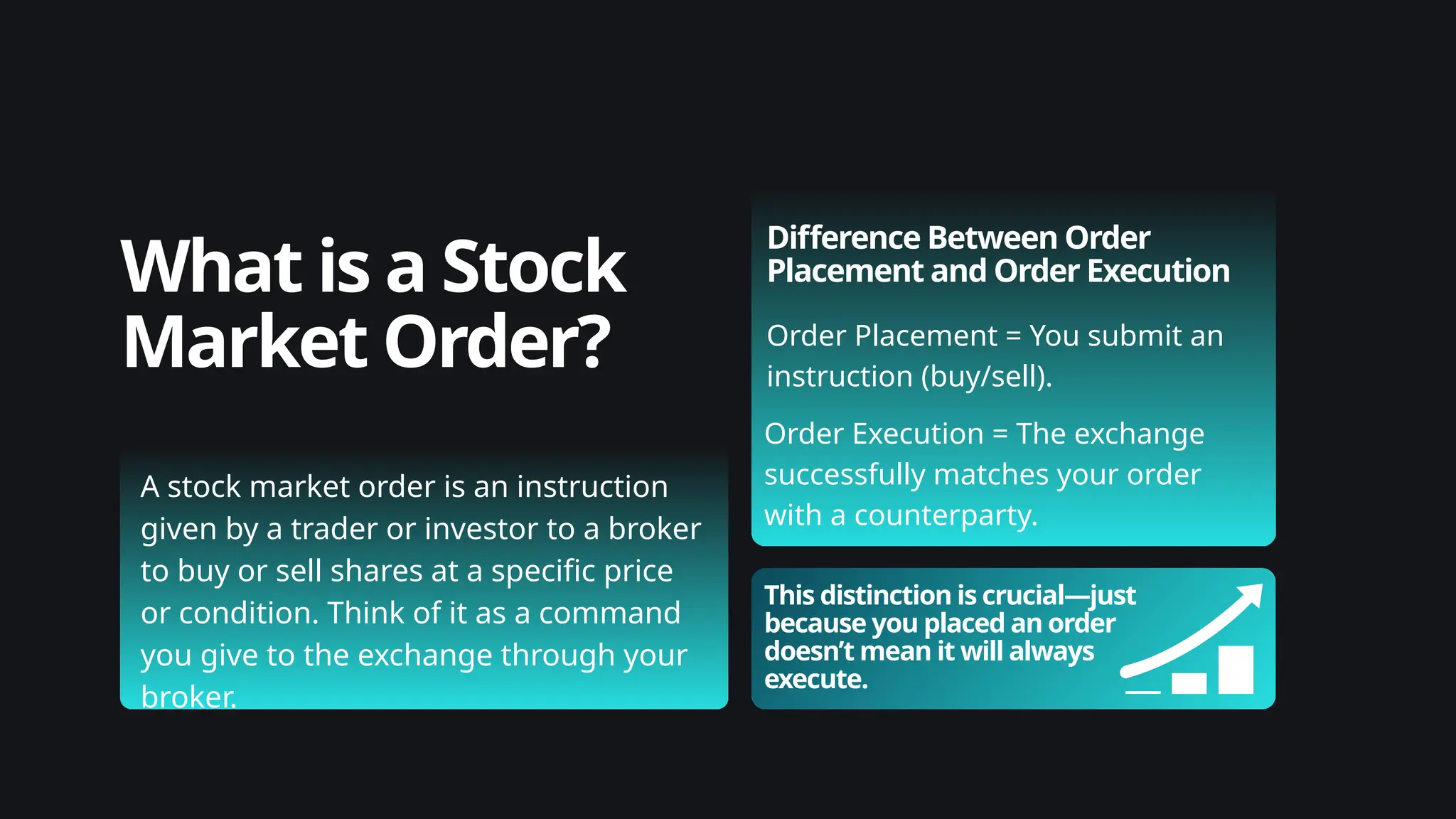
A market order is an instruction given to a brokerage firm to buy or sell a stock immediately at the current best available market price. It guarantees order execution, making it the fastest way to enter or exit a stock position, but it does not guarantee the specific execution price.
Contents
Understanding how orders are routed and filled is fundamental to navigating equity markets effectively. While a market order is the default choice for many beginner investors due to its simplicity and high likelihood of execution, relying on it blindly can lead to unexpected trade prices during periods of extreme volatility or thin trading volume.
Disclaimer: This article is provided for educational and informational purposes only and does not constitute individual financial, legal, or investment advice. Trading and investing in securities carry inherent risk of financial loss.
How a Market Order Works: Mechanics and Execution
When an investor submits a market order through an online brokerage platform, the order is instantly transmitted to an execution venue, such as a stock exchange (e.g., the Nasdaq or New York Stock Exchange) or an automated market maker (internalizer). The broker's matching engine processes the order against the existing electronic order book.
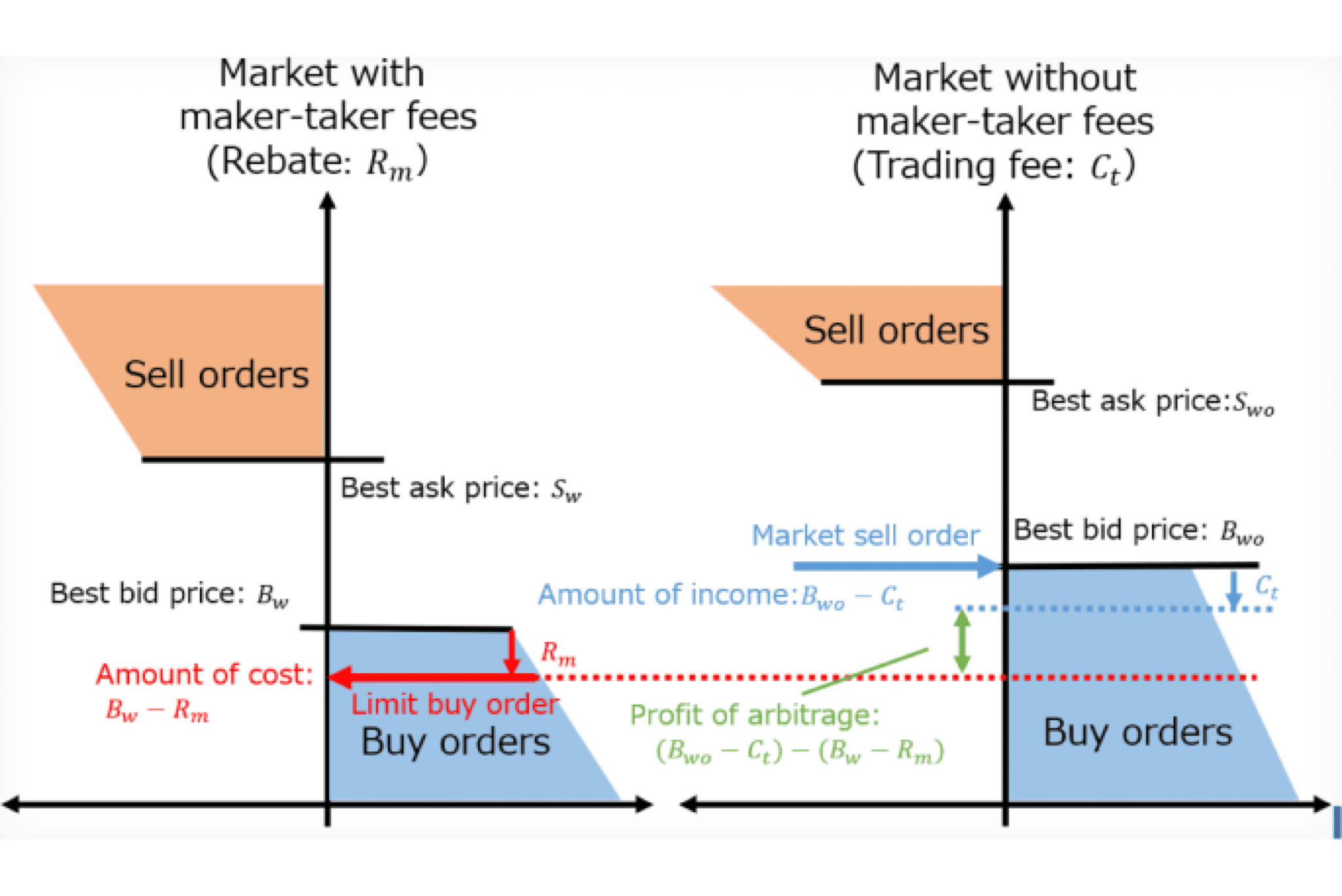
To understand how the execution price is determined, investors must understand the bid-ask spread:
- The Bid Price: The highest price a buyer in the market is currently willing to pay for a share.
- The Ask Price (or Offer): The lowest price a seller in the market is currently willing to accept for a share.
- The Spread: The monetary difference between the bid and ask prices.
When you place a market order to buy, your trade executes immediately against the lowest available ask price. Conversely, when you place a market order to sell, your trade fills immediately at the highest available bid price.
- Market Buy Order: Executes at current Ask Price
- Market Sell Order: Executes at current Bid Price
Order Book Depth and Partial Fills
For highly liquid, mega-cap stocks, hundreds of thousands of shares are offered at the national best bid and offer (NBBO). In these scenarios, a market order for 100 shares will almost certainly fill in full at a single price point within milliseconds.
However, if an investor submits a large market order that exceeds the available number of shares at the top bid or ask level, the order sweeps down (or up) the order book. This process, known as walking the book, means the order fills across multiple price levels:
- The first portion of the order fills at the prevailing best price.
- The remaining portion fills at progressively less favorable prices until the total quantity is satisfied.
This mechanical reality underscores why market orders guarantee execution quantity, but not a single unified execution price.
Market Order vs. Limit Order vs. Stop Order
Investors have several order types at their disposal, each trading off speed for price control. Selecting the correct order type depends on whether certainty of execution or precision of price is the primary priority.
| Feature | Market Order | Limit Order | Stop Order (Market-on-Stop) |
|---|---|---|---|
| Primary Objective | Immediate execution | Strict price control | Risk mitigation / Triggered exit |
| Execution Certainty | High (guaranteed if liquidity exists) | Low (fills only if target price is reached) | High (only after the stop price is triggered) |
| Price Certainty | Low (subject to market movements) | High (fills at limit price or better) | Low (converts to market order once triggered) |
| Execution Speed | Instantaneous during market hours | Variable (may remain unfilled indefinitely) | Instantaneous after triggering |
| Slippage Risk | Moderate to High | None (zero negative slippage) | Moderate to High (post-trigger) |
| Best Used For | Large-cap, liquid stocks where speed matters | Illiquid stocks, target entries/exits, volatile markets | Setting stop-loss boundaries |
Limit Orders
A limit order sets a specific maximum price you are willing to pay as a buyer, or a minimum price you are willing to accept as a seller. While a limit order protects against unfavorable price movements, it runs the risk of partial fills or going completely unfilled if the stock price moves away from your limit threshold.
Stop Orders
A stop order remains inactive until the market price reaches a designated "stop price." Once triggered, it automatically transforms into a standard market order, executing at the best available price. While designed to limit potential losses, stop orders remain vulnerable to rapid price gaps.
Advantages of Using Market Orders
Market orders remain the most widely used order type across retail trading applications for several practical reasons:
- Guaranteed Execution: Provided the market is open and the security has sufficient trading liquidity, a market order will execute. If an investor wants to exit a stock position immediately to protect capital or capitalize on a breaking news catalyst, a market order ensures the trade closes without delay.
- Speed and Simplicity: Market orders bypass the need to analyze micro-structures, calculate optimal limit prices, or continually adjust pending orders. This makes them convenient for long-term investors dollar-cost averaging into index funds or large-cap equities.
- High Liquidity Efficiency: In high-volume equities—such as major index-tracking exchange-traded funds (ETFs) or mega-cap technology firms—the bid-ask spread is frequently just one cent per share. In these asset classes, the price difference between a market order and a limit order is negligible for standard trade sizes.
Risks and Drawbacks of Market Orders
Despite their convenience, market orders carry structural risks that can erode investment returns if used incorrectly.
1. Price Slippage
Slippage occurs when there is a difference between the expected price shown on a quotation screen and the actual price at which the order executes. Because market data feeds displayed on retail trading apps can lag behind institutional exchange quotes by fractions of a second, the bid or ask price may shift before your order reaches the market.
- Negative Slippage: Buying at a higher price or selling at a lower price than expected.
- Positive Slippage: Buying at a lower price or selling at a higher price than expected (less common in volatile environments).
2. High Bid-Ask Spreads in Illiquid Securities
In small-cap stocks, penny stocks, or preferred shares, trading volume can be extremely low. The bid-ask spread on an illiquid stock might be substantial—for example, a bid of $10.00 and an ask of $10.50. Placing a market order to buy in this scenario immediately subjects the investor to a 5% spread penalty, requiring the stock to appreciate significantly just to break even.
3. Market Open Volatility and Off-Hours Risks
Submitting a market order when the stock exchange is closed ( overnight or on weekends) carries severe price risk. The market opens at 9:30 AM Eastern Time with an opening auction process. News events occurring overnight can cause a stock to open significantly higher or lower than its previous day's closing price.
A market order entered overnight will execute at the market open price, regardless of how drastically that price differs from the prior close.
Example of Market Open Gap Risk:
- Previous Day Close: $100.00
- Negative Overnight News Earnings Release
- Opening Price (Market Order Execution): $82.00
- Loss on Market Order Sell Execution: 18% instantly
Regulatory Safeguards: Best Execution Duties
In the United States, equity execution standards are strictly governed by regulatory bodies to protect retail traders from unfair price execution.
Under FINRA Rule 5310 (Best Execution), broker-dealers are legally required to exercise reasonable diligence to ascertain the best market for a security and ensure that the resulting price to the customer is as favorable as possible under prevailing market conditions.
Key factors brokers evaluate to fulfill their best execution obligations include:
- The character of the market for the security (price, volatility, and relative liquidity).
- The size and type of transaction.
- The speed of execution and accessibility of quotes across various exchanges.
Additionally, the U.S. Securities and Exchange Commission (SEC) mandates rules regarding the National Best Bid and Offer (NBBO), which requires market venues to execute customer orders at prices equal to or better than the best consolidated quotes available across all public exchanges.
Practical Scenarios: When to Use vs. Avoid Market Orders
Knowing when to apply a market order versus a limit or stop order is a key component of execution strategy.
- Is Execution Speed the Priority?
- YES
- Is the Stock Highly Liquid?
- YES: Use a MARKET ORDER
- NO: Use a LIMIT ORDER
- Is the Stock Highly Liquid?
- NO: Use a LIMIT ORDER
- YES
Recommended Usage Scenarios
- Core Buy-and-Hold Investing: Buying shares of high-volume ETFs or large-cap stocks during standard market hours.
- Urgent Risk Off-Loading: Selling an existing position rapidly when fundamental circumstances change, prioritizing immediate liquidation over price precision.
Scenarios to Avoid Market Orders
- Trading Low-Volume/Small-Cap Equities: Avoid market orders when trading thinly traded stocks where bid-ask spreads are wide.
- Trading Market Open/Close Windows: Avoid placing market orders during the first 15 minutes and last 15 minutes of the trading day, as institutional trading volume creates elevated volatility and fluctuating spreads.
- High-Impact News Events: Avoid using market orders immediately following earnings announcements, Federal Reserve interest rate releases, or major macroeconomic reports.
- Pre-Market and After-Hours Sessions: Standard market orders are generally prohibited during extended-hours sessions. Even where brokers allow market-like orders during these times, low liquidity makes price slippage extreme.
Step-by-Step: How to Place a Market Order
Placing a market order is a straightforward process across most modern trading platforms.
- Log in to Your Brokerage Account: Open your web dashboard or mobile trading application.
- Search for the Ticker Symbol: Enter the symbol of the company or fund you wish to trade (e.g.,
AAPLfor Apple Inc. orVOOfor Vanguard S&P 500 ETF). - Select the Action: Choose Buy to open/expand a position, or Sell to reduce/close a position.
- Choose "Market" as Order Type: Select Market Order from the order type drop-down menu (alternatives typically include Limit, Stop, and Stop-Limit).
- Enter Quantity: Input the number of shares or the dollar amount (fractional shares) you want to trade.
- Review the Order Summary: Double-check the order parameters. Note that your trading app will show an estimated total cost based on the real-time ask price, but the actual total may vary slightly upon execution.
- Submit the Order: Confirm the trade. The platform will typically display an instant notification once the fill is confirmed by the exchange.
Frequently Asked Questions
Does a market order always execute immediately?
During standard market hours (9:30 AM to 4:00 PM Eastern Time), a market order executes almost instantaneously, provided there is sufficient liquidity. If placed outside standard trading hours, the market order sits pending until the exchange reopens, at which point it executes at the prevailing opening price.
Can a market order be canceled?
Once a market order is submitted during regular trading hours, execution occurs within milliseconds, making cancellation virtually impossible. If submitted while the market is closed, you can cancel the pending order anytime before the market open auction takes place.
Why did my market order execute at a different price than the quote I saw?
Stock prices change continuously. In the fraction of a second between viewing a quote screen, hitting the submission button, and your broker routing the trade to an exchange, incoming orders from other market participants can move the best available bid or ask price. This variance is known as slippage.
Are market orders better than limit orders for long-term investors?
For long-term investors buying liquid, large-cap securities, market orders are generally fine because small variations in entry price (fractions of a cent) have a negligible impact on long-term capital growth. However, for precise portfolio rebalancing or active trading, limit orders offer superior price protection.
Summary Action Plan for Investors
- Check Trading Volume First: Before placing a market order, verify that the stock trades with high daily volume (typically over 1 million shares daily) and has a tight bid-ask spread.
- Avoid Off-Hours Submission: Never leave un-executed market orders overnight. Wait until the market opens and price discovery stabilizes before entering trades.
- Use Limit Orders for Volatility: If a company is releasing earnings or experiencing unusual price movements, switch from a market order to a limit order to cap your maximum purchase price or set a floor for your sale price.
Image Gallery