How to Calculate Net Worth from an Income Statement
Calculating net worth directly from an income statement alone is mathematically impossible because an income statement only reflects financial activity over a specific period, whereas net worth requires a complete accounting of assets...
Calculating net worth directly from an income statement alone is mathematically impossible because an income statement only reflects financial activity over a specific period, whereas net worth requires a complete accounting of assets and liabilities at a single point in time.
Contents
To determine net worth, an individual or business must use a balance sheet to find total assets and total liabilities. However, an income statement provides crucial analytical data—specifically net income and retained earnings—that directly impact and help track how net worth changes over time. Understanding the distinct roles of both financial statements ensures an accurate assessment of overall financial health.
Understanding the Fundamental Difference Between Income Statements and Balance Sheets
Financial statements serve different yet complementary purposes in accounting and personal finance. To evaluate financial health correctly, you must first recognize what each statement measures.
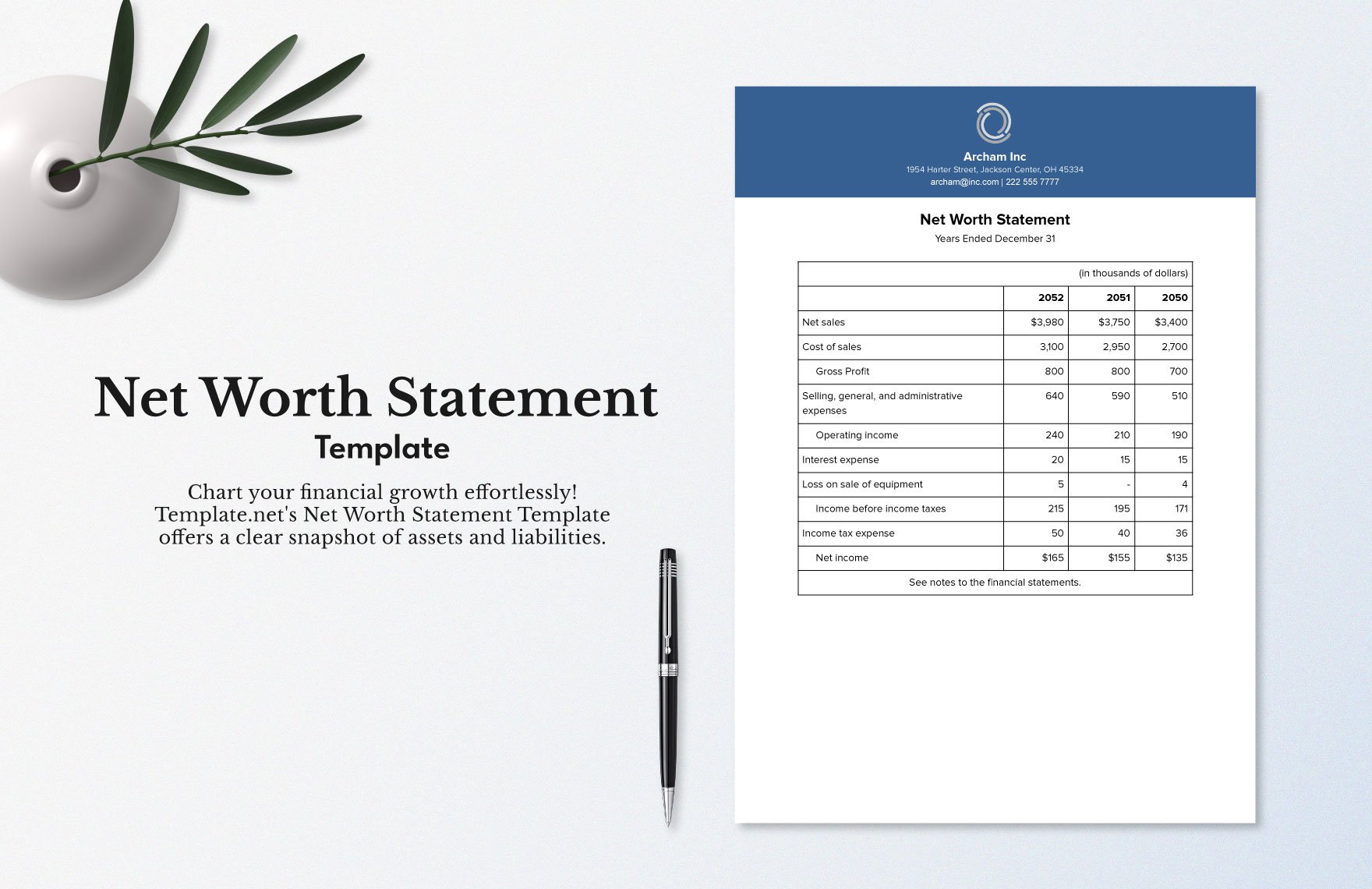
An income statement, often called a profit and loss statement, summarizes revenues earned and expenses incurred over a specific accounting period, such as a month, quarter, or year. It shows the flow of money into and out of an entity, culminating in a bottom-line figure known as net income or net loss. It functions like a video recording, capturing financial performance over a duration of time.
Conversely, a balance sheet is a snapshot of financial position at a single, exact moment. It is structured around the fundamental accounting equation:
$$\text{Assets} = \text{Liabilities} + \text{Equity}$$
Net worth for an individual, or total equity for a business, is rearranged from this formula as:
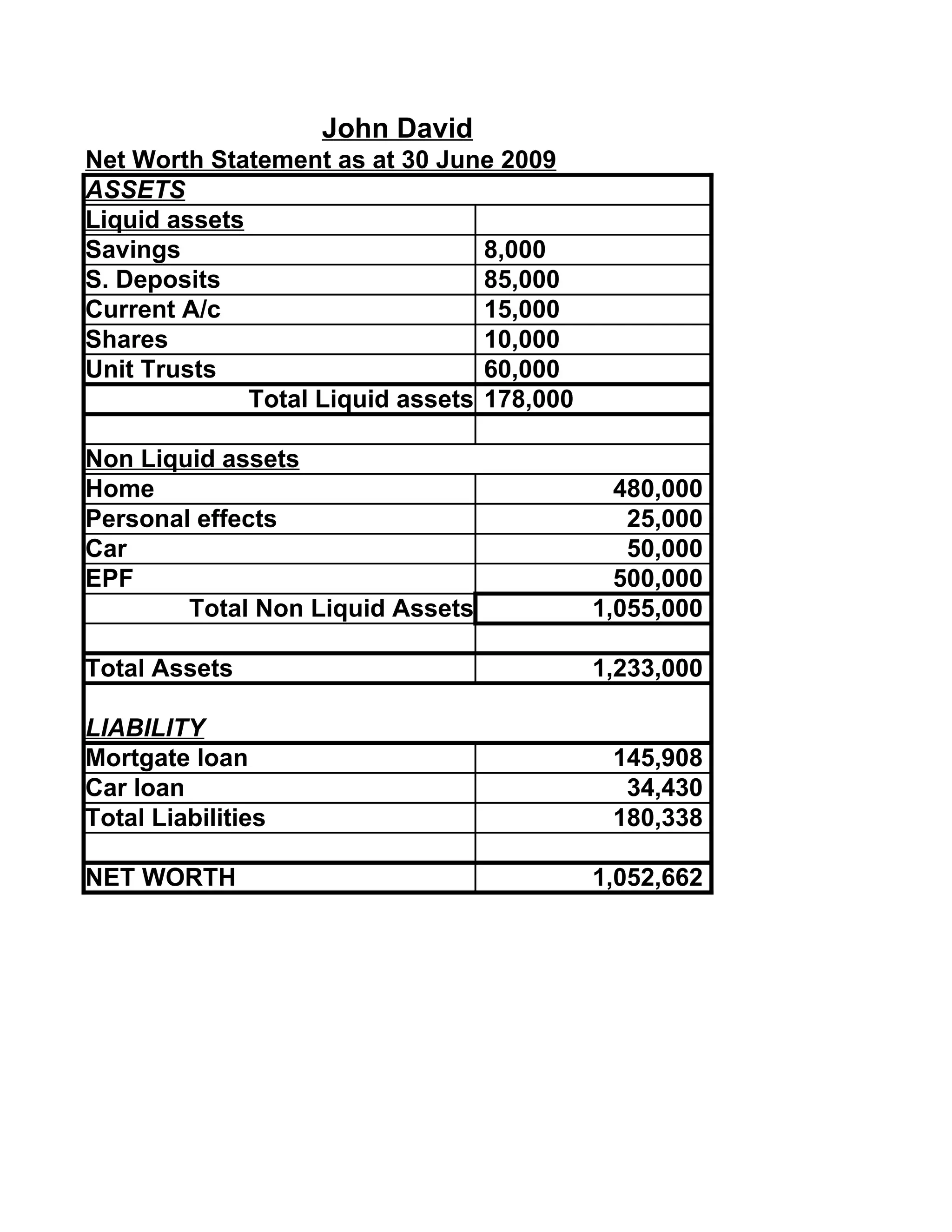
$$\text{Net Worth} = \text{Total Assets} - \text{Total Liabilities}$$
Because an income statement completely omits existing debt balances, physical properties, cash reserves, and long-term investments, it cannot provide the inventory of resources and obligations required to compute net worth.
Why an Income Statement is Indispensable to Net Worth Growth
Even though an income statement cannot calculate net worth on its own, it acts as the primary engine driving net worth changes. Every dollar of net income generated on an income statement either increases your cash, reduces your liabilities through debt paydown, or purchases new assets.
When evaluating how wealth accumulates, financial analysts examine the retention of earnings. In corporate finance, net income flows into retained earnings on the balance sheet after accounting for dividends. For individuals, net income represents your annual savings or cash flow surplus. If your income statement shows consistent profitability, your asset base or liability reduction capacity expands, driving your net worth upward. Conversely, a sustained net income deficit drains cash reserves and forces borrowing, which degrades net worth.
The Correct Formula: Transitioning from Income to Net Worth
Because you cannot derive net worth solely from revenue and expense totals, you must bridge the gap using standard financial accounting principles. The table below illustrates the conceptual differences and data flow between an income statement and a balance sheet calculation.
| Financial Metric | Income Statement Role | Balance Sheet Role | Impact on Net Worth |
|---|---|---|---|
| Revenue / Income | Measures total inflows during a period | Not recorded directly | Increases cash or accounts receivable (Assets) |
| Expenses | Measures total outflows during a period | Not recorded directly | Decreases cash or increases liabilities |
| Net Income | Final bottom-line profit or loss | Transfers into retained earnings or owner equity | Directly increases or decreases total equity |
| Assets | Excluded | Catalogs all owned items of value | Direct addition in the net worth formula |
| Liabilities | Excluded (interest is included as an expense) | Catalogs all outstanding debts and obligations | Direct subtraction in the net worth formula |
To accurately determine your net worth when starting from income data, follow this step-by-step procedural workflow:
- Extract Net Income: Pull the final net income figure from the bottom of your income statement for the desired period.
- Account for Cash Flow Allocation: Determine how that net income was deployed. Did it sit in a bank account, purchase equipment, or pay down a credit card?
- Compile Total Assets: List all liquid, tangible, and intangible assets currently owned (cash, real estate, investments, inventory, equipment).
- Compile Total Liabilities: List all current and long-term debts owed (mortgages, student loans, accounts payable, credit card balances).
- Execute the Net Worth Calculation: Subtract total liabilities from total assets.
Common Mistakes When Analyzing Income and Wealth
Misinterpreting financial statements is a frequent error among novice investors and business owners. Confusing cash flow with profitability or profitability with wealth accumulation distorts financial planning.
One major pitfall is assuming high revenue equals high net worth. A business can report millions in revenue on its income statement, but if expenses and liabilities outpace collections, the net income may be negative, and net worth may be declining. Similarly, an individual might earn a high salary, but if lifestyle inflation consumes every dollar without acquiring appreciating assets or paying down principal debt, net worth remains stagnant.
Another frequent mistake is failing to separate principal debt payments from interest expenses. On an income statement, only the interest portion of a loan payment appears as an expense. The principal portion reduces the liability on the balance sheet. Ignoring this distinction prevents accurate tracking of how income translates into net worth expansion over multi-year periods.
Frequently Asked Questions
Can I estimate my net worth using only my tax return?
Tax returns share similarities with income statements because they report annual income and deductible expenses. However, like an income statement, a tax return does not list your total assets or outstanding debts. While it provides insight into your earning power, you still need to inventory your assets and liabilities separately to calculate net worth.
How often should net worth and income statements be reviewed?
Income statements are typically reviewed monthly or quarterly to monitor operational performance and profitability trends. Net worth, however, is usually calculated on a quarterly or annual basis. Because asset valuations—such as real estate markets or stock portfolios—fluctuate, a less frequent review schedule is generally sufficient for long-term wealth tracking.
What is the difference between retained earnings and net worth?
Retained earnings represent the cumulative net income a business has earned since its inception, minus any dividends paid out to shareholders. Net worth, or total equity, includes retained earnings plus initial capital investments and other equity accounts. For individuals, net worth is the direct equivalent of total equity.
Why do profitable businesses sometimes experience negative net worth?
A business can be profitable on its income statement yet have negative net worth if its accumulated liabilities exceed its total assets. This often occurs in early-stage startups that accumulate heavy debt or startup costs before their revenue-generating assets scale sufficiently to offset those obligations.
Next Actions for Financial Tracking
To gain a complete and accurate picture of your financial standing, stop relying solely on profit metrics. Open a spreadsheet or financial software and build a balance sheet today. List every item of value you own on one side, itemize every debt you owe on the other, and subtract the liabilities from the assets. Pair this balance sheet with your recurring income statements to monitor not just how much you earn, but how effectively those earnings build enduring wealth.
Image Gallery