Understanding the Differences Between Term, Whole, and Universal Life Insurance Policies
The primary difference between term, whole, and universal life insurance lies in the duration of coverage and the accumulation of cash value. Term insurance provides pure death benefit protection for a specific timeframe. In contrast,...
The primary difference between term, whole, and universal life insurance lies in the duration of coverage and the accumulation of cash value. Term insurance provides pure death benefit protection for a specific timeframe. In contrast, whole and universal life are permanent policies that include a savings component, though they differ in premium flexibility and investment structure.
Contents
Navigating the life insurance market in 2026 requires a clear understanding of these three pillars. While the fundamental purpose of life insurance remains the financial protection of beneficiaries, the mechanisms through which these policies operate have evolved to meet diverse financial planning needs. Choosing the right policy is no longer just about the death benefit; it is about aligning the policy's structure with your long-term liquidity needs, tax strategy, and risk tolerance.
Term Life Insurance: Pure Protection for Defined Needs
Term life insurance is often described as the "simplest" form of life insurance. It is designed to provide coverage for a specific period—typically 10, 15, 20, or 30 years. If the insured individual passes away during this "term," the insurance company pays the death benefit to the designated beneficiaries. If the term ends while the insured is still living, the coverage simply expires unless it is renewed or converted.
Why Policyholders Choose Term
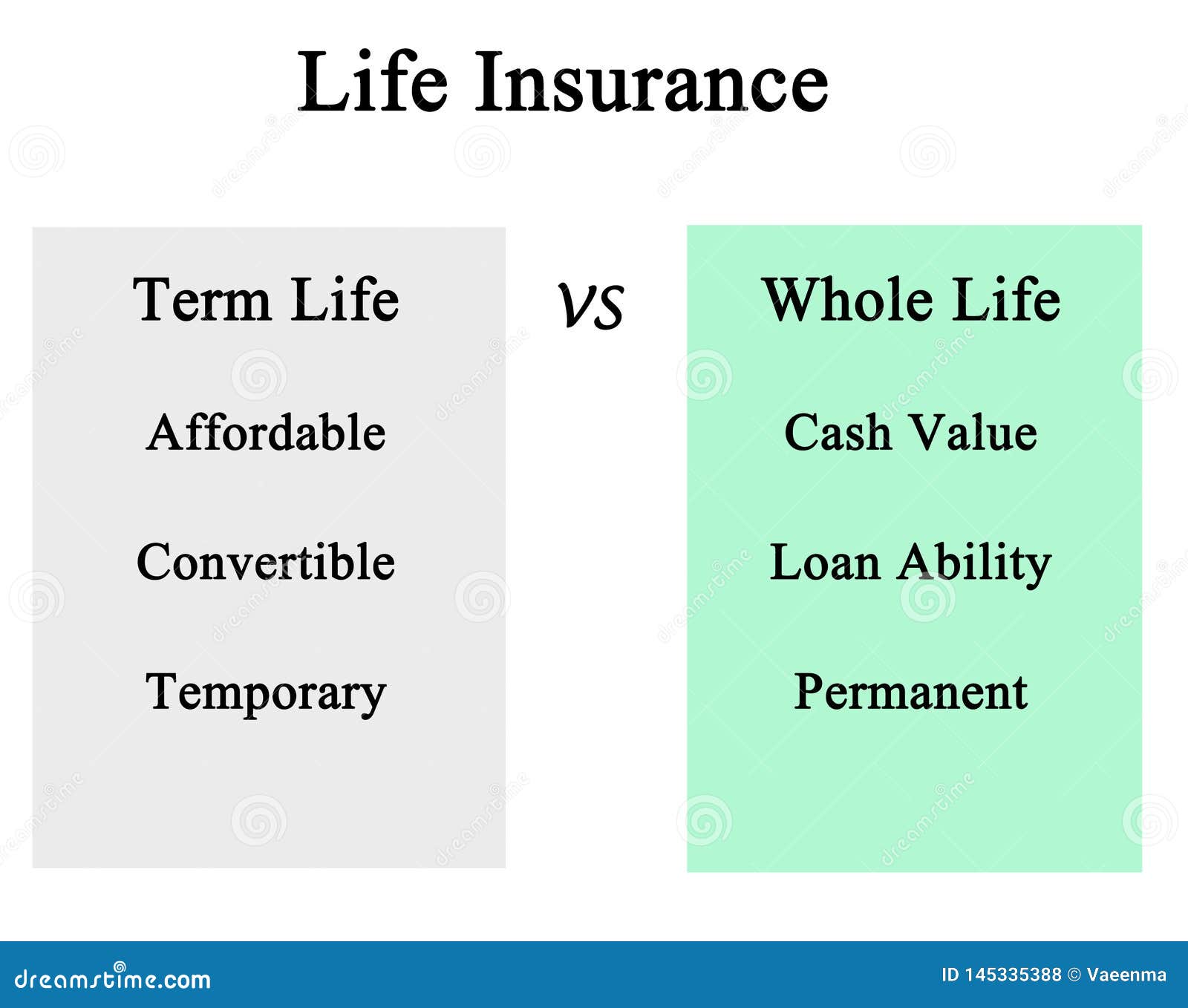
The primary appeal of term insurance in 2026 remains its affordability. Because it does not build cash value and only pays out if death occurs within a specific window, the premiums are significantly lower than permanent alternatives. This makes it an ideal tool for "mortgage protection" or ensuring that children are supported until they reach adulthood.
Key Features of Term Policies
- Level Premiums: Most modern term policies feature "level premiums," meaning the cost remains the same every month for the duration of the term.
- Renewability: Many policies include a guaranteed renewability clause, allowing the holder to extend coverage without a medical exam, albeit at a much higher price.
- Convertibility: A crucial feature to look for is the conversion rider. This allows a policyholder to transition their term coverage into a permanent policy (whole or universal) without proving insurability, which is vital if health declines during the term.
Whole Life Insurance: Permanent Security with Guarantees
Whole life insurance is a type of permanent life insurance that remains in force for the insured's entire lifetime, provided premiums are paid. Unlike term insurance, whole life includes a "cash value" component that grows over time at a guaranteed rate.
The Mechanism of Cash Value
A portion of every premium payment is directed into a cash value account. This account grows tax-deferred, meaning you do not pay taxes on the growth as long as the money remains within the policy. In 2026, whole life continues to be used by high-net-worth individuals as a "volatility buffer," providing a stable asset that is uncorrelated with the stock market.
Guarantees and Dividends
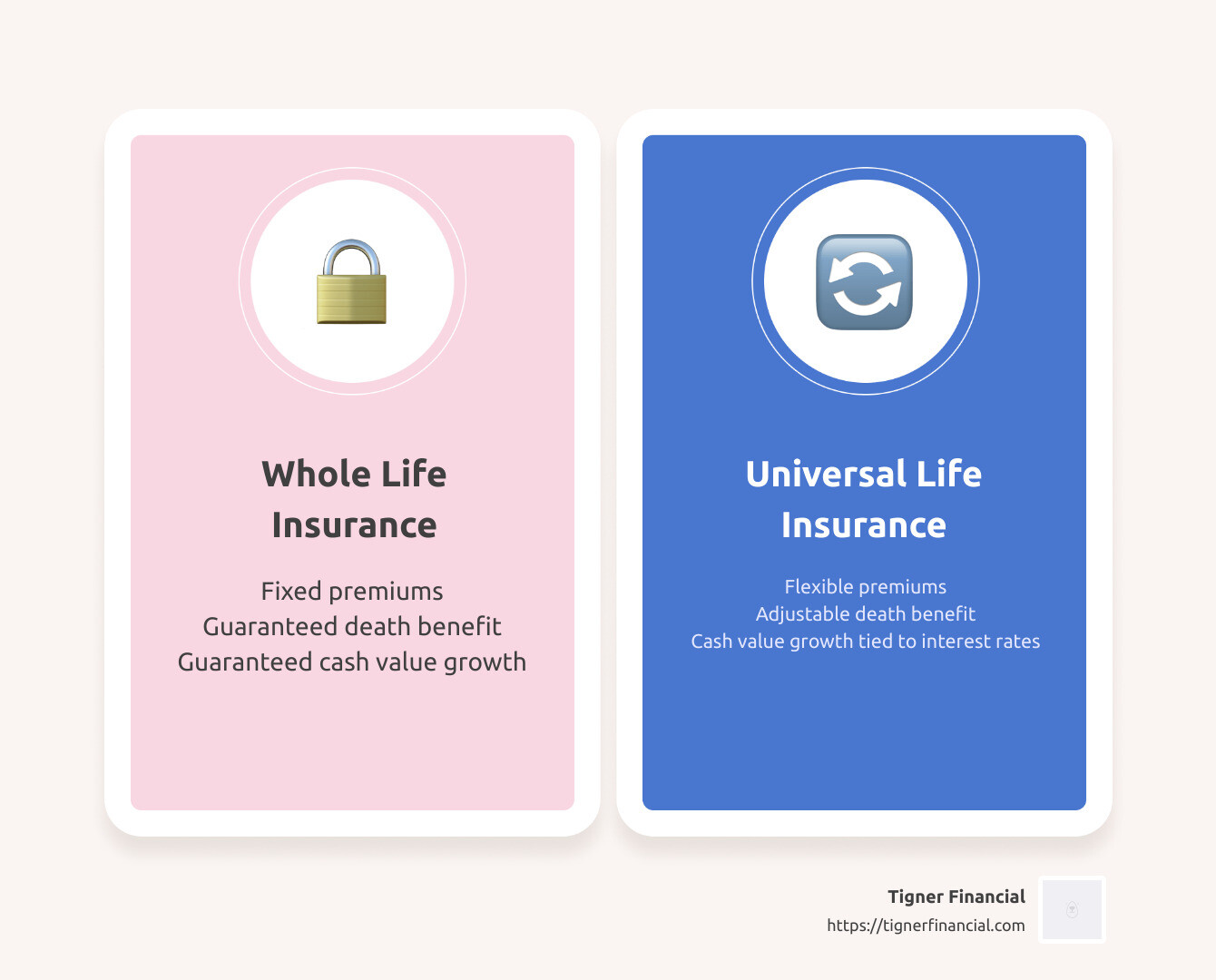
Whole life is characterized by its "fixed" nature. The premiums are fixed for life, the death benefit is guaranteed, and the cash value growth is guaranteed. Furthermore, if you purchase a policy from a "mutual" insurance company, you may be eligible to receive dividends. While not guaranteed, these dividends can be used to purchase "paid-up additions," which increase both the death benefit and the cash value of the policy over time.
The Cost of Certainty
The trade-off for these guarantees is cost. Whole life premiums can be five to ten times more expensive than term insurance for the same death benefit amount. It is a long-term commitment; surrendering a policy in the first few years often results in significant financial loss due to front-loaded administrative costs and commissions.
Universal Life Insurance: The Flexible Alternative
Universal life (UL) insurance was developed to provide a middle ground between the affordability of term and the permanence of whole life. Its defining characteristic is flexibility. Policyholders can, within certain limits, adjust their premium payments and even increase or decrease their death benefit as their financial circumstances change.
How Universal Life Works
Unlike whole life, which bundles the death benefit and cash value into a single premium structure, universal life "unbundles" these components. The policyholder pays a premium, the insurance company deducts the "cost of insurance" (COI) and administrative fees, and the remainder is credited to the cash value account.
Variations of Universal Life
In 2026, several types of universal life dominate the market:
- Guaranteed Universal Life (GUL): Focuses on a permanent death benefit with little to no cash value growth. It is often the most affordable way to secure lifelong coverage.
- Indexed Universal Life (IUL): The cash value growth is tied to the performance of a market index (like the S&P 500). It typically features a "floor" (protecting against market losses) and a "cap" (limiting maximum gains).
- Variable Universal Life (VUL): Allows the policyholder to invest the cash value in sub-accounts similar to mutual funds. This offers the highest growth potential but carries the risk of losing principal if the market performs poorly.
Side-by-Side Comparison of Policy Types
| Feature | Term Life Insurance | Whole Life Insurance | Universal Life Insurance |
|---|---|---|---|
| Duration | Specific term (10–30 years) | Entire lifetime | Entire lifetime |
| Premium Cost | Lowest | Highest | Flexible (Moderate to High) |
| Cash Value | None | Guaranteed growth | Variable/Indexed growth |
| Premium Flexibility | None | None | High (Can adjust payments) |
| Death Benefit | Fixed | Guaranteed | Adjustable |
| Complexity | Low | Moderate | High |
| Best For | Temporary needs/Debt coverage | Lifetime protection/Estate planning | Flexible planning/Investment potential |
Strategic Considerations: Which Policy Fits Your Profile?
Choosing between these three options requires an audit of your financial goals. If you are a young professional with a mortgage and young children, a Term Life policy is usually the most efficient use of capital. It provides the maximum amount of "leverage"—protecting your family for the lowest possible cost during your highest years of financial vulnerability.
If you are looking for a "set it and forget it" solution that provides an inheritance for your heirs and a stable cash reserve, Whole Life is the standard. It functions as a forced savings vehicle and an insurance policy rolled into one. It is particularly useful for final expenses or for funding a buy-sell agreement in a small business.
Universal Life is best suited for those who want permanent coverage but expect their income to fluctuate. For example, a business owner might pay higher premiums during profitable years to bolster the cash value and pay lower premiums (or even skip them) during leaner years. However, universal life requires more active management. If the cash value does not grow sufficiently to cover the rising cost of insurance as you age, the policy could lapse unless you inject more capital.
Technical Nuances: Tax Advantages and Policy Loans
Regardless of the type, all three policies offer a tax-free death benefit under current tax laws (IRC Section 101(a)). This is perhaps the most powerful financial aspect of life insurance—the ability to transfer wealth to the next generation without the erosion of income tax.
Furthermore, the permanent options (Whole and Universal) allow for policy loans. You can borrow against your cash value, often at competitive interest rates. These loans are not technically "income" and are therefore not taxed. However, any outstanding loan balance at the time of your death will be deducted from the death benefit paid to your beneficiaries.
Frequently Asked Questions
Can I change my mind after I buy a policy?
Yes. Most policies have a "free look period" (usually 10 to 30 days depending on the state) during which you can cancel for a full refund. Beyond that, you can "surrender" a permanent policy for its current cash value, though surrender charges may apply in the early years. Term policies can be cancelled at any time by simply stopping premium payments.
Is "Buy Term and Invest the Rest" still a valid strategy?
This strategy suggests buying cheap term insurance and investing the difference (compared to a whole life premium) into the stock market. In 2026, this remains a mathematically sound approach for disciplined investors. However, whole life proponents argue that the guaranteed growth and tax advantages of permanent insurance provide a "safety net" that many individuals fail to build on their own.
What happens to my Universal Life policy if interest rates drop?
If you have an Indexed or traditional Universal Life policy, low interest rates can reduce the growth of your cash value. If the cash value drops too low, it may not be able to cover the monthly cost of insurance. In this scenario, you would be required to pay higher premiums to keep the policy in force. This is why regular "policy reviews" are essential for UL holders.
Do I need a medical exam for these policies in 2026?
The industry has moved significantly toward "accelerated underwriting." Many healthy applicants can now secure term, whole, or even universal life insurance without a physical exam, using data from prescription databases, motor vehicle records, and credit histories. However, larger death benefits or complex health histories still typically require a full medical screening.
Final Recommendation
Before committing to a policy, determine your "why." If your goal is to cover a 20-year mortgage, do not buy a permanent policy; the costs will outweigh the benefits. If your goal is to provide a legacy or manage estate taxes, a permanent policy is a necessity.
For most consumers, a Convertible Term Life policy offers the best balance. It provides immediate, affordable protection while leaving the door open to permanent coverage later in life when your income is higher and your financial goals have solidified. Always consult with a licensed fiduciary or insurance professional to run "illustrations"—detailed projections of how a policy's cash value and death benefit will perform over 30 or 40 years.
Image Gallery