Comprehensive Guide to NHS Pay Scales and Salary Structures for 2026
Navigating the National Health Service (NHS) pay structure is essential for clinical and non-clinical professionals working within the United Kingdom healthcare system. As of 2026, understanding the Agenda for Change (AfC) pay framewor...
Navigating the National Health Service (NHS) pay structure is essential for clinical and non-clinical professionals working within the United Kingdom healthcare system. As of 2026, understanding the Agenda for Change (AfC) pay framework, annual pay uplifts, band progressions, and regional variations remains critical for career planning, contract negotiation, and financial forecasting. This guide provides an in-depth breakdown of NHS pay scales, band structures, pay progression rules, and the operational mechanics governing public healthcare compensation in 2026.
Contents
Understanding the Agenda for Change Framework in 2026
The Agenda for Change (AfC) is the single national pay system for all NHS staff, excluding very senior managers (VSMs), doctors, and dentists. Established to ensure fair, transparent, and consistent pay across all regions and professions, the framework categorizes jobs into nine distinct pay bands based on the knowledge, responsibilities, skills, and effort required for the role.
Every position within the AfC framework undergoes a rigorous job evaluation process. This ensures that roles of equal value receive equal pay, regardless of whether the practitioner is a nurse, an administrator, a biomedical scientist, or a facilities manager. In 2026, the framework continues to adapt to inflationary pressures, workforce retention challenges, and strategic health service investments across England, Scotland, Wales, and Northern Ireland.
Core Principles of NHS Job Evaluation
The AfC system measures roles against specific national job evaluation profiles. Key factors analyzed during evaluation include:
- Communication skills and the complexity of information handled.
- Analytical and investigative capabilities required for daily tasks.
- Planning and organizational skills for complex clinical or operational pathways.
- Physical, mental, and emotional effort involved in patient care and service delivery.
- Responsibility for patient care, policy implementation, and financial resources.
Breakdown of NHS Pay Bands and Salary Ranges for 2026
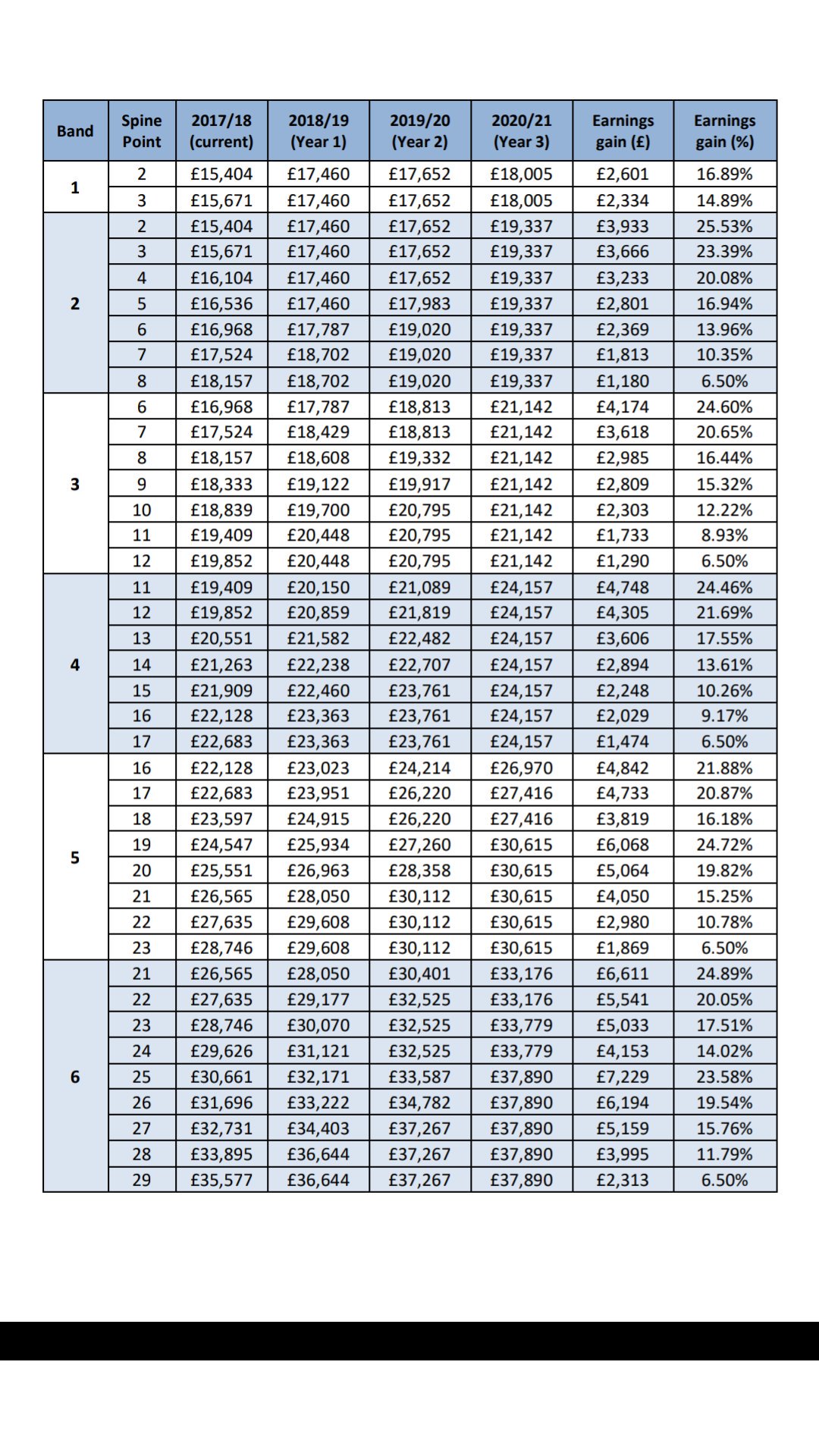
The NHS pay scales are divided into nine bands, starting from Band 1 (though largely phased out or restricted for new hires in most trusts) up to Band 9 for the most senior directors and consultants. Each band features multiple pay points, requiring staff to meet specific progression standards to advance.
| Pay Band | Typical Roles & Responsibilities | 2026 Base Salary Range (Illustrative National Averages) | Progression Requirements |
|---|---|---|---|
| Band 1 | Domestic staff, housekeeping assistants | £23,200 - £24,000 | Annual review and satisfactory performance |
| Band 2 | Healthcare assistants, administrative support | £24,000 - £26,500 | Completion of foundational training and local competencies |
| Band 3 | Senior healthcare assistants, admin supervisors | £25,500 - £28,200 | Demonstration of advanced technical skills |
| Band 4 | Associate practitioners, nursing associates | £27,500 - £31,000 | Professional registration maintenance and appraisal |
| Band 5 | Newly qualified nurses, radiographers, physiotherapists | £30,000 - £36,500 | Supported preceptorship year and core competencies |
| Band 6 | Senior nurses, specialist practitioners, team leaders | £37,000 - £44,500 | Specialist qualification or equivalent advanced experience |
| Band 7 | Advanced clinical practitioners, service managers | £45,000 - £53,000 | Advanced leadership or clinical master's level training |
| Band 8a-8d | Consultant practitioners, heads of department, directors | £53,500 - £110,000 | Strategic leadership metrics and governance achievements |
| Band 9 | Very senior executives, chief nursing/operating officers | £114,000 - £135,000+ | Executive board-level appraisal and national benchmarking |
How Pay Progression and Appraisals Work
Moving through the pay points within a specific band is no longer purely automatic. Under current NHS Employers guidelines, pay step progression depends on successful annual appraisals and the absence of any ongoing formal capability or disciplinary proceedings.
Important Appraisal Mandate for 2026 Staff must demonstrate that they meet the required knowledge and competency standards outlined in their job description during their annual appraisal. Line managers must formally sign off on these standards to unlock the next pay point progression date. If performance standards are not met, progression may be deferred until objectives are achieved through a supported improvement plan.
High-Cost Area Supplements (HCAS)
Because living costs vary significantly across the UK—particularly in and around London—the NHS utilizes High-Cost Area Supplements to adjust base salaries. These payments are calculated as a percentage of basic salary, subject to minimum and maximum cash floor and ceiling caps.
- Inner London: Typically adds 20% to basic salary (subject to statutory caps).
- Outer London: Typically adds 15% to basic salary.
- Fringe Zone: Typically adds 5% to basic salary for trusts bordering Greater London.
Comparing NHS Pay with Private Sector Healthcare Compensation
When evaluating career paths, healthcare professionals frequently weigh public sector employment against private practice or independent healthcare providers. While private sector entities may offer higher initial base pay for certain acute surgical or administrative specialties, the total reward package within the NHS often provides unique long-term benefits.
- Pension Security: The NHS Pension Scheme remains one of the most generous defined benefit pension schemes available in the UK, offering guaranteed retirement income tied to career-average earnings.
- Job Security and Standardization: National pay scales eliminate wage negotiation bias and provide robust employment rights, sick pay, and maternity/paternity provisions.
- Professional Development: NHS employers generally provide structured funding and protected study time for continuing professional development (CPD) and specialized post-graduate education.
- Workload and Burnout: Private facilities may offer lower patient-to-staff ratios in select settings, whereas NHS environments frequently manage higher clinical acuity and systemic demand pressures.
Step-by-Step Guide to Calculating Your NHS Take-Home Pay
Determining net take-home pay from a gross NHS salary requires accounting for statutory deductions, pension contributions, and local tax bands. Follow this operational workflow to calculate net earnings:
- Identify Gross Salary: Locate your exact position on the national pay scale band, including any applicable High-Cost Area Supplements or unsocial hours enhancements (e.g., Band 5 nurse working night shifts).
- Calculate Pension Contributions: Determine your tiered NHS Pension contribution rate based on your actual pensionable earnings. Contribution tiers scale progressively from lower earners to very high earners.
- Deduct National Insurance (NI): Apply current UK National Insurance thresholds and rates to your gross earnings after allowable pre-tax deductions.
- Apply Income Tax: Calculate PAYE income tax according to your personal tax code (e.g., standard 1257L) across basic, higher, or additional rate tax bands.
- Account for Student Loans: If applicable, deduct Plan 1, Plan 2, Plan 4, Postgraduate, or Plan 5 student loan repayments based on annual income thresholds.
- Factor in Salary Sacrifice Schemes: Subtract deductions for voluntary schemes such as cycle-to-work programs, lease car initiatives, or additional voluntary pension contributions (AVCs).
Frequently Asked Questions Regarding NHS Pay Scales
How are NHS pay awards negotiated and implemented each year?
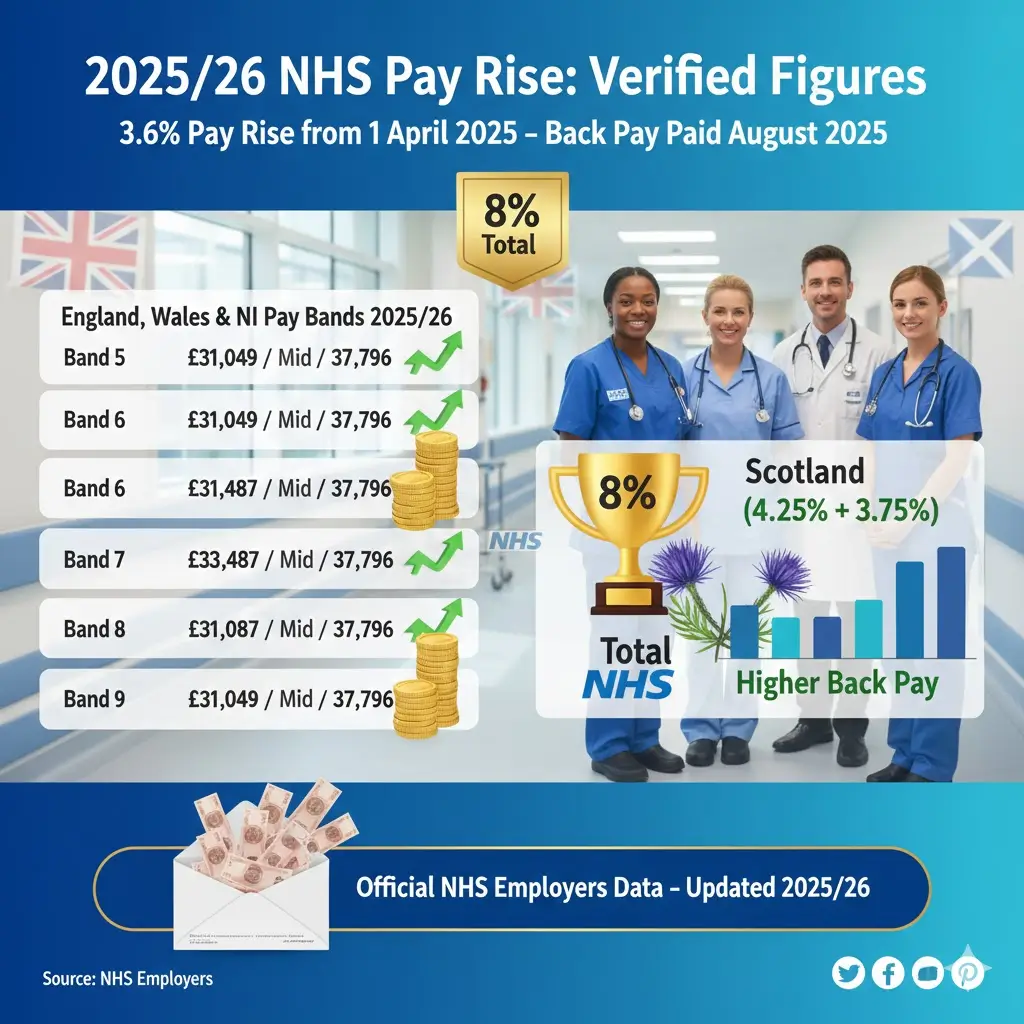
NHS pay awards are typically informed by recommendations from the independent NHS Pay Review Body (PRB), which gathers evidence from health unions, government departments, and NHS employers regarding inflation, recruitment, and retention. Once government decisions are announced, trusts update payroll systems to backdate and disburse awarded uplifts.
What happens to my pay if I change NHS trusts or bands?
If you move to a new trust on the same pay band, your pay point and incremental date typically transfer with you, provided there is no break in service. If you secure a promotion to a higher band, your starting salary is normally calculated using the NHS promotion rule, ensuring you receive at least the minimum of the new band or an increase equivalent to at least one pay point in your old band.
Are overtime and unsocial hours paid separately from basic pay?
Yes. Work completed outside standard Monday-to-Friday daytime hours—such as nights, weekends, and bank holidays—attracts enhanced pay rates under Section 2 of the Agenda for Change terms and conditions. Overtime hours worked beyond standard contracted hours are likewise compensated at enhanced hourly rates.
How do clinical doctors and consultants fit into the pay scale?
Doctors and dentists do not follow the Agenda for Change framework. Instead, they operate under distinct national pay structures, including Foundation Doctor pay scales, Specialty Registrar (StR) pay scales, and Consultant contractual frameworks that incorporate programmed activities (PAs) and clinical excellence awards.
Can my pay band be downgraded if my role changes?
NHS employers cannot arbitrarily downgrade a pay band without a formal organizational change consultation and job re-evaluation. If a restructuring leads to role redesign, robust protection of earnings (pay protection) policies generally apply for a transitional period to safeguard staff income.
Conclusion and Next Steps for Healthcare Professionals
Navigating the 2026 NHS pay scales requires a thorough understanding of band structures, regional supplements, and progression frameworks. Whether entering public healthcare as a newly qualified practitioner or seeking advancement into senior clinical and operational leadership, staying informed about annual pay negotiations and competency milestones is vital for professional growth. To verify specific organizational vacancies, review local trust intranet policies, consult your HR department, or reference current NHS Employers guidance documents for precise regional salary tables.
Image Gallery