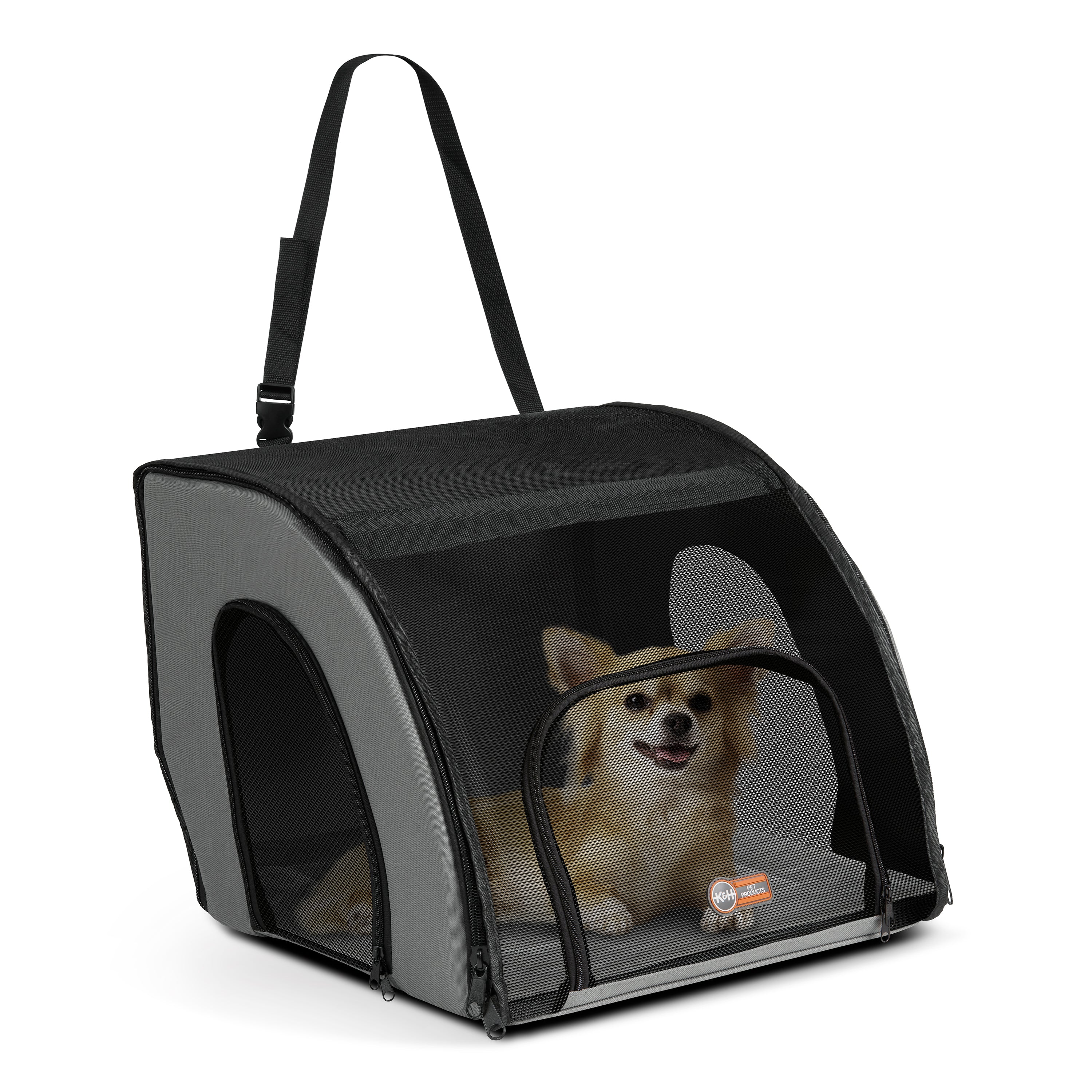
Choosing the Right Dog Flight Carrier for Safe Travel
Selecting the proper dog flight carrier requires matching your pet’s physical dimensions to specific airline regulatory standards, depending on whether your dog travels in the cabin or in the cargo hold. Cabin carriers must fit under t...
Selecting the proper dog flight carrier requires matching your pet’s physical dimensions to specific airline regulatory standards, depending on whether your dog travels in the cabin or in the cargo hold. Cabin carriers must fit under the seat in front of you with proper ventilation, while cargo kennels must meet rigid International Air Transport Association (IATA) structural, locking, and sizing requirements.
Contents
Understanding In-Cabin vs. Cargo Flight Carrier Standards
Air travel with a pet is strictly regulated by international aviation bodies and individual commercial airlines. The fundamental choice of a carrier depends on your dog's size, weight, and whether they will travel under the passenger seat or inside the climate-controlled cargo compartment.
- Choose Travel Compartment
- In-Cabin Travel (Small Dogs < 15lb)
- Soft-Sided Carrier (Flexible Top/Sides)
- Cargo / Hold (Larger Dogs >15lb)
- Hard-Plastic Kennel (IATA Container CR1)
- In-Cabin Travel (Small Dogs < 15lb)
In-Cabin Pet Carriers (Soft-Sided vs. Hard-Sided)
In-cabin travel is generally restricted to small dogs that, along with their carrier, weigh under 15 to 20 pounds (depending on the airline's policy). The carrier acts as your dog's designated space under the seat directly in front of you during taxi, takeoff, turbulence, and landing.
Soft-sided carriers are preferred for cabin travel because their pliable construction allows them to compress slightly under varying seat heights across different aircraft models (such as the Boeing 737 or Airbus A320). When choosing a soft-sided cabin carrier, verify that it features:
- A reinforced wire or fiberglass internal frame to prevent collapse onto the pet.
- High-density nylon or polyester fabric (at least 600D ballast material) that resists chewing and clawing.
- Mesh ventilation panels on at least three sides (four sides preferred for international routes).
- A leak-proof, washable base lining with an absorbent interior pad.
Hard-sided carriers can also be used in the cabin, but their rigid height offers zero flexibility under low seat frames. If the hard shell exceeds an airline’s under-seat height limit by even half an inch, gate agents can deny boarding.
Cargo and Hold Crates (IATA Container Requirement 1)
For dogs too large for in-cabin travel, transport in the aircraft hold requires an IATA-compliant rigid crate, formally governed by IATA Live Animals Regulations (LAR) Container Requirement 1.
Cargo environments subject crates to handling, stacked cargo shifts, and ambient vibrations. Soft-sided carriers, folding crates, and snap-together plastic kennels are strictly prohibited in the cargo hold. An approved cargo crate must feature:
- Rigid Construction: Solid plastic, wood, metal, or fiber-reinforced material. Plastic kennels must be secured along the central seam using steel nuts and bolts—plastic tension latches or twist-locks alone are not permitted by most carriers.
- Solid Roof: No top-entry hatches, feed doors, or ventilation grates on the roof surface.
- Door Integrity: Electro-welded heavy-gauge steel or iron mesh doors with a multi-point spring-lock system that prevents the door from bending when pressed from the inside.
- Absence of Wheels: Castors or wheels must be completely removed or rendered permanently non-functional prior to tender.
How to Measure Your Dog for a Flight-Compliant Carrier
A commercial airline will refuse transport if a dog appears cramped, unable to stand fully upright, or unable to turn around naturally. Measuring your dog accurately prevents last-minute denial of carriage at the airport check-in counter.
- A: Nose to Base of Tail
- B: Floor to Elbow
- C: Shoulder Width
- D: Floor to Head/Ears
The Official IATA Sizing Formula
To determine the minimum internal dimensions of an acceptable flight crate, take four key measurements of your dog while they are standing naturally on a flat surface:
- A = Length of the pet: From the tip of the nose to the base of the tail (excluding the tail length).
- B = Height from floor to elbow joint: Measured vertically from the ground to the elbow.
- C = Width across shoulders: Measured at the widest point across the dog's shoulders.
- D = Height of the pet in standing position: From the floor to the highest point of the dog's head or ears (whichever is taller for erect-eared breeds like German Shepherds or French Bulldogs).
Using these measurements, calculate the required internal dimensions:
$$\text{Internal Length} = A + \left(0.5 \times B\right)$$
$$\text{Internal Width} = C \times 2$$
$$\text{Internal Height} = D \quad (\text{minimum clear headroom above ears})$$
Common Sizing Mistakes That Lead to Denied Boarding
- Ignoring Ear Height: For breeds with upright, rigid ears (e.g., Boston Terriers, Great Danes), the height measurement ($D$) must extend to the tip of the ears. If the ears touch the interior ceiling of the crate when the dog stands erect, the carrier is deemed undersized.
- Assuming Weight Equals Fit: Airline weight limits (e.g., "up to 20 lbs") are upper safety limits, not guarantees of space fit. A long-legged 14-pound Terrier may exceed under-seat height limits despite fitting the weight criteria.
- Measuring While Sitting or Lying Down: Dogs stretch out when relaxed, but airlines inspect pets while standing. Always take measurements when your dog is standing straight.
Key Safety and Regulatory Features to Look For
Selecting a flight carrier involves evaluating safety components against both international rules and safety agency guidelines, such as those published by the USDA Animal and Plant Health Inspection Service (APHIS).
CARRIER SAFETY CHECKLIST
- Hardware: Steel metal nuts & bolts (no plastic clips)
- Door: Central multi-point spring latch; single metal grill
- Ventilation: 14% min surface area (4-sided for international)
- Water Bowls: Dual-rimmed bowls clamped to door, fillable outside
- Markings: "LIVE ANIMAL" green/red stickers; orientation arrows
Ventilation and Airflow Requirements
Proper ventilation prevents heat stress, carbon dioxide accumulation, and respiratory compromise during ground delays or flight operations.
- Domestic Flights: Cargo crates must have ventilation on a minimum of three sides (usually the door and two side walls).
- International Flights: Cargo crates must feature ventilation on all four sides. The total ventilated area must constitute at least 14% of the overall wall surface area.
- Rim Distances (Spacer Bars): Cargo kennels must feature raised spacer rims (at least 0.8 inches / 2 cm wide) along the outer side walls to prevent adjacent baggage from blocking air vents.
Locking Mechanisms and Structural Integrity
Escapes from pet carriers on tarmac ramps or cargo areas present severe safety hazards. Airlines enforce strict locking specifications:
- In-Cabin Carriers: High-grade self-locking zippers or secondary safety clips (carabiner-style clasps) prevent clever dogs from pushing zippers open from the inside.
- Cargo Kennels: The door must feature a central locking mechanism that engages pins at both the top and bottom of the door frame simultaneously. Single-latch doors or magnetic closures are forbidden. Additionally, pre-drilled cable tie holes at the four corners of the door frame allow zip-ties to be installed as secondary door retention devices.
Absorbent Bedding and Spill Prevention
Under federal and international transport laws, pet carriers must remain leak-proof throughout transit:
- Bedding: Linings must consist of non-toxic, highly absorbent materials. Suitable options include thick puppy training pads secured to the floor, specialized travel vet bedding, or shredded paper. Loose straw, hay, or wood shavings are prohibited on most routes due to agricultural customs regulations.
- Hydration Containers: Cargo crates must include a water bowl attached securely to the inside of the door mesh. The bowl must be accessible from the outside (via a funnel or tube) so airline handlers can fill it without opening the crate door.
Carrier Standards Matrix: In-Cabin vs. Cargo Specifications
The following comparison details the structural, legal, and operational differences between in-cabin soft carriers and hold cargo crates.
| Specification Feature | In-Cabin Soft-Sided Carrier | Cargo Hard-Sided Crate (IATA CR1) |
|---|---|---|
| Primary Material | 600D Nylon/Polyester with wire frame | Heavy-duty rigid plastic, wood, or aluminum |
| Weight Limit | Typically $\le$ 15–20 lbs (pet + carrier) | Based on crate structural limit (up to 150+ lbs) |
| Typical Max Dimensions | ~18" L x 11" W x 11" H (Varies by airline) | Sized individually based on pet measurements |
| Fastener Type | Reinforced zippers with latching clips | Steel nuts and bolts through flange perimeter |
| Door Type | Mesh panel with dual zippers | Electro-welded wire mesh with dual spring latches |
| Ventilation | 3 to 4 mesh walls | 4-sided (international) / 3-sided (domestic min) |
| Hydration System | Optional internal pouch or portable bowl | Exterior-fillable bowl clamped to wire door |
| Under-Seat Requirement | Must compress without collapsing interior | N/A (Stored in climate-controlled hold) |
| Customs Marking | Standard ID tag | "LIVE ANIMAL" labels + directional arrows |
Navigating Airline-Specific Rules and Dimensional Limits
While IATA provides worldwide standards, individual air carriers maintain their own size limits based on aircraft fleet configurations.
Under-Seat Variations Across Commercial Fleets
Under-seat dimensions vary dramatically depending on aircraft model and cabin class (First, Business, Economy):
- Mainline Narrowbody (e.g., Boeing 737-800): Often features roughly 19" L x 12" W x 9" H under-seat space, but center seats often have more room than window or aisle seats due to electronics boxes.
- Widebody Transoceanic (e.g., Boeing 787 / Airbus A350): Under-seat configurations in premium cabins often feature footrests or entertainment control units that reduce available height for pet carriers.
- Regional Jets (e.g., Embraer E175, CRJ-900): Smaller under-seat clearances often restrict carrier heights to 8.5 or 9 inches max.
Always cross-reference your ticketed aircraft type on the airline's official pet policy page before travel. Reference guidelines from major authorities like the Federal Aviation Administration (FAA) for baseline passenger carrying rules.
Preparing Your Dog and Carrier for Flight Day
Buying a compliant carrier is only half the process; your dog must be comfortable and conditioned to remain inside for extended periods.
- Step 1: Assembly & Home Acclimation (4-6 weeks out)
- Place carrier in living space with door open and familiar blanket.
- Step 2: Positive Association & Feeding (3-4 weeks out)
- Feed daily meals inside the carrier; reward entering voluntarily.
- Step 3: Door Closure & Duration Building (1-2 weeks out)
- Practice closing door for extended periods during quiet home hours.
- Step 4: Simulated Travel & Movement (1 week out)
- Carry dog in carrier inside motor vehicles to simulate transport motion.
Acclimation and Crate Training Steps
- Uncrate Early: Unpack and assemble the flight carrier at least four to six weeks before your departure date. Place it in a high-traffic room at home with the door open.
- Positive Reinforcement: Place high-value treats, favorite toys, and worn clothing items inside to build positive associations. Feed your dog their regular meals inside the open carrier.
- Enclosure Conditioning: Slowly transition to closing the door while your pet eats, gradually increasing the duration from five minutes to several hours.
- Motion Simulation: Take short drives with your dog secured inside their carrier in your vehicle to help them adapt to engine noise, sway, and shifting motion.
Labeling, Accessories, and Pre-Flight Checks
Before heading to the airport, perform a final physical inspection of the carrier:
- Attach Required Labels: Cargo crates require official green or red "LIVE ANIMAL" stickers (letters at least 1 inch high) on the top and side walls, along with "THIS END UP" directional arrows.
- Information Pouch: Fasten a clear waterproof pouch containing your dog’s name, flight details, owner contact information, destination address, and a copy of their rabies vaccination certificate and health passport.
- Hardware Tightness: For cargo crates, verify that all metal bolts are tightened down securely. Carry a spare set of bolts and heavy-duty cable ties in your personal luggage in case inspectors request additional securing at check-in.
Frequently Asked Questions
Can soft-sided carriers be used in cargo?
No. Soft-sided carriers are strictly prohibited in the cargo hold due to the risk of crushing by shifted cargo or handling equipment. Cargo transport requires a rigid plastic, wooden, or structural metal container compliant with IATA Container Requirement 1.
How do I know if my carrier meets an airline's under-seat space requirements?
Measure your carrier's exterior length, width, and height when fully expanded. Compare these numbers with the specific under-seat dimensions listed for your flight's aircraft model on the airline's website. Soft-sided carriers can measure 1 to 2 inches higher than the stated limit if their top frame can compress down gently without reducing internal space for the dog.
Are collapsible or folding crates allowed for air travel?
Collapsible plastic or fabric crates are forbidden in cargo because their folding joints can fail under structural stress. For in-cabin travel, soft-sided carriers with flexible wire frames that fold flat for storage are permitted, provided they maintain structural shape while housing the dog under the seat.
What happens if my dog is too large for the under-seat carrier?
If your dog cannot stand, turn around naturally, or fit inside a compliant carrier without touching the sides, the gate agent will deny in-cabin boarding. The dog must then be rebooked via the airline's cargo service (if available and climate limits permit) using an appropriately sized IATA cargo crate, or alternate ground transportation must be arranged.
Do airlines require metal hardware instead of plastic latches on cargo crates?
Yes. Most commercial airlines explicitly reject cargo crates held together solely by plastic snap-latches or plastic turn-nuts. Crates must be secured along perimeter flanges using steel bolts and metal nuts to prevent crate separation during turbulence or handling.
Practical Checklist for Safe Pet Air Travel
To ensure safe and stress-free travel, follow these actionable steps before booking:
- Consult Your Veterinarian: Obtain a health certificate (usually within 10 days of travel) and confirm your dog is physically fit for air travel.
- Obtain Official Aircraft Dimensions: Check your specific flight numbers and aircraft models to verify under-seat clear space or cargo hold hold-capacity.
- Measure your Pet Accurately: Use the IATA formula ($A + 0.5B$ length, $D$ height) rather than guessing by pet weight.
- Purchase an Approved Carrier: Select a soft-sided carrier for cabin use or a bolted hard shell for cargo. Verify that cargo crates feature steel hardware, an exterior-fillable water bowl, and no top doors.
- Begin Crate Training: Start positive association training at least four weeks prior to travel to eliminate flight-day stress.
Image Gallery