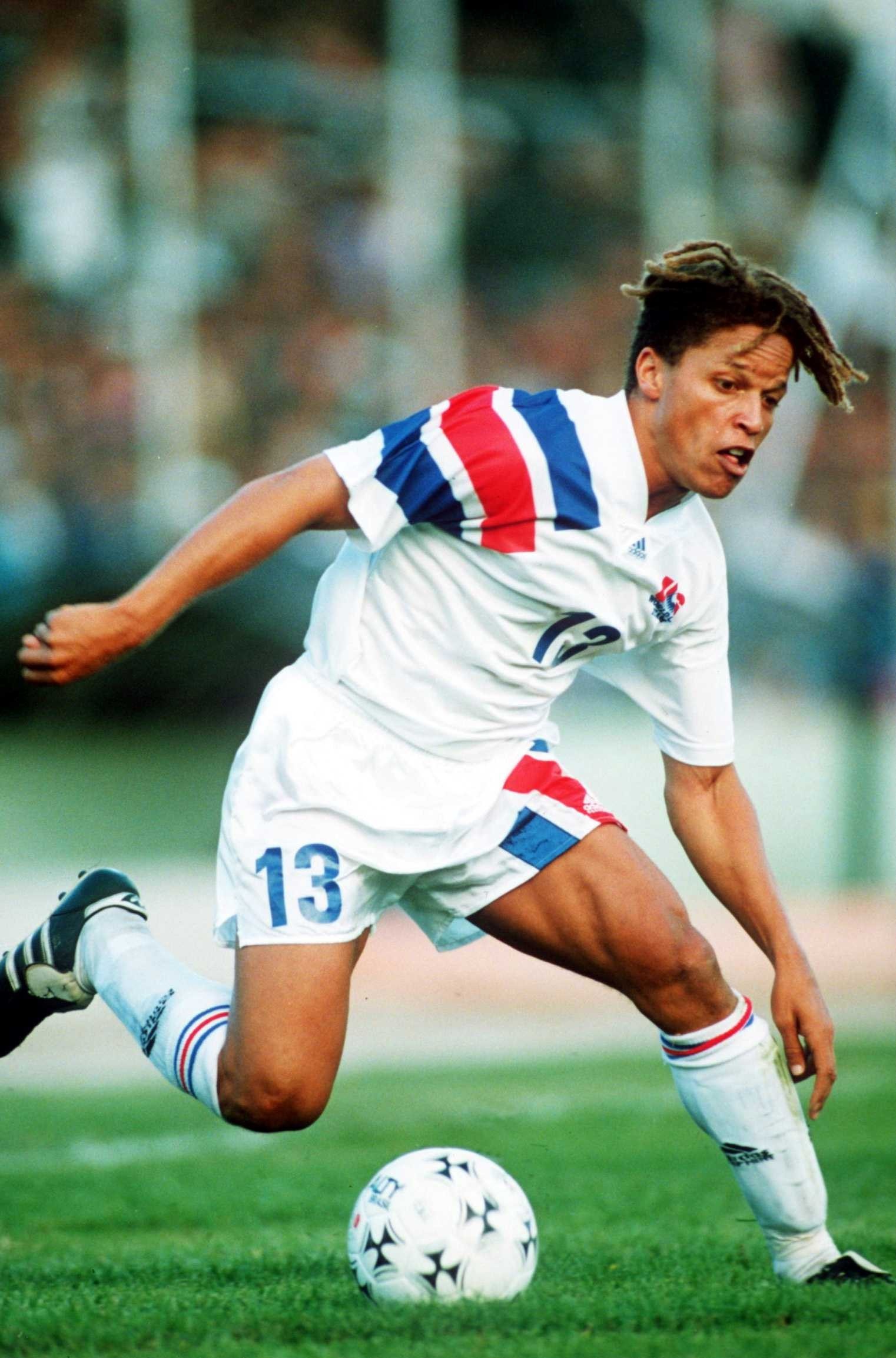
The Cobi Jones Bio for Soccer Fans: The Legacy of an American Icon
Cobi Jones remains the most capped player in U.S. Men’s National Team history, serving as a foundational pillar for both the national team and Major League Soccer. As a three-time World Cup veteran and LA Galaxy legend, his career defi...
Cobi Jones remains the most capped player in U.S. Men’s National Team history, serving as a foundational pillar for both the national team and Major League Soccer. As a three-time World Cup veteran and LA Galaxy legend, his career defines the professionalization and growth of soccer in North America.
Contents
The Early Years: From UCLA Walk-On to National Prospect
The story of Cobi Jones is often cited by coaches as the ultimate example of perseverance. Born in Detroit in 1970 and raised in Southern California, Jones did not enter the collegiate level as a blue-chip recruit with a scholarship. Instead, he joined the UCLA Bruins as a walk-on. His technical progression at UCLA was rapid, characterized by a relentless work rate and a natural speed that made him a nightmare for lateral defenders.
By the time he graduated, Jones had transformed from an unheralded addition into a centerpiece of the Bruins' attack. His performance earned him a spot on the 1992 U.S. Olympic team in Barcelona, a turning point that signaled his readiness for the international stage. For soccer fans looking at the "how" behind his success, it was this transition from a non-scholarship player to an Olympian that forged his reputation for durability and tactical discipline.
The International Record: 164 Caps and Three World Cups
To understand the Cobi Jones bio for soccer fans, one must first look at his staggering international resume. Jones earned 164 caps for the United States Men's National Team (USMNT), a record that stands even as the team enters the 2026 FIFA World Cup cycle. His international career spanned from 1992 to 2004, covering the most transformative decade in American soccer history.
The 1994 World Cup: Cultural Breakthrough
Playing on home soil in 1994, Jones became a household name. While his speed on the wing was his primary asset, his distinctive dreadlocks and charismatic presence made him the "face" of the team for many casual fans. He appeared in all four matches, including the historic 2-1 victory over Colombia and the hard-fought Round of 16 loss to eventual champions Brazil.
1998 and 2002: Longevity and Leadership
While the 1998 World Cup in France was a collective disappointment for the U.S., Jones remained a consistent bright spot. However, it was the 2002 World Cup in South Korea and Japan where Jones cemented his legendary status. Serving as a veteran leader, he played a crucial role in the U.S. run to the quarterfinals—the furthest the team has advanced in the modern era. His ability to provide width and track back defensively allowed the younger "golden generation" players like Landon Donovan and DaMarcus Beasley to flourish.
A Pioneer Abroad: Coventry City and Vasco da Gama
Before Major League Soccer (MLS) launched in 1996, American players often had to seek professional opportunities in unpredictable environments. Jones was one of the few Americans of his era to find success in diverse leagues abroad.
- Coventry City (England): Following the 1994 World Cup, Jones signed with Coventry City in the Premier League. At a time when American outfield players were viewed with skepticism in England, Jones proved he could handle the physicality of the British game. He famously scored a match-winner against Norwich City, proving that American speed could translate to the world's most competitive league.
- Vasco da Gama (Brazil): In a move that remains rare for American players even in 2026, Jones spent a season with Vasco da Gama in Brazil. This stint was critical for his technical development. Immersed in a culture that prioritized ball control and flair, Jones returned to the U.S. with a more sophisticated understanding of rhythm and space—skills that would serve him well in the nascent MLS.
The Face of the LA Galaxy
When MLS launched in 1996, Cobi Jones was assigned to the Los Angeles Galaxy, beginning a 12-season tenure that would make him "Mr. Galaxy." While other stars like David Beckham eventually followed, Jones was the bedrock upon which the franchise's identity was built.
He made 306 appearances for the club, scoring 70 goals and providing 91 assists. His statistical contributions were only part of the story; Jones was the emotional leader during the club's most successful early periods. He led the Galaxy to two MLS Cup titles (2002, 2005), a CONCACAF Champions' Cup (2000), and two U.S. Open Cup trophies.
By the time he retired in 2007, the Galaxy made the unprecedented move of retiring his number 13 jersey. It was the first retired number in club history, reflecting a level of service that few players in any league achieve.
Playing Style and Technical Impact
For tactical analysts and fans, Cobi Jones represented the evolution of the traditional right-winger. In the 4-4-2 systems common in the 1990s, his primary job was to stretch the opposition defense and deliver crosses. However, Jones was more than a "kick-and-run" specialist.
- Recovery Speed: He was one of the first American wingers who consistently fulfilled "box-to-box" duties, dropping back to support his fullback before launching counter-attacks.
- Dribbling in Tight Spaces: His time in Brazil significantly improved his ability to maintain possession under pressure, a trait that helped the USMNT retain the ball against technically superior European and South American sides.
- Fitness and Durability: Perhaps his most impressive technical feat was his availability. Jones rarely suffered long-term injuries, allowing him to accumulate the record-breaking cap count that defines his career.
Career Statistics and Honors
The following table summarizes the milestones that define the Cobi Jones bio for soccer fans, highlighting his contributions across different eras and competitions.
| Category | Statistic / Honor | Significance |
|---|---|---|
| International Caps | 164 | Current all-time leader for the USMNT |
| World Cup Appearances | 1994, 1998, 2002 | Participated in three different decades |
| MLS Appearances | 306 (Regular Season) | Spent entire 12-year MLS career with LA Galaxy |
| MLS Cup Titles | 2 (2002, 2005) | Central to the Galaxy's early dynasty |
| Hall of Fame | Inducted 2011 | National Soccer Hall of Fame first-ballot entry |
| Individual Honors | U.S. Soccer Athlete of the Year (1998) | Recognized during the peak of his career |
Post-Retirement: Broadcasting and the 2026 World Cup
After hanging up his boots, Jones transitioned seamlessly into the media and coaching world. He served as an assistant coach for the LA Galaxy and later became one of the most respected color commentators in the sport.
As we move through 2026, Jones remains a primary ambassador for North American soccer. His insights during the 2026 FIFA World Cup broadcasts provide fans with a bridge between the humble beginnings of the 1994 tournament and the massive scale of the current global event. His ability to explain the pressures of playing a home World Cup is unique, as he is one of the few individuals who has experienced it both as a player and a media professional.
Frequently Asked Questions
Why is Cobi Jones so important to American soccer history?
Cobi Jones is vital because he was the first true "homegrown" star of the modern era. He proved that an American player could develop through the college system, play successfully in Europe and South America, and then return to help build a domestic league (MLS) from the ground up. His 164 caps symbolize a level of commitment and longevity that helped stabilize the national team during its formative years.
Did Cobi Jones ever play in the Premier League?
Yes, Jones played for Coventry City in the English Premier League during the 1994-1995 season. He made 24 appearances and scored two goals. His time in England was significant because it paved the way for future American attackers like Clint Dempsey and Brian McBride to be taken seriously in the UK.
What is Cobi Jones doing now in 2026?
In 2026, Cobi Jones is a prominent broadcaster and ambassador for U.S. Soccer. He frequently appears as an analyst for major tournaments and works closely with the LA Galaxy in various community and promotional capacities. He is also involved in youth development, often speaking to young players about the transition from the amateur to the professional ranks.
How did Cobi Jones get the nickname "Cobi"?
"Cobi" is a shortened version of his middle name, N'Gai. Throughout his career, he was almost exclusively referred to as Cobi, a name that became a brand in itself during the marketing boom of the 1994 World Cup and the early years of Major League Soccer.
Which jersey number is retired in his honor?
The LA Galaxy retired the number 13 in honor of Cobi Jones. This was a landmark moment for Major League Soccer, as the league was relatively young at the time, and it established a tradition of honoring long-term club legends in a manner similar to other major American sports leagues.
Final Recommendation for Fans
For fans who want to truly appreciate the impact of Cobi Jones, the best course of action is to watch archival footage of the 2002 World Cup matches against Portugal and Mexico. These games highlight his tactical maturity and his ability to influence high-stakes matches even when he wasn't the primary goal-scorer. Furthermore, following his current commentary provides a masterclass in how the game has evolved from the physical, direct style of the 1990s to the technical, possession-based game seen in the 2026 era. Understanding Jones is, in many ways, understanding the history of the sport in the United States itself.
Image Gallery