What Hallmarks Mean for You: A Consumer’s Guide to Precious Metal Security
For you, a hallmark is an official, independent guarantee of a precious metal's purity and origin. It ensures that the gold, silver, platinum, or palladium item you purchase meets legal standards of fineness. This mark protects you fro...
For you, a hallmark is an official, independent guarantee of a precious metal's purity and origin. It ensures that the gold, silver, platinum, or palladium item you purchase meets legal standards of fineness. This mark protects you from fraud, verifies the item's intrinsic value for resale or insurance, and provides a permanent record of the piece's history.
Contents
The Essential Role of Hallmarking in 2026
When you purchase a piece of jewelry, a luxury watch, or an investment-grade silver platter, you are not just buying an aesthetic object; you are acquiring a financial asset. However, precious metals like gold and silver are rarely used in their pure form for manufacturing because they are too soft. They are instead alloyed with other metals to provide durability. Without a hallmark, it is impossible for the naked eye—or even an experienced professional without destructive testing—to determine the exact ratio of precious metal to alloy.
As of 2026, hallmarking remains the most reliable consumer protection mechanism in the luxury goods market. It represents a "third-party" verification. Unlike a "maker's mark," which is applied by the manufacturer, a true hallmark is struck by an independent Assay Office. For you, this means that the person selling the item is not the same person certifying its quality. This separation of interests is the cornerstone of trust in the precious metals trade.
Understanding the Components of a Hallmark
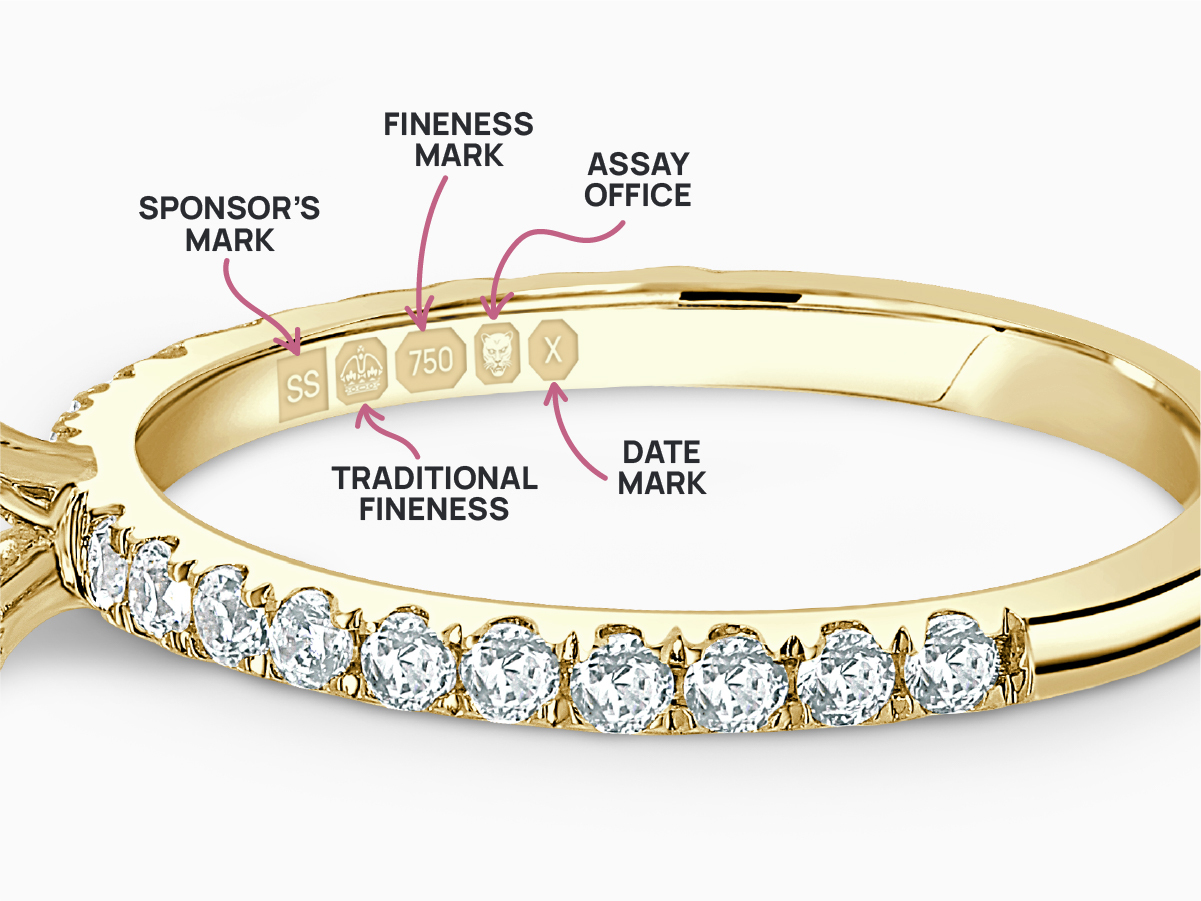
A modern hallmark is rarely a single stamp. Instead, it is a series of small marks that tell a complete story about the item. When you examine a piece under a jeweler’s loupe, you should look for the following specific elements:
1. The Sponsor’s Mark (Maker’s Mark)
This is the registered mark of the company or person who sent the item to the Assay Office. It typically consists of initials inside a shield or specific shape. For you, this mark provides traceability. If a piece is found to be defective or if you wish to verify its provenance decades later, the sponsor’s mark identifies the specific workshop or brand responsible for its creation.
2. The Metal and Fineness Mark
This is the most critical mark for determining value. It indicates the "millesimal fineness"—how many parts per thousand of the alloy are actually precious metal.
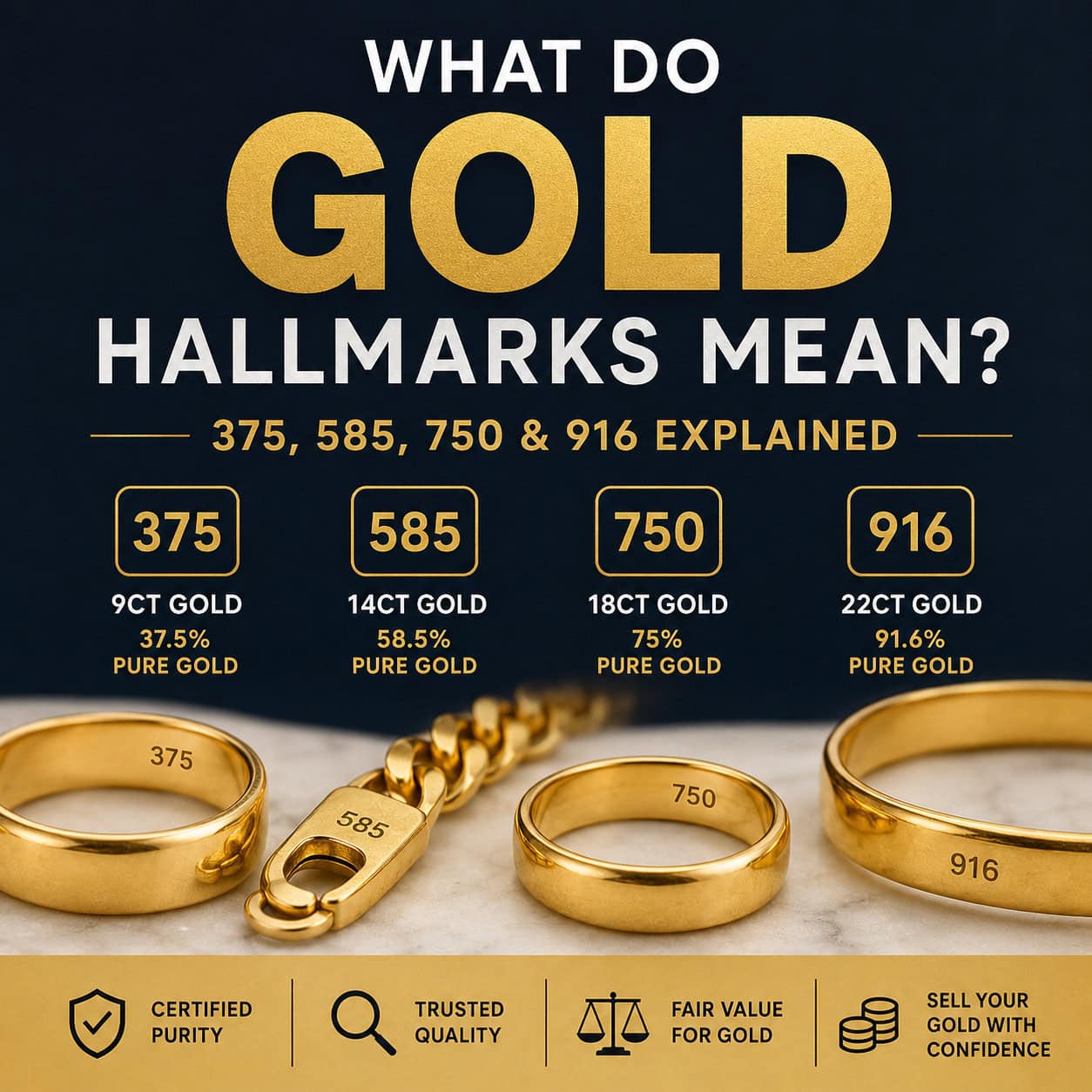
- Gold: A mark of "750" means the item is 18-carat gold (75% pure).
- Silver: A mark of "925" indicates Sterling silver (92.5% pure).
- Platinum: A mark of "950" indicates 95% purity.
3. The Assay Office Mark
This symbol tells you which laboratory tested and certified the metal. For example, in the United Kingdom, the London Assay Office uses a leopard's head, while the Birmingham office uses an anchor. These symbols are internationally recognized and add a layer of geographical authenticity to your purchase.
4. The Date Letter (Optional but Historical)
While not mandatory in all jurisdictions in 2026, many high-end pieces still feature a date letter. This is a letter of the alphabet that changes every year. For collectors, this is invaluable for dating antique or vintage pieces, allowing you to track the evolution of a designer’s style or verify the age of an heirloom.
Why Hallmarking Matters for Your Financial Security
The significance of a hallmark extends far beyond simple identification. It has direct implications for your wallet and your legal rights.
Protection Against Under-Carating
"Under-carating" is a form of fraud where an item is sold as a higher purity than it actually is—for example, selling 9-carat gold as 14-carat. Because gold prices are significantly different between these grades, under-carating can cost you thousands of dollars on a single purchase. A hallmark acts as a legal shield, ensuring that the metal you paid for is the metal you received.
Resale Value and Liquidity
If you ever decide to sell your jewelry or bullion, the presence of a hallmark makes the process significantly easier. Professional buyers and scrap metal dealers can instantly verify the metal content. An un-hallmarked item often requires "acid testing" or "X-ray fluorescence (XRF) scanning," which can be time-consuming or, in the case of acid testing, slightly damaging to the piece. Hallmarked items typically command a higher price because the buyer does not have to factor in the risk of the metal being counterfeit.
Insurance and Appraisals
For insurance purposes, a hallmark is often a prerequisite for a high-value appraisal. Insurance companies in 2026 require documented proof of an item's specifications to provide coverage. A hallmark provides an immutable record that an appraiser can use to justify the replacement value of the item.
Comparative Purity Standards
To help you understand what you are looking at when inspecting a piece, the following table outlines the standard fineness marks you will encounter in the 2026 market.
| Metal | Millesimal Fineness | Common Trade Name | Hallmark Shape (Standard) |
|---|---|---|---|
| Gold | 375 | 9 Carat | Octagon |
| Gold | 585 | 14 Carat | Octagon |
| Gold | 750 | 18 Carat | Octagon |
| Gold | 916 | 22 Carat | Octagon |
| Silver | 800 | Continental Silver | Oval |
| Silver | 925 | Sterling Silver | Oval |
| Silver | 958 | Britannia Silver | Oval |
| Platinum | 850 | Standard Platinum | House / Pentagon |
| Platinum | 950 | High Purity Platinum | House / Pentagon |
| Palladium | 500 | Standard Palladium | Trapeze |
| Palladium | 950 | High Purity Palladium | Trapeze |
The International Perspective: The Vienna Convention
If you travel or buy jewelry online from international sellers, you should be aware of the Common Control Mark (CCM). This was established by the Vienna Convention (The Convention on the Control and Marking of Articles of Precious Metals).
The CCM is a symbol of a "balance scale" with the fineness number superimposed on it. If an item bears this mark, it has been tested to an international standard that is recognized by all member countries. For you, this means you can buy a ring in London, sell it in Vienna, or have it appraised in Oslo without needing to have the metal re-tested or re-hallmarked locally. It is the closest thing to a universal "passport" for precious metals.
Identifying and Verifying Marks
In 2026, technology has changed how hallmarks are applied, but the verification process remains grounded in physical inspection.
Laser vs. Struck Marks
Traditionally, hallmarks were "struck" using a steel punch, which creates a deep physical indentation. Today, many Assay Offices use high-precision lasers. Laser hallmarking is particularly useful for delicate or hollow items that might be deformed by a physical punch. For you as a consumer, both are equally valid, though laser marks may be shallower and more susceptible to being polished away over decades of wear.
How to Inspect Your Jewelry
- Use a 10x Loupe: Most hallmarks are too small to read with the naked eye. A standard jeweler's loupe is a small investment that allows you to see the detail of the marks.
- Locate the Mark: On rings, the hallmark is usually on the inside of the shank. On necklaces and bracelets, check the clasp or a small "tag" near the fastener. On watches, it is often inside the case back or on the lugs.
- Check for Sharpness: A genuine hallmark should be crisp and clear. While wear and tear can soften the edges over time, "mushy" or poorly defined marks on a new item can be a red flag for a casting counterfeit.
Common Pitfalls and Troubleshooting
Even with a hallmarking system in place, consumers can encounter confusion. Here is how to navigate common issues:
- Imported Goods: In some countries, hallmarking is voluntary. If you buy jewelry from a region without mandatory hallmarking, the item may only have a "925" stamp applied by the factory. This is not a hallmark; it is a self-declaration. For your security, always check if the item has been independently assayed.
- The "Metal Only" Misconception: A hallmark certifies the metal, not the gemstones. If you are buying a diamond ring, the hallmark guarantees the gold or platinum, but you will need a separate GIA or IGI certificate to verify the quality of the diamond.
- Solder and Repairs: If a piece of jewelry has been significantly repaired or resized, the hallmark might have been cut through or covered with solder. In some cases, a reputable jeweler will have the piece re-hallmarked after a major alteration to maintain its integrity.
Frequently Asked Questions
Does every piece of jewelry have to be hallmarked?
In many jurisdictions, such as the UK, there are weight exemptions. For example, silver items weighing less than 7.78 grams or gold items weighing less than 1 gram do not legally require a hallmark. However, many high-end designers choose to hallmark even these small pieces to maintain brand prestige and consumer trust.
Can a hallmark be faked?
Yes, but it is difficult and highly illegal. Forging an official Assay Office mark is a serious criminal offense. Fakes are usually identified by their lack of detail or by "casting" the hallmark into the mold rather than striking it afterward. If you are suspicious, any Assay Office can verify the authenticity of a mark for a small fee.
Does a hallmark tell me if the gold is "Fairtrade" or ethical?
Standard hallmarks focus on purity and origin of manufacture. However, in 2026, many Assay Offices have introduced "ethical marks" that can be struck alongside the hallmark. These indicate that the metal was sourced from Fairtrade or Fairmined certified mines. Look for these additional stamps if ethical sourcing is a priority for you.
Why is my vintage jewelry missing a hallmark?
Many antique pieces, particularly those from the United States or pre-19th century Europe, may not have formal hallmarks. In these cases, value is determined by the "maker's mark" and professional testing. However, for any modern purchase made in 2026, a hallmark should be considered a non-negotiable requirement for high-value items.
Final Recommendation for Buyers
When purchasing precious metal items, always ask the seller to show you the hallmark through a loupe before finalizing the transaction. If a seller is unable to identify the marks or claims they are "unnecessary," consider this a significant warning sign. For your long-term financial security and peace of mind, only invest in pieces that carry the official, independent verification of an Assay Office. This mark is your only permanent guarantee that the "gold" in your hand is exactly what it claims to be.
Image Gallery