How White Label Manufacturing Works in Retail
White label manufacturing in retail involves an independent factory producing generic products that retailers brand, package, and sell as their own exclusive merchandise. This retail model bypasses product development costs, allowing b...
White label manufacturing in retail involves an independent factory producing generic products that retailers brand, package, and sell as their own exclusive merchandise. This retail model bypasses product development costs, allowing businesses to scale private-label offerings quickly using established supply chains.
Contents
The retail landscape relies heavily on private-label goods to drive profit margins, build brand loyalty, and offer competitive pricing against national brands. Among the various strategies for sourcing private-label inventory, white label manufacturing stands out as one of the most accessible and streamlined methods. By purchasing unbranded, ready-made items from a contract manufacturer, retail brands can enter new product categories rapidly without investing in proprietary research, laboratory testing, or specialized industrial equipment. Understanding the mechanics of this supply chain relationship is essential for any retail business looking to expand its catalog efficiently.
The Core Concept of White Label Manufacturing
White label manufacturing is a business arrangement where a contract manufacturer (sometimes called a third-party manufacturer or original design manufacturer) produces a standardized product that multiple retail buyers can purchase. Once purchased, the retailer applies its own brand name, logo, and custom packaging to the item, making it appear as though the retailer manufactured the product themselves.
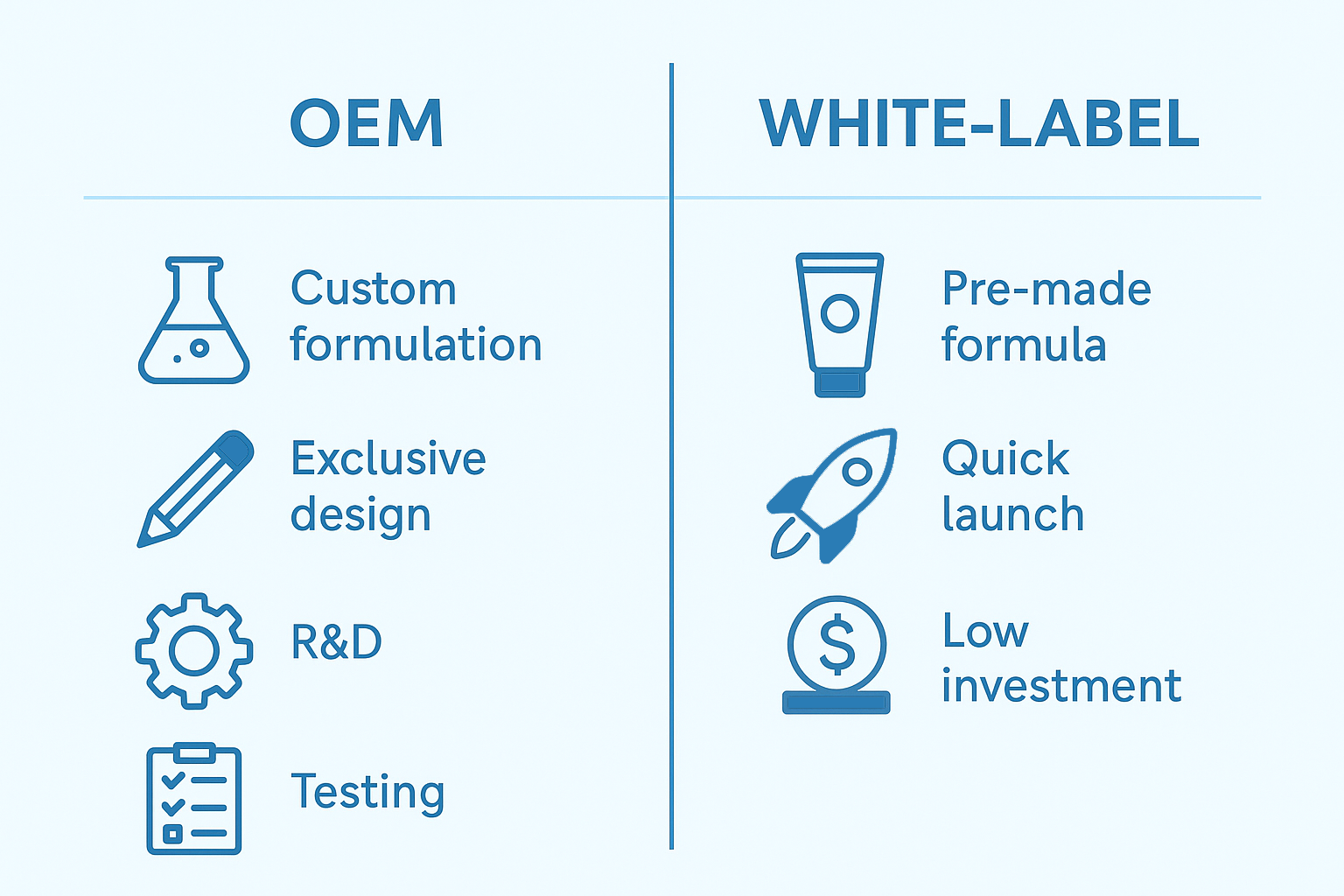
This model differs significantly from private labeling in the strictest sense, though the terms are frequently used interchangeably in retail circles. Private labeling can encompass custom formulations or proprietary designs owned exclusively by the retailer but built by a third party. White labeling typically implies that the product formulation or design already exists, has been thoroughly tested, and is mass-produced for multiple clients with only superficial alterations, such as labeling and outer packaging, to differentiate the brand identities.
The efficiency of this model stems from economies of scale. Because the manufacturer produces large volumes of the base product for various clients, the per-unit production cost remains low. Retailers benefit from these lower production costs without needing to build, operate, or maintain costly production facilities.
The Operational Workflow: Step-by-Step
Navigating the white label manufacturing process requires a structured approach from initial product selection to final shelf placement. While every retail sector—whether cosmetics, apparel, or consumer electronics—has unique requirements, the operational lifecycle generally follows a predictable sequence.
1. Product Sourcing and Catalog Review
The process begins when a retail buyer reviews product catalogs provided by contract manufacturers or attends industry trade shows. Manufacturers typically offer a wide array of pre-formulated or pre-designed baseline products. The retailer evaluates these options based on target demographic appeal, quality standards, and profit margin potential.
2. Sample Evaluation and Quality Testing
Once potential products are identified, the manufacturer sends physical samples to the retailer. Rigorous testing is conducted at this stage to assess durability, ingredient safety, taste, or performance. Retailers often modify minor parameters if the manufacturer permits slight adjustments, though major formula changes turn the project into a custom private-label agreement rather than standard white labeling.
3. Brand Customization and Packaging Design
With the product approved, attention shifts to branding. The retailer designs custom labels, hangtags, boxes, or bottles that align with their brand identity. Regulatory compliance is critical during this phase; the packaging must accurately display required ingredients, nutritional facts, warnings, or country-of-origin details mandated by local trade authorities.
4. Minimum Order Quantities (MOQs) and Contracting
The retailer and manufacturer negotiate the financial and logistical terms, establishing Minimum Order Quantities (MOQs), unit pricing tiers, payment schedules, and delivery timelines. A formal manufacturing agreement is signed to protect intellectual property, outline liability, and guarantee quality control parameters.
5. Production, Fulfillment, and Distribution
The manufacturer produces the goods, applies the retailer’s custom packaging, and prepares the inventory for freight shipping. Depending on the agreement, the products are shipped either to the retailer’s central distribution center, a third-party logistics (3PL) warehouse, or directly to retail fulfillment hubs for customer distribution.
| Stage | Primary Responsibility | Key Deliverables | Risk Factors |
|---|---|---|---|
| Catalog Selection | Retailer | Product shortlist | Misalignment with target audience |
| Sample Testing | Retailer & Manufacturer | Approved product sample | Substandard material quality |
| Packaging Design | Retailer | Compliant label artwork | Regulatory non-compliance |
| Contracting | Both Parties | Signed manufacturing agreement | Unfavorable MOQs or payment terms |
| Mass Production | Manufacturer | Finished, packaged goods | Supply chain delays, defect rates |
Financial Dynamics and Cost Considerations
Entering the white label market requires careful financial planning. While capital requirements are significantly lower than building an independent manufacturing plant, hidden costs can impact profitability if not factored into the initial budget.
Initial capital outlay primarily covers the Minimum Order Quantity, packaging design fees, and sample shipping. Because manufacturers set high MOQs to justify production runs, cash flow management is vital. Retailers must calculate their inventory turnover rates to ensure capital is not tied up in slow-moving stock.
Unit economics dictate the success of white label retail. Retailers must factor in shipping freight, import tariffs, customs clearance fees, storage warehousing, and platform marketplace commissions when calculating landed cost. Gross margins on white label goods are frequently higher than those of national name brands because marketing and development costs are minimized, leaving more room for competitive retail pricing or increased profit retention.
Advantages of the White Label Retail Model
Retailers across e-commerce and brick-and-mortar sectors utilize white label manufacturing for several distinct strategic advantages:
- Reduced Time to Market: Because product research, development, and factory tooling are already completed by the manufacturer, retailers can launch new items in weeks rather than years.
- Lower Capital Expenditure: Bypassing factory acquisition, machinery maintenance, and industrial labor costs lowers the barrier to entry for small and mid-sized retail brands.
- Focus on Core Competencies: Retailers can dedicate their capital and human resources toward marketing, customer acquisition, and brand building rather than industrial operations.
- Scalability: As demand grows, established manufacturers can easily scale production volume without requiring the retailer to build new infrastructure.
Operational Limitations and Risk Management
Despite its efficiency, white label manufacturing presents specific operational challenges that require proactive risk management.
Control over the supply chain is shared. If a manufacturer experiences labor strikes, material shortages, or regulatory compliance failures, the retailer’s inventory supply is immediately disrupted. Furthermore, because multiple retailers may purchase the exact same base product from the same manufacturer with only different labels, product differentiation can be difficult in crowded market segments.
Quality control is another critical concern. A single batch of defective products can damage a retailer’s hard-earned brand reputation. To mitigate this risk, retailers must establish clear quality assurance clauses in their contracts and employ third-party inspection agencies to audit production lines before final shipment approval.
Frequently Asked Questions
What is the difference between white label and private label manufacturing?
While often used interchangeably, white label typically involves buying a pre-made, standardized product that multiple retailers brand as their own. Private label can be broader, sometimes including custom formulations or exclusive product designs commissioned by a single retailer.
Do I own the formula or design of a white label product?
Generally, no. The contract manufacturer retains the intellectual property rights to the base formula or design. You own your brand name, trademarked logos, and custom packaging designs, but other retailers may purchase the identical underlying product.
What are Minimum Order Quantities (MOQs) in white labeling?
MOQs represent the smallest number of units a manufacturer is willing to produce in a single order. These thresholds vary widely depending on the industry, product complexity, and factory capacity, ranging from a few hundred units to tens of thousands.
How do I ensure product quality with an overseas manufacturer?
Mitigating quality risks involves requesting physical samples, conducting factory audits through independent inspection agencies, and including strict quality control standards and defect-remediation terms within the manufacturing contract.
Can I customize a white label product to make it unique?
Most manufacturers allow minor surface-level customizations, such as scent additions in cosmetics or color variations in textiles. However, substantial alterations usually shift the arrangement from white labeling to custom contract manufacturing, which incurs higher costs and longer development timelines.
Next Actions for Retailers
To successfully implement a white label product line, begin by defining your target customer base and identifying gaps in your current product catalog. Research established contract manufacturers through verified B2B marketplaces or industry directories, and request sample kits from at least three different suppliers to compare quality. Prioritize drafting a comprehensive manufacturing agreement that protects your brand standards, establishes clear defect policies, and outlines realistic fulfillment timelines before committing capital to your first large-scale production run.
Image Gallery