What Does Orochi Mean in Japanese? Etymology, Mythology, and Cultural Significance
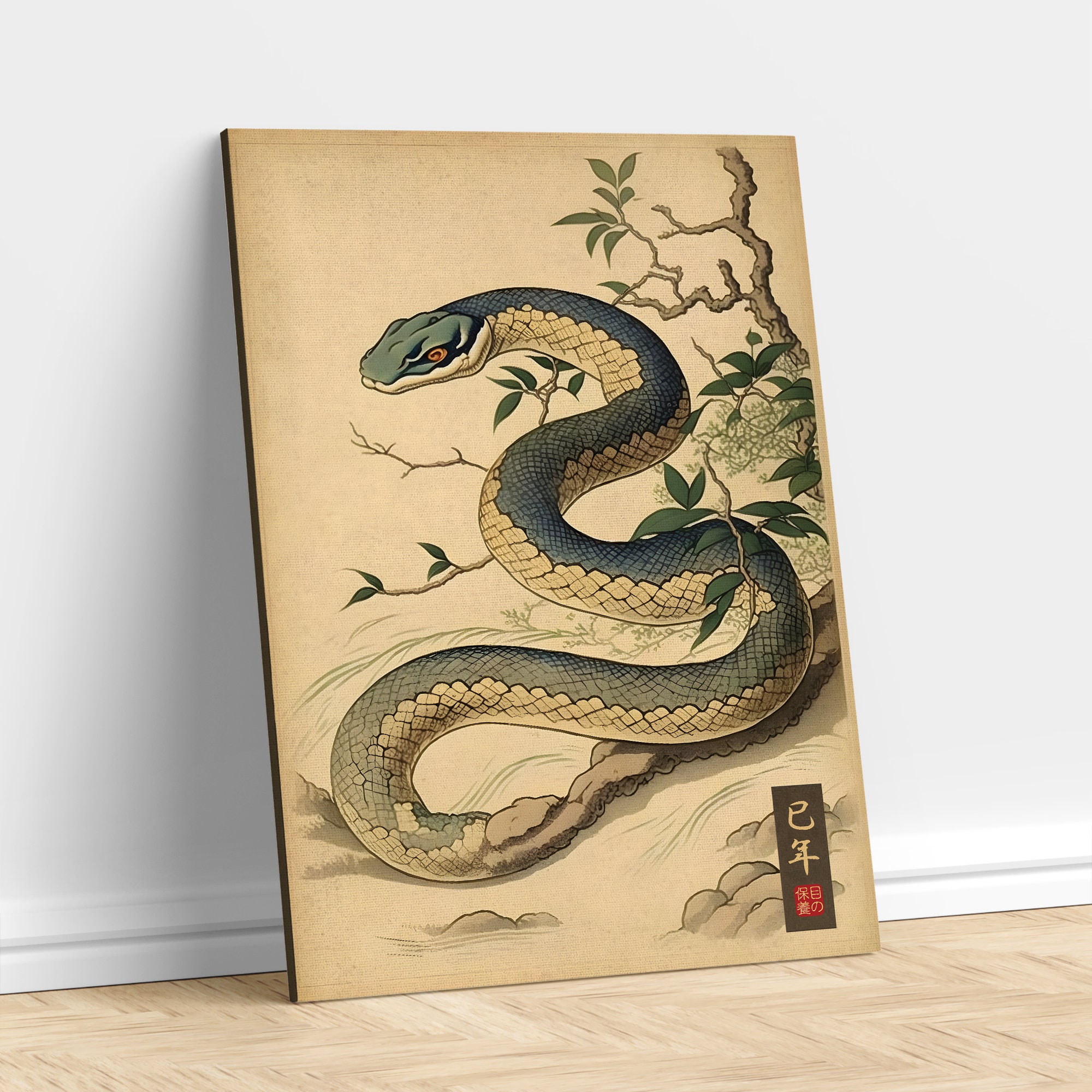
In Japanese, Orochi (typically written in kanji as 大蛇) literally translates to a "giant snake," "huge serpent," or "monstrous dragon." Deeply rooted in Shinto folklore, the term primarily refers to Yamata no Orochi, a mythical eight-...
In Japanese, Orochi (typically written in kanji as 大蛇) literally translates to a "giant snake," "huge serpent," or "monstrous dragon." Deeply rooted in Shinto folklore, the term primarily refers to Yamata no Orochi, a mythical eight-headed and eight-tailed serpent defeated by the storm god Susanoo-no-Mikoto in ancient Japanese mythology.
Contents
Beyond its basic vocabulary translation, orochi carries centuries of linguistic history, religious symbolism, and cultural resonance. Understanding what orochi means requires examining its Old Japanese roots, its famous depiction in ancient chronicles like the Kojiki, its distinction from other Japanese words for snakes and dragons, and its modern legacy across global popular culture.
Etymology and Linguistic Origins of Orochi
The word orochi is an ancient native Japanese (yamato kotoba) term whose linguistic components predate the wide adoption of Chinese kanji characters in Japan. While modern readers usually encounter orochi written with the Chinese characters 大蛇 (literally "big snake"), its underlying phonetic components reveal a deeper spiritual meaning from Old Japanese.
Linguists and historical scholars break down the original phonetic composition of orochi into three primary elements:
- O (大 / 尾 / 雄): Represents size, grand posture, or gender. In ancient compound words, o served as a prefix denoting something vast, magnificent, or male. Some etymologists also link it to o (尾), meaning "tail," referencing the creature's prominent multi-tailed form.
- Ro (呂 / ろ): Functioned in Old Japanese as a genitive connector or possessive particle, equivalent to the modern Japanese particle no (の). It links the descriptive prefix to the noun that follows.
- Chi (霊 / 蛇 / 知): An archaic Old Japanese noun used to denote a spirit, divine entity, supernatural force, or serpent.
Because chi signified sacred or supernatural beings, the term orochi originally meant "great serpent spirit" or "mighty divine snake" rather than simply a large physical reptile. This root chi appears in several other legendary Japanese entities and words:
- Mizuchi (水霊 / 蛟): A horned water dragon or river serpent spirit.
- Tsuchinoko (槌の子): A mythical snake-like cryptid, historically linked to earth spirits (tsuchi).
- Kagutsuchi (迦具土 / 火之夜藝速男神): The Shinto deity of fire, where tsuchi/chi denotes divine essence.
Modern Kanji Variations and Pronunciations
When literacy expanded across Japan during the Asuka and Nara periods, scribes assigned kanji to existing spoken words. In early texts like the Kojiki (712 CE), orochi was written phonetically using man'yogana characters as 遠呂智 or 大蛇.
In contemporary written Japanese, 大蛇 can be read in two ways depending on context:
- Orochi (おろち): The native Japanese (kun'yomi) reading, reserved almost exclusively for mythical, gigantic, or sacred serpents.
- Daija (だいじゃ): The Sino-Japanese (on'yomi) reading, which refers generally to large real-world snakes, such as anacondas, pythons, or unusually large native pit vipers.
The Myth of Yamata no Orochi
Any discussion of orochi leads back to Yamata no Orochi (八岐大蛇 or 八俣遠呂智), the most famous serpent in Japanese mythology. The tale is recorded in Japan's oldest surviving historical chronicles, the Kojiki ("Records of Ancient Matters") and the Nihon Shoki ("Chronicles of Japan").
The Legend of Susanoo and the Eight-Forked Serpent
According to Shinto tradition, after the unruly storm god Susanoo-no-Mikoto was banished from the High Heavenly Plain (Takamagahara), he descended to earth near the Hi River in Izumo Province (modern-day Shimane Prefecture). There, he encountered an elderly earthly deity named Ashinazuchi, his wife Tenazuchi, and their young daughter, Princess Kushinadahime, who were weeping bitterly.
When Susanoo asked why they grieved, Ashinazuchi explained that they originally had eight daughters. However, every year for the past seven years, a terrifying creature known as Yamata no Orochi descended from the mountains and devoured one of their daughters. Now, only Kushinadahime remained, and the serpent was due to arrive again soon.
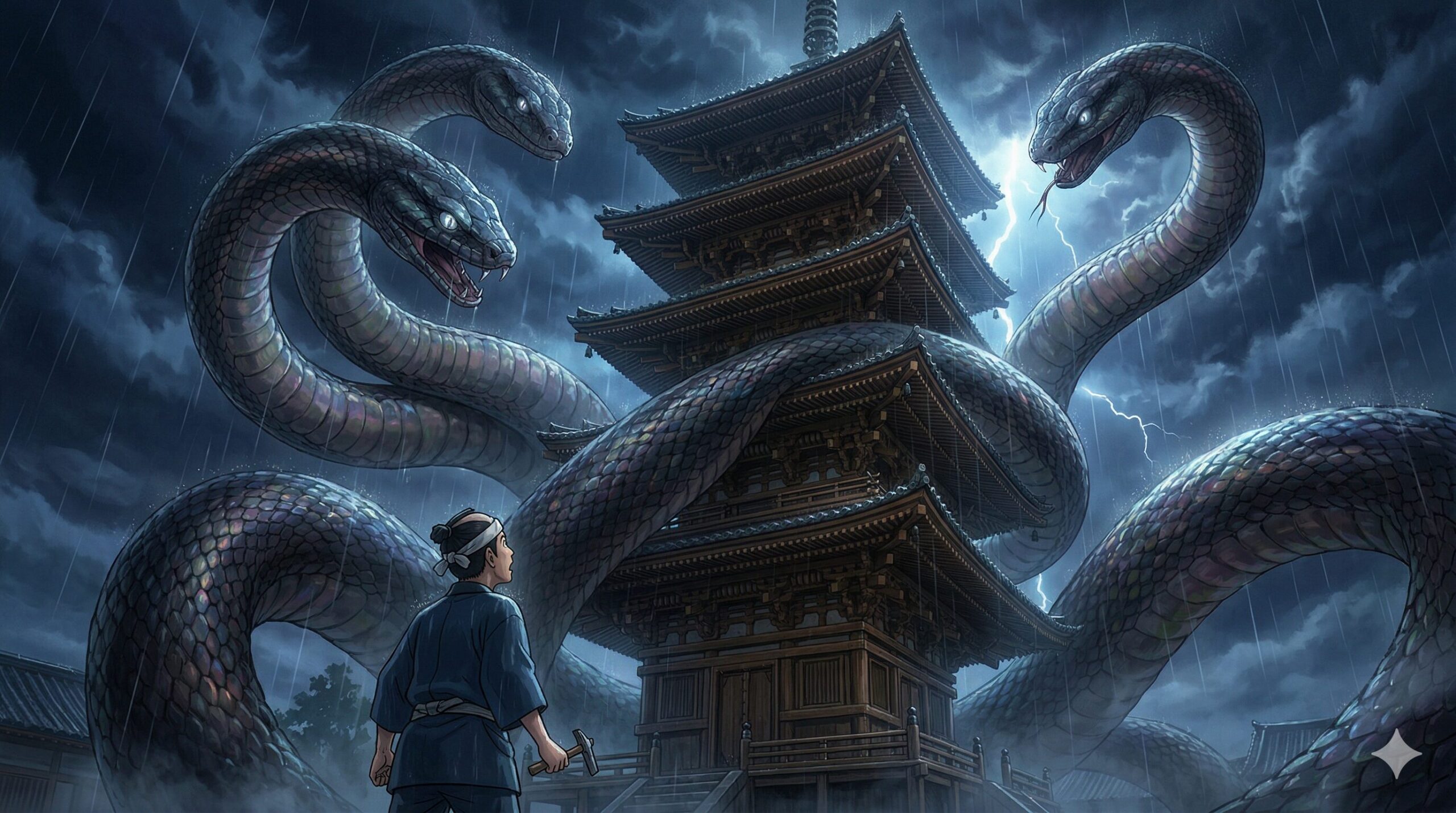
The chronicle describes Yamata no Orochi as an astonishingly massive monster:
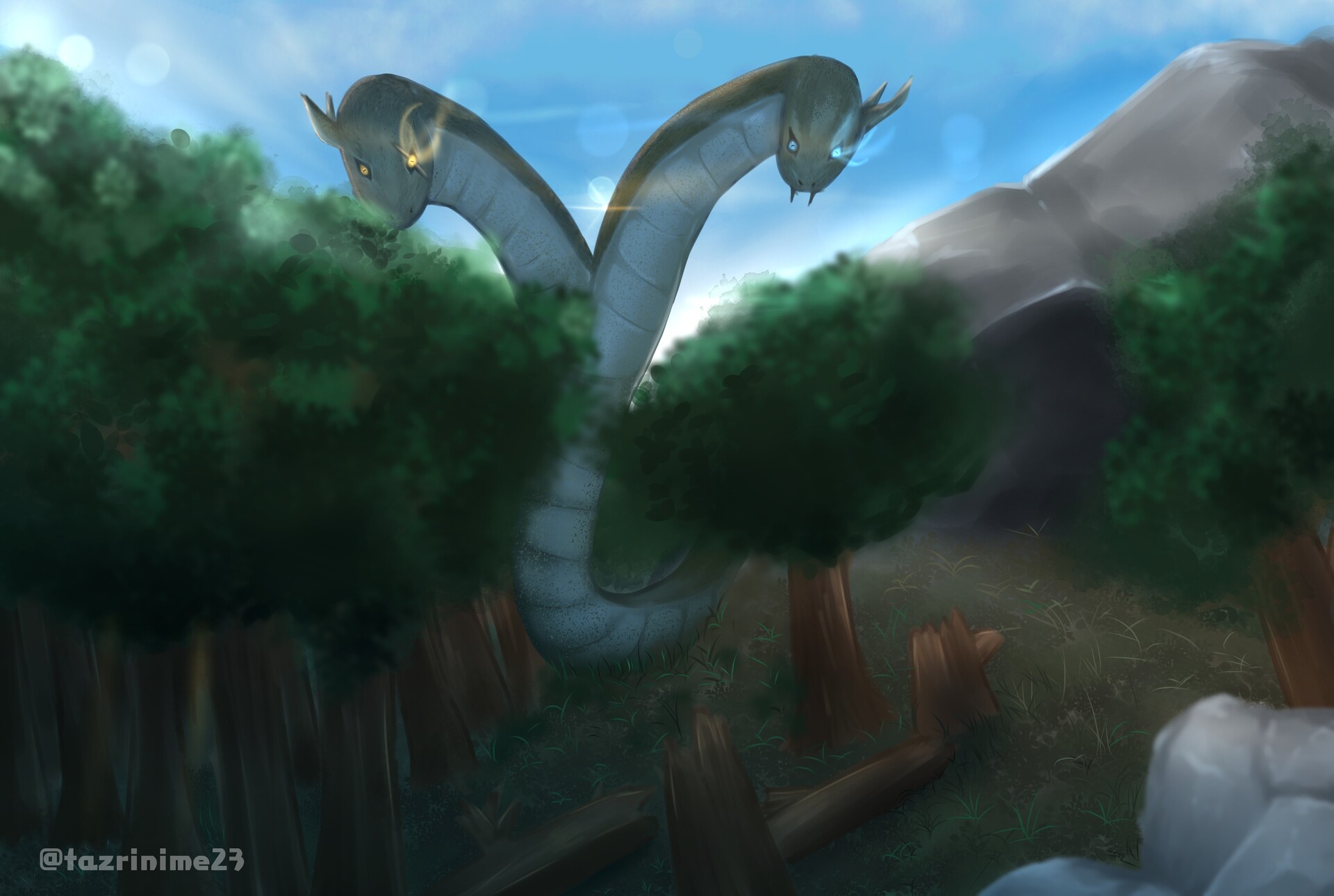
- It possessed eight heads and eight tails.
- Its eyes burned bright red, like winter cherries (hoozuki).
- Moss, cypress, and cedar trees grew upon its enormous back.
- Its body stretched across eight valleys and eight hills.
- Its underbelly was perpetually inflamed and bloody.
Susanoo's Battle and Strategy
Susanoo offered to slay the monster on the condition that he could marry Kushinadahime. The parents agreed. To protect the princess, Susanoo transformed her into a small, fine-toothed wooden comb (tsuma-kushi) and tucked her safely into his hair bun.
Rather than relying purely on physical force, Susanoo devised a clever trap:
- He instructed the family to brew an extraordinarily strong, eight-fold refined sake called Yashio-no-ori no sake (八塩折之酒).
- He had them construct a wooden fence with eight gates.
- At each gate, he placed a platform holding a large vat filled with the potent sake.
When Yamata no Orochi arrived, smelling the aromatic alcohol, each of its eight heads dipped into one of the eight vats and drank eagerly. Drunk and overwhelmed by the potent brew, the creature collapsed into a deep slumber.
Susanoo drew his legendary sword, the Totsuka-no-Tsurugi (Ten-Span Sword), and chopped the helpless serpent into pieces, turning the Hi River red with blood.
The Discovery of the Kusanagi-no-Tsurugi
While hacking through Yamata no Orochi's middle tail, Susanoo felt his blade strike something exceptionally hard, causing his sword to notch. Splitting open the serpent's tail, he uncovered a divine, double-edged sword: the Ama-no-Murakumo-no-Tsurugi (Heavenly Sword of Gathering Clouds).
Recognizing the weapon's divine quality, Susanoo presented it to his sister, the sun goddess Amaterasu Omikami, as a peace offering. This blade was later renamed the Kusanagi-no-Tsurugi (Grass-Cutting Sword) and became one of the Three Sacred Treasures of Japan (Sanshu no Jingi), forming a core pillar of Imperial legitimization alongside the sacred mirror (Yata no Kagami) and jewel (Yasakani no Magatama).
- Susanoo Slays Yamata no Orochi
- Saves Kushinadahime (Marries Her)
- Recovers Sacred Blade (Kusanagi-no-Tsurugi)
- Presented to Amaterasu (Imperial Regalia)
Comparing Japanese Serpent Terms: Orochi vs. Daija vs. Hebi vs. Ryu
Japanese vocabulary contains distinct terms for snakes, serpents, and dragon-like entities. Using the correct term depends on whether the subject is a natural reptile, a generic giant snake, or a mythical spirit.
| Term | Kanji | Direct Translation | Context & Connotation | Example Usage |
|---|---|---|---|---|
| Hebi | 蛇 | Snake / Serpent | Generic term for any common, natural snake. Neutral connotation. | Aoki hebi (a green snake found in a garden). |
| Daija | 大蛇 | Giant Snake / Large Python | Sino-Japanese reading referring to an physically enormous snake (real or realistic). | Daija no kawa (the shed skin of a massive python). |
| Orochi | 大蛇 / 遠呂智 | Mythical Giant Serpent / Dragon-Serpent | Native Japanese term for legendary, multi-headed, or divine monstrous snakes. Rich in mythological weight. | Yamata no Orochi (the eight-headed legendary monster). |
| Ryu / Ryo | 龍 / 竜 | Dragon | Eastern dragon featuring four legs, antlers, whiskers, and water control abilities. Divine and benevolent. | Ryujin (the Dragon King of the Sea). |
| Mizuchi | 水霊 / 蛟 | Water Serpent / Horned Dragon | Mythical serpentine water spirit inhabiting rivers and lakes; smaller than an Orochi. | Mizuchi no kami (local river spirit). |
Symbolic Interpretations of Orochi in Shinto and History
Folklorists, historians, and Shinto scholars interpret the story of Orochi not merely as a fairy tale, but as an allegorical representation of ancient environmental challenges, metallurgical history, and social development in early Japan.
1. The River Flooding Theory
The most widely accepted historical theory, popularized by scholars such as Kazutami Nishimiya, suggests that Yamata no Orochi is an allegory for the volatile Hi River (Hi-kawa) in the Izumo region.
- The eight heads and eight tails represent the numerous tributaries, delta branches, and curving channels of the river system during monsoon season.
- The serpent's bloody underbelly and red eyes reflect the reddish iron ore and iron-rich sand (masa) washed down from the mountains during floods.
- The annual sacrifice of a young maiden symbolizes the ancient seasonal loss of human life and agricultural yields to destructive spring floods.
- Susanoo’s act of "slaying" the serpent represents the successful implementation of early flood control, damming, and irrigation efforts by incoming tribes.
2. Early Iron Metallurgy and the Izumo Region
Ancient Izumo was the center of Japan’s primitive ironworking culture, known as tatara ironmaking (たたら製鉄). The extraction of iron sand required deforesting mountain slopes, which exacerbated soil erosion and caused severe river flooding.
The sword found within the serpent's tail—the Kusanagi-no-Tsurugi—symbolizes the discovery and mastery of advanced steel-forging techniques in Izumo. Slaying the orochi thus marks the transition from uncontrolled natural chaos to technological mastery, iron production, and agricultural stability under tribal leadership.
3. Serpents as Suijin (Water Deities)
In traditional Shinto beliefs, snakes are intimately connected with water, fertility, and agriculture. As creatures that shed their skin, serpents symbolize rebirth, transformation, and perpetual life.
While Yamata no Orochi represents the destructive, chaotic aspect of water (ara-mitama, or rough spirit), once tamed or pacified, serpent entities become Suijin (water gods) that guard rice fields and ensure rich harvests.
Orochi in Modern Pop Culture, Anime, and Media
The imagery of the monstrous serpent Orochi remains vibrant in contemporary Japanese fiction, animation, video games, and industrial design. Modern storytellers frequently draw upon the legend of Yamata no Orochi to create formidable villains, powerful beasts, or mystical weapons.
Popular Anime and Manga
- Naruto: The primary antagonist of the original series, Orochimaru (蛇丸), directly derives his name, snake-themed jutsu, and quest for immortality from Japanese serpent lore. His legendary sword, the Kusanagi, is drawn straight from the Yamata no Orochi myth. Furthermore, his battle against Itachi Uchiha features his ultimate transformation into an eight-headed white giant serpent.
- One Piece: The character Kurozumi Orochi, the tyrannical shogun of Wano Country, possesses the mythical Zoan Devil Fruit known as the Hebi Hebi no Mi, Model: Yamata no Orochi, allowing him to transform into an eight-headed serpent.
- Noragami: Uses ancient Shinto lore surrounding serpent spirits and divine blades to construct its urban fantasy world.
Video Games
- The King of Fighters (KOF): In SNK’s long-running fighting game franchise, Orochi is featured as an ancient divine entity representing the will of the Earth, seeking to erase humanity to restore natural balance.
- Okami: Capcom’s acclaimed action-adventure game directly recreates the myth of Yamata no Orochi. Players control the sun goddess Amaterasu (in wolf form) to defeat an eight-headed demon serpent using sake and blade work.
- Warriors Orochi & Nioh: Both franchises adapt Orochi as a climactic boss encounter, depicting it as a multi-headed elemental dragon born of dark magic and malevolence.
- Persona / Shin Megami Tensei: Yamata no Orochi appears frequently as a summonable demon or Persona belonging to the Snake or Dragon arcana.
Automotive Design: The Mitsuoka Orochi
In the automotive world, Japanese boutique car manufacturer Mitsuoka Motors produced a radical sports car named the Mitsuoka Orochi between 2006 and 2014. Designed to resemble an aggressive serpent, the vehicle featured undulating bodylines, biological front grilles resembling an open snake mouth, and headlight accents styled after reptilian eyes.
Frequently Asked Questions
Is an Orochi a dragon or a snake?
An orochi occupies an overlapping space between a giant snake and a dragon. While its name literally uses the kanji for snake (蛇), traditional artwork and descriptions depict it as a monstrous, multi-headed serpent-dragon hybrid tied to water and nature spirits.
What is the difference between Orochi and Daija?
Orochi (おろち) is an ancient, native Japanese term reserved for mythical, divine, or multi-headed giant serpents like Yamata no Orochi. Daija (だいじゃ) is a Sino-Japanese word that simply means a large real-world snake, such as an exceptionally big python or anaconda.
Why did Susanoo use sake to defeat Yamata no Orochi?
Yamata no Orochi was far too colossal and powerful to defeat in direct combat. Susanoo used eight-fold refined sake (Yashio-no-ori no sake) to intoxicate all eight of the serpent's heads, causing it to fall asleep so he could cut it apart safely.
What does the syllable "Chi" mean in ancient Japanese names?
In Old Japanese, chi (often written phonetically or associated with 霊/蛇) designated a spirit, supernatural entity, deity, or serpent power. It appears in words like orochi, mizuchi (water spirit), and kagutsuchi (fire deity).
What legendary sword was found inside Yamata no Orochi?
Susanoo extracted the Ama-no-Murakumo-no-Tsurugi (Heavenly Sword of Gathering Clouds) from the serpent's tail. Later renamed the Kusanagi-no-Tsurugi (Grass-Cutting Sword), it became one of the Three Sacred Treasures of the Japanese Imperial Family.
Summary and Practical Takeaways
When encountering the word orochi in Japanese literature, art, or entertainment, keep these essential insights in mind:
- Literal Translation: Orochi means a "giant snake" or "monstrous serpent," written in kanji as 大蛇.
- Ancient Etymology: The word stems from Old Japanese roots (o-ro-chi), meaning "great serpent spirit" or "mighty divine entity."
- Mythological Anchor: It almost always references Yamata no Orochi, the eight-headed, eight-tailed serpent defeated by Susanoo-no-Mikoto in the Kojiki.
- Cultural Metaphor: Modern historians view the Orochi myth as a historical metaphor for controlling the flooding Hi River and developing early iron metallurgy in Izumo.
- Modern Legacy: The entity remains one of Japan's most iconic mythological figures, heavily shaping characters, plotlines, and iconography in modern anime, manga, and video games.
Image Gallery