Finding and Navigating Books for Philosophy in the Library
To find books for philosophy in the library, you must navigate specific classification systems: the Dewey Decimal Classification (DDC), where philosophy resides in the 100–199 range, or the Library of Congress Classification (LCC), whe...
To find books for philosophy in the library, you must navigate specific classification systems: the Dewey Decimal Classification (DDC), where philosophy resides in the 100–199 range, or the Library of Congress Classification (LCC), where it is found under the B–BJ call numbers. Most academic and public libraries use these systems to organize texts by sub-disciplines such as ethics, logic, and metaphysics.
Contents
The study of philosophy is unique in its reliance on primary historical texts and dense secondary commentaries. Because the field spans over two millennia, libraries must balance ancient manuscripts with 2026’s latest academic journals. Whether you are a student, a researcher, or a self-taught enthusiast, understanding the physical and digital architecture of a philosophy collection is the first step toward effective inquiry.
The Architecture of Philosophy: DDC vs. LCC Systems
Libraries do not shelve books by author alone; they categorize them by subject to facilitate "shelf browsing," where a researcher can find related works in close physical proximity. As of 2026, the two dominant systems continue to define how we access philosophical thought.
The Dewey Decimal Classification (100–199)
Predominantly used in public libraries and smaller K-12 school libraries, the Dewey Decimal Classification (DDC) assigns philosophy to the 100 series. This section is often titled "Philosophy and Psychology," reflecting a historical era when psychology was considered a branch of mental philosophy.
- 100–109: General works, including philosophy encyclopedias and periodicals.
- 110–119: Metaphysics (the study of existence, time, and reality).
- 120–129: Epistemology, causation, and the nature of humankind.
- 140–149: Specific philosophical schools (e.g., Existentialism, Rationalism, Idealism).
- 160–169: Logic (formal and informal reasoning).
- 170–179: Ethics (moral philosophy and applied ethics).
- 180–189: Ancient, Medieval, and Eastern Philosophy.
- 190–199: Modern Western Philosophy (post-1500).
The Library of Congress Classification (B–BJ)
Most university and research libraries utilize the Library of Congress (LCC) system. It offers a more granular approach, which is essential for massive academic collections. The "B" class is dedicated to philosophy and religion, but the specific philosophical sub-classes are found between B and BJ.
- B: General Philosophy and History of Philosophy.
- BC: Logic.
- BD: Speculative Philosophy (includes metaphysics and epistemology).
- BH: Aesthetics (the study of beauty and art).
- BJ: Ethics and Social Etiquette.
| Subject Area | Dewey Decimal (DDC) | Library of Congress (LCC) |
|---|---|---|
| General/Histories | 100–109 | B1 – B5802 |
| Logic | 160 | BC1 – BC199 |
| Metaphysics | 110 | BD95 – BD131 |
| Epistemology | 120 | BD143 – BD237 |
| Ethics | 170 | BJ1 – BJ1725 |
| Aesthetics | 111.85 | BH1 – BH301 |
| Ancient Philosophy | 180 | B108 – B708 |
Navigating the Stacks: Practical Search Strategies
Locating a philosophy book involves more than just knowing a call number. The interdisciplinary nature of philosophy means that a book on the "Philosophy of Science" might be in the 500s (Science) in Dewey, while "Philosophy of Law" might be in the K (Law) section of LCC.
Utilizing the Online Public Access Catalog (OPAC)
In 2026, the modern library catalog is a sophisticated tool that integrates physical holdings with digital e-books. When searching for philosophy books, use Library of Congress Subject Headings (LCSH). These are standardized tags that group books regardless of the specific words the author used in the title. For example, searching for the subject "Knowledge, Theory of" will yield more precise results than the general term "Epistemology."
The Power of Boolean Operators
To narrow down thousands of philosophical texts, use Boolean logic (AND, OR, NOT).
- "Existentialism AND Sartre" ensures the results include both the movement and the specific author.
- "Ethics NOT Religion" helps filter out theological texts if you are looking for purely secular moral philosophy.
Understanding the "Reference" Section
Many essential philosophy books—such as the Stanford Encyclopedia of Philosophy (print version) or the Routledge Encyclopedia of Philosophy—are kept in the Reference section. These books cannot be checked out. They are meant for "in-library" use to help researchers define terms or find bibliographies that lead to other books in the main stacks.
Essential Philosophy Books for Every Library Collection
A well-rounded library collection should feature a mix of primary sources (written by the philosophers themselves) and secondary sources (analysis by scholars). If you are building a reading list, look for these foundational categories.
1. Ancient and Medieval Foundations
The roots of Western thought are found in the works of Plato and Aristotle. In most libraries, these are located in the 180s (DDC) or B100–B600 (LCC). Key titles include:
- The Republic by Plato: A cornerstone of political philosophy and metaphysics.
- Nicomachean Ethics by Aristotle: The foundational text for virtue ethics.
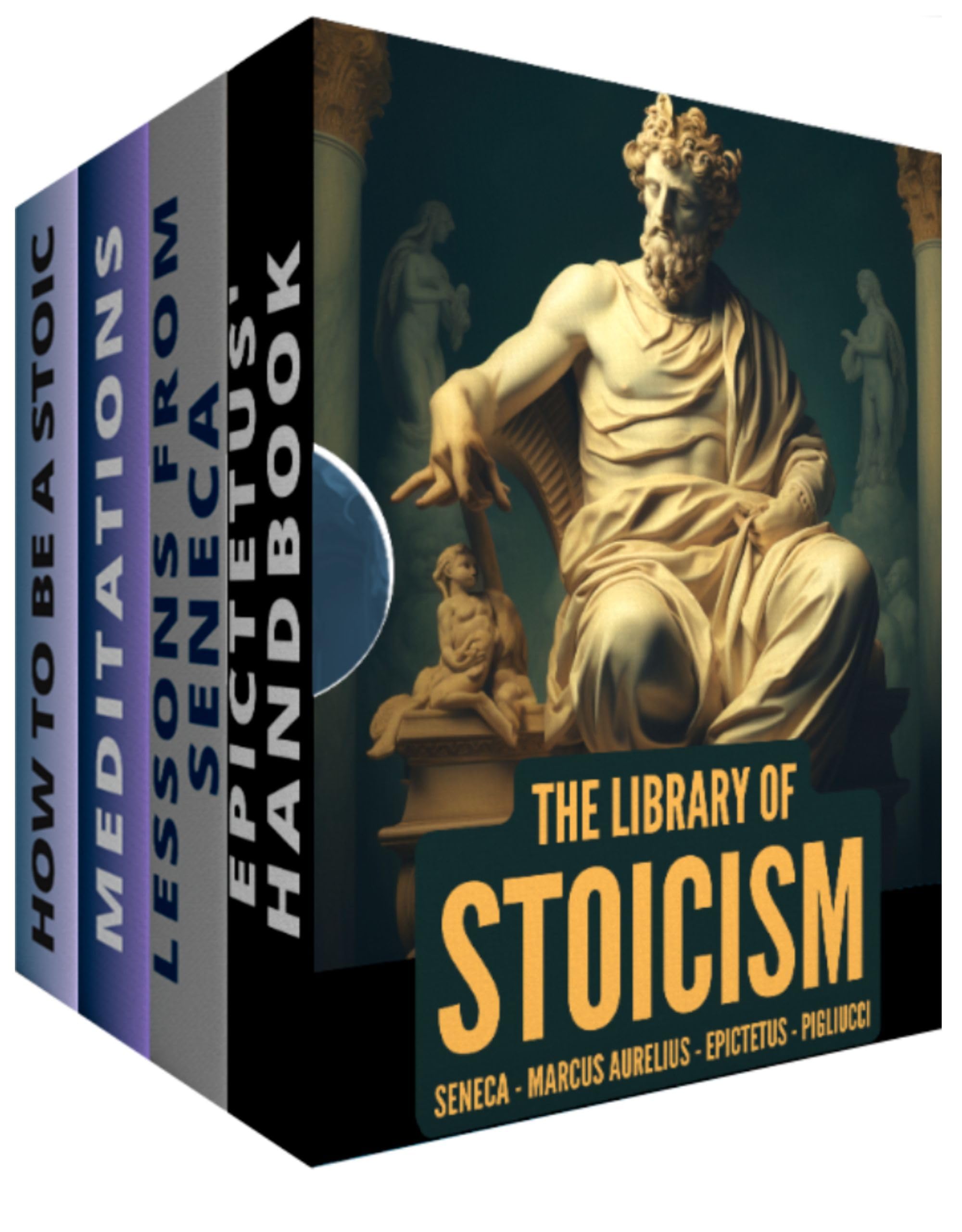
- Meditations by Marcus Aurelius: A primary source for Stoic philosophy.
2. The Modern Turn (1600–1900)
This era represents the shift toward rationalism, empiricism, and eventually, existentialism.
- Meditations on First Philosophy by René Descartes: Famous for "I think, therefore I am."
- Critique of Pure Reason by Immanuel Kant: Often considered the most significant work in modern philosophy.
- Beyond Good and Evil by Friedrich Nietzsche: A critical text for modern ethics and continental thought.
3. Contemporary and Applied Philosophy
Modern libraries in 2026 have significantly expanded their "Applied Ethics" sections. This includes books on bioethics, environmental ethics, and the philosophy of technology (particularly Artificial Intelligence). These are frequently found in the BJ (LCC) or 170–179 (DDC) ranges.
Accessing Rare and Specialized Philosophical Texts
Not every philosophy book is available on the open shelf. For serious scholars, specialized access methods are often required.
Special Collections and Rare Books
Many older philosophy books, especially first editions or Latin commentaries from the 17th century, are housed in "Closed Stacks." You must request these items at the circulation desk, and they are typically viewed in a supervised reading room. These collections are vital for studying the history of the book and the evolution of philosophical printing.
Interlibrary Loan (ILL)
Philosophy is a niche field, and your local library might not carry a specific academic monograph from an international publisher. The Interlibrary Loan system (often powered by WorldCat) allows you to borrow philosophy books from other libraries globally. As of 2026, ILL services have become faster, with many digital chapters being delivered to your email within 24 to 48 hours.
Digital Repositories and Open Access
If a physical book is not in the library, digital databases often fill the gap. Major academic libraries provide access to:
- JSTOR: A massive archive of philosophical journals.
- Project MUSE: Focuses on humanities and social sciences.
- The Internet Encyclopedia of Philosophy (IEP): A peer-reviewed online resource often linked through library portals.
- The Stanford Encyclopedia of Philosophy (SEP): The gold standard for dynamic, updated philosophical entries.
Common Pitfalls When Searching for Philosophy Books
A frequent mistake is confusing Philosophy (100 DDC / B LCC) with Religion (200 DDC / BL-BX LCC). While they overlap, especially in the "Philosophy of Religion" (210 DDC), they are distinct sections. If you are looking for Thomas Aquinas, you might find him in both the philosophy section (as a philosopher) and the religion section (as a theologian).
Another challenge is the language barrier. Much of the world's greatest philosophy was written in Greek, Latin, German, or French. When looking for books, check the "Translator" note. In philosophy, the quality of the translation can fundamentally change the meaning of the text. Libraries often stock multiple translations of the same work (e.g., several versions of Kant’s Critique) for this reason.
FAQ
Where are philosophy books located in most libraries?
In most public libraries, philosophy books are in the 100–199 section of the Dewey Decimal system. In university or research libraries, they are located in the B, BC, BD, BH, and BJ sections of the Library of Congress system.
How do I find books on a specific philosopher like Nietzsche?
You can search the library catalog by "Subject" rather than just "Author." Use the philosopher’s name as a subject heading (e.g., "Nietzsche, Friedrich, 1844–1900"). This will bring up both books written by him and books written about him.
What is the difference between the 100s and 200s in Dewey?
The 100s are dedicated to Philosophy and Psychology, focusing on human reason, logic, and ethics. The 200s are dedicated to Religion, focusing on faith, sacred texts, and theological doctrines. Philosophy of religion usually straddles the two but is often categorized in the 210s.
Are philosophy books categorized by time period or topic?
It depends on the system. The Library of Congress (LCC) often categorizes by time period and region within the B section (e.g., Ancient, Medieval, Modern). The Dewey Decimal Classification (DDC) tends to categorize by sub-topic (e.g., Logic, Ethics) first, and then by time period within the 180–190 range.
Can I access philosophy journals through the library?
Yes. Most libraries provide physical copies of journals like The Journal of Philosophy or Mind in their "Periodicals" section. Additionally, through the library's website, you can usually access digital versions of these journals via databases like JSTOR or EBSCO.
Strategic Recommendations for Researchers
For those looking to master the philosophy section of their library, the following steps are recommended:
- Consult the Reference Librarian: Philosophy is a dense subject with complex terminology. Librarians can help you find specialized bibliographies that "map out" a specific debate, such as the problem of free will or the nature of consciousness.
- Verify the Edition: In philosophy, scholarly editions (such as the Cambridge Texts in the History of Philosophy) are preferred because they include critical introductions and extensive footnotes that explain difficult concepts.
- Use Subject Guides: Most 2026 university libraries offer online "LibGuides" specifically for philosophy. These curated pages list the best databases, core books, and search tips specific to that institution’s collection.
- Explore the Adjacent Stacks: Philosophy often bleeds into other fields. If you are studying political philosophy, spend time in the J (Political Science) section. If you are interested in the philosophy of mind, the BF (Psychology) and QP (Physiology) sections are essential.
Image Gallery