Navigating Your Accountancy Degree: Curriculum, Career Paths, and Professional Certification
An accountancy degree provides a structured educational foundation in financial reporting, taxation, auditing, and managerial accounting, preparing students for careers in corporate finance, public practice, and government agencies whi...
An accountancy degree provides a structured educational foundation in financial reporting, taxation, auditing, and managerial accounting, preparing students for careers in corporate finance, public practice, and government agencies while serving as an essential stepping stone toward professional credentials like the CPA or ACA.
Contents
Choosing to pursue higher education in accounting opens doors to a stable, highly regulated, and universally required professional sector. Whether you are an undergraduate mapping out your academic future or a career changer evaluating your options, understanding the nuances of an accountancy degree is critical. This guide breaks down what the degree entails, the core curriculum, career trajectories, and how academic study bridges the gap into professional licensure.
What Is an Accountancy Degree?
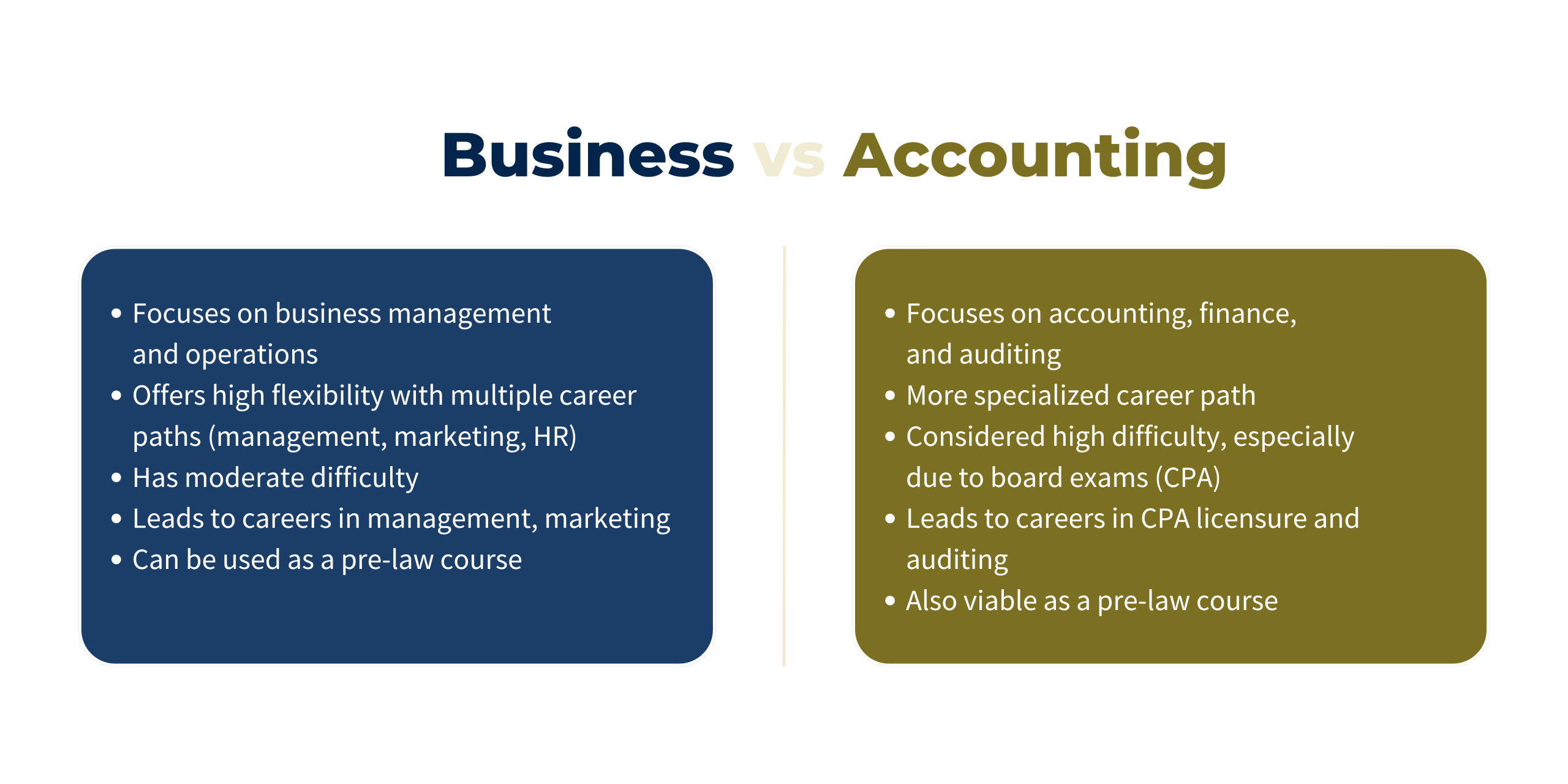
An accountancy degree—offered typically as a Bachelor of Science (B.Sc.), Bachelor of Business Administration (BBA), or a Master of Accountancy (M.Acc.)—focuses on the measurement, processing, and communication of financial information about economic entities. Unlike a broad business administration degree that touches lightly on various corporate functions, an accountancy degree dives deep into the technical rules and analytical frameworks governing money.
The primary objective of these programs is to teach students how to read, interpret, and generate financial statements that comply with established frameworks such as Generally Accepted Accounting Principles (GAAP) or International Financial Reporting Standards (IFRS). By mastering these standards, graduates become equipped to help organizations make informed financial decisions, maintain regulatory compliance, and safeguard against fraud.
Core Curriculum and Specializations
The curriculum of an accountancy program is designed to build technical competency progressively. Initial coursework introduces foundational business concepts, while advanced semesters tackle complex theoretical and practical financial problems.
Foundational Courses
At the undergraduate level, students generally spend their first two years completing general education requirements alongside foundational business classes. These include:
- Microeconomics and Macroeconomics: Understanding market forces, supply and demand, and national economic indicators.
- Business Law: Examining legal frameworks surrounding contracts, agency, and business organizations.
- Introduction to Financial and Managerial Accounting: Learning the basic accounting cycle, debits, credits, balance sheets, and income statements.
Advanced Accounting Core
As students progress into upper-division courses, the curriculum intensifies. Key subjects include:
- Intermediate Accounting: A rigorous, multi-semester deep dive into GAAP/IFRS standards, asset valuation, liability recognition, and equity reporting.
- Auditing and Assurance: Studying internal controls, risk assessment, sampling techniques, and the ethical responsibilities of independent auditors.
- Taxation: Analyzing federal, state, and local tax codes for individuals, corporations, partnerships, and estates.
- Cost and Managerial Accounting: Focusing on internal reporting, budgeting, variance analysis, and decision-making tools for corporate management.
Electives and Specializations
Many universities allow students to tailor their degrees toward specific industry demands. Common specializations include forensic accounting (fraud examination), data analytics in accounting, information systems security, and international taxation.
Comparing Accounting Degree Levels
Different educational levels serve different career goals. Choosing the right program depends on your long-term ambitions, such as whether you intend to sit for professional examinations that require specific credit hours.
| Degree Level | Typical Duration | Focus Areas | Primary Career Outcome |
|---|---|---|---|
| Associate Degree | 2 Years | Basic bookkeeping, payroll, entry-level ledger management | Bookkeeper, Accounts Payable/Receivable Clerk |
| Bachelor's Degree | 3 to 4 Years | Comprehensive financial accounting, tax, auditing, core business | Staff Accountant, Internal Auditor, Tax Preparer |
| Master's Degree (M.Acc.) | 1 to 2 Years | Advanced taxation, forensic accounting, data analytics, 150-credit requirement | Senior Accountant, Public Accounting Auditor, Forensic Analyst |
Professional Certification and the 150-Hour Rule
One of the most consequential considerations for accounting students is the educational requirement for professional licensure, most notably the Certified Public Accountant (CPA) designation in the United States or equivalent chartered credentials globally (such as the ACA or ACCA in the UK and international jurisdictions).
The 150-Semester-Hour Requirement
Most U.S. state boards of accountancy require candidates to complete 150 semester hours of college credit—equivalent to five years of higher education—to obtain full CPA licensure. A standard bachelor’s degree typically provides only 120 credit hours. To bridge this gap, students frequently pursue one of two paths:
- Dual Major or Extended Bachelor's: Taking additional undergraduate courses or a double major (e.g., Accounting and Finance).
- Master of Accountancy (M.Acc.): Enrolling in a fifth-year master's program that satisfies the remaining 30 credits while providing specialized, high-level technical training.
Beyond education, candidates must pass the rigorous four-part CPA Uniform Examination and fulfill specific work experience requirements under the supervision of a licensed CPA.
Career Paths and Employment Outlook
Graduates with an accountancy degree enjoy diverse career opportunities across multiple sectors. The universal need for financial accountability ensures steady demand for qualified professionals.
Public Accounting
Public accounting firms—ranging from the "Big Four" (Deloitte, PwC, EY, and KPMG) to regional and local firms—provide audit, tax, and advisory services to external clients. Working in public accounting offers rapid professional growth, exposure to various industries, and structured paths to partnership.
Corporate (Private) Accounting
Corporate accountants work internally for private companies, non-profits, or government agencies. Roles in this sector include cost accountants, financial analysts, controllers, and chief financial officers (CFOs). Corporate accountants focus on internal budgeting, financial forecasting, and operational efficiency.
Government and Regulatory Agencies
Federal, state, and local government bodies—such as the Internal Revenue Service (IRS), the Government Accountability Office (GAO), and state departments of revenue—employ accountants to audit public spending, enforce tax laws, and investigate financial crimes.
Common Challenges and How to Overcome Them
Pursuing an accountancy degree and building a career in the field comes with specific hurdles. Being prepared for these challenges helps ensure academic and professional longevity.
- Keeping Pace with Regulatory Changes: Tax laws and accounting standards (FASB/IASB) evolve continuously. Professionals must commit to lifelong learning through Continuing Professional Education (CPE) credits.
- Balancing Compliance with Strategic Thinking: Modern employers expect accountants to be more than number-crunchers. Developing soft skills, data visualization capabilities, and business acumen is just as important as mastering technical bookkeeping.
- Managing Work-Life Balance in Busy Seasons: Public accounting features notable seasonal spikes (often referred to as "busy season" leading up to tax deadlines or audit filing dates), requiring strong time-management and stress-management skills.
Frequently Asked Questions
Is an accountancy degree difficult to earn?
An accountancy degree is rigorous and requires strong analytical skills, attention to detail, and a willingness to master complex regulatory frameworks. While math is involved, advanced calculus is rarely required; the focus is primarily on applied arithmetic, logic, and systematic problem-solving.
Do I need a master's degree to be an accountant?
No, a bachelor's degree is sufficient for many entry-level positions, such as staff accountant, internal auditor, or corporate accounting clerk. However, a master's degree or equivalent coursework is typically required to meet the 150-credit hour threshold necessary for CPA licensure in most jurisdictions.
What is the difference between an accountant and a bookkeeper?
Bookkeepers focus primarily on the day-to-day recording of financial transactions, such as posting debits and credits and managing invoices. Accountants build upon that data to analyze financial health, prepare tax returns, conduct audits, and provide strategic financial advice.
Can I complete an accountancy degree online?
Yes, many accredited universities offer fully online or hybrid accountancy programs at both the undergraduate and graduate levels. Ensure that any online program you consider is regionally accredited and recognized by your state board of accountancy if you plan to pursue professional certification.
What software skills should accounting students learn?
Modern accountants must be proficient in advanced Microsoft Excel (including pivot tables and VLOOKUPs), enterprise resource planning (ERP) systems like SAP or Oracle, and specialized tax and auditing software such as QuickBooks or Xero.
Next Steps
If you are ready to pursue an accountancy degree, begin by researching accredited academic institutions that align with your career goals and geographic location. Review their curriculum to ensure it covers core preparation for professional exams, and speak with academic advisors about accelerated bachelor-to-master tracks if you intend to pursue licensure. For those already holding a degree in a different field, look into post-baccalaureate certificate programs designed to satisfy prerequisite coursework efficiently.
Image Gallery