What Peacocks Are Known For: The Biology, Behavior, and Symbolism of Peafowl
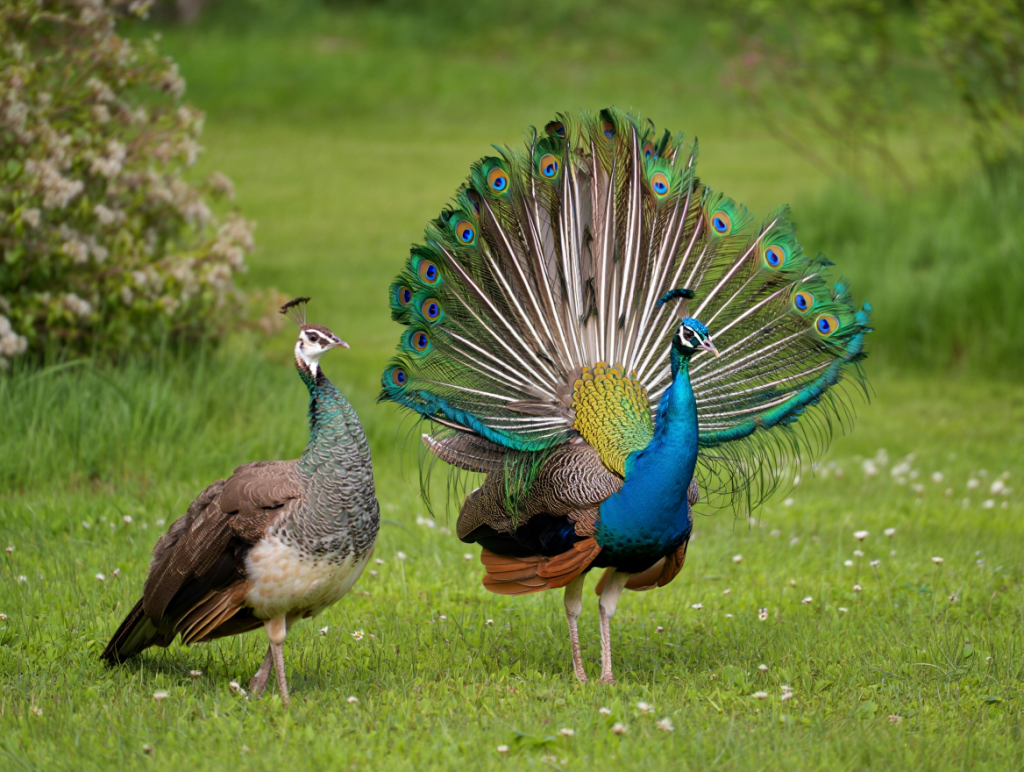
Peacocks are primarily known for the male's striking iridescent tail train, featuring vibrant "eyespots" (ocelli) used in elaborate courtship displays. Beyond their iconic plumage, peacocks are recognized for dramatic sexual dimorphism...
Peacocks are primarily known for the male's striking iridescent tail train, featuring vibrant "eyespots" (ocelli) used in elaborate courtship displays. Beyond their iconic plumage, peacocks are recognized for dramatic sexual dimorphism, loud vocalizations, snake-hunting abilities, infrasonic feather-rattling communication, and rich cultural symbolism across global traditions.
Contents
1. Structural Coloration and the Physics of the Peacock Train
While peacocks are celebrated worldwide for their brilliant blue and green hues, the source of these striking shades is not chemical pigment. Instead, the peacock train relies on structural coloration—a phenomenon where microscopic physical structures interact with ambient light to produce vivid, shimmering hues.
Light Source ---> Microscopic Keratin/Melanin Matrix ---> Light Interference ---> Iridescent Hues (Blue/Green/Gold)
Covert Feathers vs. True Tail Feathers
A common misconception is that the peacock’s famous fan consists of its actual tail feathers. Anatomically, the magnificent train is composed of elongated upper tail coverts—specialized feathers growing from the lower back that overlay the shorter, rigid tail feathers (rectrices). The true tail feathers lie underneath, acting as a sturdy structural support when the male lifts and spreads the train into an arch.
Photonic Structures and Iridescence
The barbs of each covert feather contain two-dimensional photonic crystal structures made of melanin rods bound in a matrix of keratin. The spacing and arrangement of these nano-structures determine which wavelengths of light are reflected and which are absorbed:
- Blue hues: Created by tightly spaced melanin rods that reflect shorter wavelengths of light.
- Green hues: Produced by slightly wider rod spacing mixed with yellow pigments.
- Bronze and gold hues: Result from broader spatial arrangements that reflect longer light wavelengths.
Because these colors depend on light interference rather than physical dyes, the apparent color shifts dynamically as the viewing angle changes—a optical effect known as iridescence.
Anatomy of the Ocellus
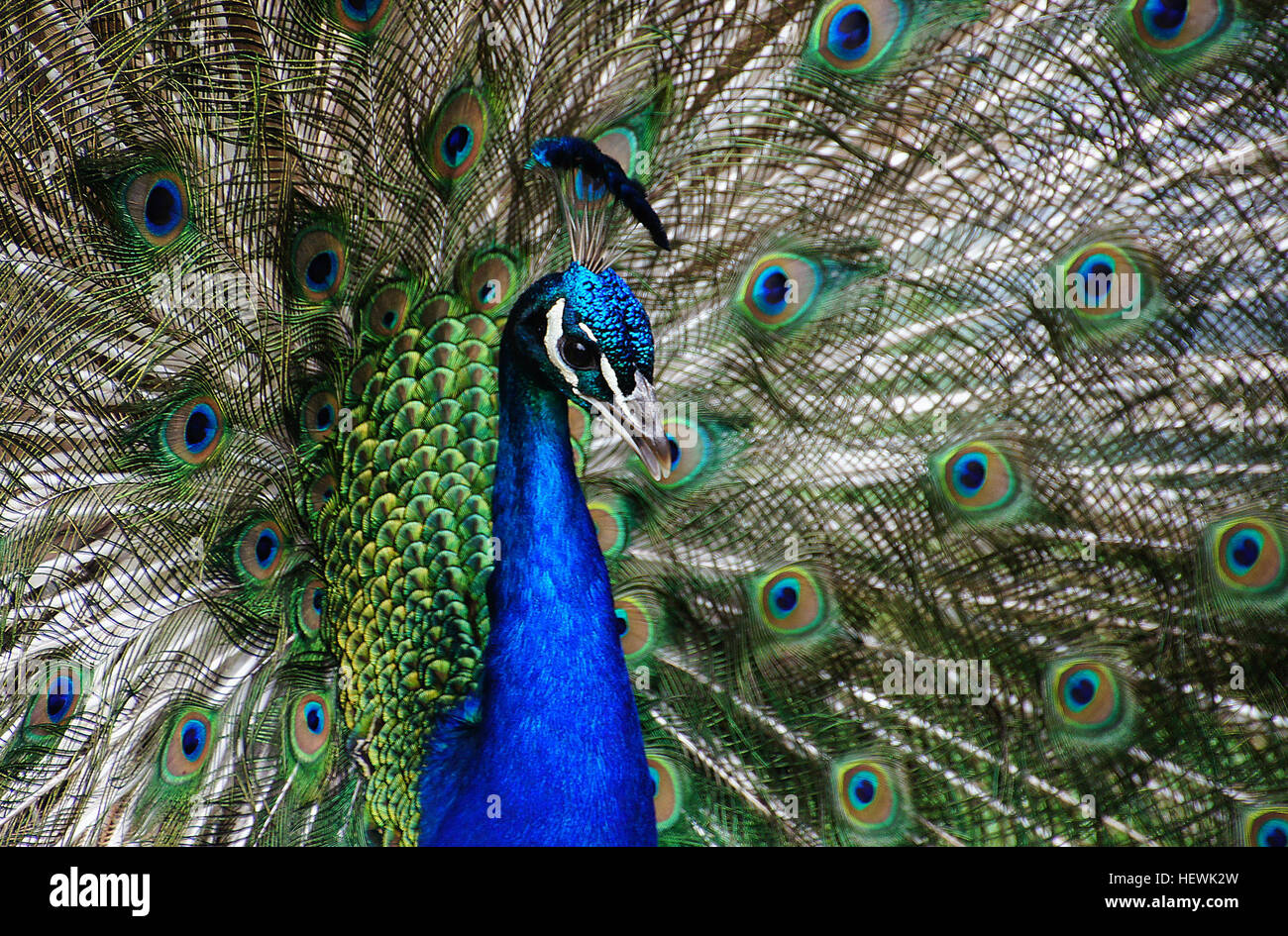
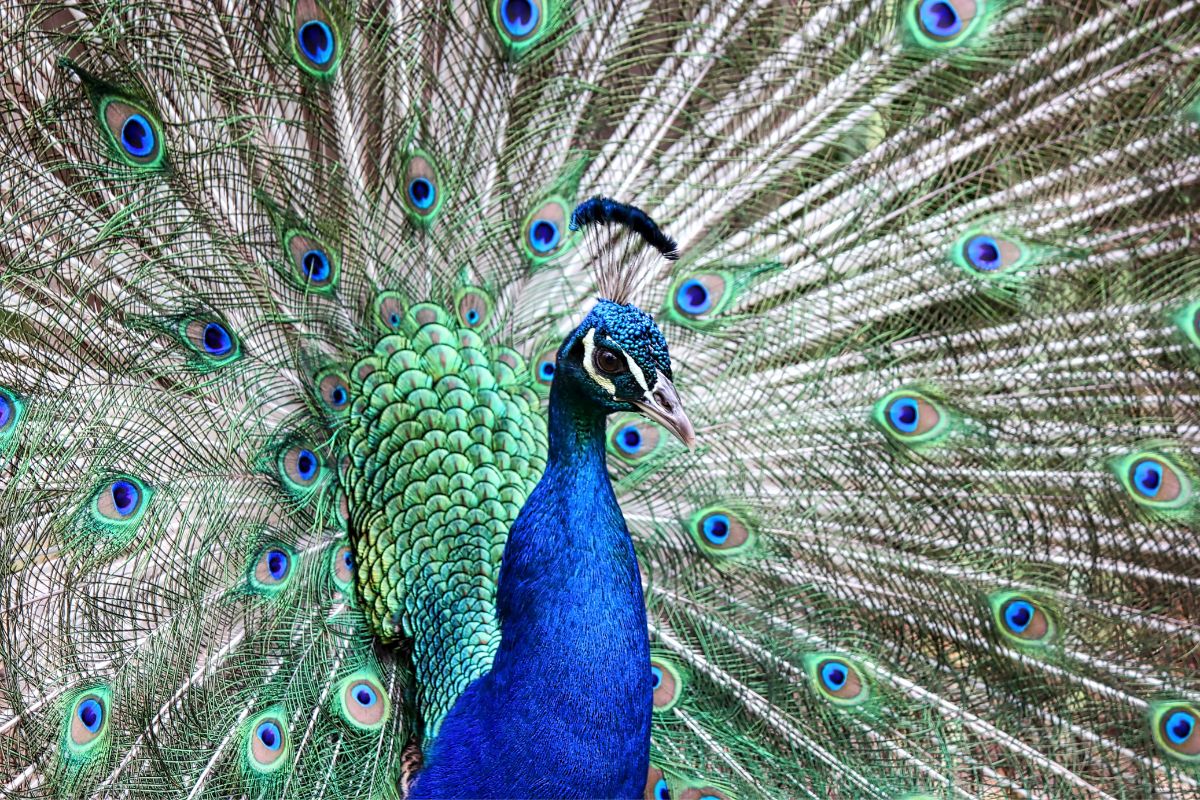
At the tip of each primary covert feather lies an ocellus, or eyespot. The center of the ocellus features a dark, velvet-like blue spot framed by concentric rings of turquoise, shimmering green, yellow, and deep bronze. A single mature male can display between 150 and 200 of these eyespots across a fully grown train.
2. Sexual Selection: Darwin's Dilemma and the Handicap Principle
The extreme physical design of the peacock train played a pivotal historical role in the development of evolutionary biology. In 1860, Charles Darwin wrote that "the sight of a feather in a peacock's tail, whenever I gaze at it, makes me sick!" The train appeared to contradict his theory of natural selection: it was heavy, energy-expensive to grow, hindered rapid flight, and made the bird highly conspicuous to predators like tigers and leopards.
Female Choice as an Evolutionary Driver
Darwin resolved this contradiction by proposing the theory of sexual selection. He asserted that traits could evolve not only to enhance survival, but also to increase mating success. In peafowl, females (peahens) act as the selective force. Over thousands of generations, peahens consistently preferred mates with larger, more symmetrical, and more eye-spotted trains, driving the evolution of increasingly complex plumage.
[Male Displays Train] ---> [Peahen Evaluates Symmetry/Ocelli] ---> [Selection of Fittest Mate] ---> [Genetic Trait Passed On]
Zahavi's Handicap Principle
In the 1970s, biologist Amotz Zahavi expanded on Darwin's work with the Handicap Principle. Zahavi argued that the peacock’s train serves as an honest indicator of genetic quality precisely because it is a burden.
A weak, sick, or malnourished male cannot afford the biological cost of growing a dense, brilliant train while dodging predators and maintaining stamina. Therefore, a male that survives while carrying a massive, vibrant train demonstrates to peahens that he possesses superior immunity, parasite resistance, foraging skill, and overall physical vigor.
3. Acoustic and Infrasonic Communication
Peacocks are famous for their visual displays, but their acoustic capabilities are equally complex and essential to their survival and social hierarchy.
Audible Vocalizations
Peafowl produce a wide range of vocal calls that can carry over a mile. The most recognizable call is a loud, carrying horn-like sound often rendered phonetically as "may-awe" or "phee-owl".
- Mating Calls: Dominant males call frequently during the spring breeding season to establish territory and invite females into their display area (lek).
- Alarm Calls: When ground predators or airborne threats are detected, both sexes emit sharp, repetitive honks and shrieks, alerting the entire local flock and neighboring animal species.
- Roosting Calls: As evening approaches, peafowl vocalize to synchronize flock movements before flying up into high tree branches to sleep safely above ground predators.
Infrasonic Feather Shaking (Stridulation)
During courtship, males do not remain still; they perform a high-frequency vibration of their train feathers known as train-rattling or stridulation. By rapidly shaking the base of their tail, the feather barbs brush against one another, creating a shimmering sound and causing the eye-spots to remain remarkably stable while the surrounding feathers flutter.
Research reveals that train-rattling generates low-frequency infrasound—acoustic waves below 20 Hertz, which are imperceptible to human ears. This low-frequency resonance travels long distances near the ground, penetrating dense foliage. Peahens feel these infrasonic vibrations through sensory receptors in their crest feathers and feet, allowing them to gauge the male's physical mass and display intensity even before entering his line of sight.
4. Species Overview and Color Mutations
The term "peacock" specifically refers to the male of the peafowl species, which belong to the family Phasianidae (pheasants). There are three distinct biological species of peafowl worldwide, along with notable color variants resulting from captive breeding.
Indian Peafowl (Pavo cristatus)
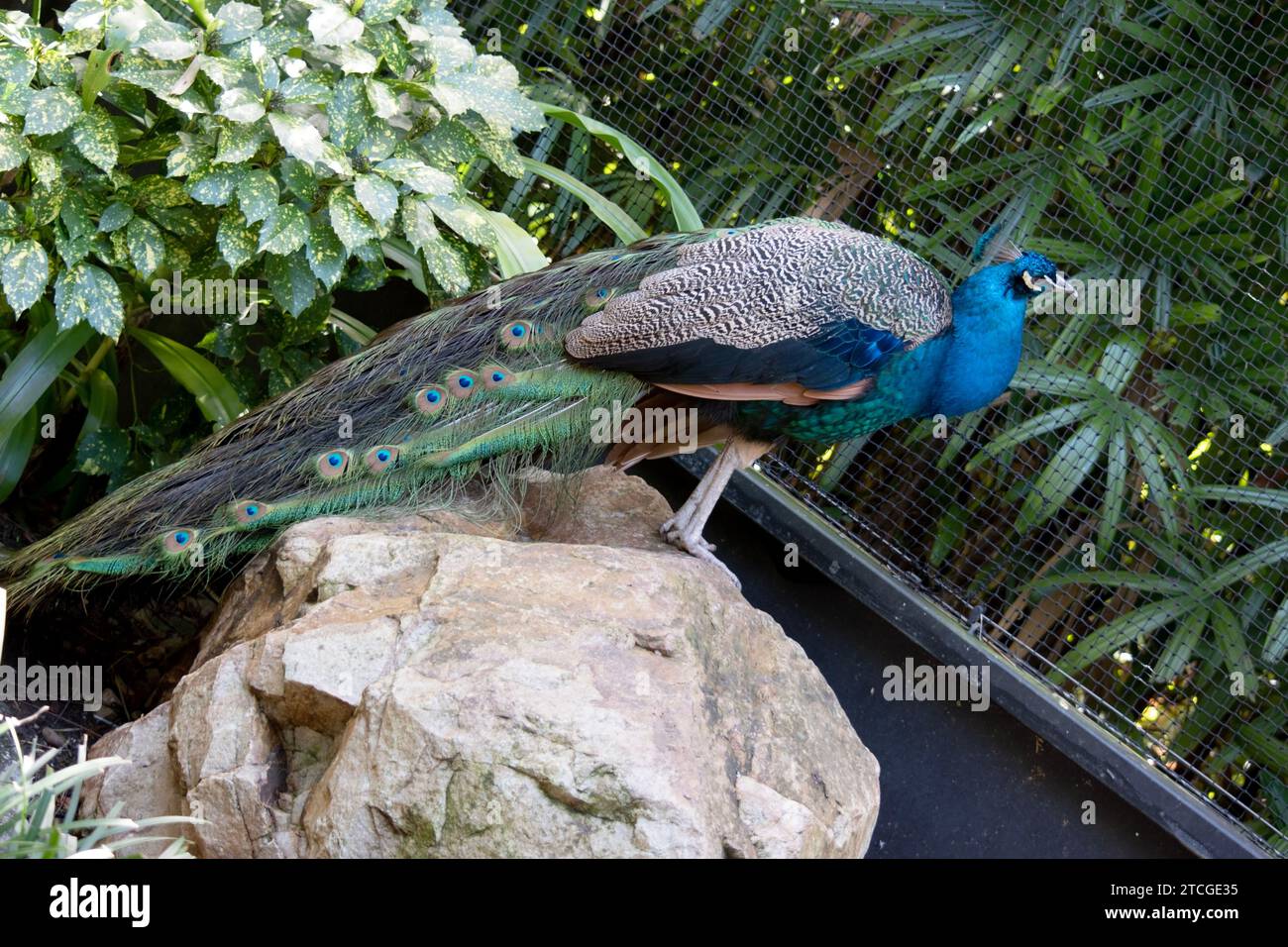
Native to the Indian subcontinent, the Indian Peafowl is the most widely recognized species. Males feature a deep blue head, neck, and breast, contrasting with black-and-white barred wings and a long green-and-gold train. Females display a muted brown and cream plumage with subtle green iridescent neck patches, providing effective camouflage while nesting on the ground.
Green Peafowl (Pavo muticus)
Native to Southeast Asia, the Green Peafowl is larger and taller than its Indian cousin. Unlike Indian peafowl, Green Peafowl exhibit less extreme visual dimorphism: both males and females possess brilliant green plumage, dark scaly neck feathers, and upright, compact crests. Males are distinguished primarily by longer trains and spur length. Due to habitat loss and hunting, the Green Peafowl is classified as an endangered species.
Congo Peafowl (Afropavo congensis)
Found exclusively in the dense rainforests of the Congo Basin in Central Africa, the Congo Peafowl was only formally cataloged by science in 1936. It is smaller than Asian peafowl and lacks the long, sweeping train. Males feature deep violet-blue and green feathers with a short, rounded tail, while females are reddish-brown and emerald green. The Congo Peafowl remains elusive and is listed as vulnerable.
White Peacocks: Leucism vs. Albinism
White peacocks are frequently misunderstood as albinos. In reality, most white peacocks carry a genetic condition called leucism. Leucism prevents melanin and other pigments from depositing in the feathers, resulting in pure white plumage. Unlike true albino animals, which lack pigment entirely and have pink or red eyes, leucistic peacocks retain normal dark blue or brown eyes and light skin pigmentation.
Comparative Matrix of Peafowl Species
| Characteristic | Indian Peafowl (Pavo cristatus) | Green Peafowl (Pavo muticus) | Congo Peafowl (Afropavo congensis) |
|---|---|---|---|
| Native Range | India, Sri Lanka, Nepal | Southeast Asia (Indonesia, Indochina) | Congo Basin (Central Africa) |
| Conservation Status | Least Concern | Endangered | Vulnerable |
| Male Primary Color | Electric cobalt blue | Metallic emerald green | Dark violet-blue and black |
| Train Length | Up to 5 feet (1.5 meters) | Up to 5 feet (1.5 meters) | Short, lacks true long train |
| Female Appearance | Brown/grey camouflage | Similar to male (bright green) | Chestnut-brown with green back |
| Vocal Profile | High-pitch horn/call | Deeper, harsher trumpet call | Soft double-note "gowe-owe" |
| Habitat Preference | Open forest, farmland, parks | Tropical dry/moist forests | Primary lowland rainforest |
5. Diet, Pest Control, and Snake-Hunting Behavior
Beyond their ornamental value, peafowl play a functional ecological role in their native environments as opportunistic omnivores and active predators of agricultural pests.
Generalist Omnivorous Diet
Peafowl forage on the ground in small groups known as parties or musters. Their diet consists of:
- Plant matter: Seeds, grains, wild berries, flower petals, tender shoots, and cultivated crops.
- Invertebrates: Grasshoppers, beetles, termites, ants, scorpions, and centipedes.
- Small vertebrates: Frogs, mice, small lizards, and young snakes.
Renowned Snake Hunters
In South Asian folklore and practical agriculture, peacocks are revered for their ability to hunt venomous snakes, including cobras and vipers. The Sanskrit word for peacock, Mayura, translates roughly to "killer of snakes."
Peacocks possess agile footwork, sharp vision, and dense leg scales that afford protection against snake bites. When encountering a snake, a peacock fluffs its wings to confuse the reptile, uses its speed to avoid strikes, and delivers powerful pecks to the back of the snake's head with its sharp, hooked beak until the prey is neutralized.
6. Cultural Symbolism and Historical Status
Throughout human history, peafowl have left an enduring mark on global art, mythology, religion, and national iconography.
[Ancient Myths & Religion] ---> [Royal & Imperial Court Symbol] ---> [Modern National & Cultural Icons]
The National Bird of India
In 1963, the Government of India declared the Indian Peafowl the National Bird of India. The decision was based on the bird's rich integration into Indian tradition, broad distribution across the nation, and high visibility in sacred literature. In Hindu mythology, the peacock is the vahana (mount) of Lord Kartikeya (the god of war) and is closely associated with Lord Krishna, who traditionally wears a peacock feather in his crown.
Greek and Roman Mythology
In classical Greco-Roman tradition, the peacock was sacred to Hera (Juno), the queen of the gods. Myth tells that Hera rewarded her faithful hundred-eyed giant servant, Argus, after his death by placing his eyes onto the tail of her favorite bird, creating the eyespots seen today. Consequently, peacocks symbolized royalty, vigilance, and heavenly protection throughout the Roman Empire.
Early Christian and Asian Symbolism
- Early Christianity: Peacocks symbolized immortality and resurrection. Ancient naturalists believed peafowl flesh did not decay after death. Additionally, the annual shedding and re-growth of their train feathers every autumn and spring mirrored the theme of rebirth.
- East Asian Traditions: In Chinese and Japanese culture, peacock feathers were awarded by emperors as tokens of high official rank, symbolizing grace, peace, and beauty.
7. Practical Considerations for Keeping Peafowl
In modern contexts, peafowl are raised on rural estates, hobby farms, and botanical gardens. However, keeping peafowl requires specific knowledge of their care requirements and behavioral traits.
Space and Housing Requirements
Peafowl are large birds that require substantial space to thrive.
- Enclosure Size: A flight pen for a breeding pair should measure at least 10 feet wide by 20 feet long by 8 feet high to prevent long train feathers from snapping.
- Roosting Needs: Peafowl prefer to roost high off the ground to feel secure. Sturdy wooden perches placed 6 to 8 feet above the floor are essential.
- Containment: While they are heavy ground birds, peafowl can easily fly over standard fences to roost in neighborhood trees or rooftops if allowed to free-range.
Noise and Neighborhood Impact
The vocal nature of peacocks is one of the most critical factors for potential keepers to evaluate. During the spring breeding season (typically April through July), males call persistently throughout the day and occasionally during night hours when startled by light or movement. In suburban or densely populated areas, this noise frequently leads to municipal noise complaints.
Feeding and Health Management
Captive peafowl require a high-protein diet to support feather growth and overall body mass:
- Dietary Needs: Commercial gamebird feeds containing 20% to 24% crude protein during breeding and molt seasons, supplemented with leafy greens and scratch grains.
- Parasite Control: Because peafowl spend significant time foraging on the ground, regular deworming and clean dry bedding are required to prevent blackhead disease (Histomoniasis) and coccidiosis.
Frequently Asked Questions
What is the difference between a peacock, peahen, and peafowl?
"Peafowl" is the correct collective term for the species as a whole. "Peacock" refers strictly to the adult male bird, while "peahen" refers to the female. Peachicks are the offspring under one year of age.
Do peacocks shed their train feathers every year?
Yes. Peacocks go through an annual molt late in the summer at the end of the breeding season. They naturally shed their long coverts over several weeks. The train grows back entirely during the winter and early spring months, ready for the next display season.
Can peacocks actually fly with such heavy trains?
Yes, peacocks can fly despite their long train. They use powerful wing beats to launch themselves almost vertically into low branches or rooftops before transitioning into steady horizontal flight. However, they fly primarily to escape danger or reach high roosts rather than traveling long distances.
Are peacocks dangerous or aggressive to humans?
Peafowl are generally cautious around humans and prefer to walk away when approached. However, mature males can show aggressive behavior during the spring mating season if they feel cornered, or if humans attempt to handle them. Their sharp spurs on the back of their legs and powerful beaks can inflict scratch wounds.
Why do peacocks spread their tail feathers when no female is nearby?
While the display primarily functions to attract peahens, males also fan their trains as a territorial warning to rival males, or as a defensive threat posture to intimidate potential predators by making themselves appear substantially larger.
Key Takeaways and Next Actions
Understanding what peacocks are known for reveals a complex biological balance between survival, signaling, and environmental adaptation:
- Appreciate the Physics: The peacock's colors stem from nano-structural optical interference rather than simple pigmentation.
- Recognize Evolutionary Drivers: The heavy, decorative train stands as the definitive scientific example of sexual selection and honest fitness signaling.
- Respect Property and Legal Requirements: If planning to keep peafowl on private property, verify local municipal poultry zoning laws and noise ordinances to prevent legal disputes.
- Support Conservation Effort: Help protect vulnerable peafowl habitats by supporting wildlife organizations dedicated to preserving Southeast Asian rainforests (Green Peafowl) and the Congo Basin (Congo Peafowl).
Image Gallery