Understanding MBS Capital Markets: Securitization, Trading, and Pipeline Management
MBS capital markets encompass the institutional financial marketplace where individual mortgage loans are pooled, transformed into tradable debt securities, and sold to global investors. By linking primary mortgage originators with sec...
MBS capital markets encompass the institutional financial marketplace where individual mortgage loans are pooled, transformed into tradable debt securities, and sold to global investors. By linking primary mortgage originators with secondary market liquidity, these markets allow lenders to hedge pipeline risk, replenish regulatory capital, and offer competitive interest rates to residential and commercial real estate borrowers.
Contents
The Role of Mortgage-Backed Securities in Debt Capital Markets
Mortgage-backed securities (MBS) represent one of the largest and most liquid segments of the fixed-income market worldwide. At its core, the MBS capital market operates as a bridge between home loan borrowers and institutional fixed-income investors such as pension funds, central banks, insurance companies, and mutual funds.
When a primary mortgage lender—such as a bank or non-bank mortgage originator—issues home loans, those assets sit on the lender's balance sheet. To originate new loans continuously, the lender must free up liquidity and manage balance sheet risk. The lender does this by selling mortgage pools into the capital markets.
The Securitization Cycle
The securitization process transforms illiquid individual loan contracts into standardized, liquid financial instruments:
Origination and Accumulation: Lenders issue residential or commercial mortgages under standardized underwriting guidelines. Loans accumulate until a sufficient pool size is achieved (typically tens or hundreds of millions of dollars).
Pooling and Trust Creation: The accumulated loans are transferred to a bankruptcy-remote special purpose vehicle (SPV) or standard securitization trust.
Credit Enhancement and Structuring: The cash flows from the underlying mortgages (principal and interest payments) are organized into structured debt securities.
Issuance and Distribution: Dealers and investment banks distribute the newly created securities to institutional investors, transferring credit or prepayment risk away from the original lender.
Borrower Pays Principal & Int.
Mortgage Servicer Collects & Passes
Securitization Trust / SPV
Institutional Bond Investors
Agency vs. Non-Agency Capital Markets
The MBS capital market is fundamentally divided into two major market segments:
- Agency MBS: Guaranteed by U.S. government-sponsored enterprises (GSEs)—Fannie Mae (Federal National Mortgage Association) and Freddie Mac (Federal Home Loan Mortgage Corporation)—or backed by the full faith and credit of the U.S. government through Ginnie Mae (Government National Mortgage Association). Agency securities carry negligible credit default risk due to these explicit or implicit guarantees.
- Non-Agency (Private-Label) MBS: Issued by commercial banks, investment firms, and non-bank financial institutions without GSE guarantees. These securities include non-conforming jumbo loans, non-qualified mortgages (non-QM), and commercial properties. Because they lack a federal guarantee, non-agency securities rely on structural credit enhancements—such as subordination, overcollateralization, and reserve accounts—to achieve investment-grade credit ratings.
Key Structures and Products in MBS Capital Markets
Institutional market participants utilize several distinct security structures depending on their risk tolerance, yield requirements, and duration preferences.
Agency Pass-Through Securities
The most basic MBS structure is the pass-through security. In a pass-through structure, homeowners' monthly payments of principal and interest are collected by a loan servicer, pooled, and passed directly through to security holders pro-rata, minus servicing and guarantee fees.
Agency pass-throughs trade predominantly in the To-Be-Announced (TBA) forward market. The TBA market is an extremely liquid forward market where buyers and sellers agree on key trade parameters—such as agency type, coupon rate, settlement month, and total face value—without specifying the exact underlying loan pools at the trade date. The specific pool details are announced 48 hours prior to settlement (known as 48-hour notification). This standardization makes agency TBA trading second only to U.S. Treasuries in overall fixed-income market liquidity.
Collateralized Mortgage Obligations (CMOs)
While pass-through securities distribute prepayment risk evenly among all investors, Collateralized Mortgage Obligations (CMOs) reallocate principal and interest cash flows into distinct risk classes called tranches. This re-engineering permits creation of short-, medium-, and long-term bonds from a single underlying mortgage pool:
- Sequential-Pay Tranches: Principal payments are directed entirely to the first tranche until it is fully retired. Subsequent tranches receive principal sequentially, insulating longer-term tranches from early prepayment.
- Planned Amortization Class (PAC) Tranches: Offer protected cash flow schedules, provided actual prepayment speeds remain within a pre-established prepayment band (PAC collar).
- Targeted Amortization Class (TAC) Tranches: Provide protection against rising prepayment speeds (refinancing booms), but offer less protection against slowing prepayments.
- Interest-Only (IO) and Principal-Only (PO) Strips: Extreme structural allocations where IO investors receive only interest payments (benefiting from slow prepayments) and PO investors receive only principal payments at a discount (benefiting from rapid prepayments).
Residential vs. Commercial MBS (RMBS vs. CMBS)
Capital markets distinguish between residential properties (1–4 family units) and commercial real estate properties (multifamily, office, retail, industrial, and hotel properties):
- RMBS (Residential Mortgage-Backed Securities): Driven by consumer borrowing, household demographics, residential refinancing incentives, and borrower credit scores. Homeowners generally hold the right to prepay their mortgages without financial penalties.
- CMBS (Commercial Mortgage-Backed Securities): Backed by income-generating commercial properties. CMBS structures feature robust prepayment protections—such as defeasance, yield maintenance, and prepayment lock-out periods—that significantly minimize prepayment uncertainty compared to residential counterparts.
Capital Markets Operations for Lenders: Pipeline Hedging and Execution
For mortgage originators, active participation in MBS capital markets is essential to protect profitability against volatile market interest rates between loan application and final sale.
- Loan Application & Rate Lock Granted to Borrower
- Interest Rate Risk Exists (Unhedged Pipeline Vulnerable)
- Hedging Action: Short TBA MBS or Futures
- Loan Closing & Warehouse Funding
- Secondary Market Sale (Mandatory or Best-Efforts)
- Unwind Hedge / Deliver Pool to Capital Market
Mortgage Pipeline Risk
When a lender grants an interest rate lock to a home borrower, the lender assumes interest rate risk. If market benchmark yields rise before the loan is closed and sold into the secondary market, the value of that locked mortgage declines. Conversely, if market yields drop, borrowers may abandon their rate lock (fallout risk).
To insulate profit margins, lender capital markets desks construct dynamic hedge portfolios using short positions in TBA agency contracts, U.S. Treasury futures, or interest rate swaps.
Execution Strategies: Best-Efforts vs. Mandatory Delivery
Mortgage originators choose between two primary methods when selling funded loans into the secondary market:
- Best-Efforts Execution: The lender commits to sell a specific loan to an investor only if the loan actually closes. The investor absorbs the interest rate and fallout risk, but charges a pricing premium. This option is commonly used by smaller institutions and credit unions seeking simplicity over margin maximization.
- Mandatory Delivery (Bulk or Direct Pool Securitization): The lender commits to deliver a specified dollar volume of loans by a set settlement date, regardless of whether individual pipeline loans close. If the lender fails to deliver, it faces pair-off fees. Mandatory execution delivers higher secondary market payouts (often 25 to 75 basis points higher than best-efforts), but requires aggressive, active pipeline hedging by internal capital markets experts or third-party advisors.
Comparative Matrix: Agency MBS, Non-Agency RMBS, and CMBS
Understanding the structural differences across mortgage capital market asset classes helps institutions align investment strategies with yield targets and risk mandates.
| Feature / Dimension | Agency Pass-Through MBS | Non-Agency RMBS (Private Label) | Commercial MBS (CMBS) |
|---|---|---|---|
| Primary Collateral | Standardized 1-4 family residential mortgages | Jumbo, Non-QM, or non-conforming residential loans | Income-producing commercial real estate assets |
| Credit Risk & Guarantee | Explicit (Ginnie Mae) or implicit (GSEs) federal backing | No government guarantee; credit enhanced structurally | No government guarantee; property performance dependent |
| Trading Market Structure | TBA forward market & specified pools | Bespoke over-the-counter (OTC) secondary trades | Over-the-counter private transactions & institutional public deals |
| Prepayment Protection | None; borrowers can prepay freely | Typically low; occasional short-term penalty periods | Strong; lockouts, defeasance, yield maintenance clauses |
| Prepayment vs. Default Focus | Prepayment risk is the primary analytical metric | Credit default risk and loss severity are primary metrics | Commercial default risk, NOI, and refinancing risk drive metrics |
| Primary Investor Base | Central banks, commercial banks, money market funds, foreign sovereigns | Pension funds, hedge funds, private credit funds, specialized asset managers | Life insurance companies, sovereign wealth funds, institutional debt funds |
Valuation Drivers and Analytics in MBS Trading
Valuing mortgage-backed securities requires analyzing dynamic cash flows affected by shifting interest rates and homebuyer behavior.
Prepayment Metrics: CPR and SMM
Because underlying borrowers can pay down loan principal early—via home sales, cash-out refinancing, or voluntary principal reductions—MBS cash flows are inherently uncertain. Tranches and pools are evaluated using standardized prepayment rate indicators:
- Constant Prepayment Rate (CPR): An annualized estimate of unadjusted principal prepayments relative to the remaining pool balance. For example, a 6% CPR assumes 6% of the pool's remaining balance will prepay over the course of a year.
- Single Monthly Mortality (SMM): The monthly equivalent of CPR, representing the percentage of balance prepaid in a single month. It is mathematically calculated as:
$$\text{SMM} = 1 - (1 - \text{CPR})^{1/12}$$
Negative Convexity and Extension Risk
Standard fixed-rate bonds display positive convexity: as interest rates fall, bond prices rise at an increasing rate. However, MBS instruments exhibit negative convexity over specific interest rate ranges due to borrower prepayment options.
Bond Price vs. Interest Rates Fall:
- Standard Bond (Positive Convexity)
- MBS Price Curve (Negative Convexity)
Refinancing Risk (Rates Fall): When market interest rates decline, homeowners refinance into lower rates. Principal returns to MBS investors faster than expected, forcing them to reinvest cash flows at prevailing lower market yields. This caps the price appreciation of the bond.
Extension Risk (Rates Rise): When market interest rates increase, mortgage refinancing drops sharply. The average life of the mortgage pool extends, locking investor capital into below-market yields for a longer duration.
Option-Adjusted Spread (OAS)
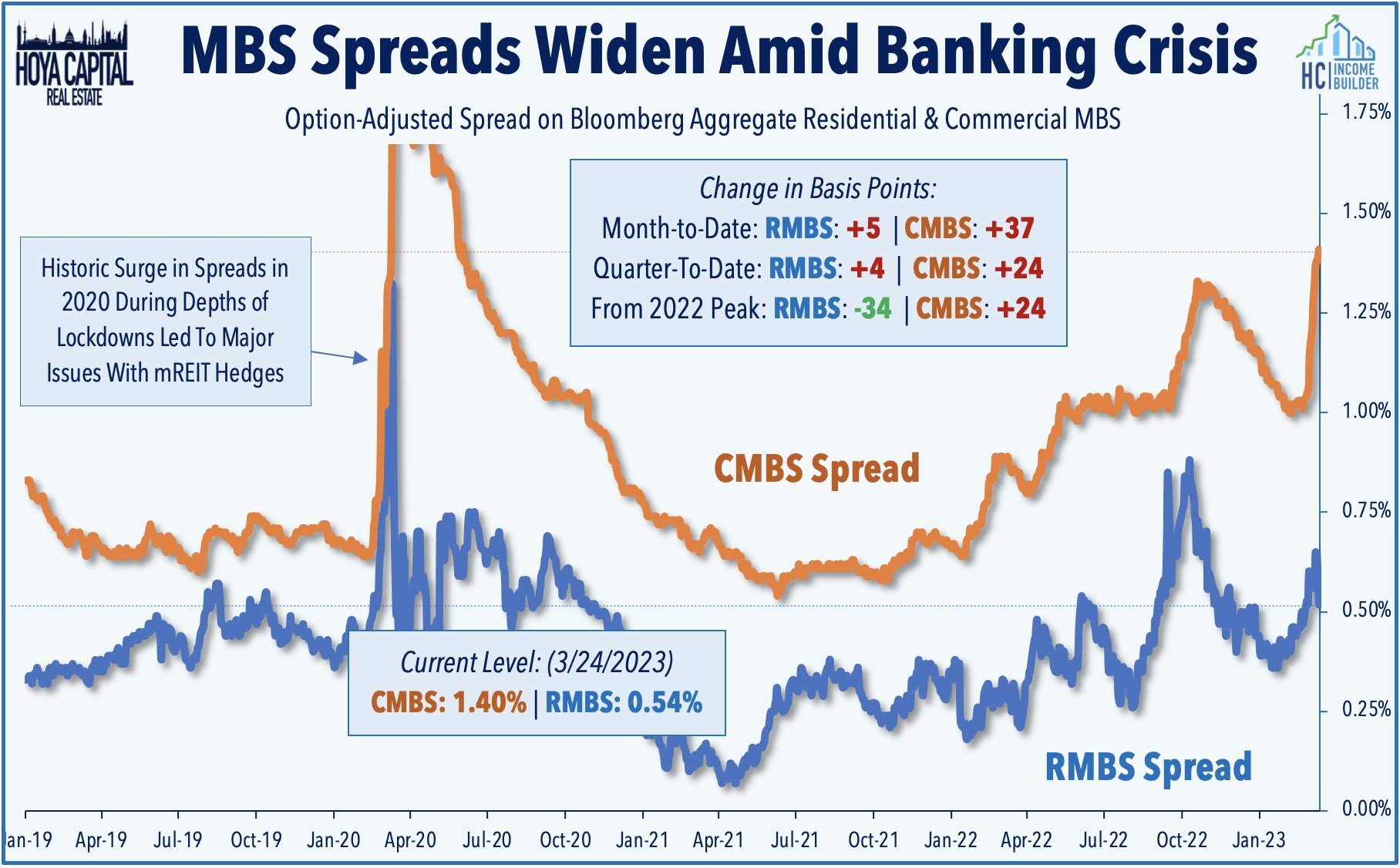
To evaluate MBS pricing relative to risk-free benchmark curves (such as U.S. Treasuries or SOFR swap curves), traders utilize Option-Adjusted Spread (OAS). OAS calculates the spread over the benchmark yield curve after removing the embedded cost of the borrower's prepayment option, using Monte Carlo simulations of potential interest rate paths.
Regulatory Framework and Market Oversight
Given the systemic importance of housing debt within global finance, MBS capital markets operate under structured oversight:
- Securities Regulation: Publicly offered non-agency MBS issuances must comply with SEC registration, disclosure, and asset-level reporting mandates under Regulation AB II.
- Trading Oversight: Market trading conduct, dealer registration, and secondary market execution fall under the jurisdiction of the Financial Industry Regulatory Authority (FINRA) and the Municipal Securities Rulemaking Board (MSRB) for municipal-linked mortgage debt.
- Risk Retention Rules (Dodd-Frank Act): Sponsors of non-agency securitizations generally must retain at least 5% of the credit risk (the "risk retention" requirement), aligning sponsor incentives with investors unless the underlying assets meet Qualified Residential Mortgage (QRM) exemptions.
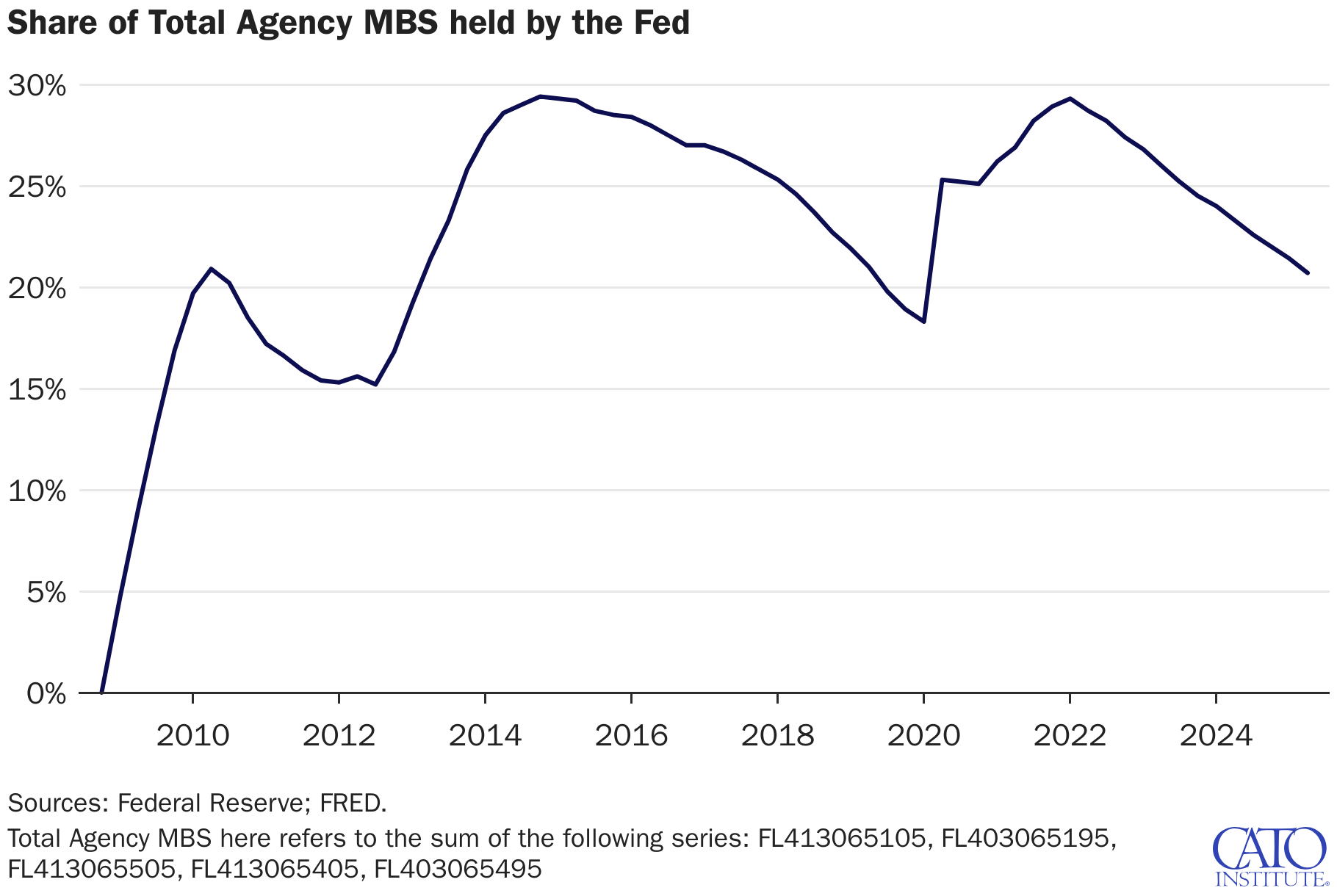
- Central Bank Operations: The Federal Reserve directly influences agency MBS liquidity through monetary policy actions, balance sheet adjustments, and open market operations conducted by the Federal Reserve Bank of New York.
Disclaimer: Mortgage capital markets involve complex risk exposures, including interest rate, prepayment, credit, and liquidity risks. The analytical concepts presented here are for educational and structural informational purposes only and do not constitute formal investment, legal, or financial advice.
Frequently Asked Questions
What is the primary difference between agency and non-agency MBS?
Agency MBS are issued or backed by government agencies (Ginnie Mae) or GSEs (Fannie Mae and Freddie Mac), carrying explicit or implicit federal guarantees against credit default. Non-agency MBS are issued by private entities (such as commercial banks) without government guarantees, relying on credit tranches, subordination, and asset quality to manage risk.
How does the TBA (To-Be-Announced) market support mortgage liquidity?
The TBA market standardizes trading parameters (agency issuer, maturity, coupon, and settlement date) without requiring traders to examine individual mortgage loans at contract execution. This standard format pools liquidity into a few benchmark products, enabling primary mortgage lenders to hedge pipeline positions and lock in secondary market execution pricing.
What causes negative convexity in mortgage-backed securities?
Negative convexity stems from the borrower's option to prepay their mortgage early without penalty. When interest rates fall, borrowers refinance, returning principal to investors early when reinvestment yields are low. When rates rise, prepayments dry up, extending the bond's duration when yields are higher. This asymmetry limits price appreciation when rates fall and amplifies price drops when rates rise.
What is the difference between mandatory and best-efforts secondary market sales?
In a best-efforts arrangement, the lender delivers a loan to an investor only if the borrower closes the mortgage; if the loan falls out, no penalty occurs. In a mandatory delivery arrangement, the lender commits to deliver a fixed dollar volume of loans by a specified date. Mandatory delivery yields higher secondary market prices but requires active hedging against pipeline fallout and rate movements.
What role do investment banks play in MBS capital markets?
Investment banks act as underwriters, market makers, and securitization structurers. They assist mortgage lenders by purchasing bulk loan portfolios, structuring cash flows into tranches (such as CMOs), pricing risks, providing warehouse financing lines, and selling the resulting securities to institutional asset managers globally.
Practical Recommendations for Market Participants
To optimize capital market execution and manage structural risks, financial institutions and market participants should apply a clear framework based on their operational focus:
For Mortgage Originators
- Evaluate Secondary Execution Strategy: Regularly audit your delivery mix. Transitioning eligible loan volume from best-efforts to mandatory delivery can yield 25–75 basis points in added revenue, provided robust hedging technology is in place.
- Automate Pipeline Hedging: Use dynamic risk analytics software to track daily rate-lock pull-through ratios and fallout behavior across different market volatility regimes.
- Diversify Warehouse Lines: Maintain relationships with multiple warehouse lenders to ensure continuous funding capacity during periods of market stress.
For Institutional Investors
- Analyze Prepayment Sensitivity: Look beyond nominal yield. Evaluate Option-Adjusted Spread (OAS) across various interest rate shock scenarios to model true performance under changing rate conditions.
- Match Tranche Structures to Mandates: Match liability structures precisely. Use PAC tranches for predictable cash flows, or short-pay sequential tranches if capital preservation and quick principal return are paramount.
- Monitor Underlying Credit Collateral: For non-agency exposures, inspect underlying loan-to-value (LTV) ratios, debt-to-income (DTI) metrics, borrower credit distributions, and geographic concentration risks to model stress loss scenarios accurately.
Image Gallery