Santander Bank in Spain: Analyzing Market Dominance, Strategic Reach, and the Regulatory Landscape in 2026
Banco Santander remains the preeminent financial institution in Spain and a cornerstone of the European banking sector. In 2026, its operations are defined by a massive domestic market share, an integrated digital-physical reach, and a...
Banco Santander remains the preeminent financial institution in Spain and a cornerstone of the European banking sector. In 2026, its operations are defined by a massive domestic market share, an integrated digital-physical reach, and a rigorous compliance framework necessitated by its status as a Global Systemically Important Bank (G-SIB) under continuous European Central Bank (ECB) oversight.
Contents
The Scale of Banco Santander in the Spanish Market
As of 2026, Banco Santander continues to anchor the Spanish economy, holding a dominant position in retail banking, corporate lending, and investment services. Following years of consolidation in the Spanish banking sector—most notably the integration of Banco Popular in the previous decade—Santander has optimized its domestic footprint to balance physical presence with digital efficiency.
Market Share and Asset Base
In the Spanish territory, Santander accounts for approximately 20% of the total market share in loans and deposits. Its domestic asset base is a critical component of its global balance sheet, which exceeds €1.8 trillion. This scale provides the bank with significant competitive advantages, including a lower cost of funding and the ability to finance large-scale infrastructure projects that smaller regional players cannot support.
The bank’s size is not merely a matter of total assets but also of its role as a primary lender to Small and Medium-sized Enterprises (SMEs). In Spain, where SMEs form the backbone of the economy, Santander’s "Santander Empresas" division provides specialized credit lines and international trade advisory, cementing its reach into the industrial and service sectors of every Spanish autonomous community.
The "One Santander" Model
A pivotal development reaching maturity in 2026 is the One Santander operational model. This strategy has unified the bank’s technology stacks across its global footprint, but its impact is felt most acutely in Spain. By simplifying its product offering, the bank has reduced operational complexity, allowing it to maintain a high Return on Tangible Equity (RoTE) even in a fluctuating interest rate environment. This efficiency is a primary driver behind its ability to sustain massive dividends and share buyback programs while meeting stringent capital requirements.
Reach and Accessibility: The Omnichannel Evolution
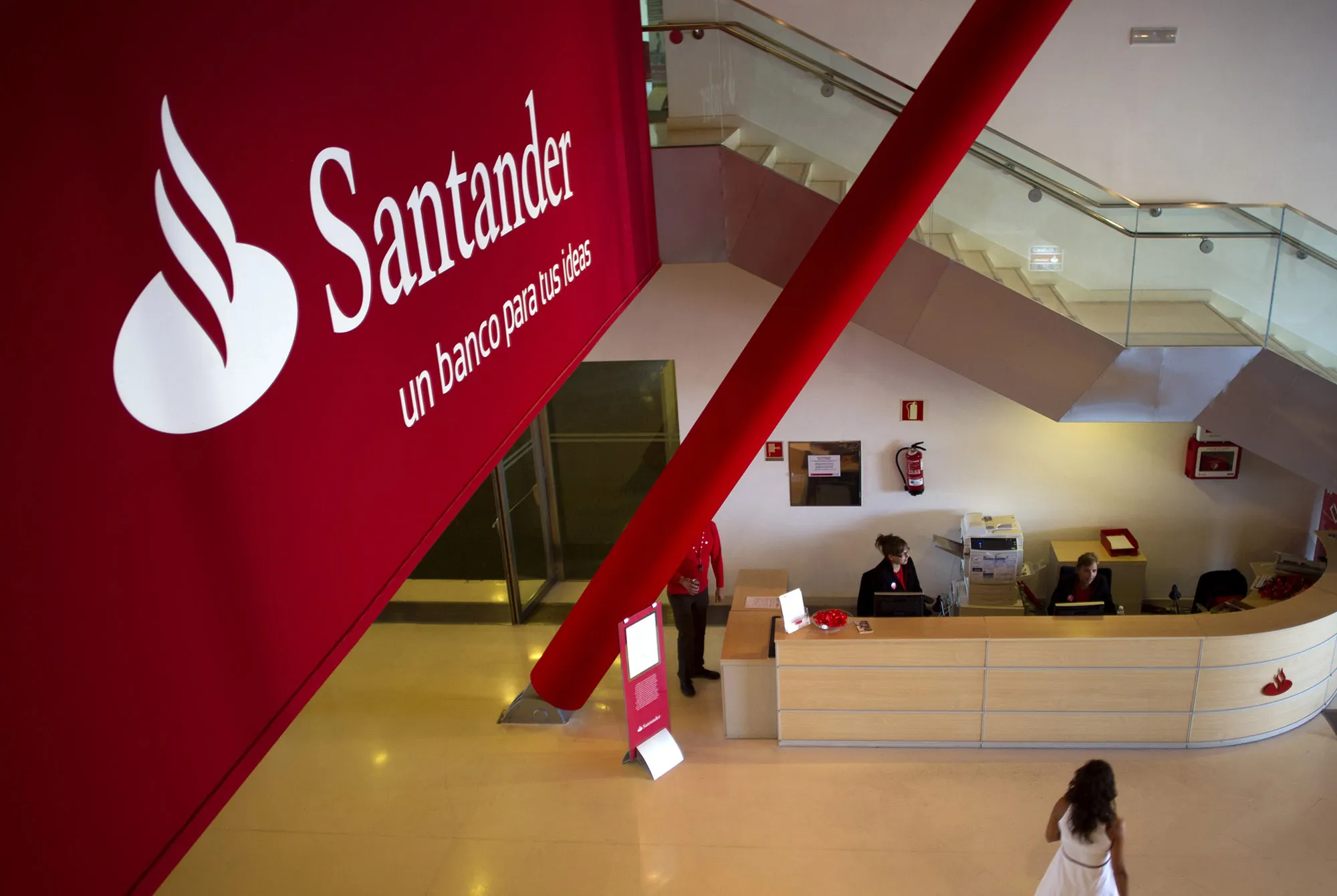
Santander’s reach in Spain is no longer measured solely by the number of street-level offices. While it maintains one of the largest branch networks in the country, the nature of these locations has transformed into "Smart Red" branches—hubs focused on high-value advisory services rather than basic transactional banking.
Digital Penetration and Openbank
The bank’s digital reach is spearheaded by its native digital subsidiary, Openbank. By 2026, Openbank has evolved from a secondary option into a central pillar of Santander’s growth strategy, targeting a younger, tech-savvy demographic. The integration of the "Gravity" cloud-native core banking platform has allowed Santander to migrate millions of Spanish customers to a more agile system, facilitating real-time payments and advanced AI-driven financial planning tools.
Geographic and Demographic Depth
Santander’s reach extends beyond major urban centers like Madrid and Barcelona. Through a combination of physical branches, "Correos" (postal service) partnerships, and mobile banking units, the bank ensures presence in rural "España Vaciada" (Empty Spain) regions. This social reach is a key component of its corporate social responsibility mandates and helps mitigate the "financial exclusion" concerns frequently raised by Spanish consumer advocates.
Ongoing Regulatory Scrutiny and Compliance Frameworks
Being a bank of Santander's magnitude brings an extraordinary level of regulatory oversight. In 2026, the bank operates under a "permanent audit" state, managed primarily by the European Central Bank’s Single Supervisory Mechanism (SSM) and the Bank of Spain (Banco de España).
Capital Requirements and Stress Testing
The ECB mandates that Santander maintain a robust Common Equity Tier 1 (CET1) ratio, typically targeted above 12% on a post-dividend basis. In 2026, regulatory scrutiny is particularly focused on the implementation of the final stages of Basel III (often referred to as Basel IV). This involves more standardized approaches to calculating credit, market, and operational risk, ensuring that the bank’s internal models do not underestimate potential losses during economic downturns.
Annual stress tests conducted by the European Banking Authority (EBA) simulate severe macroeconomic shocks, such as a sharp contraction in Spanish GDP or a collapse in the Eurozone property market. Santander’s performance in these tests is a matter of public record and is used by investors to gauge the bank’s resilience.
Anti-Money Laundering (AML) and Counter-Terrorism Financing (CTF)
The regulatory environment regarding AML has intensified significantly. Following the establishment of the EU’s Anti-Money Laundering Authority (AMLA), Santander has had to invest billions into automated monitoring systems. Regulatory scrutiny in Spain focuses on:
- Know Your Customer (KYC) Protocols: Continuous updates to customer profiles to prevent identity fraud.
- Transaction Monitoring: Real-time analysis of cross-border flows, particularly involving jurisdictions with high corruption indices.
- Ultimate Beneficial Ownership (UBO): Identifying the individuals behind complex corporate structures in the commercial banking segment.
Consumer Protection and Transparency
In Spain, the "Tribunal Supremo" (Supreme Court) and the Bank of Spain have set high bars for transparency. Santander, like other major Spanish banks, faces ongoing scrutiny regarding:
- Mortgage Clauses: Ensuring all loan conditions are transparent and do not include "abusive" terms.
- Fee Structures: Regulators monitor bank commissions to ensure they correspond to actual services rendered.
- AI Ethics: As the bank deploys AI for credit scoring, regulators now demand "explainability" to ensure that algorithms do not discriminate against specific demographic groups.
Comparative Market Position in 2026
To understand Santander’s reach, it is essential to compare its metrics against its primary Spanish competitors: BBVA and CaixaBank.
| Metric (2026 Estimates) | Banco Santander (Spain) | BBVA (Spain) | CaixaBank |
|---|---|---|---|
| Total Assets (Global) | ~€1.85 Trillion | ~€820 Billion | ~€650 Billion |
| Domestic Market Share | ~20% | ~15% | ~25% |
| Digital Customer Base | >60 Million (Global) | >50 Million (Global) | ~12 Million (Domestic) |
| CET1 Capital Ratio | 12.5% - 13% | 12.7% - 13.2% | 12.0% - 12.5% |
| Regulatory Focus | G-SIB Status / AML | Digital Asset Integration | Domestic Consolidation |
Note: Data reflects projected 2026 standings based on current growth trajectories and regulatory filings.
The Impact of the Spanish "Bank Tax"
A unique element of the regulatory and fiscal landscape for Santander in 2026 is the permanent nature of the special tax on large financial institutions. Initially introduced as a temporary measure, the Spanish government’s "impuesto extraordinario" has significantly influenced Santander’s domestic strategy.
The tax, calculated on interest income and commissions, forces the bank to maintain higher efficiency ratios to protect its bottom line. This has led to a dual-track strategy: maximizing fee-based income from wealth management and insurance while strictly controlling operational costs in the retail segment. Critics of the tax argue it limits the bank’s ability to supply credit, while proponents suggest it ensures a fair contribution from highly profitable entities during periods of high interest rates.
Emerging Challenges: ESG and Cyber Resilience
As we progress through 2026, the scope of regulatory scrutiny has expanded beyond traditional financial metrics to include Environmental, Social, and Governance (ESG) standards and cyber-resilience.
Green Finance and Taxonomy
The ECB now requires Santander to disclose its "Green Asset Ratio" (GAR), showing the proportion of its loan book dedicated to sustainable activities. Regulatory scrutiny here aims to prevent "greenwashing." Santander is under pressure to transition its heavy-industry loan portfolio toward carbon-neutral projects, a task that is particularly challenging given Spain's diverse industrial landscape.
Operational Resilience (DORA)
The Digital Operational Resilience Act (DORA) is in full effect in 2026. This means Santander must prove it can withstand, respond to, and recover from all types of ICT-related disruptions. Regulators conduct "red-teaming" exercises where they simulate cyber-attacks on the bank’s infrastructure. Given the bank's massive digital reach, a single point of failure could have systemic implications for the Spanish economy, making cyber-compliance a top-tier priority.
Frequently Asked Questions
Is Santander still considered "Too Big to Fail" in 2026?
Yes, Banco Santander is classified as a Global Systemically Important Bank (G-SIB). This classification means it is subject to higher capital buffer requirements and more intense supervision because its failure could trigger a global financial crisis. In Spain, its role is so central that the "Single Resolution Board" (SRB) maintains a detailed "living will" for the bank to ensure an orderly resolution without taxpayer bailouts if a crisis occurs.
How does the regulatory scrutiny in Spain differ from the UK or US?
While the core Basel standards apply globally, Spanish regulators (Bank of Spain) place a stronger emphasis on consumer protection laws and real estate risk. In the US, Santander (through Santander US) faces stricter Stress Capital Buffer (SCB) rules from the Federal Reserve, while in the UK, it must comply with "ring-fencing" regulations that separate retail banking from investment banking—a requirement that does not exist in the same way in the Spanish market.
What are the main requirements for opening a corporate account at Santander in 2026?
Due to AML and KYC scrutiny, businesses must provide comprehensive documentation, including proof of the Ultimate Beneficial Owner (UBO), tax residency certificates, and a detailed business plan. For Spanish SMEs, the process is increasingly digital, but high-risk sectors may face multi-week vetting processes to satisfy ECB compliance standards.
Has the digital reach of Santander replaced physical branches entirely?
No. While Santander has closed thousands of traditional branches over the last decade, it has pivoted to a "Phygital" model. In 2026, physical branches serve as essential centers for complex negotiations, such as mortgage applications, commercial lending, and private wealth management, where human expertise remains a differentiator.
Practical Recommendation for Stakeholders
For consumers and businesses operating with Santander in 2026, the key is transparency and digital integration. As the bank is under heavy regulatory pressure to monitor all flows, maintaining updated KYC profiles and using the bank’s integrated digital tools for tax and reporting compliance will minimize friction. Investors should look beyond the headline profit figures and focus on the CET1 ratio and the efficiency ratio, as these are the primary indicators of how well the bank is navigating the complex Spanish and European regulatory environments.
Image Gallery