How to Use Example Evaluation Questions in Security Assessments
Using example evaluation questions in security assessments requires mapping standardized templates to an organization's technical context, system boundaries, and regulatory frameworks. Security assessors select baseline questions from...
Using example evaluation questions in security assessments requires mapping standardized templates to an organization's technical context, system boundaries, and regulatory frameworks. Security assessors select baseline questions from established standards, tailor them to eliminate irrelevant criteria, mandate objective evidence artifacts, and score responses systematically to identify operational vulnerabilities and compliance gaps.
Contents
The Strategic Role of Example Evaluation Questions in Security Audits
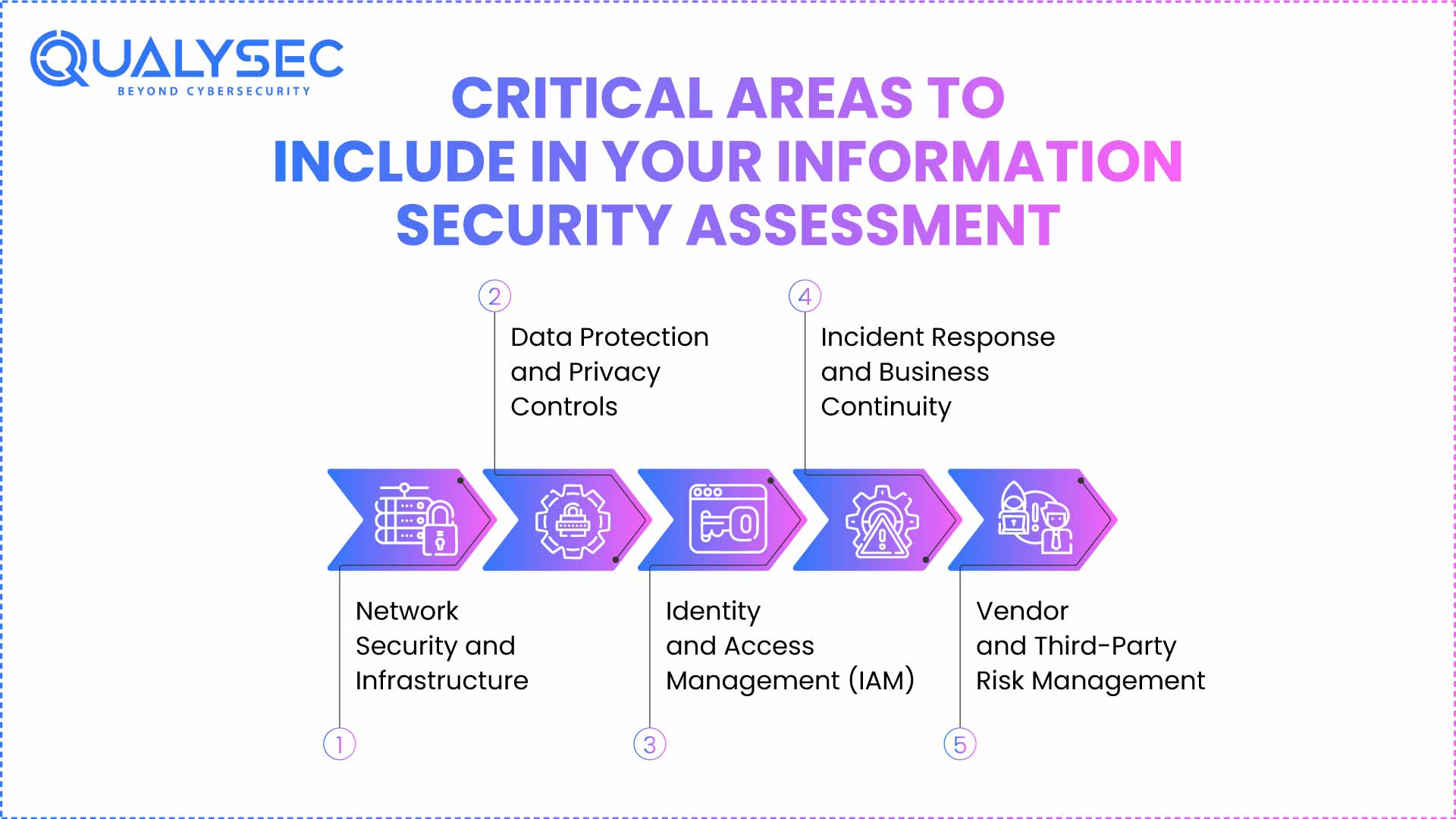
Security assessments assess whether an organization’s administrative, physical, and technical safeguards perform as intended. Conducting an assessment from scratch without a structured framework risks omitting critical control domains, creating inconsistent audit outcomes, and increasing manual workload. Example evaluation questions serve as standardized blueprints that provide technical rigor, repeatability, and comprehensive coverage across complex IT environments.
Standardized question sets—derived from recognized bodies like the National Institute of Standards and Technology (NIST), the Center for Internet Security (CIS), and the Cloud Security Alliance (CSA)—distill complex security policies into actionable queries. When used properly, these example questions help assessors move beyond high-level policy checks to evaluate real-world technical execution.
However, relying on raw example questions without contextual adaptation introduces operational friction. Pre-built question sets are designed to cover broad operational models; applying them blindly can result in survey fatigue, irrelevant compliance findings, and misplaced remediation priorities. Effective security assessors treat example questions as a baseline foundation rather than a rigid audit checklist.
Framework Sources for Example Security Evaluation Questions
Selecting appropriate source material is the first critical step when designing an assessment questionnaire. Different security frameworks address distinct operational domains, cloud deployment models, and risk parameters.
FRAMEWORK & QUESTION SELECTION
- NIST SP 800-53A: Federal / Enterprise Depth
- CIS Safeguards: Prioritized Technical Baselines
- CSA CAIQ v4: Cloud & SaaS Environment Audits
- Shared Access SIG: Third-Party / Vendor Risk Assessment
NIST SP 800-53A Rev. 5
NIST Special Publication 800-53A provides explicit assessment procedures for federal systems and enterprise security programs. Its evaluation questions are structured around three primary methods: Examine (reviewing documentation and operational logs), Interview (conversing with system administrators and operators), and Test (executing dynamic checks on physical or logical controls). This framework is ideal for deep technical reviews and regulatory audits under FISMA or FedRAMP.
CIS Controls & Safeguards
The CIS Controls break security implementation into three Implementation Groups (IG1, IG2, and IG3), ranging from basic cyber hygiene to advanced threat defense. The accompanying CIS assessment objectives offer straightforward, metrics-driven evaluation questions designed to test endpoint security, network defense, identity governance, and vulnerability management.
Cloud Security Alliance (CSA) CAIQ
The Consensus Assessments Initiative Questionnaire (CAIQ v4) is tailored specifically for cloud service providers (CSPs) and cloud-hosted workloads. Its example evaluation questions focus heavily on multi-tenancy separation, shared responsibility boundaries, hypervisor security, data protection at rest and in transit, and container security.
Shared Assessments SIG (Standardized Information Gathering)
For third-party risk management (TPRM), the SIG questionnaire provides a comprehensive library of evaluation questions categorized into operational domains such as risk management, asset control, environmental safety, and supply chain governance. It allows risk managers to scope evaluation questions based on the vendor's level of access to sensitive data.
Step-by-Step Guide: Applying and Customizing Example Questions
To maximize the value of example evaluation questions, security teams must execute a structured ingestion, customization, and evidence-gathering workflow.
- Scope Environment
- Select Baseline Questions
- Contextualize & Tailor
- Mandate Evidence Artifacts
- Execute Triad Evaluation (Examine / Interview / Test)
- Score & Prioritize Gaps
Step 1: Define Assessment Scope and Criticality
Before selecting evaluation questions, define the system boundary, network segment, or third-party service under review. Categorize assets based on data sensitivity (e.g., PII, PHI, PCI-DSS, proprietary intellectual property) and operational criticality. A high-value database hosting customer records requires granular evaluation questions regarding database activity monitoring (DAM) and encryption key rotation, whereas an isolated internal documentation repository requires less stringent queries.
Step 2: Ingest and Scope Baseline Questions
Import evaluation questions from your chosen framework repository into your Governance, Risk, and Compliance (GRC) platform or assessment management tool. Filter out domain modules that do not apply to the target architecture. For instance, if evaluating a serverless cloud application, suppress physical security questions related to data center access badges and diesel generator maintenance schedules.
Step 3: Rephrase for Technical Context and Clarity
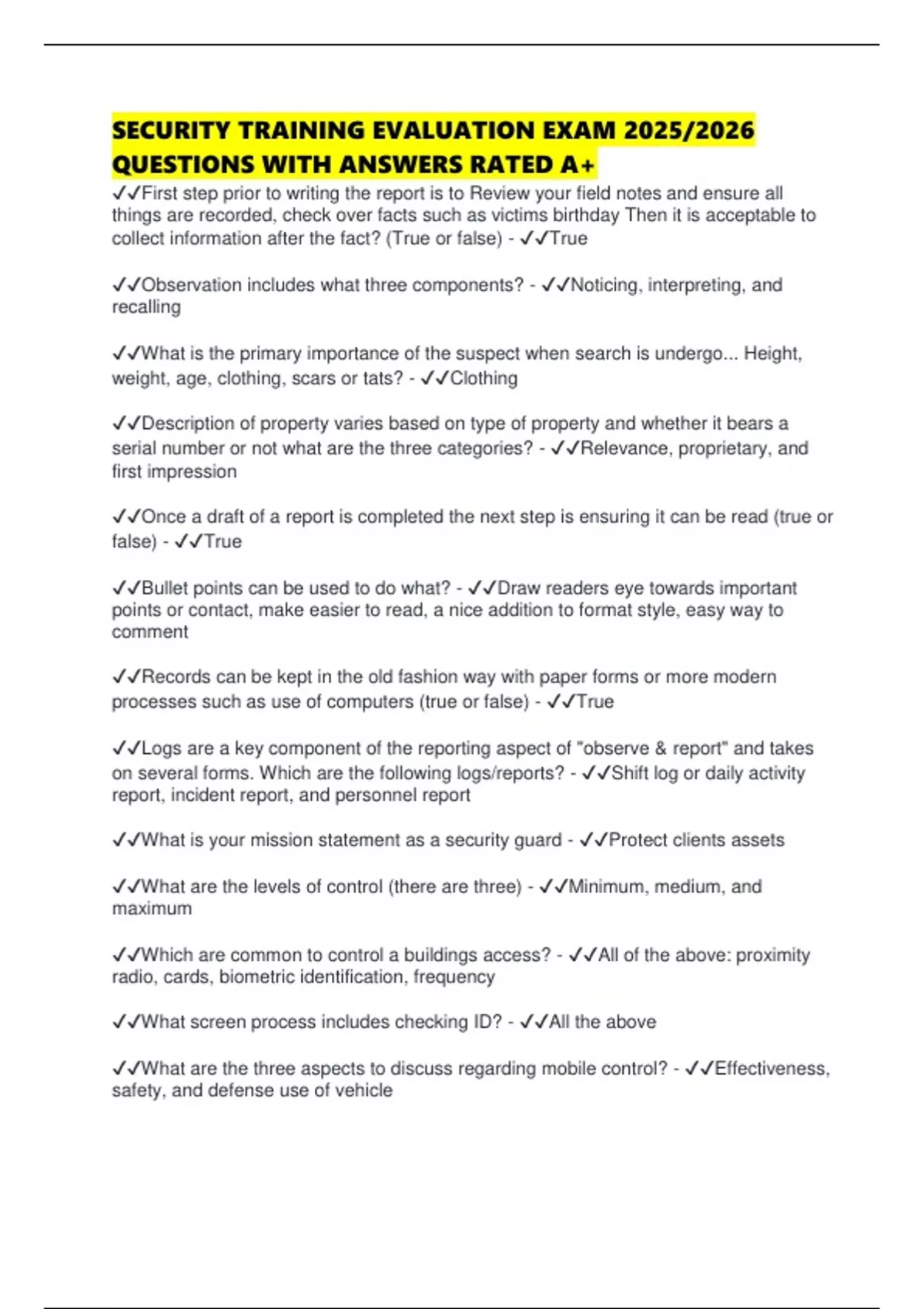
Example questions in standard frameworks are frequently written in high-level regulatory language. Rephrase these questions into clear, technical statements tailored to your specific architecture and technology stack.
- Generic Framework Question: "Is access to system management functions restricted to authorized personnel?"
- Tailored Assessment Question: "How does the organization enforce role-based access control (RBAC) and hardware-backed multi-factor authentication (MFA) for administrative access to AWS IAM, Azure Active Directory, and Kubernetes control planes?"
Step 4: Mandate Objective Evidence Artifacts
Self-reported "Yes" or "No" answers are insufficient for verifying security controls. For every tailored evaluation question, specify the exact evidence artifact required to prove compliance. Require artifacts such as configuration exports, active directory reports, static code analysis summaries, or automated vulnerability scanning output.
Step 5: Execute Evaluation Using the Triad Method
Apply the NIST assessment methodology to cross-validate responses:
- Examine: Review policies, network topology diagrams, firewall rule tables, and system logs.
- Interview: Discuss configuration standards with systems engineers, developers, and SOC analysts to verify that written policies reflect daily operations.
- Test: Conduct active verification, such as running credentialed patch scans, executing simulated phishing exercises, or verifying endpoint agent telemetry in the EDR console.
Tailoring Questions Across Assessment Domains
Security assessments vary depending on whether you are evaluating an internal application, a cloud deployment, or an external SaaS supplier. The table below illustrates how example questions from standard frameworks are customized and paired with specific evidence artifacts across operational domains.
| Domain / Scenario | Framework Source | Example Tailored Question | Required Evidence Artifact | Core Objective |
|---|---|---|---|---|
| Third-Party Risk (TPRM) | CSA CAIQ / SIG | How is multi-tenant data isolation enforced, and how often are tenant boundary leakage controls tested? | SOC 2 Type II report (Section III), tenant architecture diagrams, independent penetration test executive summary | Verify data privacy and multi-tenant isolation in cloud environments. |
| Cloud Security (IaaS/PaaS) | CIS AWS Foundations | Are object storage buckets configured to block public access globally, and is default SSE-KMS encryption enforced? | AWS Config rule compliance reports, CSPM policy export, CloudTrail audit logs | Prevent unauthorized cloud storage exposure and enforce data encryption. |
| Identity & Access (IAM) | NIST SP 800-53A (IA-2, AC-2) | What automated pipeline disables directory accounts within 24 hours of employee offboarding notification? | IdP/HR system integration workflow documentation, audit log sample of recent deprovisioning timestamps | Prevent stale account persistence and insider access threats. |
| Application Security | OWASP ASVS / NIST | How are API endpoints authenticated, rate-limited, and protected against broken object-level authorization (BOLA)? | DAST scan logs, API Gateway routing configuration, WAF rule exports | Prevent API-level data leakage and automated abuse. |
| Incident Response | ISO/IEC 27001 (A.5.24) | When was the Ransomware Incident Playbook last executed against production system backups, and what was the recovery point objective (RPO) performance? | After-action report (AAR) from recent tabletop exercise, immutable backup verification logs | Assess operational resilience and recovery capability against destructive attacks. |
Scoring Methodologies and Risk Prioritization
Once evaluation questions are answered and verified against evidence artifacts, assessors must translate raw responses into prioritized risk ratings.
Binary vs. Maturity-Based Scoring
While binary scoring (Compliant / Non-Compliant) offers quick baseline indicators, it fails to capture partial implementations or operational maturity. Adopting a maturity-based scoring model—such as the Capability Maturity Model Integration (CMMI) scale—provides greater visibility into control effectiveness:
- Level 0 (Non-Existent): Control is missing entirely; no formal process exists.
- Level 1 (Ad-Hoc): Control is performed informally on an unstructured basis without documentation.
- Level 2 (Repeatable): Control is documented and followed consistently across core teams.
- Level 3 (Defined): Control is standardized, integrated into enterprise policies, and monitored for compliance.
- Level 4 (Managed): Control performance is measured using automated telemetry and key performance indicators (KPIs).
- Level 5 (Optimizing): Control undergoes continuous improvement through automated regression testing and threat intelligence feeds.
Weighting Findings Based on Environmental Impact
Incorporate vulnerability severity metrics (such as CVSS v3.1/v4.0 scores) and business impact metrics when evaluating negative findings. A missing policy document for an offline backup controller represents a moderate administrative finding, whereas an unauthenticated API endpoint exposed directly to the internet constitutes a critical finding requiring immediate remediation.
Common Pitfalls and How to Avoid Them
1. Treating Evaluation Templates as Static Checklists
The Problem: Deploying standard question templates without adaptation causes evaluation teams to collect meaningless data, frustrates operational units, and dilutes focus on critical controls. The Solution: Pre-screen every question against the deployment architecture. Mandate that at least 30% of standard questions be customized to reflect local technical terminology and infrastructure dependencies.
2. Accepting Self-Attestation Without Validation
The Problem: Relying on vendor or administrator assurances ("Yes, we encrypt all data") without verifying underlying system configurations creates a false sense of security. The Solution: Establish a strict proof threshold. Require raw configuration files, automated scan results, or direct visual demonstrations during technical walk-throughs before marking a question as fully verified.
3. Overlooking Temporal Evidence Validity
The Problem: Evaluating security postures using stale evidence, such as a penetration test conducted 18 months prior or dynamic application scan reports run prior to major code commits. The Solution: Establish evidence age limits. Configuration exports, patch status reports, and account listings must be less than 30 to 90 days old relative to the assessment window.
4. Isolating Questions from Continuous Monitoring
The Problem: Conducting point-in-time security assessments that become obsolete shortly after completion due to continuous deployment cycles and rapid cloud infrastructure changes. The Solution: Map evaluation questions directly to Continuous Control Monitoring (CCM) tools and Security Information and Event Management (SIEM) detections where feasible.
Frequently Asked Questions
Where can I find reputable example evaluation questions for security assessments?
Authoritative source frameworks include NIST SP 800-53A Rev. 5, the CIS Controls Assessment Objectives, the Cloud Security Alliance CAIQ v4, and the OWASP Application Security Verification Standard (ASVS). For third-party assessment programs, the Shared Assessments SIG library provides industry-standard templates.
How do I adapt evaluation questions for small business environments versus enterprise infrastructure?
For smaller environments, map questions to streamlined frameworks like CIS Implementation Group 1 (IG1) or NIST Small Business Cybersecurity Corner resources. Focus evaluation questions on baseline cyber hygiene—such as centralized patch management, MFA enforcement, endpoint detection and response (EDR), and immutable offsite backups—rather than complex regulatory governance frameworks.
What is the difference between an evaluation question and a compliance audit objective?
An audit objective defines the high-level policy standard that must be achieved (e.g., "Ensure all sensitive data at rest is protected"). An evaluation question provides the specific technical inquiry used to verify that standard (e.g., "Are production PostgreSQL databases encrypted using AES-256 keys managed in a dedicated Hardware Security Module?").
How many evaluation questions should a standard security assessment include?
Questionnaire scope depends on assessment depth and risk tier. A lightweight vendor screening may include 20 to 50 targeted questions, whereas a comprehensive Tier-1 application or enterprise infrastructure audit using NIST SP 800-53A may involve 150 to 300 tailored questions covering multiple control domains.
How do automated GRC and security tools use example questions?
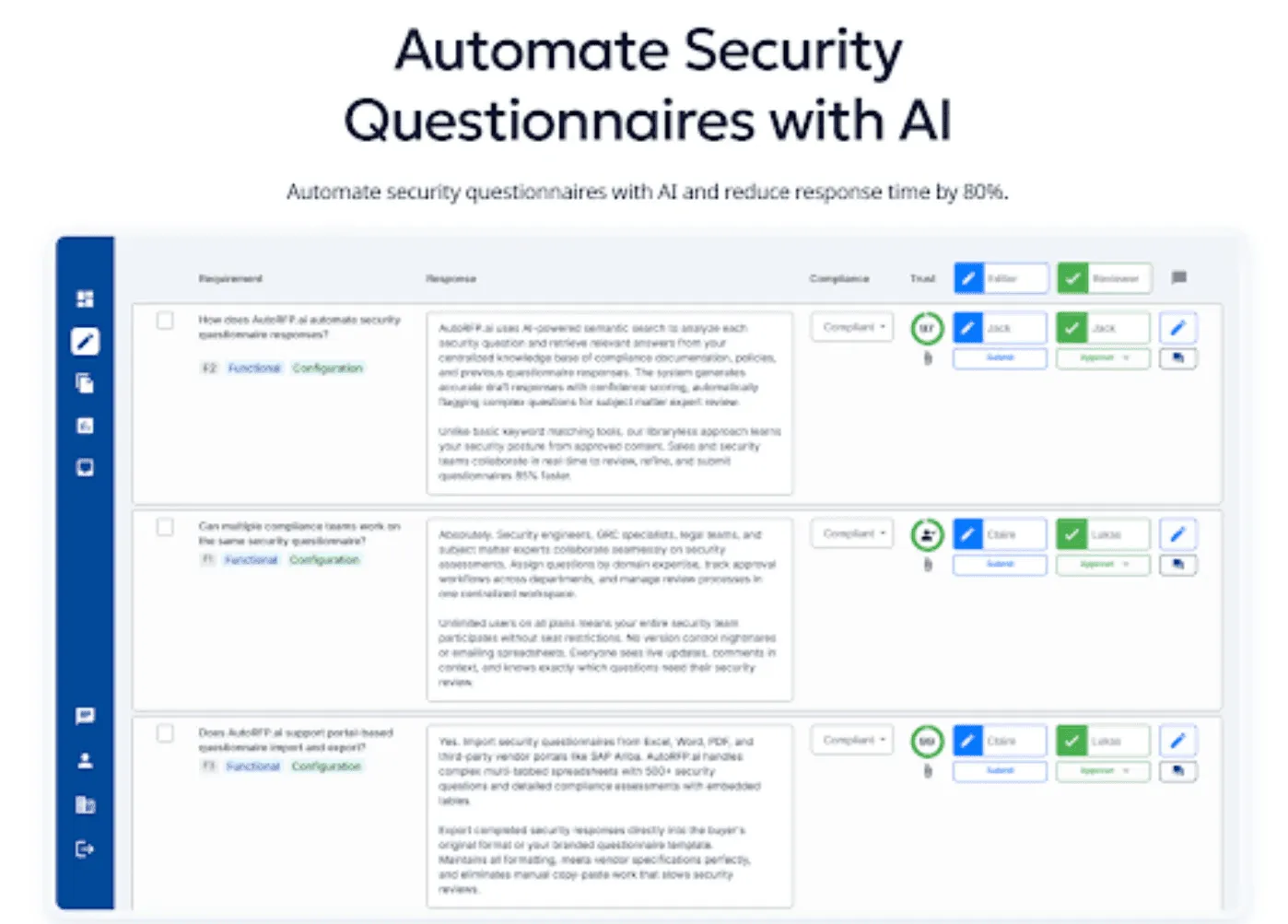
Modern GRC platforms ingest standardized question libraries and use API integrations to map technical telemetry from Cloud Security Posture Management (CSPM), Identity Providers (IdP), and vulnerability scanners directly to evaluation questions. This automates evidence gathering and replaces static annual surveys with real-time compliance reporting.
Practical Recommendation for Security Teams
To successfully implement example evaluation questions in your security assessment workflow, follow this practical operational checklist:
- Establish a Core Library: Consolidate standard question sets from NIST SP 800-53A, CIS Controls, and CSA CAIQ into a centralized repository or GRC system.
- Define Scoping Rule-Sets: Create templates mapped to specific system types (e.g., SaaS Vendor, AWS Infrastructure, Internal HR Portal, Mobile Application) so assessors can quickly filter out irrelevant control modules.
- Standardize Evidence Artifacts: Publish an evidence guide detailing acceptable proof types for each question domain, reducing administrative back-and-forth during technical reviews.
- Integrate Technical Testing: Pair self-reported or document-based questionnaire answers with automated technical verification, such as vulnerability scans, configuration audits, and IAM access reviews.
- Track Remediation with SLA Alignment: Link unsatisfied evaluation questions to risk register entries with enforced remediation timeframes based on severity (e.g., Critical gaps resolved within 14 days, High within 30 days).
Image Gallery