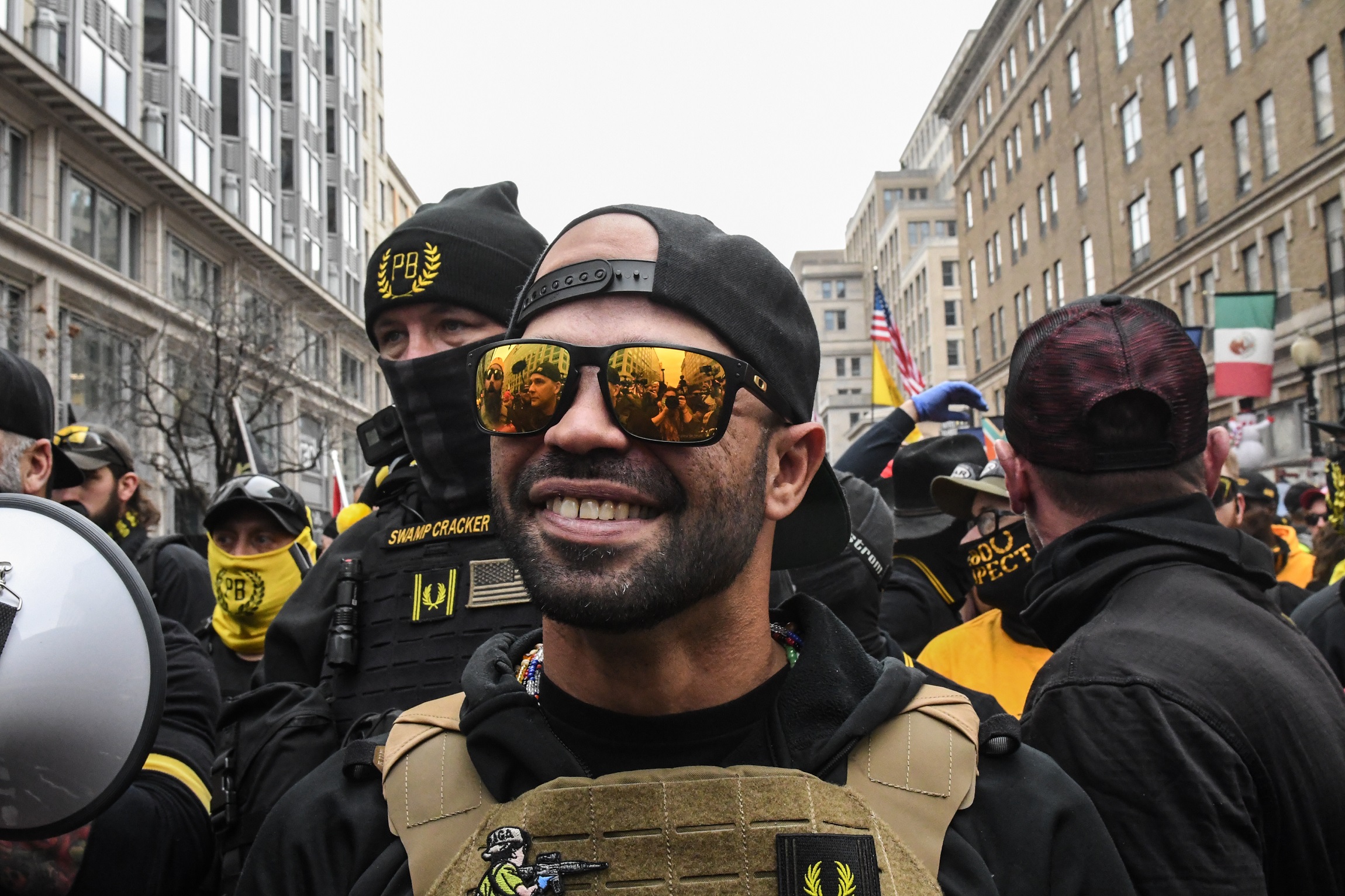
The Truth About Enrique Tarrio and the Claim He Is Black
Enrique Tarrio, the former national chairman of the Proud Boys, has frequently been described or self-identified as Afro-Cuban, sparking widespread public discussion and debate regarding his racial identity. Public records, genealogica...
Enrique Tarrio, the former national chairman of the Proud Boys, has frequently been described or self-identified as Afro-Cuban, sparking widespread public discussion and debate regarding his racial identity. Public records, genealogical context, and cultural definitions within the Hispanic diaspora clarify that he is of Afro-Latino descent, specifically with Cuban heritage, though the public discourse often intersects with complex American racial categorizations.
Contents
Understanding the background of Enrique Tarrio, the nuances of Afro-Latino identity in the United States, and the controversies surrounding his leadership of a far-right organization requires examining public documentation, media reports, and historical context. This analysis breaks down the verifiable facts regarding his heritage, the nature of the claims made about his race, and how these elements influenced political commentary.
Background and Identity of Enrique Tarrio
Henry "Enrique" Tarrio rose to public prominence as the leader of the Proud Boys, a far-right, neo-fascist organization founded in 2016 that promotes political violence. Throughout his tenure and subsequent legal proceedings resulting from the January 6, 2021, Capitol riot, his racial and ethnic background became a frequent point of discussion in mainstream media and political circles.
Tarrio was born and raised in Miami, Florida, within a Cuban-American family. In various media interviews and public profiles, including a prominent 2020 profile by The New York Times, Tarrio has identified as Afro-Cuban. In the United States, the intersection of Hispanic ethnicity and racial identity frequently creates friction because the U.S. Census Bureau treats race and Hispanic origin as two separate and distinct concepts. Consequently, an individual can be ethnically Hispanic or Latino and belong to any racial category, including Black, White, or multiracial.
Understanding Afro-Latino Identity in Context
To evaluate claims regarding Tarrio's racial identity accurately, it is essential to look at how race is understood in Cuba versus the United States.
- The Cuban Racial Spectrum: Cuba has a complex racial history influenced by Spanish colonization and the transatlantic slave trade. A significant percentage of the Cuban population identifies as Afro-Latino, mulato, or Black.
- The U.S. Census Definition: In the United States, race is often viewed through a rigid binary lens (Black and White). However, Latin America generally utilizes a more fluid spectrum of racial categorization based on skin tone, ancestry, and social perception.
- Self-Identification: Tarrio’s identification as Afro-Cuban aligns with his family's heritage from Cuba, where African ancestry is deeply interwoven into the cultural and demographic fabric.
Public Controversy and Political Discourse
The debate over whether Tarrio can be described as Black or a person of color largely stems from his association with the Proud Boys, an organization scrutinized for attracting white nationalists and promoting exclusionary politics. Critics and political opponents have frequently questioned the authenticity or relevance of his Afro-Latino identity given the group's ideological alignment.
Conversely, supporters and Tarrio himself have pointed to his ethnic background to deflect accusations of white supremacy leveled against the organization. This dynamic created a unique political flashpoint during the height of the organization's visibility. Researchers specializing in extremism and sociology have noted that the presence of individuals of color in far-right or nationalist movements does not negate the ideological frameworks of those movements, which often prioritize nationalism and cultural assimilation over traditional white supremacy, though xenophobic and exclusionary rhetoric remains a core component.
Media Reporting and Verification
Major journalistic outlets, including investigative reports by Reuters, the Associated Press, and The Miami Herald, have consistently referred to Tarrio as Afro-Cuban based on his family background and court documents. Public records from his time in Miami confirm his Cuban-American heritage.
| Source / Entity | Claim Addressed | Verified Status |
|---|---|---|
| Court Documents | Family origin and birthplace (Miami, FL) | Verified |
| Media Profiles | Self-identification as Afro-Cuban | Verified through interviews |
| U.S. Census Bureau Framework | Classification of Hispanic and Latino race | Hispanic is an ethnicity, not a race |
| Extremism Researchers | Role of minority members in far-right groups | Documented sociological phenomenon |
Legal Proceedings and Sentencing
Beyond his racial identity, Tarrio's public profile changed significantly following his arrest and subsequent conviction related to the events of January 6, 2021. In August 2023, a federal judge sentenced Tarrio to 22 years in prison—one of the longest sentences handed down in connection with the Capitol attack—after he was convicted of seditious conspiracy and other charges.
Throughout his trial and sentencing, media coverage occasionally revisited his background, but the legal proceedings focused primarily on his leadership role, organizational planning, and actions surrounding the certification of the 2020 presidential election results rather than his racial or ethnic background.
Summary of Key Facts
- Ethnic Heritage: Enrique Tarrio is a Cuban-American born in Miami, Florida.
- Racial Identification: He has publicly identified as Afro-Cuban, reflecting his family roots in a country with significant African diaspora history.
- U.S. Classification Nuance: In the United States, his heritage places him in the Afro-Latino demographic, distinguishing between ethnicity (Hispanic) and race.
- Political Context: His background became a subject of intense public debate due to his leadership position within the Proud Boys.
Frequently Asked Questions
Is Enrique Tarrio considered Black?
Enrique Tarrio identifies as Afro-Cuban. Within the context of Latin American heritage, this denotes African descent combined with Cuban nationality. In the United States, individuals of Afro-Latino descent may or may not identify primarily as Black, depending on personal perspective and cultural context, though demographic standards categorize Hispanic origin separately from race.
What is an Afro-Latino identity?
Afro-Latino refers to people living in the Americas of African ancestry who originate from Latin American countries. This includes millions of individuals from nations such as Cuba, Puerto Rico, the Dominican Republic, Brazil, and Colombia, where populations exhibit diverse racial mixtures resulting from historical migration and slavery.
How did Tarrio's background affect the Proud Boys' image?
The leadership of a far-right organization by a person of Cuban descent was frequently cited by members to counter allegations of white supremacy. However, civil rights organizations and extremism experts argued that individual racial backgrounds do not alter the documented ideology, rhetoric, and actions of the organization itself.
What are the current legal consequences for Tarrio?
Tarrio was convicted of seditious conspiracy and related federal charges for his role in organizing members of the Proud Boys during the January 6, 2021, Capitol riot. He is currently serving a 22-year federal prison sentence.
Why does the distinction between race and ethnicity matter here?
The U.S. Census Bureau treats race and Hispanic origin as separate categories. A person of any race can be of Hispanic, Latino, or Spanish origin. This administrative and cultural framework often leads to public confusion when individuals from Latin America navigate American racial discussions.
Next Actions and Further Reading
For those seeking a deeper academic or journalistic understanding of these events, reviewing primary court documents from the U.S. District Court for the District of Columbia provides direct insight into the federal prosecution of the Proud Boys leadership. Additionally, sociological studies on the evolution of far-right movements in the United States offer broader context on how modern extremist organizations incorporate individuals from diverse ethnic backgrounds.
Image Gallery