What Is Interest Capitalization on a Student Loan?
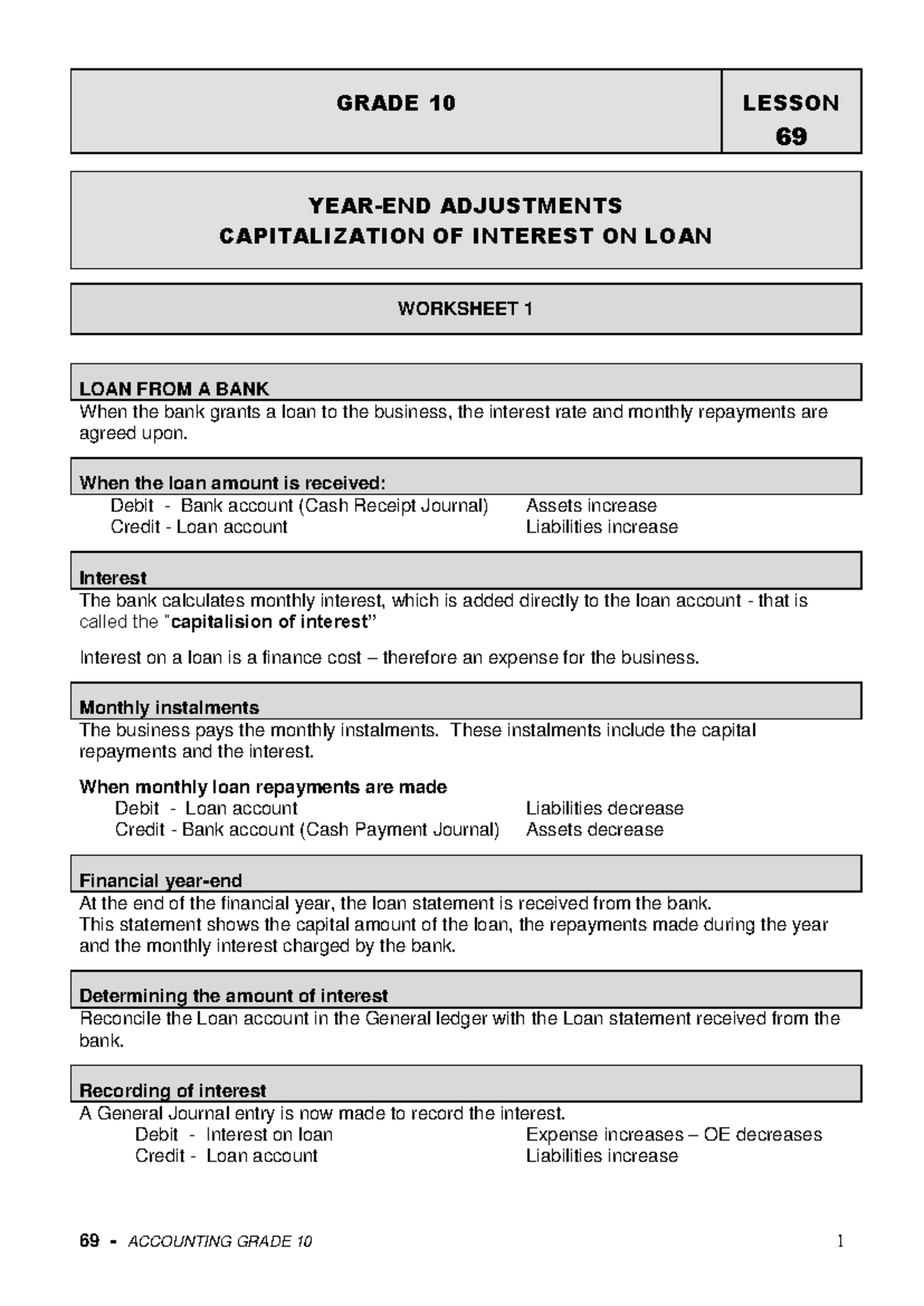
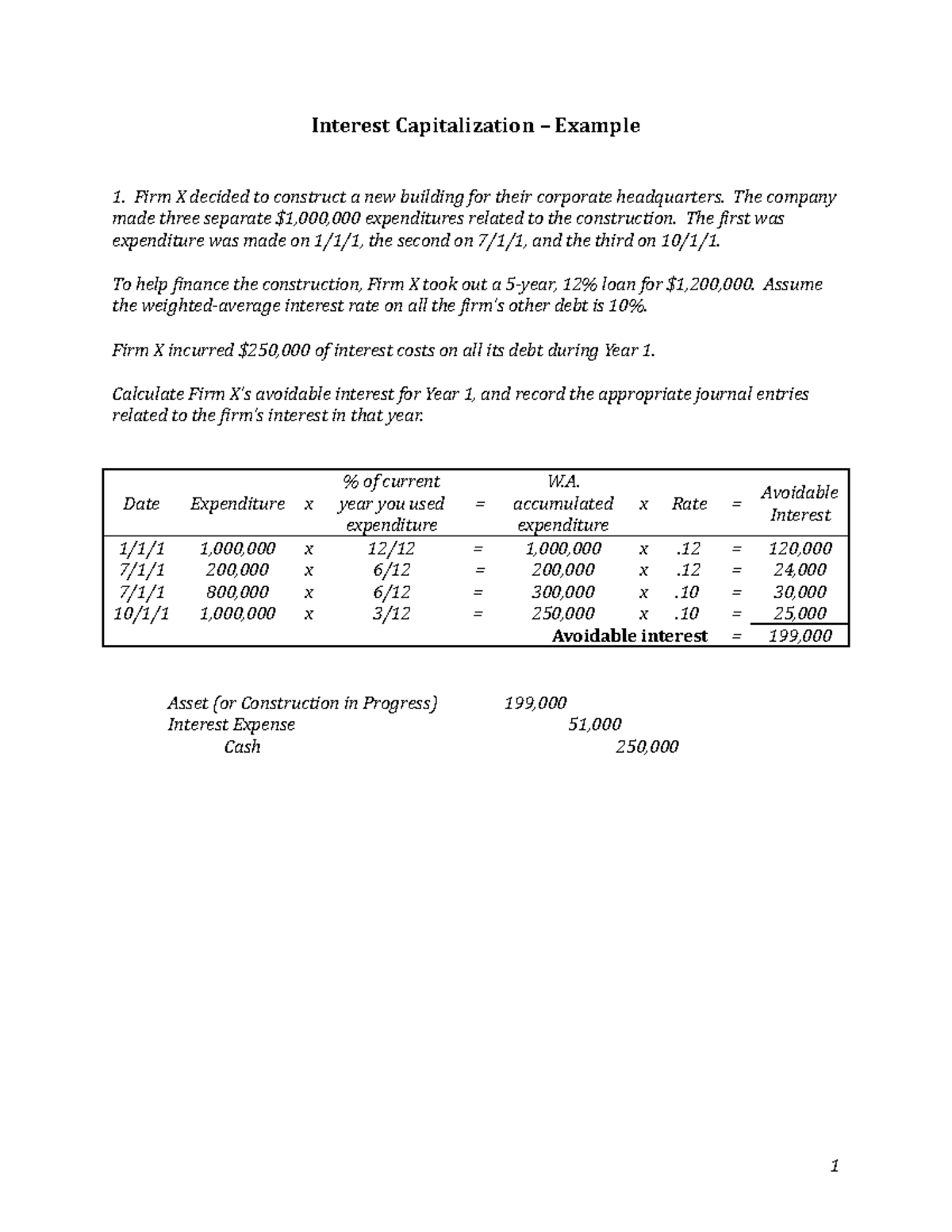
Interest capitalization on a student loan occurs when unpaid accrued interest is added to the principal loan balance. Once capitalized, future interest is calculated based on this higher combined total rather than the original amount b...
Interest capitalization on a student loan occurs when unpaid accrued interest is added to the principal loan balance. Once capitalized, future interest is calculated based on this higher combined total rather than the original amount borrowed, increasing both the overall cost of the loan and the monthly payment required under fixed repayment plans.
Contents
Understanding Interest Capitalization Mechanics
To understand how interest capitalization affects a student loan, it is necessary to distinguish between standard interest accrual and interest compounding. Most student loans in the United States—both federal and private—accrue simple daily interest. Simple interest is calculated continuously based on the current unpaid principal balance using the following basic formula:
$$\text{Daily Interest Amount} = \frac{\text{Unpaid Principal Balance} \times \text{Annual Interest Rate}}{365}$$
As long as a borrower makes full monthly payments that cover all accrued interest and a portion of the principal balance, interest does not compound. However, when a loan enters a period where payments are paused, reduced below the monthly accrued interest amount, or postponed—such as during enrollment, a grace period, deferment, or forbearance—interest continues to accrue daily on the principal.
If this accrued interest is not paid before a specific triggering event occurs, the lender or loan servicer executes interest capitalization. The accumulated interest is formally added to the principal balance. From that date forward, the daily interest calculation applies to the new, higher principal, creating a compounding effect that significantly increases borrowing costs over time.
Simple Interest vs. Capitalized Compounding
Consider a borrower with an initial principal balance of $30,000 at a fixed interest rate of 6.5%.
- Before Capitalization: The loan accrues approximately $5.34 in simple interest per day ($$30,000 \times 0.065 / 365$). If interest accrues for 12 months without payment, the accumulated interest equals roughly $1,950.
- The Capitalization Event: If that $1,950 in unpaid interest is capitalized, the principal balance resets to $31,950.
- After Capitalization: Daily interest is now calculated on $31,950. The daily interest accrual increases to approximately $5.69 per day ($$31,950 \times 0.065 / 365$).
While a difference of 35 cents per day may appear modest initially, across a 10-year or 25-year repayment schedule, periodic capitalizations can add thousands of dollars to the total repayment obligation.
When Does Interest Capitalization Occur?
The rules governing when interest capitalizes depend heavily on whether the debt consists of federal Direct Loans or private student loans. Major regulatory revisions implemented by the U.S. Department of Education significantly restricted the circumstances under which interest can capitalize on federal loans, while private lenders maintain independent terms established in their individual promissory notes.
Federal Student Loan Capitalization Rules
Historically, federal student loan interest capitalized across a wide variety of administrative and status changes. However, regulatory updates effective July 1, 2023, under Title 34 of the Code of Federal Regulations, permanently eliminated interest capitalization for Direct Loans across most non-statutory events.
Under current federal standards, interest NO LONGER capitalizes on federal Direct Loans when:
- A borrower leaves an in-school deferment or post-school grace period.
- A loan leaves a period of administrative or voluntary forbearance.
- A borrower fails to annually recertify their income on most Income-Driven Repayment (IDR) plans, such as the Saving on a Valuable Education (SAVE) plan, Pay As You Earn (PAYE), or Income-Contingent Repayment (ICR).
- A borrower switches between most income-driven repayment options.
However, federal law retains statutory requirements for interest capitalization under a small number of specific circumstances:
- Exiting the Income-Based Repayment (IBR) Plan: By federal statute (the Higher Education Act), if a borrower voluntarily leaves the statutory IBR plan or fails to provide annual income documentation under IBR, any unpaid accrued interest must be capitalized onto the principal balance.
- Federal Loan Default: If a federal student loan enters default status, unpaid interest may be capitalized onto the principal balance as part of default processing and collection actions.
- Federal Direct Consolidation: While technically creating a new loan rather than capitalizing an existing one, consolidating existing federal student loans into a Direct Consolidation Loan rolls all accumulated interest from the underlying loans into the principal balance of the new consolidated loan.
Private Student Loan Capitalization Rules
Private student loan originators (such as commercial banks, credit unions, and online lenders) are not subject to federal Department of Education regulations. Private lenders set their capitalization terms within their master promissory notes.
Private student loan interest typically capitalizes under the following standard scenarios:
- At the End of In-School Deferment: When a student graduates or drops below half-time enrollment status, all interest accumulated during enrollment is added to the principal balance.
- At the End of the Post-Graduation Grace Period: Private loans often feature a 6-month grace period after leaving school. Unpaid interest accumulated during school and grace is capitalized when full principal-and-interest repayment begins.
- Exiting Loan Forbearance or Hardship Modification: If a borrower requests temporary payment relief through a private lender’s forbearance program, accrued interest is generally capitalized as soon as the forbearance period ends.
The Financial Impact: A Mathematical Example
To evaluate the exact financial consequences of interest capitalization, consider a borrower who completes an undergraduate degree with $35,000 in unsubsidized federal or private loans at an average fixed interest rate of 7.0%.
Suppose the borrower incurs 4 years of in-school deferment plus a 6-month grace period (54 total months of interest accrual without making payments).
- Original Principal: $35,000
- Interest Rate: 7.0% per annum
- Monthly Accrued Interest: $\frac{$35,000 \times 0.070}{12} = $204.17 \text{ per month}$
- Total Accrued Unpaid Interest over 54 Months: $$204.17 \times 54 = $11,025$
Scenario Comparison: Capitalized vs. Non-Capitalized Interest
The following breakdown illustrates how capitalizing that $11,025 affects a standard 10-year (120-month) repayment plan compared to a scenario where interest does not capitalize (or is paid off before capitalization occurs):
| Repayment Metric | Scenario A: Non-Capitalized Interest | Scenario B: Full Interest Capitalization |
|---|---|---|
| Starting Principal Balance | $35,000 | $46,025 ($35,000 + $11,025) |
| Unpaid Interest Carried | $11,025 (paid down alongside principal) | $0 (rolled into principal) |
| Monthly Payment (10-Year Term) | $406.38 (principal/interest) + interest paydown | $534.39 |
| Total Cumulative Interest Paid | $13,766 | $18,102 |
| Total Lifetime Payment | $48,766 | $64,127 |
| Net Financial Difference | Baseline | +$15,361 higher total cost |
In Scenario B, the borrower pays interest on top of previous interest. Because the monthly payment rises by over $128 per month, the lifetime cost of borrowing increases by thousands of dollars beyond the initial accrued interest amount.
Federal vs. Private Loan Capitalization Rules
Understanding the policy differences between federal Direct Loans and private student debt helps borrowers make informed choices regarding repayment strategies, loan consolidation, and forbearance usage.
| Feature / Scenario | Federal Direct Loans (Post-2023 Rules) | Private Student Loans |
|---|---|---|
| In-School Deferment Exit | No interest capitalization | Interest capitalizes upon exit |
| Grace Period Exit | No interest capitalization | Interest capitalizes at end of grace |
| General Forbearance Exit | No interest capitalization | Interest capitalizes upon exit |
| Annual IDR Non-Recertification | Capitalizes on IBR only; eliminated on SAVE, PAYE, ICR | N/A (IDR plans generally unavailable) |
| Switching Repayment Plans | Capitalizes when leaving statutory IBR | Varies by lender agreement |
| Loan Default | Statutory capitalization applies | Capitalization applies per contract terms |
| Direct Consolidation / Refinancing | Interest rolls into new principal | Interest rolls into new principal |
Federal Regulatory Framework and Current Standards
The regulatory environment surrounding federal student loan capitalization underwent substantial reforms to prevent "negative amortization" traps where debt balances expand beyond control.
Under the rulemaking finalized by the U.S. Department of Education, federal policy recognized that automatic interest capitalization disproportionately harmed lower-income borrowers who required temporary forbearance or struggled to complete administrative paperwork annually.
Key Statutory Provisions
- 34 CFR § 685.202 (Interest Rates and Capitalization): Governs how interest is calculated for Direct Subsidized, Direct Unsubsidized, and Direct PLUS Loans. Recent amendments removed authorization for loan servicers to capitalize interest following periods of deferment and administrative forbearance unless explicitly mandated by the Higher Education Act of 1965.
- Subsidized vs. Unsubsidized Loan Distinctions: Subsidized Direct Loans do not accrue interest while the borrower is enrolled at least half-time, during the 6-month grace period, or during qualifying deferment periods because the federal government pays the interest. Consequently, capitalization on subsidized loans can only occur for interest accrued during non-qualifying periods or statutory events. Unsubsidized loans accrue interest continuously from the date of disbursement.
Borrowers seeking to review official federal policy details can consult the Consumer Financial Protection Bureau (CFPB) or access regulatory guidelines directly through StudentAid.gov.
How to Prevent or Minimize Interest Capitalization
Borrowers can take deliberate steps to minimize the compounding impact of capitalized interest across both federal and private student debt.
- Accruing Unpaid Interest During School / Deferment
- Does loan qualify for Federal Direct Rules?
- YES:
- Capitalization limited to statutory events (e.g., IBR Exit, Default)
- NO (Private Loan):
- Capitalization occurs at end of grace / forbearance
- PAY ACCRUED INTEREST BEFORE PERIOD ENDS
- YES:
- Prevent Principal Expansion
1. Make Interest-Only Payments While in School
The most effective way to eliminate interest capitalization is to pay off interest as it accrues. Making small monthly payments of $25 to $100 while enrolled covers daily interest accumulation, keeping the principal balance static when full repayment begins.
2. Make a Lump-Sum Payment Before Grace or Forbearance Ends
If monthly payments during school are not feasible, borrowers with private loans or statutory federal capitalization events should calculate their total accrued interest and make a one-time lump-sum payment right before the grace period or forbearance expires. Paying off accrued interest before the servicer processes capitalization prevents that interest from being added to the principal balance.
3. Select Income-Driven Repayment (IDR) Instead of Forbearance
For federal borrowers experiencing financial hardship, utilizing an Income-Driven Repayment plan (such as SAVE, PAYE, or IBR) is generally superior to requesting discretionary forbearance. Under modern IDR structures, monthly payments can be as low as $0. Furthermore, plans like SAVE feature interest subsidies that eliminate any remaining monthly accrued interest that your calculated payment does not cover, preventing interest accumulation entirely.
4. Recertify IDR Plans on Time (For Statutory IBR Borrowers)
Borrowers enrolled specifically in the statutory Income-Based Repayment (IBR) plan must submit annual income verification by the specified deadline. Failure to re-certify income on time under IBR results in automatic interest capitalization and places the account on a standard repayment schedule.
5. Evaluate Refinancing and Consolidation Timing
When consolidating federal loans into a Direct Consolidation Loan or refinancing private loans with a commercial lender, accrued interest is permanently capitalized into the new loan's principal. Before consolidating:
- Pay down as much outstanding interest as possible out-of-pocket.
- Compare the weighted average interest rate of existing loans against the new interest rate to confirm long-term net savings.
Frequently Asked Questions
Does interest capitalize on subsidized student loans?
Interest does not accrue on federal Subsidized Direct Loans while you are in school at least half-time, during your grace period, or during approved deferments because the U.S. Department of Education pays the interest during these periods. However, if you enter forbearance or an unapproved gap, any interest that does accrue can be subject to statutory rules or consolidation terms.
How does interest capitalization affect my monthly student loan payment?
When interest capitalizes, your principal loan balance increases. On standard or fixed repayment plans (such as 10-year or 25-year schedules), your loan servicer recalculates your required monthly payment based on the new, higher principal amount. This increases your mandatory monthly payment for the remainder of the repayment term.
Can interest capitalization be reversed or canceled?
Interest capitalization cannot be reversed once executed unless it occurred as a result of an administrative error made by your loan servicer (such as failing to process a deferment form submitted on time). If you suspect a servicing mistake, contact your loan servicer immediately and file a dispute with supporting documentation.
What is the difference between simple interest and capitalized interest?
Simple interest is calculated exclusively on the original unpaid principal balance of the loan. Capitalized interest is accrued interest that has been formally added to that principal balance. Once interest capitalizes, future interest charges are assessed on the combined total, resulting in compounding interest.
Does accrued interest capitalize when you consolidate student loans?
Yes. When you consolidate federal student loans into a Direct Consolidation Loan, or when you refinance private student loans with a new private lender, all accumulated, unpaid interest from the original loans is included in the total balance of the new loan. This effectively capitalizes the interest into the starting principal of the new loan.
Strategic Recommendations for Borrowers
To maintain control over your student debt and avoid unnecessary loan balance growth, take these next practical actions:
- Log in to Your Loan Servicer Account: Review your current loan breakdown to identify how much unpaid interest has accrued to date, your active repayment plan, and your current loan status.
- Identify Your Loan Type: Determine whether your debt consists of federal Direct Loans, FFEL Program loans (legacy federal loans), or private commercial loans. Federal Direct Loans benefit from modern non-capitalization rules, whereas FFEL and private loans remain subject to contract-specific capitalization triggers.
- Pay Accrued Interest First: If you plan to leave an IBR plan, consolidate debt, or end a private loan forbearance period, pay off your outstanding accrued interest balance before taking action.
- Transition away from Voluntary Forbearance: If you are using forbearance due to payment difficulties on federal loans, apply for an Income-Driven Repayment plan. IDR plans preserve federal protections, lower monthly payment amounts based on income, and prevent non-statutory interest capitalization.
EDITORIAL CATEGORY METADATA:
Image Gallery