Understanding the Australian Rail Track Corporation: Managing the Nation’s Freight Spine
The Australian Rail Track Corporation (ARTC) is a government-owned entity responsible for managing, maintaining, and developing a massive 8,500-kilometer rail network across five Australian states. It serves as the primary infrastructu...
The Australian Rail Track Corporation (ARTC) is a government-owned entity responsible for managing, maintaining, and developing a massive 8,500-kilometer rail network across five Australian states. It serves as the primary infrastructure provider for interstate freight, providing rail operators with the "paths" necessary to transport goods and passengers efficiently across the continent.
Contents
Established in 1998, the ARTC was created to provide a "one-stop shop" for rail operators who previously had to negotiate with multiple state-based authorities to move cargo across borders. By centralizing the management of the interstate rail network, the ARTC has streamlined Australian logistics, reduced the reliance on heavy road transport, and overseen some of the largest infrastructure projects in the nation’s history.
The Core Mandate: Why the ARTC Exists
The primary objective of the ARTC is to facilitate a reliable and efficient national rail system. Unlike freight companies such as Pacific National or Aurizon, the ARTC does not own or operate the locomotives themselves. Instead, it acts as the "landlord" of the tracks. Its responsibilities are split between commercial operations, infrastructure maintenance, and strategic network development.
From a regulatory standpoint, the ARTC operates under the Commonwealth Authorities and Companies Act and is overseen by the Australian Government through the Department of Infrastructure, Transport, Regional Development, Communications and the Arts. In 2026, its role has become even more critical as Australia targets more aggressive decarbonization goals, with rail freight producing significantly lower carbon emissions per tonne-kilometer compared to road transport.
1. Access and Capacity Management
The most fundamental task the ARTC performs is managing access to the tracks. This is achieved through a system of "Access Undertakings" approved by the Australian Competition and Consumer Commission (ACCC).
Rail operators—whether carrying coal, grain, minerals, or general consumer goods—purchase "paths" or time slots. The ARTC manages these schedules to ensure that high-speed passenger services (like the Indian Pacific) and heavy freight trains can share the same network without conflict. This involves complex logistical planning and the use of sophisticated network control centers that monitor train movements in real-time.
2. Infrastructure Maintenance and Engineering
Maintaining over 8,500 kilometers of track is a monumental engineering challenge. The ARTC’s network traverses some of the most hostile environments in Australia, from the heat of the Nullarbor Plain to the flood-prone regions of northern New South Wales and Queensland.
The corporation spends hundreds of millions of dollars annually on:
- Track Relaid and Re-sleepering: Replacing aged timber sleepers with durable concrete alternatives to handle heavier axle loads.
- Ballast Cleaning: Ensuring the crushed rock (ballast) that supports the tracks remains permeable and stable.
- Bridge and Tunnel Inspections: Monitoring the structural integrity of thousands of crossings across the network.
- Vegetation Management: Keeping tracks clear of bushfire fuel and ensuring visibility for drivers.
Major Projects: Driving National Growth
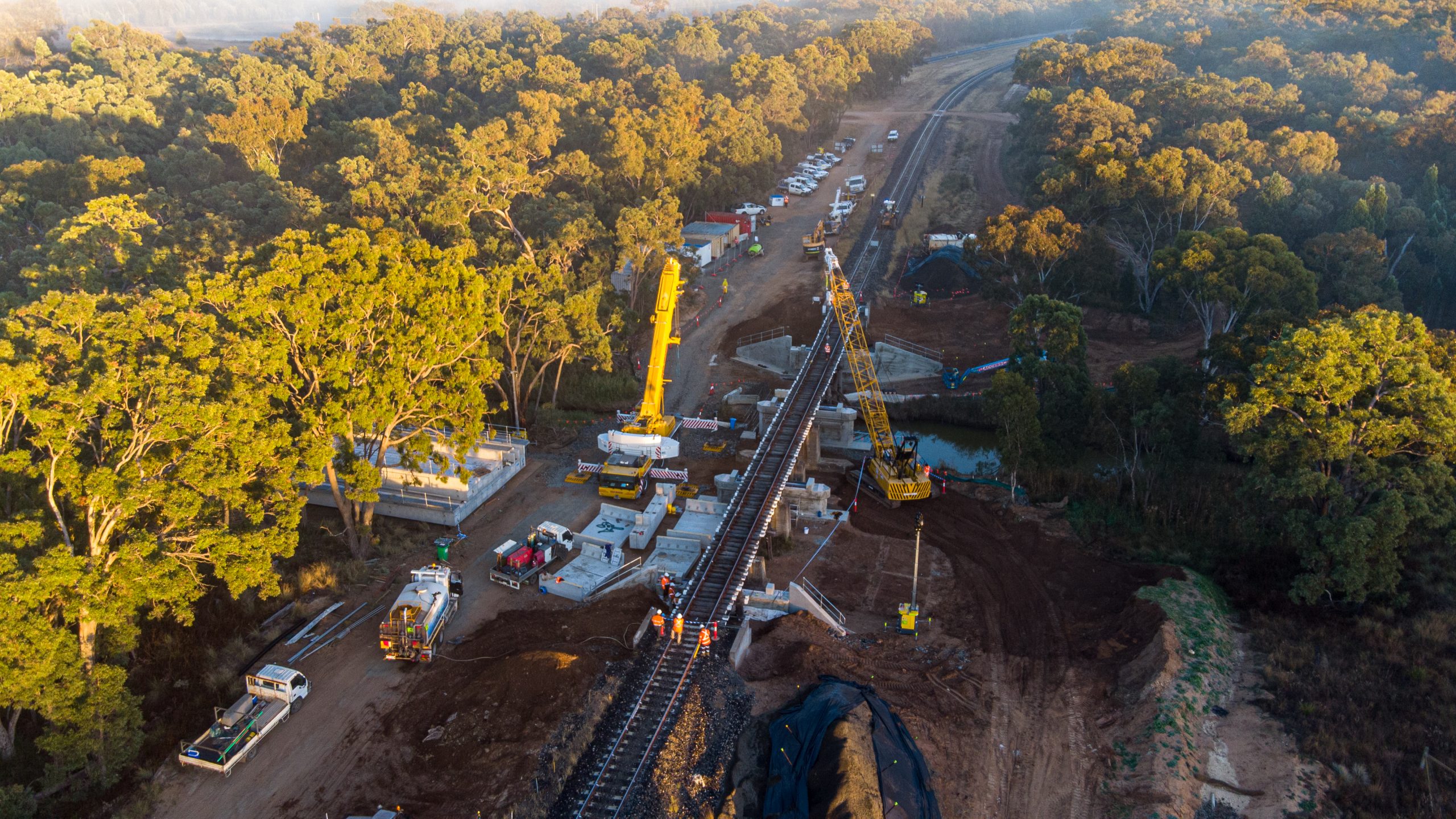
Beyond day-to-day maintenance, the ARTC is the delivery vehicle for "nation-building" infrastructure. These projects are designed to future-proof the Australian economy by increasing the volume of freight that can be moved by rail.
The Inland Rail Project
The centerpiece of the ARTC’s current portfolio is the Inland Rail, a 1,700-kilometer freight rail line connecting Melbourne and Brisbane via regional Victoria, New South Wales, and Queensland. As of 2026, several segments of this project are operational, fundamentally changing how goods move along the East Coast.
The Inland Rail allows for "double-stacked" containers and trains up to 1.8 kilometers long. By bypassing the congested Sydney metropolitan network, it reduces transit times between Melbourne and Brisbane to less than 24 hours. This project is not just about track; it involves the construction of massive new viaducts, tunnels (such as the crossing of the Great Dividing Range), and the upgrading of hundreds of kilometers of existing lines.
The Hunter Valley Network
The ARTC manages the Hunter Valley Coal Network, one of the most efficient and high-volume coal supply chains in the world. This specialized network connects mines in the Hunter Valley and Gunnedah Basin to the Port of Newcastle. Because of the economic importance of coal exports, this section of the ARTC network requires unique management strategies to handle the extreme density of heavy-haul traffic.
Technology and Innovation: The Future of Rail
By 2026, the ARTC has leaned heavily into digital transformation to increase safety and capacity without necessarily building new physical tracks.
Advanced Train Management System (ATMS)
A key technological pillar is the Advanced Train Management System (ATMS). Traditionally, rail safety relied on physical signals (lights) and "blocks" of track that only one train could occupy at a time. ATMS replaces this with digital, GPS-based signaling.
Developed in partnership with Lockheed Martin, ATMS allows trains to follow each other more closely while maintaining a digital "safety bubble." If a train exceeds its authorized speed or authority, the system can automatically apply the brakes. This technology increases the "virtual capacity" of the existing tracks, allowing more trains to run per day.
Predictive Maintenance
The ARTC utilizes "automated track monitoring" vehicles equipped with lasers and ultrasonic sensors. These vehicles travel the network at speed, detecting microscopic cracks in the rails or shifts in the track geometry before they become safety hazards. This shift from "reactive" to "predictive" maintenance reduces downtime and prevents costly derailments.
Comparing the ARTC to Other Rail Entities
To understand what the ARTC does, it is helpful to distinguish its role from other state-based or private rail organizations.
| Feature | ARTC | State Rail (e.g., Sydney Trains, V/Line) | Private Freight (e.g., Aurizon) |
|---|---|---|---|
| Ownership | Federal Government | State Government | Publicly Traded / Private |
| Primary Focus | National Interstate Freight | Commuter Passenger Services | Running Trains / Logistics |
| Jurisdiction | Interstate & Hunter Valley | Metropolitan & Regional State | Specific Commercial Contracts |
| Primary Asset | Tracks and Signaling | Tracks and Passenger Stations | Locomotives and Wagons |
| Revenue Source | Access Fees from Operators | Government Subsidies & Fares | Freight Contracts |
Safety and Environmental Stewardship
Safety is the non-negotiable priority for the ARTC. The organization is regulated by the Office of the National Rail Safety Regulator (ONRSR). Its safety mandate covers not only the protection of rail workers and train drivers but also the management of level crossings, which remain one of the highest-risk areas for public safety.
From an environmental perspective, the ARTC plays a vital role in Australia’s "Net Zero" strategy. A single freight train can take up to 110 B-double trucks off the road. By improving the reliability and speed of the rail network, the ARTC incentivizes logistics companies to switch from road to rail, which typically results in a 75% reduction in greenhouse gas emissions for the same volume of freight.
Frequently Asked Questions
Does the ARTC run passenger trains?
No, the ARTC does not own or operate passenger trains. However, it provides the track access for passenger services. This includes the high-profile "Great Southern Rail" (The Ghan, Indian Pacific) and state-run regional services like NSW TrainLink that travel between major cities.
How is the ARTC funded?
The ARTC is a Government Business Enterprise (GBE). It generates revenue by charging rail operators "access fees" to use its tracks. While it is intended to operate commercially, major capital projects like the Inland Rail are often funded through direct equity injections from the Australian Government.
What is the difference between ARTC and the Department of Infrastructure?
The Department of Infrastructure sets the broad national policy and provides the regulatory framework. The ARTC is the operational arm that actually builds the tracks, manages the signaling, and maintains the physical assets.
How can a business start using ARTC tracks?
Businesses do not usually deal with the ARTC directly unless they are large-scale rail operators. Instead, a company wishing to move goods would contract a freight forwarder or a rail operator (like Pacific National). That operator then negotiates the "path" with the ARTC. Information on access protocols can be found on the ARTC website.
Does the ARTC manage the entire Australian rail network?
No. The ARTC manages the "interstate" network and specific regional lines (like the Hunter Valley). Metropolitan networks (like those in Sydney, Melbourne, and Brisbane) and many regional "branch lines" are managed by state-based authorities or private entities.
Next Steps for Stakeholders
For logistics managers and regional businesses, the ongoing expansion of the ARTC network—particularly the Inland Rail—presents new opportunities for supply chain optimization. As the network becomes more digitized through ATMS and improved port connections, the cost-competitiveness of rail over long-distance road transport is expected to improve.
Stakeholders interested in the progress of specific infrastructure segments or looking to understand the technical specifications for rail access should consult the ARTC’s Network Information Books. These provide granular detail on axle load limits, speed restrictions, and signaling requirements across the various segments of the Australian rail spine.
Image Gallery