Lisa French: Navigating the Future of Autonomous Cars
Lisa French, a prominent leader in the autonomous vehicle (AV) sector, has become a pivotal figure in guiding industry strategy through the complex landscape of public trust, safety regulations, and technical scaling. As of 2026, her w...
Lisa French, a prominent leader in the autonomous vehicle (AV) sector, has become a pivotal figure in guiding industry strategy through the complex landscape of public trust, safety regulations, and technical scaling. As of 2026, her work primarily focuses on reconciling rapid AI advancement with the rigorous safety protocols required for urban deployment.
Contents
The trajectory of autonomous driving has shifted from speculative engineering to a high-stakes integration of robotics into daily life. At the center of this transition is Lisa French, whose strategic oversight has been instrumental in redefining how companies like Cruise interact with regulators and the communities they serve. Following the industry-wide recalibration of 2024 and 2025, the focus in 2026 is no longer just on "making the car drive," but on "making the car a predictable citizen." French’s approach emphasizes that technical capability is irrelevant if the social and legislative framework cannot support it.
The Strategic Pivot: Safety as the Primary Product
In the early 2020s, the race for autonomous supremacy was often measured by miles driven or the number of cities entered. However, Lisa French has been a leading voice in shifting that metric toward "safety-validated deployments." By 2026, the industry has adopted a more conservative, data-backed expansion model. French’s strategy involves deep transparency regarding "critical incidents"—those moments where the AI requires human intervention or encounters an "edge case" it cannot resolve.
Navigating the future of autonomous cars requires addressing the "trust deficit" created by early hardware failures and software oversights. French has advocated for a "Human-in-the-Loop" (HITL) transition phase, where remote assistance remains a robust backbone of the fleet. This ensures that when a vehicle encounters a scenario outside its training data—such as a novel construction site or an unconventional emergency vehicle signal—a human operator can provide the necessary context to navigate safely.
Technical Milestones and Sensor Fusion in 2026
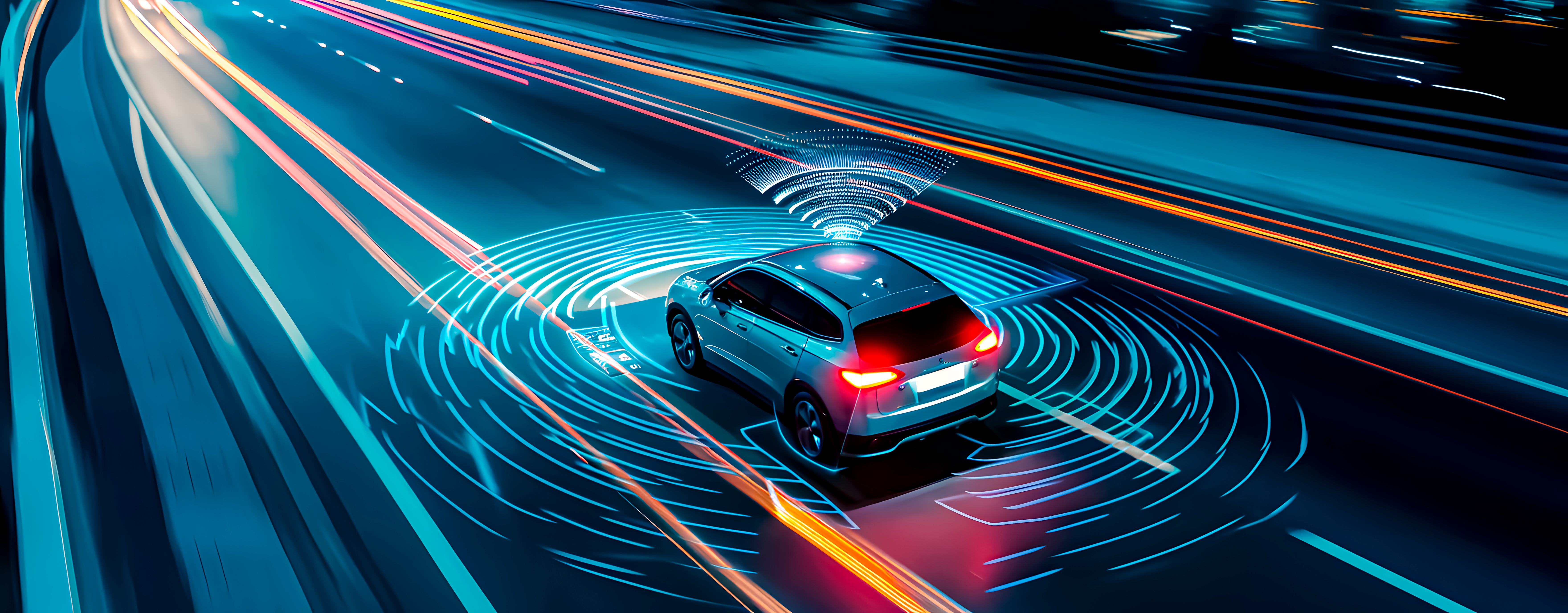
The technological landscape that Lisa French oversees in 2026 is significantly more advanced than the prototypes of five years ago. Modern autonomous systems now rely on a sophisticated "sensor fusion" architecture that combines long-range Lidar, high-resolution radar, and thermal imaging. This allows vehicles to maintain a 360-degree awareness that exceeds human biological limits, particularly in low-visibility conditions.
Key technical components currently being optimized under French’s strategic direction include:
- Redundant Computation: Each vehicle carries dual independent computing systems. If one fails, the secondary system executes a "Minimal Risk Maneuver" (MRM) to bring the vehicle to a safe stop.
- Predictive Intent Engines: Utilizing large-scale behavioral models, the AI no longer just sees a pedestrian; it predicts the likelihood of that pedestrian stepping into the street based on gaze, posture, and environmental cues.
- V2X (Vehicle-to-Everything) Communication: French has pushed for the adoption of standardized V2X protocols, allowing cars to "talk" to smart traffic lights and other vehicles to prevent collisions before they are even visible to on-board sensors.
Regulatory Landscapes and Policy Advocacy
One of the most challenging aspects of navigating the future of autonomous cars is the fragmented regulatory environment. Lisa French has spent years interfacing with organizations like the National Highway Traffic Safety Administration (NHTSA) and various state Departments of Transportation (DOTs). In 2026, the goal is to move toward a unified federal framework for Level 4 (L4) automation.
Currently, L4 vehicles can operate without a driver under specific conditions, typically within "geofenced" urban areas. French’s advocacy focuses on the "Operational Design Domain" (ODD). By clearly defining where and when a car can safely drive—excluding, for instance, extreme blizzards or unmapped rural roads—the industry can prove its safety record within controlled variables. This incremental approach is designed to win over skeptical legislators who are wary of the "move fast and break things" mentality that previously characterized the tech sector.
Comparative Framework: Automation Levels and Market Status
To understand the current state of the industry in 2026, it is helpful to compare the capabilities of different autonomous tiers. Lisa French’s work is primarily concentrated on the transition from Level 3 to Level 4.
| Automation Level | Driving Task Responsibility | Human Requirement | 2026 Industry Status |
|---|---|---|---|
| Level 2 (Partial) | Shared between human and AI | Must remain engaged at all times | Standard in most new consumer vehicles. |
| Level 3 (Conditional) | AI handles most tasks in traffic | Must be ready to take over instantly | Limited use in high-end luxury models. |
| Level 4 (High) | AI handles all tasks in geofence | No interaction needed in the zone | Active in commercial robotaxi fleets (Cruise, Waymo). |
| Level 5 (Full) | AI handles all tasks everywhere | No human needed; no steering wheel | Still in research and development; no active fleets. |
The Social and Economic Impact of Autonomous Fleets
Beyond the engineering, Lisa French addresses the societal shift that autonomous cars represent. In 2026, the discussion has moved toward "urban reclamation." By reducing the need for massive downtown parking structures—since autonomous fleets can move to the outskirts when not in use—cities are beginning to repurpose that land for green spaces and affordable housing.
However, this transition is not without friction. French has been vocal about the economic displacement of professional drivers. Her strategy includes supporting "transition programs" that leverage the skills of experienced drivers for fleet management, remote assistance, and maintenance roles. Furthermore, she emphasizes the accessibility benefits: for the elderly and those with visual impairments, autonomous cars represent a restoration of independence that traditional public transit often fails to provide.
Overcoming Edge Cases: The Final 1%
The most significant barrier to the future French is navigating remains the "long tail" of edge cases. These are the rare, unpredictable events that occur once in a million miles. Examples include a fallen tree blocking a road, a police officer using hand signals that deviate from the manual, or a child wearing a costume that confuses object recognition software.
In 2026, the industry uses "Shadow Mode" testing to solve these. This involves running the new software on thousands of vehicles that are being driven by humans (or controlled by older, proven software). The new software "thinks" what it would do, and engineers compare its decisions to the human driver's actions. Lisa French’s leadership in data sharing—where non-competitive safety data is shared across companies—has been a cornerstone in accelerating the resolution of these edge cases.
Ensuring Cybersecurity in the Autonomous Age
As vehicles become increasingly software-defined, the risk of cyber interference grows. Lisa French has prioritized the "Security-by-Design" philosophy. In 2026, every command sent to a vehicle’s steering or braking system must be cryptographically verified. The future of autonomous cars depends on the public knowing that these vehicles cannot be "hacked" remotely. This involves rigorous penetration testing and the use of air-gapped systems for the most critical driving functions.
Frequently Asked Questions
What is Lisa French's primary role in the autonomous vehicle industry? Lisa French is a senior leader, often associated with Cruise, who specializes in strategic communications and regulatory navigation. Her role is to bridge the gap between complex engineering teams and the public/regulators, ensuring that autonomous deployment is safe, transparent, and legally compliant.
Are autonomous cars fully legal in all states as of 2026? No. While many states have passed legislation allowing for testing and commercial operation of Level 4 vehicles, the rules vary significantly. Some states require a safety driver to be present, while others allow for fully driverless operation within specific geofenced cities like Phoenix, San Francisco, and Austin.
How does Lisa French's strategy address the issue of accidents? French advocates for a "comprehensive disclosure" policy. In 2026, companies are expected to provide detailed telemetry data to regulators following any incident. The focus is on showing that autonomous vehicles, while not perfect, have a statistically lower accident rate per million miles than human drivers.
What is the difference between Level 4 and Level 5 automation? Level 4 vehicles can drive themselves completely but are limited to specific areas (geofences) or weather conditions. Level 5 vehicles would be able to drive anywhere a human could, in any conditions, without any human intervention. As of 2026, Level 5 remains a future goal rather than a current reality.
Will autonomous cars replace personal car ownership? According to industry experts like French, the immediate future (2026-2030) favors "Transportation as a Service" (TaaS). It is more cost-effective for consumers to use autonomous ride-hailing services than to own a high-cost, self-driving vehicle that requires specialized maintenance and hardware.
Practical Next Steps for Stakeholders
For those looking to engage with or follow the progress of Lisa French and the AV industry, the following actions are recommended:
- Monitor NHTSA Guidelines: Regularly check for updated Federal Motor Vehicle Safety Standards (FMVSS) which dictate how autonomous systems are certified.
- Review Sustainability Reports: Look at the environmental impact data released by companies like Cruise and Waymo to see how electric autonomous fleets are affecting urban carbon footprints.
- Engage in Local Planning: If you live in a city slated for AV expansion, participate in town halls to understand how geofencing and pickup zones will be integrated into your local infrastructure.
Image Gallery