Michael Moore Documentaries: A Timeline of Impact
The career of Michael Moore spans over three decades of provocative, highly polarized, and undeniably influential documentary filmmaking. His work serves as a record of American socioeconomic shifts, focusing on themes of labor, corpor...
The career of Michael Moore spans over three decades of provocative, highly polarized, and undeniably influential documentary filmmaking. His work serves as a record of American socioeconomic shifts, focusing on themes of labor, corporate power, gun control, and healthcare. This timeline chronicles the evolution of his directorial output and the subsequent cultural impact these films generated within the American public discourse.
Contents
The Emergence of the Guerrilla Documentary Style
Michael Moore first gained national attention with Roger & Me (1989), a film that defied traditional documentary conventions by placing the filmmaker at the center of the narrative. By documenting the economic devastation of his hometown of Flint, Michigan, following General Motors’ decision to shutter local plants, Moore established a template he would follow for the rest of his career. He utilized a mix of investigative journalism, personal confrontation, and biting satire.
This style was not merely an aesthetic choice; it was a rhetorical strategy designed to bridge the gap between complex structural economic data and the personal suffering of the working class. Unlike the clinical, observational style of documentary filmmakers like Frederick Wiseman, Moore’s approach was explicitly subjective. He positioned himself as the proxy for the common person, challenging corporate executives and politicians on camera. This "guerrilla" approach polarized critics: some lauded him for bringing neglected issues to the mainstream, while others accused him of manipulative editing and prioritizing entertainment over journalistic nuance.
Defining a Decade of Social Commentary
Throughout the late 1990s and early 2000s, Moore’s documentaries began to exert significant pressure on the national consciousness. Following The Big One (1997), which examined corporate downsizing, Moore released Bowling for Columbine (2002). This film marked a turning point in his career, as it garnered an Academy Award for Best Documentary Feature and achieved unprecedented commercial success for a documentary.
Bowling for Columbine moved beyond simple observation to interrogate the American cultural relationship with fear and firearms. By juxtaposing the Columbine High School massacre with broader geopolitical contexts and historical narratives, Moore successfully shifted the conversation from purely legislative gun control to a sociological critique of American paranoia.
Heightened Political Tension and Institutional Critiques
The mid-2000s saw Moore pivot toward direct engagement with federal policy. Fahrenheit 9/11 (2004) remains the highest-grossing documentary of all time. Released during the height of the Iraq War, the film challenged the Bush administration’s justification for the invasion of Iraq and its connection to the September 11 attacks. The film’s release triggered a massive political firestorm, bringing the role of documentary film as a form of political agitation to the forefront of American media.
Following the success of his critiques of war, Moore turned his attention to domestic infrastructure. Sicko (2007) utilized a comparative framework to examine the United States healthcare system against those of other developed nations. By interviewing citizens and medical professionals in Canada, the United Kingdom, France, and Cuba, Moore sought to highlight the inefficiencies of the private insurance model in America.
The Evolving Landscape of Documentary Distribution
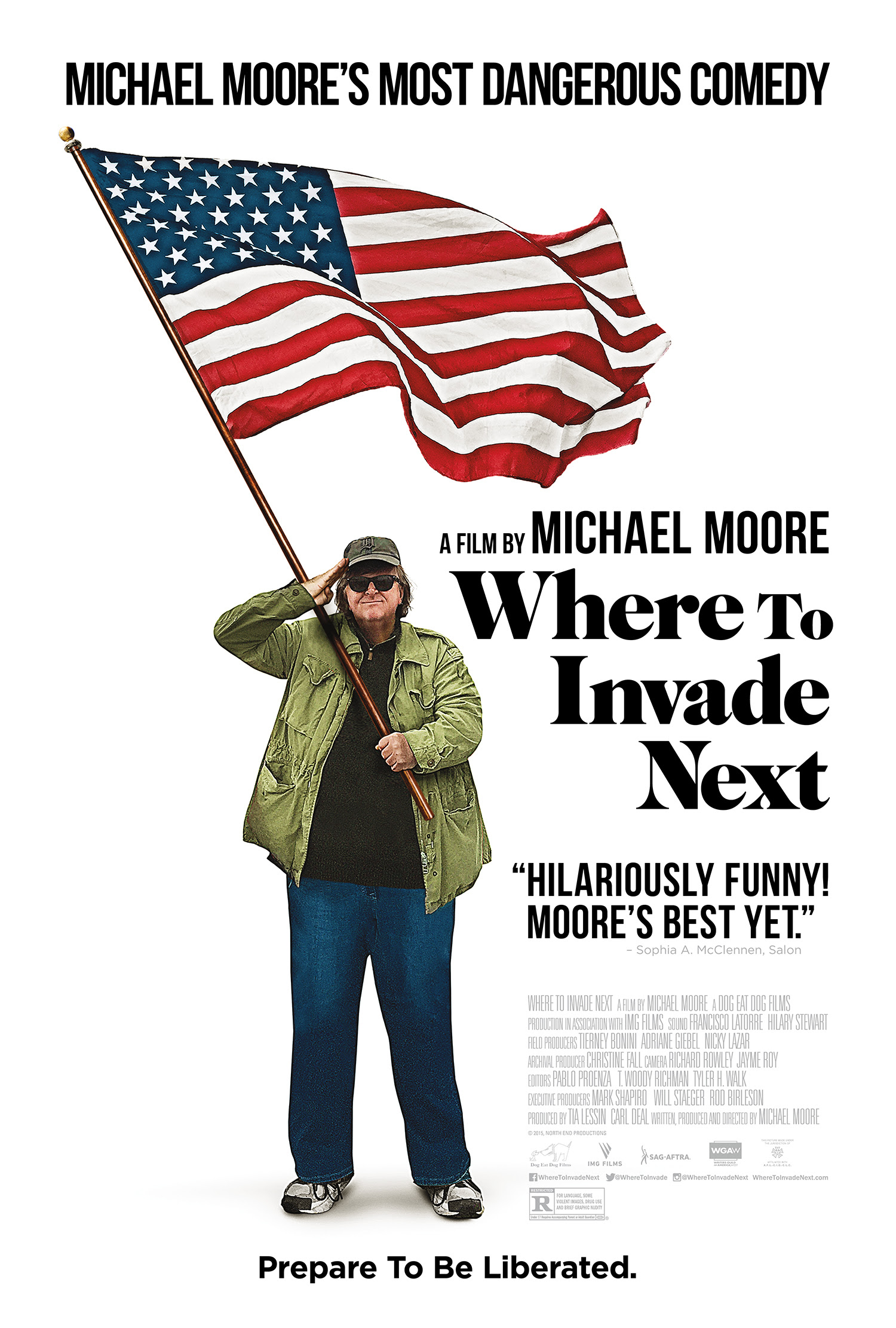
In the 2010s, Moore’s work continued to address the structural inequalities exacerbated by the 2008 financial crisis and subsequent political movements. Capitalism: A Love Story (2009) and Where to Invade Next (2015) continued his tradition of international comparison. During this period, the medium of distribution began to shift, moving from traditional theatrical releases toward streaming platforms.
The later half of his career, marked by Fahrenheit 11/9 (2018), showcased an attempt to bridge his past work with the rising populism of the late 2010s. This period highlights the challenge faced by filmmakers who rely on a specific, aggressive tone; as the political climate became more fragmented, the ability of a single documentary to galvanize a broad audience became increasingly difficult.
Documentary Timeline and Primary Focus
The following table summarizes key releases and their primary focus areas in the context of their release.
| Release Year | Title | Primary Subject Focus |
|---|---|---|
| 1989 | Roger & Me | Corporate divestment and regional deindustrialization |
| 2002 | Bowling for Columbine | Gun violence and the culture of fear |
| 2004 | Fahrenheit 9/11 | The War on Terror and executive accountability |
| 2007 | Sicko | The American healthcare insurance system |
| 2009 | Capitalism: A Love Story | Financial crisis and wealth inequality |
| 2015 | Where to Invade Next | International social policy comparison |
| 2018 | Fahrenheit 11/9 | Domestic political populism |
Measuring Cultural and Policy Impact
The impact of Moore’s documentaries is a subject of ongoing debate among media scholars. While he has rarely been credited with direct legislative changes, his films have consistently succeeded in forcing specific issues into the center of the news cycle. For example, the release of Sicko prompted a surge in public debate regarding the public option, contributing to the broader climate that culminated in the debates surrounding the Affordable Care Act (ACA).
The primary limitation of this impact is the "preaching to the choir" effect. Studies on the reception of political documentaries often show that such films primarily reinforce existing beliefs among viewers rather than shifting the opinions of skeptics. Despite this, Moore’s influence on the "activist-filmmaker" archetype is undisputed. He demonstrated that documentaries could operate as blockbuster events, providing a platform for subjects that traditional news organizations often avoided due to the complexity of the systemic critiques involved.
Common Misconceptions and Technical Challenges
A recurring challenge for audiences attempting to use Moore’s films for historical research is distinguishing between editorialized narrative and objective fact. Because his work relies heavily on montage and selective editing, it requires a high degree of media literacy to navigate. Viewers should distinguish between his assertions—which are often framed as rhetorical questions—and the underlying data regarding the events he depicts.
Another common point of contention is the use of "staged" or directed interactions. In the industry, Moore’s method of encouraging subjects to react to his lines of questioning is a known technique, but it often confuses general audiences who expect a strictly fly-on-the-wall observational approach. When engaging with these films as historical documentation, it is advisable to cross-reference his claims with independent audits of the events, such as those provided by non-partisan investigative journalism outlets or academic sociologists.
Frequently Asked Questions
Are Michael Moore’s documentaries considered historically objective? No, they are considered works of advocacy journalism. They prioritize a specific perspective and emotional narrative over a neutral, multi-perspective examination of the facts.
What is the most significant impact of his career on documentary filmmaking? Moore proved that social-issue documentaries could be commercially viable and reach massive audiences, essentially paving the way for the "documentary boom" seen in the streaming era.
How should a viewer prepare before watching these films? Viewers should research the specific political and social environment of the release year. Understanding the context of the era, such as the economic conditions of 2008 or the national mood post-9/11, is essential for interpreting his arguments.
Do these documentaries lead to actual policy changes? Rarely directly. However, they serve as "agenda-setters," bringing fringe or complex issues into the mainstream public discourse, which can indirectly influence the timing and priority of political debates.
Where can one verify the facts presented in his films? The best approach is to cross-reference claims with reliable, non-partisan sources like government economic reports, peer-reviewed academic journals, or reputable investigative news outlets that specialize in fact-checking political rhetoric.
Next Actions for Research
For those looking to analyze the evolution of political communication through film, the next logical step is to curate a watchlist that includes contemporary responses to Moore’s work from the same time periods. Comparing Fahrenheit 9/11 alongside contemporary news reporting from 2004 provides a clear view of how documentary narratives compete with, and supplement, traditional journalism. Furthermore, examining the specific economic data of the regions featured in his earlier works—such as the labor statistics of Flint, Michigan—will provide a grounded, evidence-based understanding of the subjects he popularized.
Image Gallery