Network Security Assessments: An Overview
A network security assessment is a comprehensive evaluation of an organization's digital infrastructure, designed to identify vulnerabilities, assess operational risks, and recommend prioritized remediation strategies. This process com...
A network security assessment is a comprehensive evaluation of an organization's digital infrastructure, designed to identify vulnerabilities, assess operational risks, and recommend prioritized remediation strategies. This process combines automated tooling, configuration reviews, and manual analysis to protect critical assets from evolving cyber threats.
Contents
Understanding Network Security Assessments
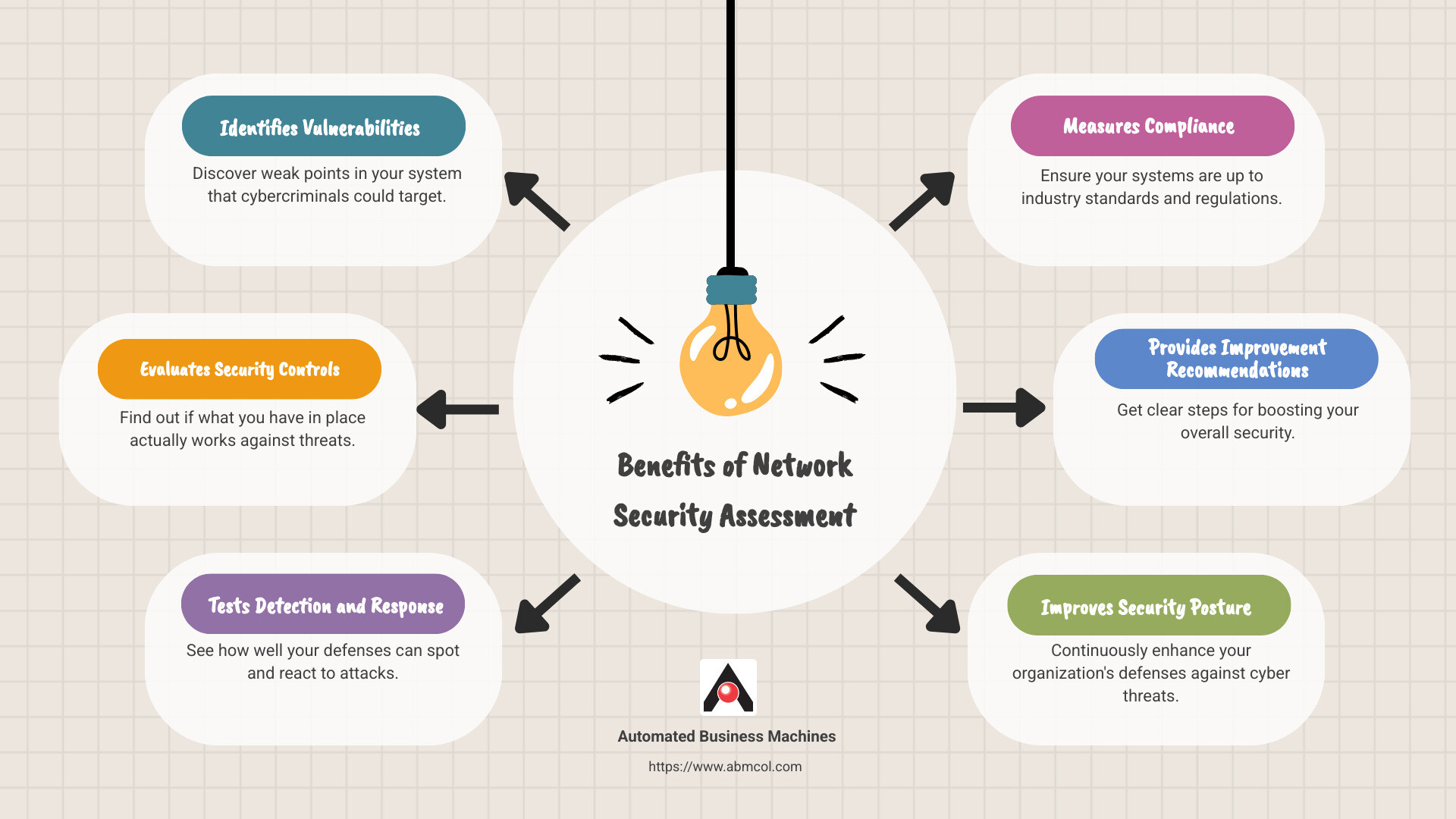
Organizations face an increasingly sophisticated threat landscape where traditional perimeter defenses are no longer sufficient. A network security assessment provides a structured, objective evaluation of an organization's posture by examining hardware, software, policies, and user behaviors. Unlike reactive security measures that trigger only after a breach occurs, assessments operate proactively. They uncover hidden weaknesses—ranging from unpatched software vulnerabilities to misconfigured firewalls—before malicious actors can exploit them.
The primary objective of these evaluations is risk reduction. By systematically mapping network assets, analyzing data flows, and testing access controls, security teams can allocate limited resources toward the most critical vulnerabilities. This process supports compliance requirements mandated by industry regulations and framework standards, such as the Payment Card Industry Data Security Standard (PCI DSS), the Health Insurance Portability and Accountability Act (HIPAA), and the National Institute of Standards and Technology (NIST) guidelines.
Key Components of a Comprehensive Assessment
A thorough network security assessment relies on multiple layers of analysis, each targeting a different dimension of the infrastructure. Combining these components ensures that organizations do not focus solely on external threats while ignoring internal vulnerabilities.
External and Internal Vulnerability Scanning
Vulnerability scanning involves deploying automated software tools to query network nodes, operating systems, and applications against known vulnerability databases.
- External Scans: These evaluate internet-facing assets, such as web servers, virtual private network (VPN) gateways, and public-facing mail servers. They simulate how an external attacker views the perimeter.
- Internal Scans: These examine systems behind the corporate firewall, assuming an attacker has already gained a foothold or that an insider threat is present. Internal scans typically reveal unpatched workstation software, weak internal service permissions, and excessive user privileges.
Configuration Reviews
Many network compromises stem from improper configuration rather than software bugs. Configuration reviews involve manually or semi-automatically inspecting the settings of core networking equipment, including routers, switches, firewalls, and wireless access points. Evaluators check for default credentials, overly permissive access control lists (ACLs), disabled logging features, and outdated encryption protocols. Ensuring secure baseline configurations significantly reduces the attack surface.
Penetration Testing Integration
While vulnerability scans identify potential flaws, penetration testing actively exploits them in a controlled manner to verify whether unauthorized access or data exfiltration is truly possible. Ethical hackers employ the same techniques used by cybercriminals, testing the resilience of intrusion detection systems (IDS), incident response procedures, and human elements through social engineering simulations.
The Step-by-Step Assessment Process
Executing a successful network security assessment requires careful planning, strict adherence to rules of engagement, and structured reporting. Rushing any phase can lead to incomplete data or, worse, unintended service disruptions.
- Scoping and Planning
- Define boundaries, asset inventories, and rules of engagement.
- Information Gathering and Discovery
- Map network topology, identify live hosts, and catalogue services.
- Vulnerability Analysis
- Execute automated scans and manual checks to locate weaknesses.
- Exploitation and Validation (Optional)
- Verify vulnerabilities via controlled penetration testing.
- Reporting and Remediation
- Deliver prioritized findings and execute mitigation strategies.
The initial scoping phase is critical. Stakeholders must define clear boundaries, specifying which Internet Protocol (IP) ranges, applications, and physical locations are included in the evaluation. This phase also establishes maintenance windows to prevent automated scans from overwhelming legacy systems or causing denial-of-service conditions.
Once scoping is complete, discovery tools map the network topology. Security analysts examine active ports, operating system versions, and running services. This baseline data informs the vulnerability analysis phase, where scanning engines and manual verification techniques isolate specific weaknesses.
Following data collection, the testing team analyzes the findings, removing false positives and correlating related flaws. The resulting report outlines each vulnerability, rates its severity using standardized scoring systems like the Common Vulnerability Scoring System (CVSS), and provides actionable remediation steps for internal IT and security engineering teams.
Comparison of Security Evaluation Methodologies
Organizations often confuse network security assessments with vulnerability assessments and penetration tests. While these terms are sometimes used interchangeably, they represent distinct scopes and depths of analysis.
| Evaluation Type | Primary Focus | Depth of Analysis | Typical Duration | Output |
|---|---|---|---|---|
| Vulnerability Assessment | Identifying known software and system flaws | Automated scanning with basic verification | Days to 1 week | Comprehensive list of identified CVEs and standard patches |
| Network Security Assessment | Holistic view of policies, controls, and configurations | Combination of automated tools and manual reviews | 1 to 3 weeks | Risk-prioritized report covering architecture, policies, and technical flaws |
| Penetration Testing | Simulating targeted attacks to breach defenses | Deep manual exploitation and lateral movement | 2 to 4 weeks | Detailed narrative of attack paths, proof-of-concept exploits, and remediation |
Choosing the appropriate methodology depends on an organization's maturity level, budget, regulatory mandates, and immediate risk concerns. Routine vulnerability assessments suit organizations requiring continuous hygiene checks, whereas comprehensive network security assessments offer a balanced evaluation of both technical controls and administrative policies.
Common Challenges and Pitfalls
Conducting network security assessments involves navigating several operational and technical hurdles. Recognizing these common pitfalls helps organizations maximize the value of their security investments.
- Incomplete Asset Discovery: Organizations frequently underestimate the number of connected devices within their environments, particularly with the proliferation of Internet of Things (IoT) gadgets and shadow IT cloud deployments. Unmapped assets cannot be assessed, leaving blind spots in the network perimeter.
- Over-Reliance on Automated Scans: Automated tools are essential for speed, but they generate false positives and cannot evaluate complex business logic flaws or chained vulnerabilities. Relying entirely on automated output without human analysis leads to wasted remediation efforts.
- Lack of Executive Buy-In: Security assessments often highlight necessary investments in software licenses, hardware upgrades, or specialized personnel. Without executive support, assessment reports remain unaddressed documents rather than catalysts for operational change.
- Operational Disruption: Aggressive vulnerability scanning can crash legacy systems or saturate bandwidth-limited networks. Establishing strict maintenance windows and utilizing non-intrusive scanning profiles mitigates this risk.
Frequently Asked Questions
How often should an organization perform a network security assessment?
Organizations should conduct a comprehensive network security assessment at least annually, as well as following any major infrastructure changes, such as cloud migrations, network restructuring, or significant corporate acquisitions. Routine vulnerability scans should occur much more frequently, typically on a monthly or quarterly basis.
What is the difference between an internal and external network assessment?
An external assessment evaluates internet-facing systems from the perspective of an outside attacker with no prior access. An internal assessment evaluates the network from behind the firewall, simulating an attacker who has bypassed the perimeter or an insider actor with legitimate network access.
Do network security assessments cause downtime?
While well-planned assessments rarely cause downtime, certain aggressive vulnerability checks or penetration testing techniques can destabilize fragile or legacy systems. Security teams mitigate this risk by scheduling testing during off-peak hours and agreeing upon explicit rules of engagement before work begins.
Who should perform a network security assessment?
Assessments can be performed by internal security teams or external third-party cybersecurity firms. External assessors often provide an objective, unbiased evaluation free from internal politics, along with specialized expertise in advanced penetration testing and compliance auditing.
What qualifications should a network security assessment provider possess?
Organizations should look for providers holding recognized industry certifications such as Offensive Security Certified Professional (OSCP), Certified Information Systems Auditor (CISA), Certified Information Systems Security Professional (CISSP), and GIAC certifications, alongside verifiable commercial experience and robust client references.
Next Actions for Security Leaders
To operationalize the insights gained from a network security assessment, organizations must establish a continuous improvement cycle. Security leaders should immediately review existing asset inventories to ensure full visibility, engage qualified internal or external assessors to schedule the next evaluation, and establish a dedicated cross-functional task force to track and remediate discovered vulnerabilities based on risk severity rather than ease of patching.
Image Gallery