Net Worth Capacity Explained: Understanding Financial Strength and Borrowing Potential
Net worth capacity refers to an individual's or entity's total financial bandwidth, determined by subtracting total liabilities from total assets, while also accounting for liquidity, cash flow stability, and the ability to leverage th...
Net worth capacity refers to an individual's or entity's total financial bandwidth, determined by subtracting total liabilities from total assets, while also accounting for liquidity, cash flow stability, and the ability to leverage these resources for credit, investments, or large-scale financial obligations.
Contents
When navigating complex financial landscapes, understanding your overall financial position goes far beyond simply looking at a bank account balance. Financial institutions, private lenders, and wealth managers frequently evaluate an individual's net worth capacity to determine creditworthiness, risk exposure, and maximum borrowing limits. While net worth itself provides a static snapshot of accumulated wealth at a specific moment in time, net worth capacity evaluates how effectively that wealth can be mobilized, utilized, or leveraged to support new financial endeavors.
This comprehensive analysis examines the foundational components of net worth capacity, how financial institutions measure it, and why this metric is crucial for high-net-worth individuals, business owners, and everyday borrowers alike. By breaking down the mechanics of asset valuation, liability structures, and liquidity ratios, you can gain a clearer understanding of your own financial standing and how to optimize it for future economic opportunities.
Defining Net Worth vs. Net Worth Capacity
To fully grasp net worth capacity, it is essential to first distinguish between traditional net worth and the broader concept of capacity. Traditional net worth is a straightforward accounting equation:
$$\text{Net Worth} = \text{Total Assets} - \text{Total Liabilities}$$
While this formula provides a baseline indicator of financial health, it has significant limitations in practical lending and wealth management scenarios. For instance, an individual might possess a high net worth tied entirely to illiquid assets—such as real estate holdings, private equity stakes, or restricted stock units—while generating minimal liquid cash flow.
Net worth capacity bridges this gap by introducing operational metrics into the equation. It assesses:
- Liquidity: How quickly assets can be converted into cash without a significant loss in value.
- Cash Flow Coverage: The ratio of incoming revenue to ongoing debt obligations.
- Asset Quality: The stability, volatility, and market demand for the underlying assets.
- Leverage Potential: The amount of additional debt or financial risk an asset base can safely support.
By evaluating these dimensions together, lenders and financial advisors can determine whether a borrower's wealth is active and functional or passive and rigid.
Key Components Evaluated in Financial Capacity Assessments
When financial underwriters or wealth advisors analyze an applicant's net worth capacity, they look past the headline number on a balance sheet. They conduct a granular review of the underlying components that make up an individual's financial ecosystem.
1. Liquid vs. Illiquid Assets
Assets are the foundation of net worth, but their classification dictates capacity.
- Liquid Assets: Cash, high-yield savings accounts, money market funds, and publicly traded securities. These provide immediate capacity to service debt or cover unexpected expenses.
- Illiquid Assets: Commercial real estate, fine art, collectibles, privately held business interests, and vesting equity. While these contribute heavily to net worth, they offer limited short-term capacity unless pledged as collateral or sold.
2. Liability Structure and Debt Service
Liabilities dictate the drag on your financial capacity. Underwriters do not just look at the total amount owed; they examine the structure of the debt. Long-term fixed-rate mortgages with low interest rates represent manageable liabilities, whereas revolving high-interest debt or balloon payments can severely restrict net worth capacity by threatening immediate cash flow.
3. Recurring Income and Cash Flow Generation
A robust net worth paired with steady, predictable cash flow creates high borrowing capacity. Lenders calculate metrics such as the Debt-to-Income (DTI) ratio and Debt Service Coverage Ratio (DSCR) to ensure that the borrower can comfortably service new financial commitments without liquidating core assets.
Comparison of Asset Classes in Net Worth Capacity
Different types of wealth contribute differently to an individual's financial capacity. The table below outlines how various asset classes are typically viewed during a financial capacity evaluation.
| Asset Class | Liquidity Level | Valuation Stability | Impact on Borrowing Capacity | Common Collateral Use |
|---|---|---|---|---|
| Cash and Equivalents | Immediate | High (Fixed) | Maximum | Direct cash collateral loans |
| Public Equities | High (Days) | Moderate to High | High (Securities-backed lines) | Margin accounts, pledged asset loans |
| Real Estate | Low (Months) | Moderate | Medium to High (Depending on equity) | Mortgages, home equity lines of credit |
| Private Equity / Business | Very Low | Variable | Low to Medium | Specialized commercial lending |
| Collectibles / Art | Low to Very Low | Subjective | Low | Niche specialty financing |
Why Net Worth Capacity Matters in Modern Finance
Understanding and optimizing your net worth capacity is critical across several distinct financial domains. Whether you are scaling a business, securing a jumbo mortgage, or engaging in private wealth management, capacity dictates your strategic options.
Securing Commercial and Jumbo Credit
Traditional lending models rely heavily on credit scores and basic income verification. However, for high-value transactions—such as purchasing luxury real estate, acquiring a commercial enterprise, or obtaining private banking lines of credit—lenders look directly at net worth capacity. High capacity allows borrowers to secure favorable interest rates, negotiate flexible repayment terms, and bypass restrictive bureaucratic hurdles by offering robust collateral pools.
Wealth Preservation and Risk Mitigation
For high-net-worth individuals, managing capacity is a core tenet of asset protection. Over-leveraging illiquid assets can lead to severe financial distress if market conditions shift rapidly. By maintaining a healthy balance between liquid reserves and long-term investments, individuals ensure they can weather economic downturns without forced asset liquidation.
Common Mistakes That Undermine Financial Capacity
Many individuals assume that accumulating a high net worth automatically guarantees favorable financial treatment. However, poor financial structuring can artificially depress net worth capacity.
- Over-Concentration in Illiquid Assets: Tying up 90% of your wealth in a single private business or commercial property leaves you vulnerable to cash flow crunches, reducing your functional capacity.
- Neglecting Liability Management: Accumulating short-term or high-interest liabilities against long-term assets creates structural friction that lenders view as a red flag.
- Inaccurate Valuation Practices: Overvaluing private equity stakes or real estate without professional appraisals can lead to rejected loan applications when institutional underwriters conduct their own due diligence.
- Ignoring Tax Implications: Failing to account for capital gains taxes or estate taxes when calculating the usable value of assets can drastically skew perceived financial capacity.
Frequently Asked Questions
How do lenders calculate net worth capacity for high-value loans?
Lenders evaluate net worth capacity by reviewing audited financial statements, tax returns, bank statements, and brokerage accounts. They subtract total liabilities from liquid and semi-liquid assets, calculate debt service coverage ratios, and assess the marketability of any pledged collateral.
Can my net worth be high while my financial capacity is low?
Yes. If your wealth is locked up in illiquid assets—such as land, private business equity, or long-term retirement accounts—you may have a high net worth on paper but very low capacity to borrow cash or service immediate debts without selling those assets.
How can I improve my net worth capacity quickly?
To improve financial capacity, focus on increasing liquid reserves, paying down high-interest or revolving liabilities, consolidating short-term debt, and optimizing your cash flow generation. Shifting a portion of illiquid holdings into income-producing or easily tradable securities can also enhance capacity.
Is net worth capacity regulated by financial authorities?
While the term itself is a financial and underwriting concept rather than a strict legal statute, the metrics used to measure it—such as debt-to-income ratios, liquidity requirements, and lending disclosures—are heavily regulated by financial authorities like the Federal Reserve, the Consumer Financial Protection Bureau (CFPB), and banking regulators.
Do financial advisors use net worth capacity for retirement planning?
Yes. Wealth managers evaluate capacity to determine how much risk a client can safely take in their investment portfolio and to plan for sustainable withdrawal rates during retirement without depleting principal assets prematurely.
Strategic Next Steps
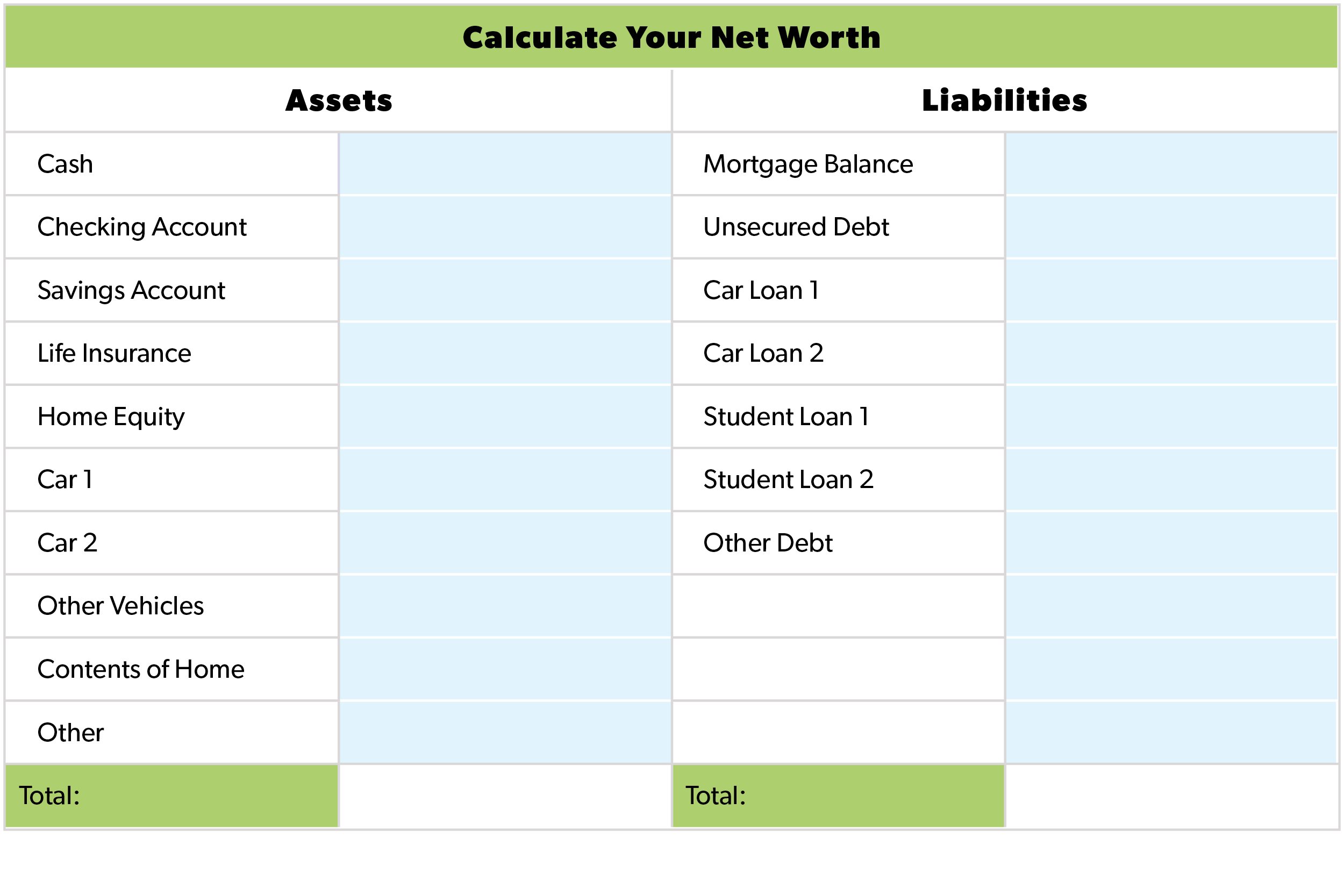
To evaluate and improve your own financial standing, begin by assembling a comprehensive balance sheet that separates your assets by liquidity tier. Calculate your true liquid net worth and compare your recurring monthly cash flow against all active liabilities. If you are preparing to apply for commercial credit, jumbo financing, or private banking services, consult with a certified financial planner or a commercial loan officer to conduct a formal capacity review before submitting applications. Proactive financial structuring ensures your accumulated wealth works efficiently to support your long-term economic goals.
Image Gallery