Army National Guard Basic Training Length: Timeline, Phases, and Split Option
Army National Guard Basic Combat Training (BCT) lasts 10 weeks, excluding the initial 4 to 7 days spent in processing at Reception Battalion. However, your full initial active-duty commitment depends on your Advanced Individual Trainin...
Army National Guard Basic Combat Training (BCT) lasts 10 weeks, excluding the initial 4 to 7 days spent in processing at Reception Battalion. However, your full initial active-duty commitment depends on your Advanced Individual Training (AIT), which ranges from 4 weeks to over 36 weeks depending on your selected military occupational specialty.
Contents
Total Training Timeline: BCT vs. AIT
Joining the Army National Guard requires completing Initial Active Duty Training (IADT). IADT consists of two distinct phases: Basic Combat Training (BCT) and Advanced Individual Training (AIT).
| Basic Combat Training (BCT) | Advanced Individual Training |
|---|---|
| 10 Weeks (All Recruits) | 4 to 36+ Weeks (MOS-Specific) |
While all Guard recruits attend the exact same 10-week basic training course as active-duty Army recruits, total time away from home varies significantly based on your job choice.
- Basic Combat Training (BCT): A standardized 10-week course designed to transform civilian enlistees into disciplined, combat-ready Soldiers. It focuses on physical fitness, marksmanship, military tactics, drill and ceremony, and core Army values.
- Advanced Individual Training (AIT): Hands-on career training that immediately follows BCT. The length of AIT depends entirely on your Military Occupational Specialty (MOS). Administrative and logistics jobs may require as little as 4 to 8 weeks of AIT, whereas medical, aviation repair, cyber intelligence, and electronics specialties can extend from 15 to 40+ weeks.
- One Station Unit Training (OSUT): Certain combat arms specialties—such as Infantry (11B) and Armor (19K)—combine BCT and AIT into a continuous, single-location course. For example, Infantry OSUT conducted at Fort Moore lasts 22 weeks total, keeping recruits with the same drill sergeants and unit structure throughout.
Detailed Breakdown of the 10-Week Basic Combat Training
Basic Combat Training takes place at four primary U.S. Army installations: Fort Jackson (South Carolina), Fort Leonard Wood (Missouri), Fort Sill (Oklahoma), and Fort Moore (Georgia). Regardless of location, the curriculum follows a rigid, phased training model overseen by the U.S. Army Center for Initial Military Training.
Reception Battalion (Week 0)
Before official training begins, recruits spend 4 to 7 days at Reception (often referred to as Week 0). During this administrative phase, recruits undergo medical screenings, receive vaccinations, obtain uniform issue, undergo military haircutting, complete paperwork, and take their initial physical fitness assessments. Reception time does not count toward the 10 weeks of BCT.
Red Phase (Weeks 1–3): Patriotism and Discipline
The Red Phase, or "Assembly Phase," introduces recruits to military discipline and the foundational elements of soldiering. Drill sergeants establish high-stress environment control to build teamwork and physical endurance. Key training components include:
- The Army Combat Fitness Test (ACFT) baseline diagnostic.
- Military tradition, ethics, rank structure, and First Aid (Self-Aid/Buddy Care).
- Chemical, Biological, Radiological, and Nuclear (CBRN) defense training, including gas chamber confidence tests.
- Unarmed combat and combatives ground fighting fundamentals.
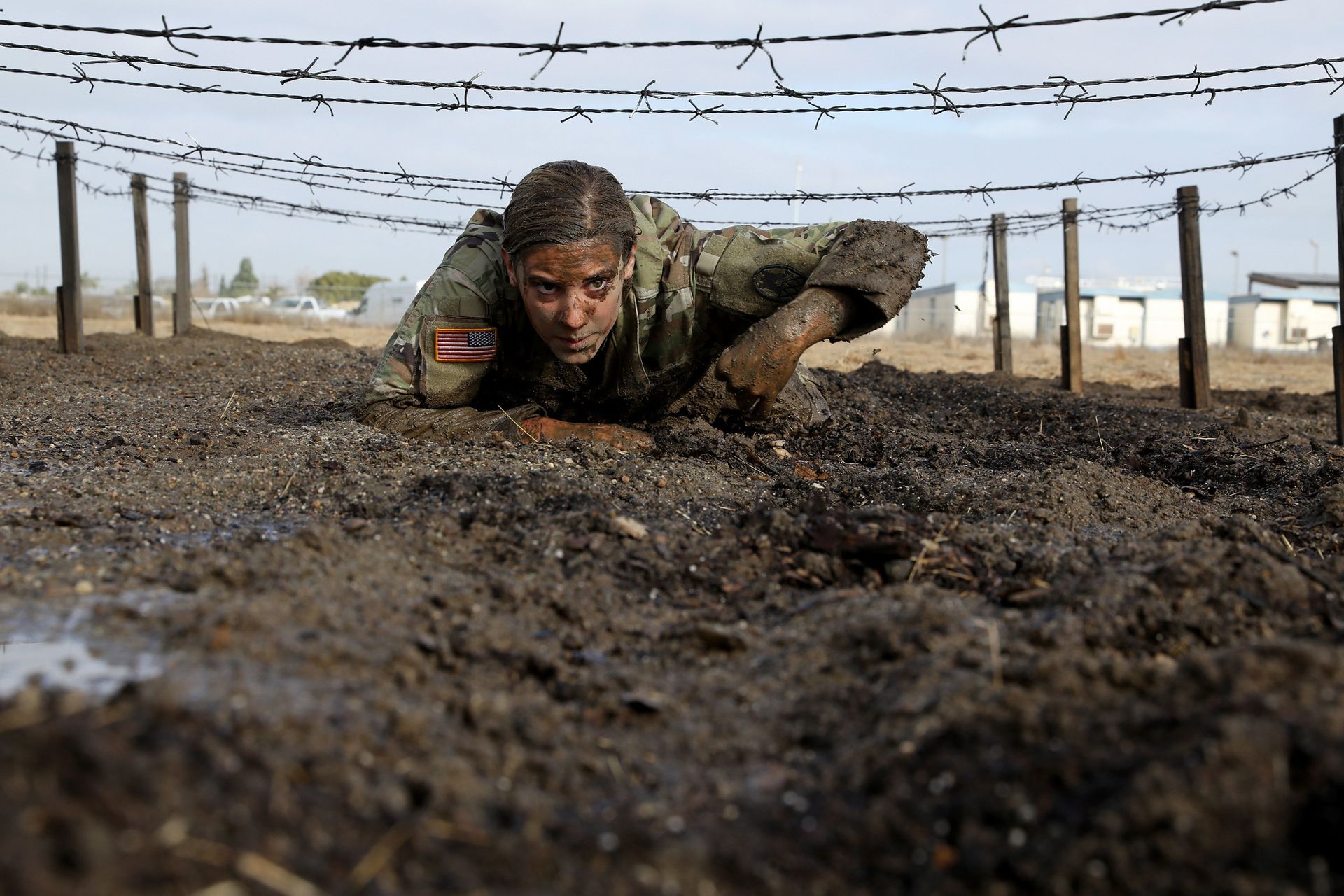
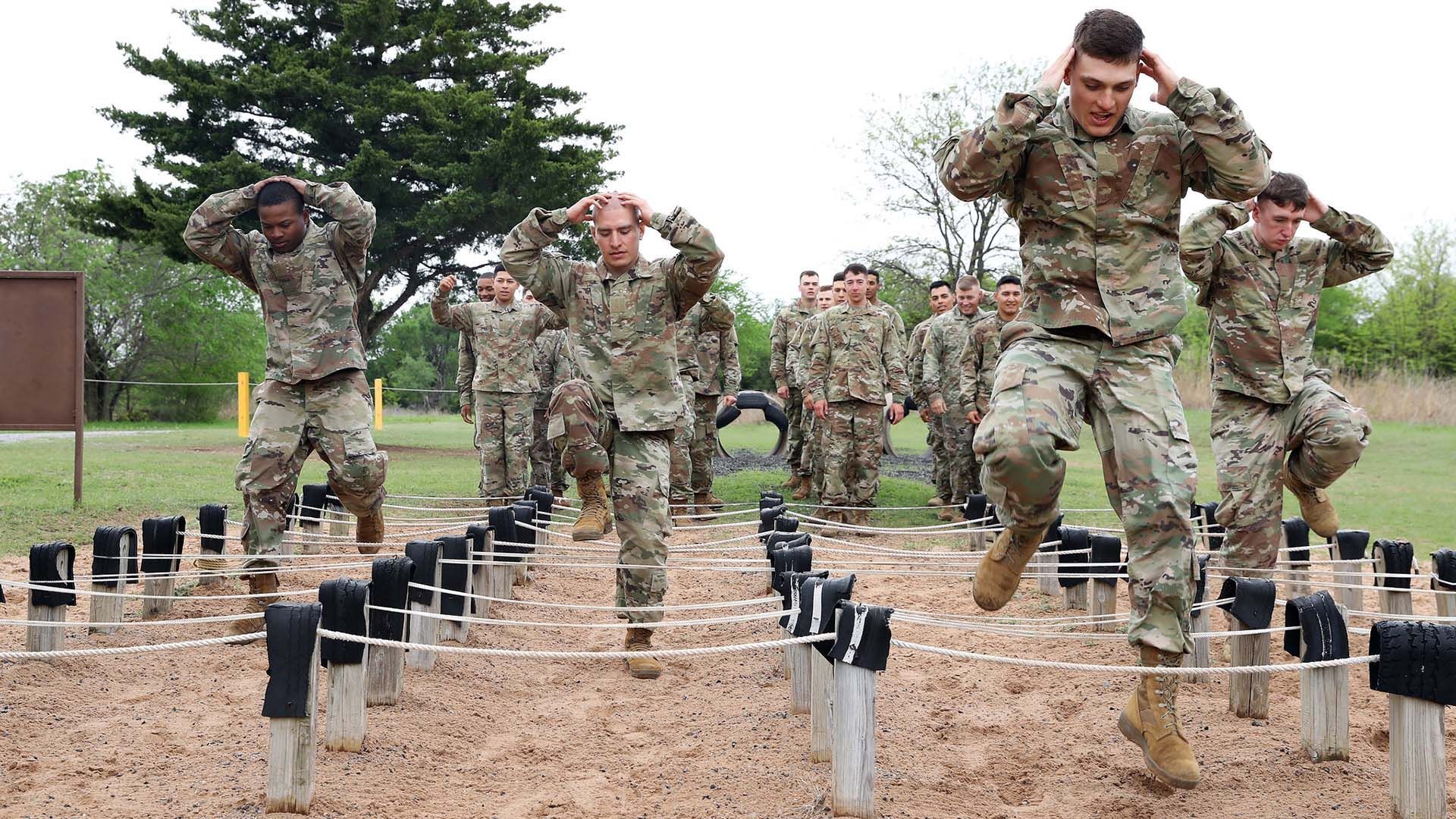
- Confidence courses and tower rappelling.
White Phase (Weeks 4–6): Gun Readiness and Rifle Marksmanship
The White Phase focuses on weapon proficiency and physical conditioning. Recruits transition from general soldiering knowledge to technical combat skills. Primary focus areas include:
- Maintenance, assembly, disassembly, and tactical handling of the M4 carbine rifle.
- Basic Rifle Marksmanship (BRM) firing progressions from rested positions to field conditions.
- Rifle qualification testing on automated pop-up target ranges.
- Primary iron sight and close-combat optic (CCO) engagement strategies.
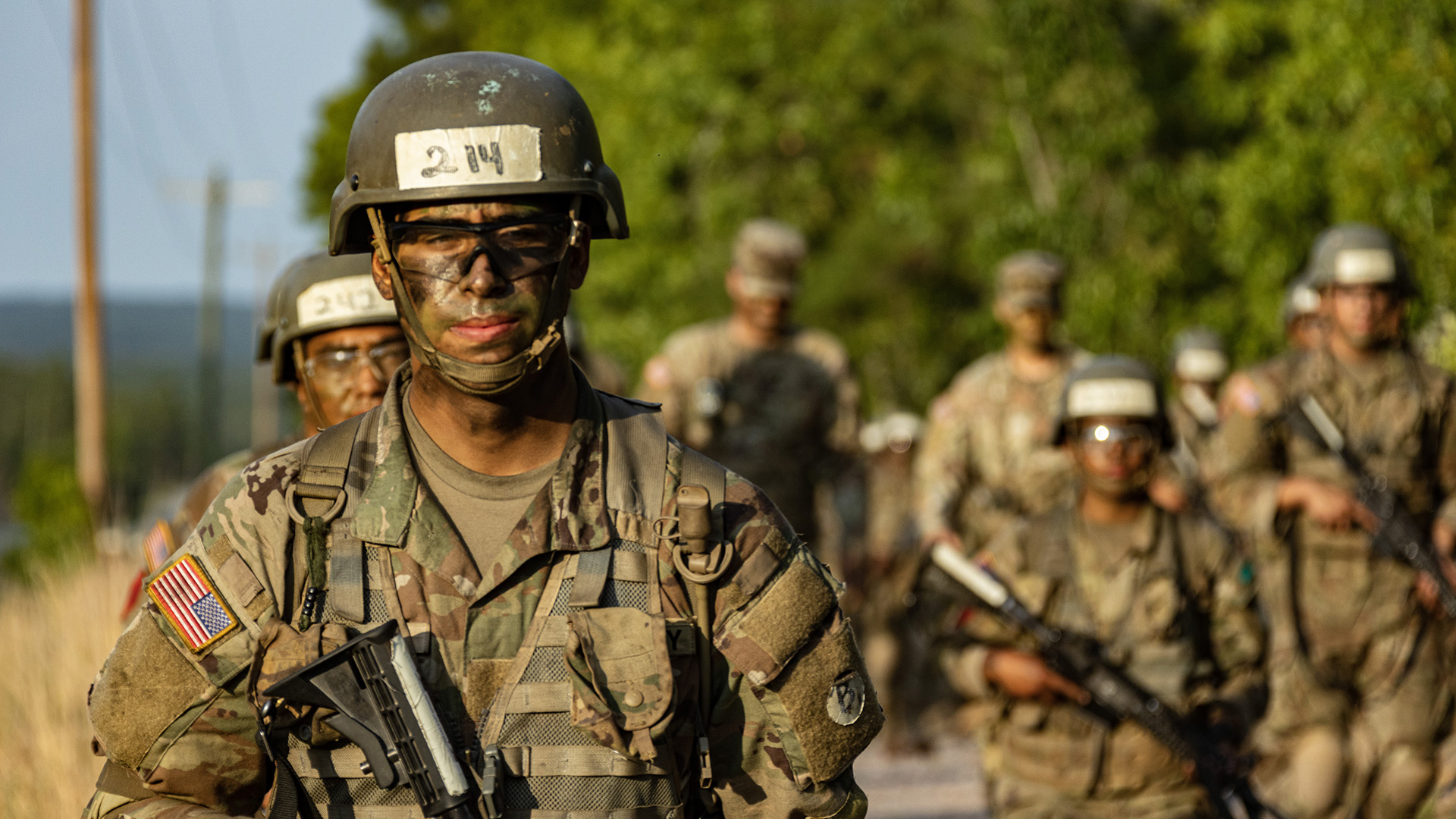
- Introduction to tactical movement, tactical road marches (rucking) with loaded packs, and hand grenade deployment.
Blue Phase (Weeks 7–10): Tactical Operations and "The Forge"
The final phase tests tactical mastery, endurance, and field execution. Recruits apply their learned skills under simulated battlefield environments.
- Advanced marksmanship and night-vision firing drills.
- Convoys, situational training exercises (STX), and urban combat movement.
- The Forge: A grueling 96-hour field training exercise that serves as the capstone evaluation of BCT. Recruits cover over 40 miles on foot carrying full combat loads while completing simulated combat missions, medical evacuations, and defensive maneuvers under sleep and physical strain.
- Rite of Passage & Graduation: Soldiers who pass The Forge earn the right to wear the Army beret, officially transitioning from recruit to Soldier before their formal graduation ceremony in Week 10.
MOS-Specific AIT Lengths for National Guard Recruits
After completing BCT, National Guard recruits immediately transfer to their AIT location (unless enrolled in the Split Training Option). The table below outlines total active-duty training timelines for common National Guard career paths:
| MOS Code & Title | BCT Duration | AIT / Specialist Duration | Combined Total Active Time | Primary Training Location |
|---|---|---|---|---|
| 11B - Infantryman (OSUT) | 10 Weeks | 12 Weeks (Integrated) | 22 Weeks | Fort Moore, GA |
| 68W - Combat Medic Specialist | 10 Weeks | 16 Weeks | 26 Weeks | Joint Base San Antonio, TX |
| 12B - Combat Engineer | 10 Weeks | 4 Weeks | 14 Weeks | Fort Leonard Wood, MO |
| 42A - Human Resources Specialist | 10 Weeks | 9 Weeks | 19 Weeks | Fort Jackson, SC |
| 91B - Wheeled Vehicle Mechanic | 10 Weeks | 13 Weeks | 23 Weeks | Fort Gregg-Adams, VA |
| 15T - UH-60 Helicopter Repairer | 10 Weeks | 15 Weeks | 25 Weeks | Joint Base Langley-Eustis, VA |
| 35F - Intelligence Analyst | 10 Weeks | 13 Weeks | 23 Weeks | Fort Huachuca, AZ |
| 88M - Motor Transport Operator | 10 Weeks | 7 Weeks | 17 Weeks | Fort Leonard Wood, MO |
The Split Training Option (STO): Designed for Students
Unique to the Army National Guard and Army Reserve, the Split Training Option (STO) allows eligible recruits to complete Initial Active Duty Training across two separate years. This program prevents interruptions to high school or college education schedules.
- YEAR 1 (Summer): Complete 10-Week BCT Training
- ACADEMIC YEAR: Attend School & Guard Drill (RSP)
- YEAR 2 (Summer): Complete AIT Career Training
How the Split Option Works
- Phase 1 (Summer 1): The recruit enlists during their junior year of high school (or while enrolled in college) and attends the 10-week Basic Combat Training during the summer break between school years.
- Interim Period (School Year): The recruit returns to high school or college for their senior year. During this time, they attend mandatory drill weekends once a month with their local Guard unit under the Recruit Sustainment Program (RSP).
- Phase 2 (Summer 2): After graduating high school or completing the academic term, the recruit ships out to their designated military post to complete Advanced Individual Training (AIT).
Eligibility Requirements for STO
- Must enlist at 17 years of age with parental consent.
- Must be enrolled as a high school junior, high school senior, or full-time undergraduate student.
- Must maintain academic standing to ensure return to training the following summer.
Factors That Can Extend Your Basic Training Duration
While Basic Combat Training is officially standardized to 10 weeks, certain circumstances can delay graduation and extend active-duty duration:
- Recycling (Training Delays): If a recruit fails a mandatory graduation requirement—such as rifle qualification, the Army Combat Fitness Test, or key evaluations during The Forge—they may be "recycled." Recycling moves the recruit back 1 to 3 weeks into a different training company to re-learn and re-test the material.
- Medical Hold (Fitness Training Unit): Recruits who suffer injuries (e.g., stress fractures, severe sprains) or debilitating illness are reassigned to a Fitness Training Unit (FTU) or Medical Hold company. They remain in medical recovery until military medical officers clear them to resume training.
- Holiday Block Leave (Winter Exodus): The U.S. Army halts basic training for approximately two weeks during late December and early January. Recruits attending BCT over the Christmas and New Year holidays are permitted to take leave or stay on post. This two-week break pauses the official 10-week clock, extending their calendar stay on post.
- Administrative Delays at Reception: Severe backlogs at Reception Battalion during peak summer shipping months can extend processing from 4 days to over two weeks before a recruit formally assigns to a BCT training company.
Preparing for Basic Training: Steps to Ensure On-Time Graduation
Recruits who prepare physically and mentally prior to shipping are far less likely to face training recycles or medical delays.
1. Master the Army Combat Fitness Test (ACFT) Standards
Physical failure is a leading cause of training recycling. Work on the six components of the ACFT before shipping out:
- Maximum Deadlift (MDL)
- Standing Power Throw (SPT)
- Hand-Release Push-Up (HRP)
- Sprint-Drag-Carry (SDC)
- Plank (PLK)
- 2-Mile Run (2MR)
2. Learn Army Ranks and General Orders
Familiarize yourself with fundamental Army knowledge during your time in the Recruit Sustainment Program (RSP):
- Study officer and enlisted rank structures across all military branches.
- Memorize the Three General Orders and the Soldier’s Creed.
- Practice military time notation and chain-of-command terminology.
3. Build Foot and Joint Conditioning
Conditioning your body to handle heavy footwear and carrying weight reduces the risk of stress fractures and joint injuries:
- Break in your issued or authorized military boots prior to shipping.
- Incorporate low-impact weighted walks (rucking) gradually to condition muscles and joints for 5- to 12-mile road marches.
Frequently Asked Questions
How long is Army National Guard basic training in total?
Basic Combat Training (BCT) is exactly 10 weeks long. However, when adding the 4 to 7 days spent at Reception Battalion, total time spent at the basic training installation is roughly 11 weeks before moving on to AIT.
Do National Guard recruits go to the same basic training as active duty Army recruits?
Yes. Army National Guard recruits attend the exact same Basic Combat Training courses, facilities, and drill sergeants as active-duty Army and Army Reserve recruits. There is no separate basic training program exclusive to the Guard.
What is the difference between OSUT and taking BCT and AIT separately?
One Station Unit Training (OSUT) combines BCT and AIT into one continuous training period at a single installation with the same drill sergeants. Separated training means you graduate BCT at one installation and transfer to another military post for AIT.
Can you take leave or go home during basic training?
Recruits generally cannot take leave during the 10 weeks of BCT, with the single exception of Holiday Block Leave (Exodus) in late December. Emergency leave may be granted through the American Red Cross in the event of severe family emergencies.
Are you paid while attending National Guard basic training?
Yes. National Guard recruits serve on active duty status (Title 10 orders) during BCT and AIT. You receive full active-duty military base pay corresponding to your rank, along with free housing, meals, and medical coverage.
Practical Recommendations for Guard Recruits
To minimize delays and complete your active duty training on schedule:
- Coordinate directly with your unit RSP Coordinator: Ensure all medical records, civilian administrative tasks, and banking details (direct deposit forms) are verified before leaving for Reception to prevent pay or clearance delays.
- Verify your STO dates with your school advisor: If utilizing the Split Training Option, confirm with your high school or university registrar that your ship dates match your academic calendars so you do not miss critical enrollment periods.
- Prioritize physical injury prevention: Focus on proper form during physical training, footwear fit, and sleep recovery. Most delays in training length result from preventable overuse injuries sustained during field marches and obstacle courses.
For full enrollment rules, physical requirements, and current ship-date schedules, visit the official U.S. Army Basic Training Portal or contact your local National Guard Recruiting Office.
Image Gallery