The Significance of Nicole Kidman’s Eyes in Eyes Wide Shut
Nicole Kidman’s expressive, multifaceted gaze throughout Stanley Kubrick’s final masterpiece, Eyes Wide Shut (1999), serves as an emotional anchor, a vehicle for psychological subtext, and a mirror reflecting the insecurities of Tom Cr...
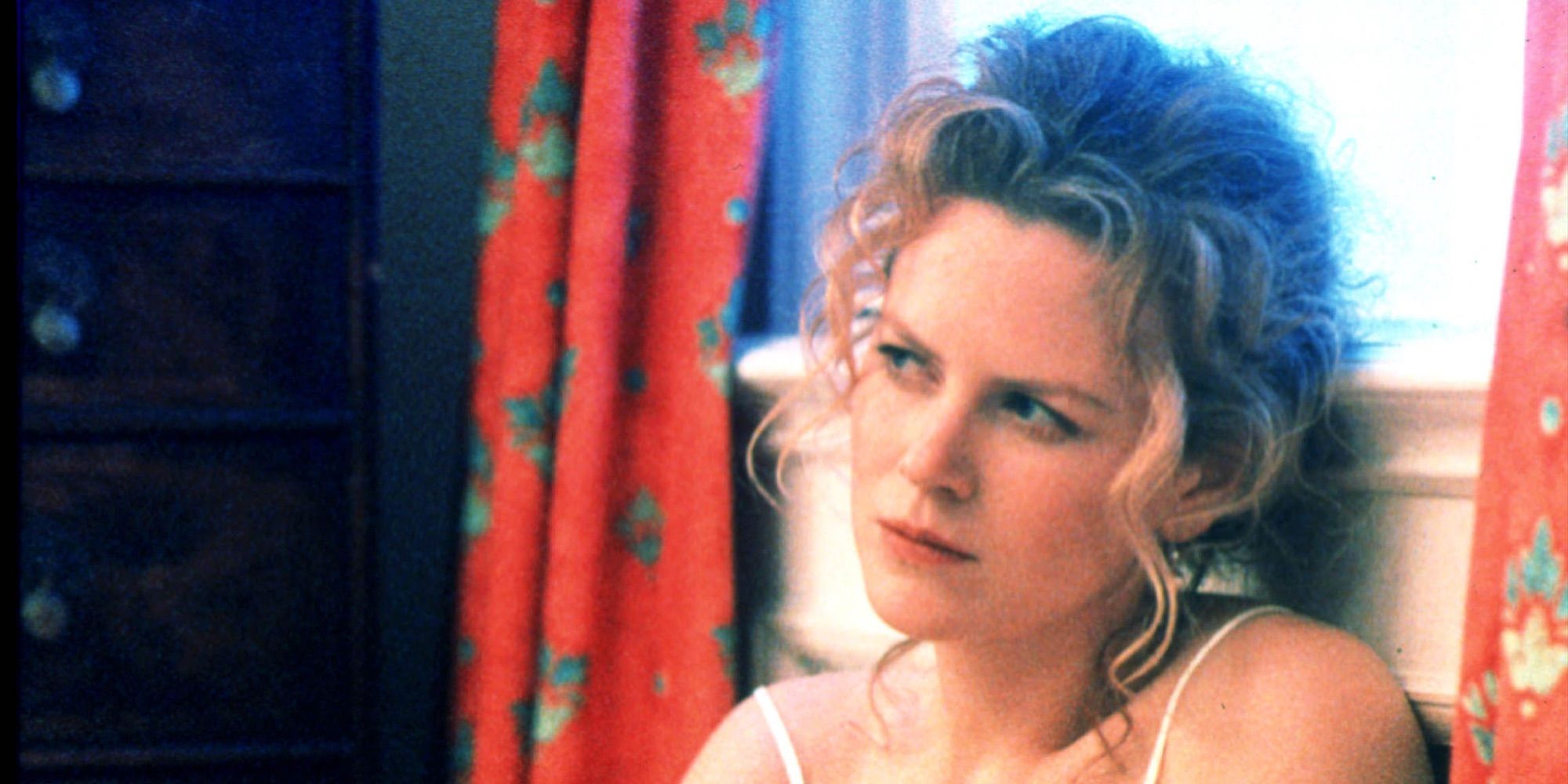
Nicole Kidman’s expressive, multifaceted gaze throughout Stanley Kubrick’s final masterpiece, Eyes Wide Shut (1999), serves as an emotional anchor, a vehicle for psychological subtext, and a mirror reflecting the insecurities of Tom Cruise’s character, Dr. William "Bill" Harford. From the opening ball scene to the final dialogue in a crowded toy store, Kidman’s character, Alice Harford, communicates volumes through her eyes alone—shifting effortlessly between seduction, boredom, amusement, vulnerability, and chilling detachment.
Contents
Introduction to Stanley Kubrick’s Visual Lexicon
Stanley Kubrick was renowned for his meticulous control over every frame, performance, and camera angle. In Eyes Wide Shut, based on Arthur Schnitzler’s 1926 novella Traumnovelle (Dream Story), the director utilizes close-ups and sustained gazes to externalize the psychological undercurrents of a wealthy Manhattan couple experiencing a nightmarish labyrinth of jealousy and repressed desire.
Unlike many Hollywood thrillers that rely on expositional dialogue to explain marital tension, Kubrick relies heavily on non-verbal cues. Nicole Kidman’s eyes become a central text within the film. They register the subtle shifts in power dynamics between Bill and Alice, particularly during the devastating confessional scene where Alice describes her vivid fantasy of infidelity with a naval officer.
Understanding the role of Kidman's gaze requires examining the film's production history, its thematic exploration of the male gaze versus the female gaze, and the specific scenes where her visual reactions alter the trajectory of the narrative.
The Opening Ball: Surveillance, Boredom, and Temptation
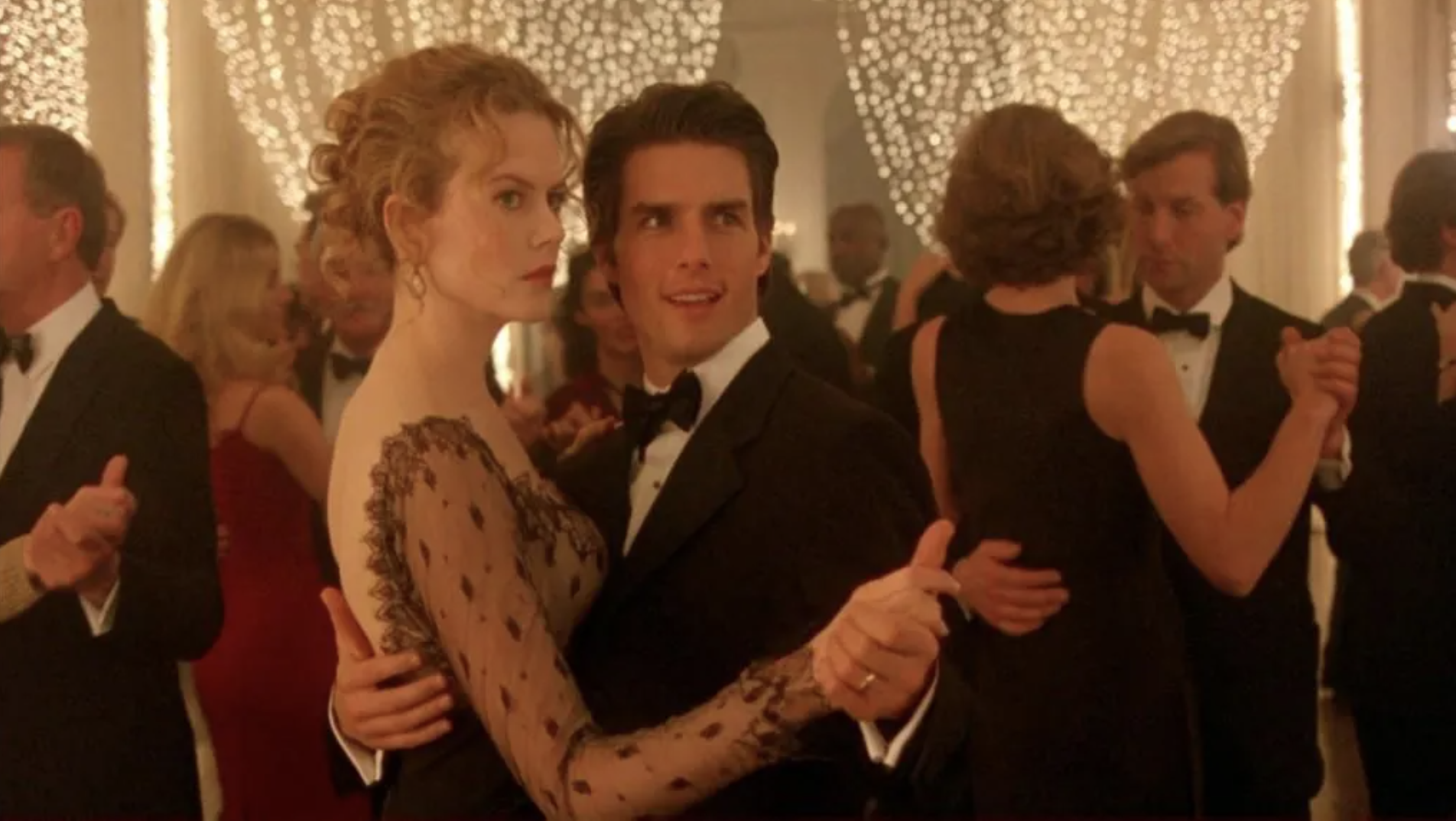
The film establishes Alice and Bill’s social standing and underlying marital friction at the opulent Christmas party hosted by Victor Ziegler (Sydney Pollack). Within this elite setting, Kidman’s eyes perform several distinct functions:
- Detachment and Critical Observation: While Bill is easily flattered and distracted by two models, Alice watches him with a mixture of amusement and mild disdain. Her eyes scan the room, evaluating the superficiality of their social circle.
- Direct Confrontation: When approached by a lecherous Hungarian guest, Alice’s gaze turns sharp and defensive. She uses her eyes to establish boundaries before deploying biting wit to dismiss him.
- Receptive Intrigue: When she dances with Sandor Szavost, her eyes reflect a calculated willingness to flirt, signaling to the audience that she is not merely a passive trophy wife, but an independent agent capable of reciprocating attention.
Kubrick frames Kidman against softly blurred Christmas lights, turning her eyes into luminous focal points that hint at the complex interior life hidden beneath her composed exterior.
| Scene Context | Primary Emotional Register Conveyed by Gaze | Narrative Function |
|---|---|---|
| The Ziegler Party | Boredom, skepticism, subtle temptation | Establishes marital cracks and social performance |
| The Bathroom Confrontation | Piercing honesty, vulnerability, calm defiance | Shifts narrative power from Bill to Alice |
| The Orgy Mansion | Fear, recognition, hidden identity | Underscores mortal danger and voyeurism |
| The Toy Store Finale | Exhaustion, maternal warmth, pragmatic realism | Resolves the psychological nightmare with a grounding truth |
The Monologue Scene: The Power of the Female Gaze
The artistic apex of Kidman’s performance occurs in the bedroom after they smoke marijuana, when Alice recounts her infatuation with a young naval officer she saw in hotel lobby months earlier. This extended monologue upends the traditional cinematic convention where the male character drives the narrative desire.
During this sequence, Kidman’s delivery is hypnotic, but her eyes do the heavier lifting. She does not look directly at Bill for the entirety of the confession; instead, her gaze is often cast downward or directed into the middle distance as she mentally relives the memory. This absence of eye contact physically excludes Bill, forcing him to confront his own impotence in the face of her autonomous imagination.
When she finally looks at him—particularly when describing her willingness to abandon their daughter and her entire life for the stranger—her eyes are devoid of guilt. They radiate a stark, uncompromising truth. This gaze shatters Bill’s fragile ego, instigating his frantic, obsessive odyssey through the nocturnal streets of New York City.
Surveillance and Judgment in the Wake of Tragedy
Following Bill’s harrowing infiltration of the masked ritual at mansion in Mansion Sonata, the psychological tension shifts entirely to how secrets are communicated visually.
When Bill returns home and places his stolen mask on the pillow beside sleeping Alice, Kubrick films Kidman waking up and discovering the object. Her reaction is immediate and visceral. Her eyes widen in horror and realization. She understands instantly that Bill defied the warnings, exposed himself to extreme peril, and compromised their family.
In the subsequent sequence where Alice breaks down in tears while confessing a nightmare that mirrors Bill’s real-life exploits, Kidman’s tear-filled eyes convey a profound empathy mingled with exhaustion. She recognizes that both of them have traversed dangerous psychological terrain, and her gaze communicates an unspoken plea for mutual absolution.
Technical Execution and Kubrick’s Directorial Approach
Kubrick’s insistence on numerous takes—sometimes stretching into the dozens—forced the actors past their technical guards into genuine exhaustion and vulnerability. For Kidman, this process was instrumental in achieving the raw authenticity of Alice's gaze.
Cinematographer Larry Smith utilized specialized lenses and controlled lighting to capture the subtle nuances of the actors' eyes, particularly in low-light interior settings. The amber and blue color palette of the film frequently catches the light in Kidman’s irises, amplifying the dreamlike, hyper-real atmosphere that Kubrick sought to construct.
Furthermore, because Eyes Wide Shut famously mirrored aspects of Kidman and Cruise’s real-life marriage at the time, viewers and critics alike often read a layer of meta-textual autobiography into Kidman’s piercing stares. While both actors have consistently downplayed direct parallels, the intensity of their on-screen eye contact undoubtedly benefited from their real-world dynamic.
Frequently Asked Questions
What does Nicole Kidman’s character symbolize in Eyes Wide Shut?
Alice symbolizes female autonomy, the hidden depths of desire within marriage, and the emotional reality that shatters male vanity. Her gaze acts as a moral and psychological compass for the film, cutting through Bill's delusions of control.
Why is the bedroom confession scene considered pivotal?
The confession scene destroys Bill’s assumption of absolute fidelity and emotional ownership over his wife. Kidman’s distant, unapologetic gaze during this monologue forces Bill out into the city to test his own desirability and masculinity.
How did Stanley Kubrick direct Kidman’s performance?
Kubrick used an exhaustive shooting schedule spanning over a year, conducting repeated takes to strip away conventional acting habits. This method elicited genuine fatigue, introspection, and stark emotional honesty, particularly visible in Kidman’s close-up reaction shots.
Are the events of Eyes Wide Shut real or a dream?
Kubrick deliberately blurs the lines between reality and dream logic, drawing directly from Arthur Schnitzler’s Traumnovelle. While the physical events occur in New York, the emotional resonance functions like a shared dream or psychological fever state, with Kidman’s character acting as both participant and arbiter in Bill’s subconscious processing.
Practical Takeaways for Film Analysis
When analyzing character dynamics in psychological dramas inspired by classic auteur cinema, consider the following analytical steps:
- Examine Non-Verbal Power Shifts: Pay attention to who breaks eye contact first in scenes of conflict; power often rests with the character who maintains a steady, unblinking gaze.
- Analyze Camera Framing: Note how directors use close-ups not merely for emotional emphasis, but to trap characters within their own subjective viewpoints.
- Contextualize Subtext: Look past dialogue to see how physical expressions—such as a sideways glance, a blank stare, or tear-filled eyes—contradict or validate spoken words.
Image Gallery