How the Postcard Code Is Evolving for Senders in 2026
The evolution of the postcard code for senders has transitioned from simple delivery tracking to a multi-layered ecosystem of Intelligent Mail barcodes (IMb), dynamic QR codes, and digital integration. Today, these codes serve as criti...
The evolution of the postcard code for senders has transitioned from simple delivery tracking to a multi-layered ecosystem of Intelligent Mail barcodes (IMb), dynamic QR codes, and digital integration. Today, these codes serve as critical bridges between physical mailpieces and digital attribution, offering senders lower postage rates, real-time logistics data, and measurable conversion metrics.
Contents
The Shift from Logistics to Interaction
For decades, the "code" on a postcard was a utility for the postal service—a series of bars and spaces designed to tell a sorting machine where a piece of mail was headed. However, as we navigate 2026, the definition of the postcard code has expanded significantly. For modern senders, the "code" now refers to a dual-purpose system: the Intelligent Mail barcode (IMb) for logistics and interactive triggers (like QR codes or NFC) for recipient engagement.
The primary driver of this evolution is the demand for data. Senders are no longer satisfied with "spray and pray" marketing. They require the same level of granularity in direct mail that they receive from email marketing or PPC (Pay-Per-Click) advertising. This demand has forced the evolution of the IMb from a basic routing tool into a sophisticated tracking asset that provides "Informed Visibility," allowing senders to trigger follow-up emails or SMS messages the moment a postcard is scanned at the local post office.
Understanding the Intelligent Mail Barcode (IMb) Evolution
The IMb remains the foundational "code" for any professional sender. By 2026, the USPS has solidified its requirements for "Full-Service" IMb compliance, which is necessary to access the most competitive workshare discounts.
The Anatomy of the Modern IMb
A standard IMb consists of 65 bars representing four distinct states. For senders, the evolution lies in how the data fields within that barcode are managed:
- Barcode ID: Identifies the presort makeup.
- Service Type ID (STID): This is where the evolution is most visible. New STIDs now allow for specific instructions regarding "Informed Delivery" and automated address correction.
- Mailer ID (MID): A 6- or 9-digit field assigned by the USPS to identify the specific business sending the mail.
- Sequence Number: This unique identifier for each recipient allows for individual piece tracking, a feature that has become mandatory for high-level attribution.
The complexity of these codes means that senders increasingly rely on automated software-as-a-service (SaaS) platforms to generate barcodes that are compliant with the latest USPS standards. This reduces "u-turn mail" (mail returned due to unreadable codes) and ensures that the sender’s data remains clean.
The Rise of Dynamic Engagement Codes
While the IMb handles the "where" and "when" of a postcard, the engagement code—most commonly the Dynamic QR code—handles the "what happens next." In 2026, the evolution of these codes for senders has moved beyond the static URL.
From Static to Dynamic QR
Earlier iterations of QR codes on postcards were often static, meaning the destination URL was hard-coded into the pattern. If the landing page changed or the campaign ended, the postcard became a dead end. Modern senders now exclusively use Dynamic QR codes. These allow the sender to change the destination URL in real-time without changing the printed code on the postcard.
Furthermore, these codes are now "personalized" (PQR). Every recipient receives a code that is unique to them. When the recipient scans the code, the sender’s CRM (Customer Relationship Management) system immediately knows exactly who scanned it, even if the user doesn't complete a form on the website. This level of attribution was previously impossible in physical mail.
Aesthetic and Technical Integration
Senders have also seen an evolution in how these codes are printed. High-resolution digital printing in 2026 allows for "Designer QR Codes" that incorporate brand colors and logos without sacrificing scannability. The technical threshold for error correction (Reed-Solomon error correction) has improved, allowing codes to remain functional even if the postcard is slightly scuffed or stained during transit.
Integration with Informed Delivery
The postcard code is no longer just on the physical paper. One of the most significant evolutions for senders is the integration with USPS Informed Delivery. This service provides residential consumers with a digital preview of their incoming mail.
For senders, this means the "code" now triggers a digital twin of the postcard. When a sender uses a compliant IMb and submits a "Representative Image" to the USPS Mail.xml system, the recipient sees a full-color digital version of the postcard in their email inbox hours before the physical mail arrives.
This creates a "double-tap" marketing effect:
- The Digital Impression: The recipient sees the code and a "Ride-along Image" with a clickable link in their email.
- The Physical Impression: The recipient receives the high-tactile postcard in their mailbox later that day.
By 2026, senders who fail to utilize this digital-physical code synchronization are seeing significantly lower ROI compared to those who embrace the "Informed Delivery" campaign format.
Technical Specifications and Clear Zones
As the postcard code evolves, the physical requirements for senders have become more stringent to accommodate high-speed sorting machines that now process tens of thousands of pieces per hour.
| Feature | Requirement / Specification | Purpose |
|---|---|---|
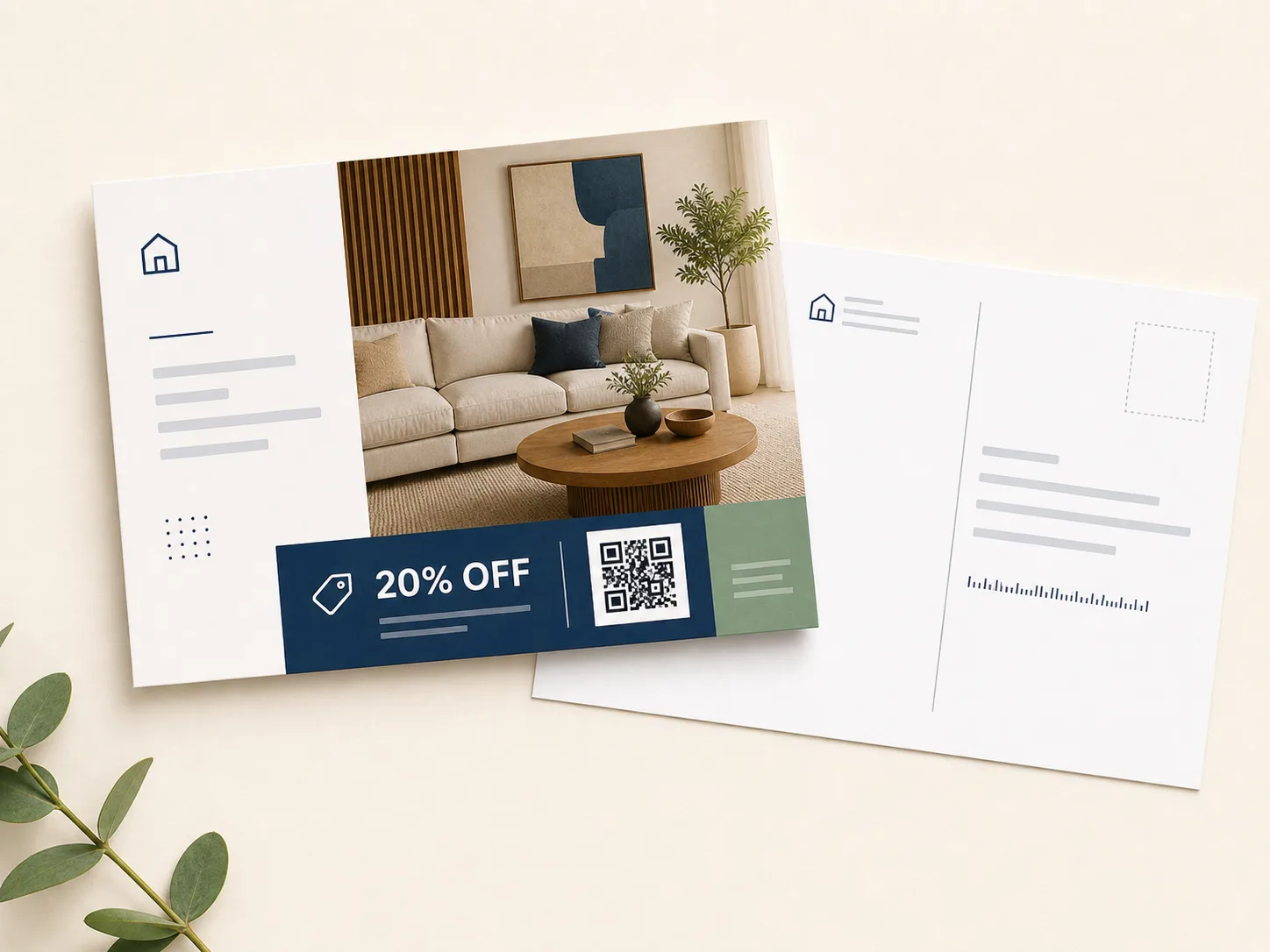
| IMb Clear Zone | 4.75" x 0.625" at bottom right | Ensures optical sensors can read the barcode without interference. |
| QR Code Size | Minimum 0.5" x 0.5" | Guarantees smartphone cameras can focus and resolve the data. |
| Address Block | 2.75" width minimum | Provides space for the delivery address and the IMb above/below. |
| Quiet Zone | 1/8 inch around all codes | Prevents design elements from being misread as part of the code. |
| Contrast Ratio | Minimum 30% | Ensures the code stands out from the background paper color. |
Senders must also consider the paper stock. Reflective or overly glossy coatings can interfere with laser scanners. In 2026, many senders are moving toward matte finishes or "aqueous coatings" that protect the postcard while maintaining a high level of code readability.
Cost Considerations and Postage Discounts
The evolution of the postcard code is deeply tied to the economics of shipping. The USPS provides significant incentives for senders who adopt advanced coding practices.
Full-Service Automation Discounts: By using a unique IMb for every piece and submitting electronic documentation (eDoc), senders can save several cents per piece. On a campaign of 50,000 postcards, this can amount to thousands of dollars in savings.
Informed Delivery Incentives: Periodically, the USPS offers "promotions" where senders receive a percentage-based discount on postage if they include an interactive element (like a QR code linked to a mobile-optimized site) or participate in an Informed Delivery campaign. Senders in 2026 monitor the USPS PostalPro website closely to align their campaign dates with these discount periods.
Common Pitfalls for Modern Senders
Despite the technological advancements, several common mistakes can render a postcard's code useless:
- Low Contrast: Placing a black QR code on a dark navy background.
- Improper Scaling: Stretching a barcode image, which changes the ratio of the bars and makes it unreadable.
- Broken Redirects: Failing to test the destination of a dynamic QR code before the mail drop.
- Encroachment: Allowing "social media icons" or "call to action" text to bleed into the IMb clear zone.
To mitigate these risks, professional senders often utilize "Mailpiece Design Analysts" (MDA) or automated pre-flight tools provided by modern print-on-demand platforms. These tools simulate the USPS scanners to ensure the code is valid before a single drop of ink is spent.
The Future of Postcard Codes: Beyond 2026
Looking beyond the current year, we are seeing the early stages of NFC (Near Field Communication) and AR (Augmented Reality) tags being embedded into the paper itself. While these are not "codes" in the traditional printed sense, they function as the next evolution of the postcard code for senders.
Imagine a postcard where the code is invisible, embedded in the fibers of the paper. A user simply taps their phone to the card to trigger a purchase. While currently more expensive than a printed QR code, the cost of these technologies is falling, and they represent the next frontier in the evolution of how senders connect with their audience.
FAQs
What is the difference between an IMb and a QR code for a sender?
The Intelligent Mail barcode (IMb) is used primarily by the USPS for sorting, routing, and tracking the delivery progress of the postcard. The QR code is a marketing tool used by the sender to direct the recipient to a website, video, or digital offer. Both are "codes," but they serve entirely different functional purposes within the same mailpiece.
Do I need a special printer to use evolved postcard codes?
Standard office printers often lack the resolution or the specific software integration required to generate unique, serialized Intelligent Mail barcodes for each recipient. Senders typically work with commercial printers or "Direct Mail SaaS" providers that have the specialized equipment to handle Variable Data Printing (VDP) at scale.
How do I track my postcard using these codes?
Tracking is handled through the "Informed Visibility" platform. When you send mail using a Full-Service IMb, the USPS provides data files (often via an API) that tell you when a postcard has been processed at various distribution centers. This allows you to see exactly when your mail is "out for delivery."
Can I use a QR code instead of a barcode for postage?
No. A QR code cannot replace the Intelligent Mail barcode (IMb) required for postal sorting and discounts. While some countries are experimenting with "digital stamps," for US-based senders in 2026, the IMb remains the only recognized barcode for automated postage processing.
Are there privacy concerns with personalized postcard codes?
Because personalized codes (PQRs) can identify a recipient as soon as they scan, senders must be transparent in their privacy policies about how this data is collected. However, because the data is essentially an extension of an existing business relationship (sending mail to a known address), it generally falls under standard direct marketing regulations like the CCPA or GDPR, depending on the jurisdiction.
Practical Recommendation
For senders looking to capitalize on the evolution of the postcard code in 2026, the most effective strategy is to combine Full-Service IMb tracking with a Dynamic, Personalized QR code. This "Dual-Code" approach ensures you get the lowest possible postage rates and the highest possible data attribution. Always run a small "test batch" or use a USPS Mailpiece Design Analyst to verify that your layout meets the latest "Clear Zone" requirements before committing to a high-volume print run.
Image Gallery