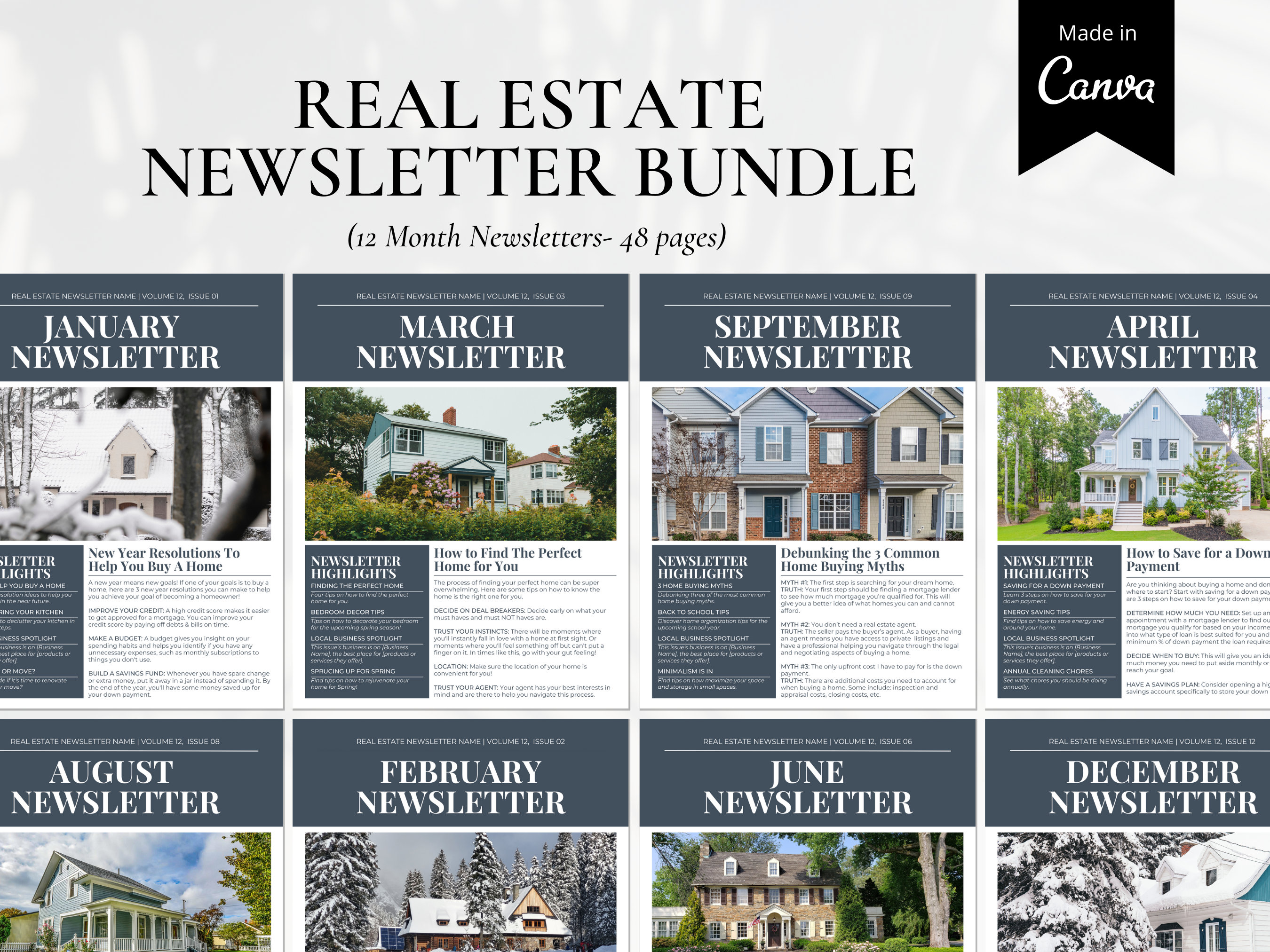
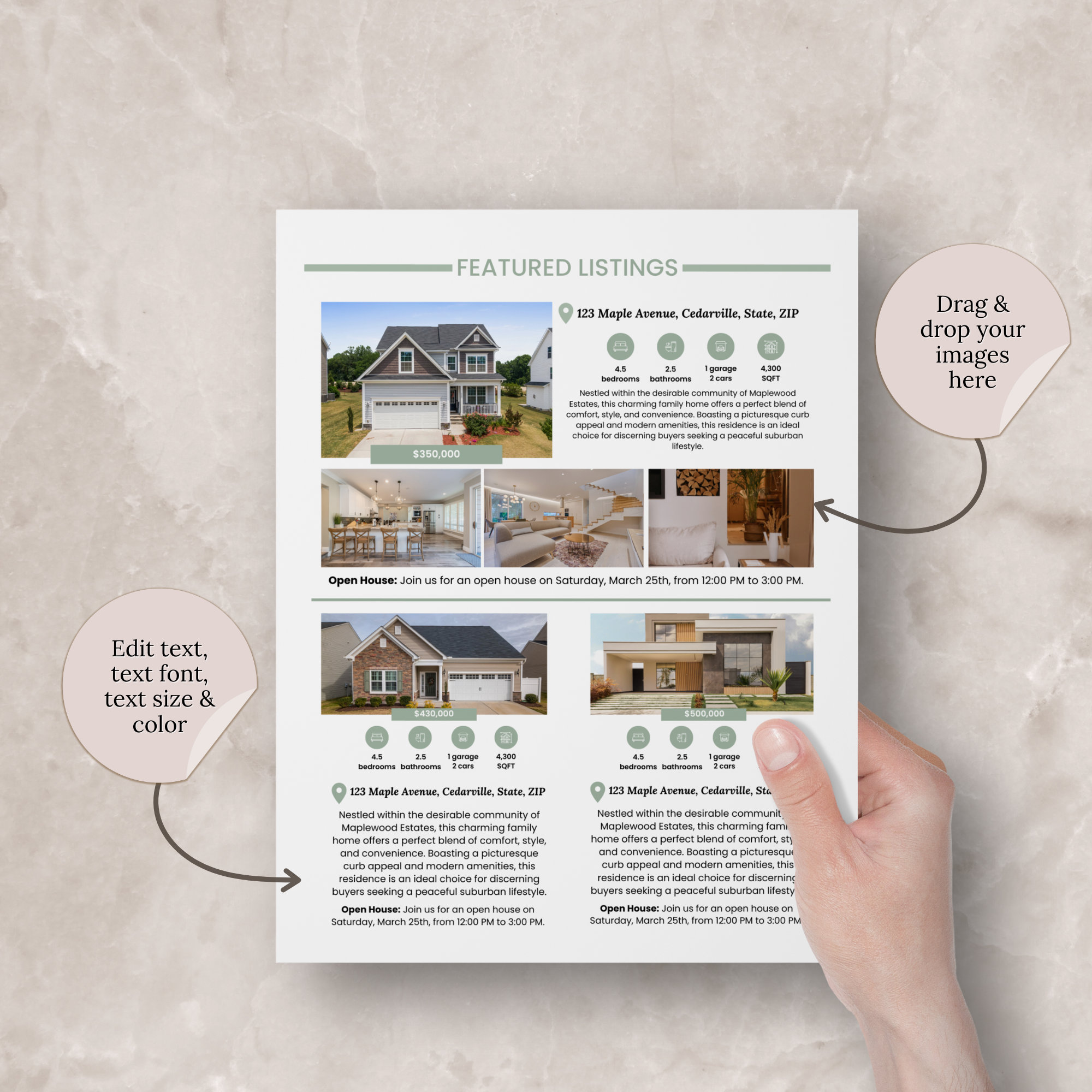
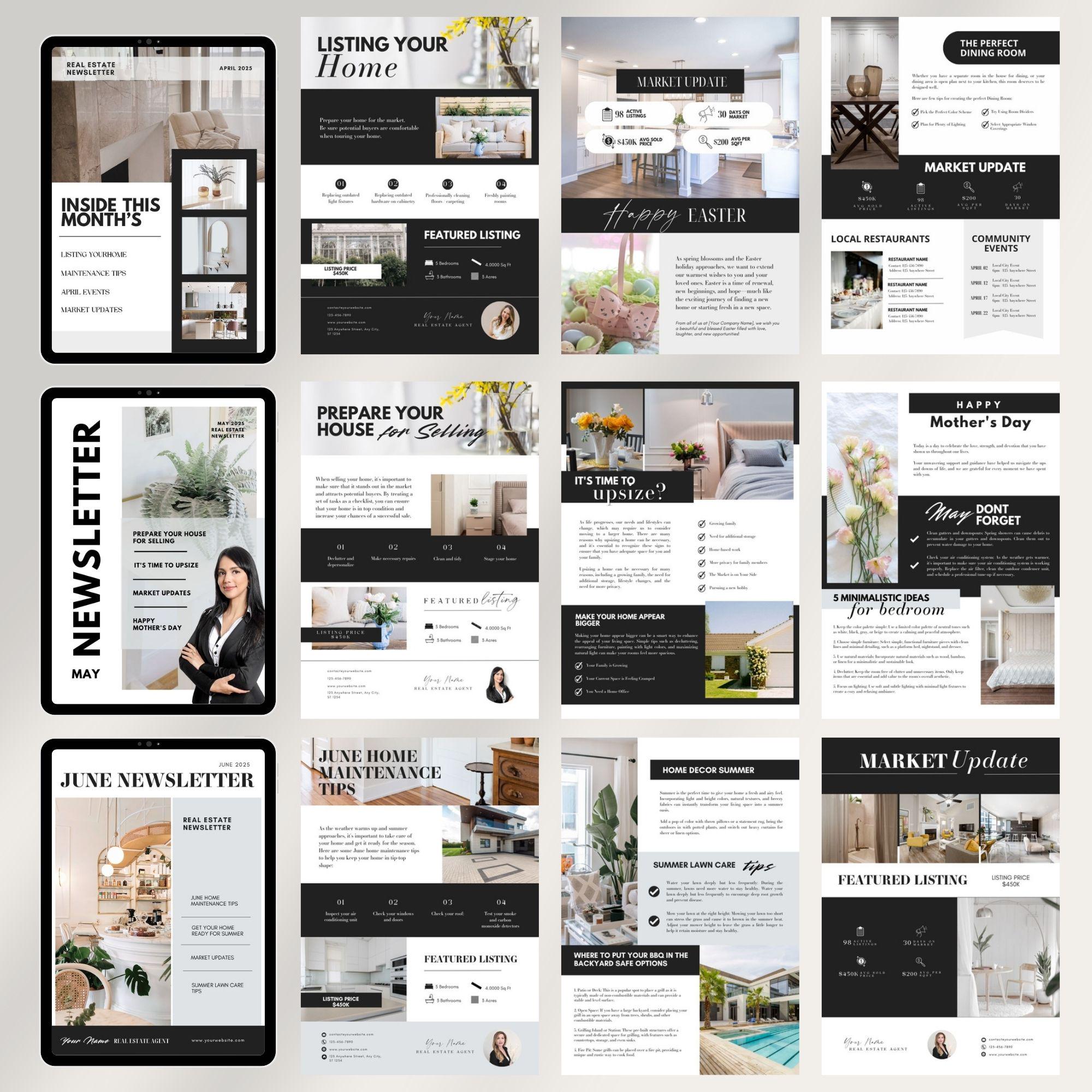
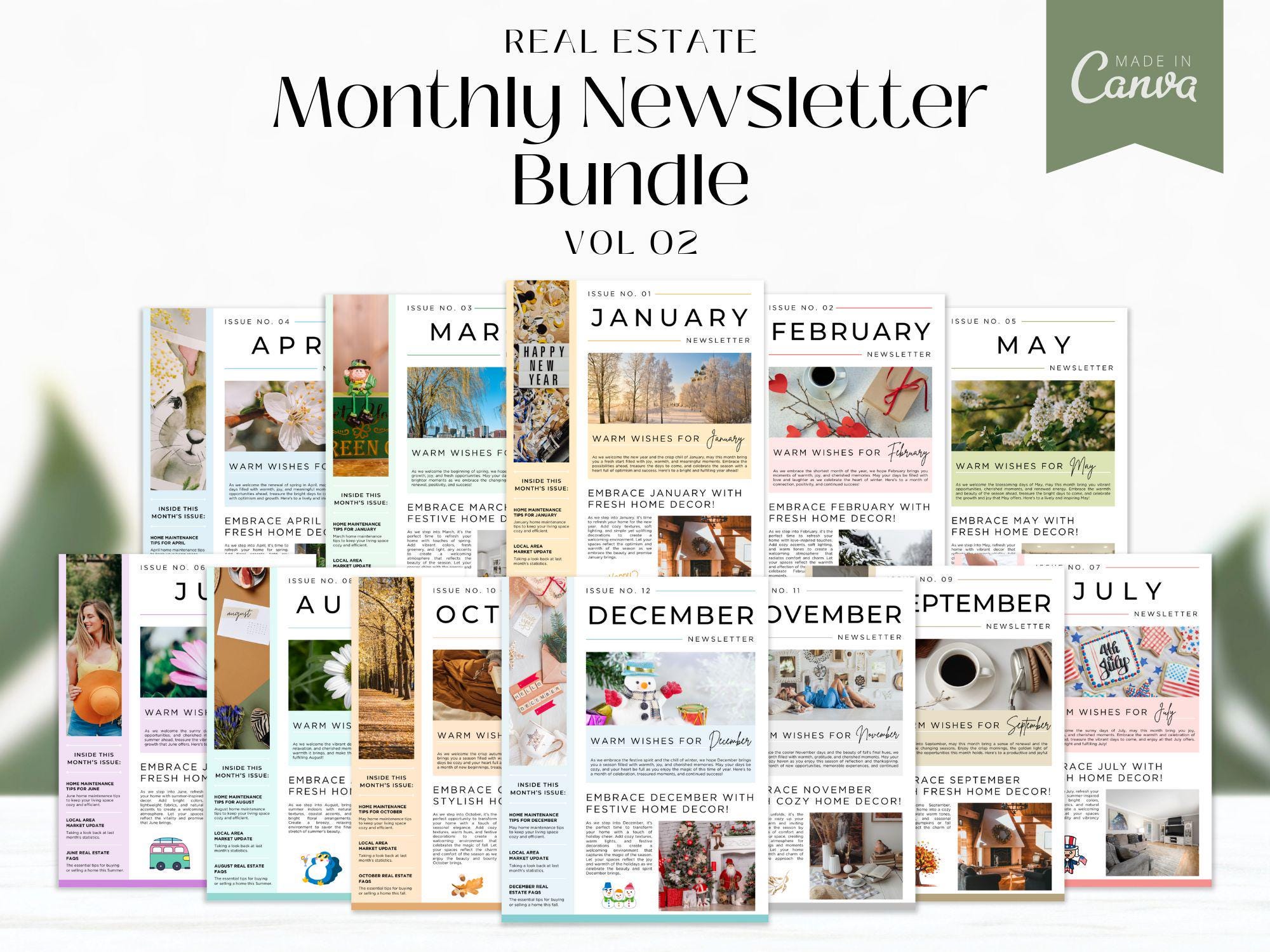
Monthly Real Estate Newsletters: Strategy, Content Architecture, and Execution Guide
Monthly real estate newsletters serve as a primary relationship-nurturing tool for real estate agents, brokers, and team leaders. By delivering hyper-local market intelligence, homeowner advice, and community updates on a consistent sc...
Monthly real estate newsletters serve as a primary relationship-nurturing tool for real estate agents, brokers, and team leaders. By delivering hyper-local market intelligence, homeowner advice, and community updates on a consistent schedule, these publications keep real estate professionals top-of-mind within their sphere of influence, generating repeat business and high-intent client referrals over time.
Contents
The Strategic Role of a Monthly Real Estate Email Newsletter
Real estate transactions are high-value, low-frequency events. The average homeowner relocates every 7 to 10 years, meaning immediate transactional intent is absent in the vast majority of an agent's contact database at any given time. Maintaining consistent contact across these multi-year gaps requires a communications strategy that provides continuous utility rather than aggressive sales pitches.
A monthly real estate newsletter bridges this gap. Unlike weekly emails—which frequently trigger contact fatigue and higher unsubscribe rates among non-active buyers—a monthly rhythm provides enough time to compile meaningful market shifts and curated local content without overwhelming recipient inboxes.
- Sphere of Influence / Database
- Monthly Newsletter (Hyper-Local Insights & Market Data)
- High-Value Touches (Property Equity Updates, Local Spotlights)
- Top-of-Mind Brand Awareness
- Inbound Referrals & Repeat Listings
When structured correctly, a monthly email newsletter achieves three core objectives:
- Demonstrates Local Market Authority: Positions the agent as a knowledgeable market advisor through accurate local MLS statistics and narrative commentary.
- Protects Database Equity: Nurtures the agent's sphere of influence (SOI), past clients, and cold leads, preventing prospective clients from turning to competing agents when transaction readiness arrives.
- Drives Trackable Engagement: Generates behavioral signals—such as link clicks on home valuation tools or featured listings—that highlight active prospects within a customer relationship management (CRM) platform.
Core Content Architecture for High-Converting Newsletters
Successful email newsletters balance educational market data with actionable homeowner advice. A proven structural model uses an 80/20 ratio: 80% hyper-local value and educational insight, combined with 20% promotional real estate content (such as current listings, recently sold properties, or client reviews).
- Header & Quick Greeting
- Market Pulse (Local MLS Data, Median Prices, Days on Market)
- Feature Article (Homeownership, Equity, Maintenance Tips)
- Community Spotlight (Local Events, Business Highlights)
- Featured Listings / Recent Closings
- Call-to-Action (Home Valuation, Buyer/Seller Consultation)
1. Local Market Pulse (The Anchor Section)
Raw data alone does not engage readers; interpretation does. The market update section should digest complex MLS metrics into simple, narrative insights. Avoid publishing raw, regional numbers that cover an entire metropolitan area. Instead, segment data by specific neighborhoods, ZIP codes, or property types.
Key metrics to include and contextualize:
- Median Sold Price Trends: Explain whether prices are appreciating, stabilizing, or adjusting downward, and what that means for potential seller equity.
- Months of Inventory (Absorption Rate): Translate inventory figures into market conditions (under 4 months indicates a seller’s market; 4 to 6 months represents a balanced market; over 6 months indicates a buyer’s market).
- Average Days on Market (DOM): Use DOM changes to help buyers set realistic offer timelines and advise sellers on competitive pricing strategies.
2. Seasonal Homeowner Utility
Provide practical advice that addresses ongoing home ownership costs, maintenance, and equity growth. This positions the sender as a long-term home advisor rather than a transactional salesperson.
Examples of high-performing seasonal topics include:
- Q1 (Winter/Spring Prep): Property tax protest procedures, spring maintenance checklists, home office tax deduction guidelines, and HVAC prep.
- Q2 (Peak Selling Season): High-ROI home renovation projects, curb appeal enhancements, and staging principles for maximum yield.
- Q3 (Summer/Fall Maintenance): Energy-efficiency audits, roof and gutter maintenance, and winterization techniques.
- Q4 (Year-End Planning): Year-end real estate equity reviews, capital gains strategies, and mortgage refi evaluation checklists.
3. Hyper-Local Community Spotlights
Highlighting local businesses, school district developments, community events, and municipal projects reinforces your status as a neighborhood authority. Partnering with local business owners to offer exclusive subscriber discounts or featuring an interview with a local business owner builds goodwill and expands cross-promotional reach.
4. Featured Listings and Recent Sales
Limit direct property promotion to one or two visually compelling entries. Showcase:
- Just Listed Properties: Highlight unique architectural details, price positioning, or open house schedules.
- Just Sold Properties: Focus on sales achievements, such as "Sold in 4 days over asking price," to demonstrate execution capabilities to prospective sellers.
- Off-Market / Coming Soon Opportunities: Offer early access details where local MLS regulations and brokerage rules permit.
5. Primary Call to Action (CTA)
Every monthly issue must end with a single, clear call to action. Avoid vague prompts such as "Contact me for all your real estate needs." Use focused, low-friction offers:
- "Curious what your home is worth after recent neighborhood sales? Request a custom 5-minute equity report."
- "Planning a move in the next 12 months? Download our 2026 Home Buyer's Roadmap."
Real Estate Newsletter Content Strategy Matrix
The following matrix outlines structural components, ideal lengths, target audience segments, and primary success metrics for each section of a monthly real estate newsletter:
| Newsletter Section | Primary Purpose | Optimal Format / Length | Target Audience Segment | Success Metric / KPI |
|---|---|---|---|---|
| Market Pulse Breakdown | Educate on local real estate valuation trends and inventory shifts. | 150–250 words + simple graphic or chart | Homeowners, Investors, Prospective Sellers | Click-through rate (CTR) on full market report link |
| Home Maintenance & Equity Tip | Deliver actionable utility to build long-term trust. | 200–300 words with bullet points | Past Clients, Sphere of Influence (SOI) | Forward/Share rates, Reply rate |
| Hyper-Local Community Feature | Establish local authority and support community businesses. | 100–200 words + photo + local partner link | Neighborhood Residents, Relocation Buyers | Partner cross-clicks, Local engagement |
| Featured Listing / Sold Story | Demonstrate transaction activity and sales track record. | Image card + 50–75 words summary + price/specs | Active Buyers, Unrepresented Sellers | Property landing page clicks, Tour inquiries |
| Interactive Call-to-Action (CTA) | Capture high-intent leads and home valuation requests. | Single button or banner + 1–2 direct sentences | Warm Database Leads, Seller Prospects | Conversion rate (Form fills, Valuation requests) |
Technical Infrastructure, CRM Delivery, and Deliverability Compliance
Even high-quality content fails if newsletters end up in spam folders or violate email marketing regulations. Establishing proper technical delivery infrastructure is essential for long-term email deliverability.
Technical Authentication Standards
Major mailbox providers—including Google, Yahoo, and Microsoft—enforce strict authentication rules for bulk senders to combat phishing and unsolicited commercial email. Ensure your domain uses these authentication controls:
- SPF (Sender Policy Framework): Specifies which mail servers are authorized to send email on behalf of your custom domain.
- DKIM (DomainKeys Identified Mail): Adds a cryptographic signature to outgoing messages, confirming that the email was sent by the domain owner and was not altered in transit.
- DMARC (Domain-based Message Authentication, Reporting, and Conformance): Tells receiving mail servers how to handle emails that fail SPF or DKIM checks. Set your DMARC policy to at least
p=nonefor monitoring, moving towardp=quarantineorp=rejectas domain health stabilizes.
Regulatory Compliance Frameworks
Real estate professionals must ensure full compliance with international and national consumer protection and anti-spam laws:
- CAN-SPAM Act (United States): Requires a clear physical business address in every email footer, a functioning one-click opt-out or unsubscribe mechanism, accurate header data, and non-deceptive subject lines. Review compliance guidelines through the Federal Trade Commission CAN-SPAM Guide.
- CASL (Canada’s Anti-Spam Legislation): Demands explicit or implied consent prior to sending commercial electronic messages, alongside strict opt-out tracking mechanisms.
- Fair Housing Act Compliance: All imagery, language, and promotional offers must adhere to federal, state, and local fair housing laws. Ensure content does not express preference, limitation, or discrimination based on race, color, religion, sex, handicap, familial status, or national origin.
Platform Selection: Dedicated ESPs vs. Real Estate CRMs
Choosing between a dedicated Email Service Provider (ESP) or a specialized real estate Customer Relationship Management (CRM) platform depends on your database scale and automation strategy:
- Should You Use an ESP or a Real Estate CRM?
- Does your primary goal require advanced visual design & newsletter automation?
- YES: Dedicated ESP Route (Mailchimp, ActiveCampaign, ConvertKit)
- Superior visual customization
- Advanced audience segmentation
- Higher deliverability analytics
- NO: Real Estate CRM Route (kvCORE, LionDesk, Follow Up Boss)
- Direct integration with lead pipelines
- Automated activity tracking for agents
- Built-in MLS listing integration
- YES: Dedicated ESP Route (Mailchimp, ActiveCampaign, ConvertKit)
- Does your primary goal require advanced visual design & newsletter automation?
- Dedicated ESPs (e.g., Mailchimp, ActiveCampaign, ConvertKit): Offer advanced visual email drag-and-drop builders, higher design customization, deep audience segmentation, and deliverability reporting tools. Ideal for agents who prioritize custom branding and polished editorial design.
- Real Estate CRMs (e.g., kvCORE, LionDesk, Follow Up Boss, Chime): Offer direct integration with your lead database, property search tracking, and automated client activity triggers. While email layout options may be more structured, integration with property records makes running targeted campaigns straightforward.
A 30-Day Step-by-Step Production & Execution Workflow
To ensure consistency, structure your newsletter compilation, review, and distribution into a repeating monthly production cycle:
- Week 1: Data Gathering
- Week 2: Content Creation
- Week 3: Testing & Compliance
- Week 4: Send & Analyze
Week 1: Data Gathering and Topic Selection
- Pull month-end market statistics directly from your local MLS.
- Identify key trends: Calculate percentage changes in median sale prices, active listings, and average days on market year-over-year.
- Select a primary topic based on seasonal maintenance schedules, municipal developments, or market shifts.
Week 2: Draft Content and Layout Design
- Write the main market narrative, focusing on what the statistics mean for buyers and sellers in clear language.
- Draft the homeowner utility article and curate a community business feature.
- Select photos for featured listings or recent sales. Ensure high resolution, proper aspect ratios, and alt-text tags for accessibility.
Week 3: Staging, Technical Testing, and Quality Control
- Load content into your ESP or CRM template.
- Perform rendering checks across desktop, tablet, and mobile devices, testing both light and dark mode displays.
- Check all external links (market reports, listing URLs, vendor sites, unsubscribe links) to ensure proper destination and UTM tracking parameter placement.
- Run a spam filter audit using tools like Mail-Tester to verify SPF/DKIM signature status.
Week 4: Distribution, Behavioral Tracking, and Lead Follow-Up
- Schedule distribution for optimal engagement windows. Industry data suggests Tuesday, Wednesday, and Thursday mid-mornings (between 9:00 AM and 11:00 AM local time) yield reliable open and click-through metrics.
- Monitor performance 24 to 48 hours post-send. Identify contacts who opened the email multiple times or clicked high-intent links (such as home valuation tools or listing pages).
- Pass engaged contacts to your sales pipeline for personal follow-up phone calls, text messages, or customized home valuation reports.
Common Real Estate Email Marketing Mistakes to Avoid
- Relying Exclusively on Syndicated, Boilerplate Content: Purchasing generic corporate newsletters with non-local real estate tips fails to build local authority. Personalize syndicated articles with your own local insights, market commentary, and neighborhood photos.
- Ignoring Mobile Layout Constraints: More than 50% of real estate newsletters are opened on mobile devices. Multi-column templates often break on mobile screens, leading to misaligned text and tiny buttons. Use responsive single-column layouts with large, touch-friendly CTA buttons (minimum 44x44 pixels).
- Failing to Segment Your Audience: Sending buyer-focused advice (e.g., "How to Save for Your First Down Payment") to long-time homeowners harms subscriber engagement. Segment your contact database into distinct buckets:
- Past Clients / Sphere of Influence (Focus: Home equity, maintenance, market updates)
- Warm Seller Prospects (Focus: Detailed market analysis, home preparation tips, local demand statistics)
- Active Buyers (Focus: Available inventory, rate trends, negotiation techniques)
- Real Estate Investors (Focus: Cap rates, rental yield trends, 1031 exchange guidance)
- Neglecting List Hygiene: Sending emails to abandoned, invalid, or unengaged email addresses damages your sender reputation over time. Scrub your database every six months to clear bounced addresses and archive contacts who have not opened an email in over 12 months.
Frequently Asked Questions
What is a good open rate for a monthly real estate newsletter?
For the real estate sector, healthy open rates typically fall between 30% and 42%, while target click-through rates (CTR) range from 2% to 5%, depending on list quality and audience segmentation. Highly targeted sphere-of-influence (SOI) lists of past clients often experience open rates exceeding 50%, whereas unsegmented cold lead lists deliver significantly lower engagement metrics.
Should I send my monthly newsletter on the same day every month?
Yes. Establishing a predictable distribution rhythm—such as the second Tuesday or third Thursday morning of each month—helps establish consistency. Avoid sending newsletters on the first day of the month or during major holidays, when inbox volume spikes and recipient attention declines.
Can I include video content in my real estate email newsletter?
Most major email clients (including Gmail and Outlook) do not support inline HTML5 video playback directly within the email body. The best practice is to embed a high-quality video thumbnail image featuring a prominent play button icon. Hyperlink that thumbnail directly to a dedicated landing page, YouTube video, or video hosting platform (such as Vimeo or Loom) where the recipient can view the full clip.
How do I grow my monthly newsletter subscriber list organically?
Place embedded newsletter sign-up forms on your website, listing pages, and blog posts. Capture emails at open houses using digital sign-in sheets with explicit opt-in checkboxes. Offer high-value lead magnets, such as a quarterly local market report, neighborhood moving guides, or home valuation tools, in exchange for an email address.
Should I use plain text or HTML visual templates?
A balanced hybrid approach works best. While rich HTML visual templates allow you to showcase property imagery, charts, and clean branding, overly complex layouts with excessive code or heavy image files can trigger promotional folder filtering or slow down load times on mobile devices. Ensure your HTML templates maintain a high text-to-image ratio and load efficiently.
Strategic Next Steps
To launch or optimize your monthly real estate newsletter:
- Audit Your CRM Database: Clean existing contacts, remove invalid email addresses, and tag subscribers based on their relationship status (Past Client, Seller Prospect, Buyer Lead, Vendor).
- Setup Domain Authentication: Work with your domain administrator or CRM support team to verify SPF, DKIM, and DMARC settings to secure delivery.
- Develop a 12-Month Editorial Calendar: Outline seasonal homeowner topics, community business spotlights, and market report release schedules for the entire year.
- Create a Unified Master Template: Design a responsive, single-column HTML email template optimized for mobile devices, aligned with your brand guidelines, and compliant with CAN-SPAM requirements.
Image Gallery