Understanding Carlos Alcaraz’s US Open Prize Money: A Comprehensive Breakdown
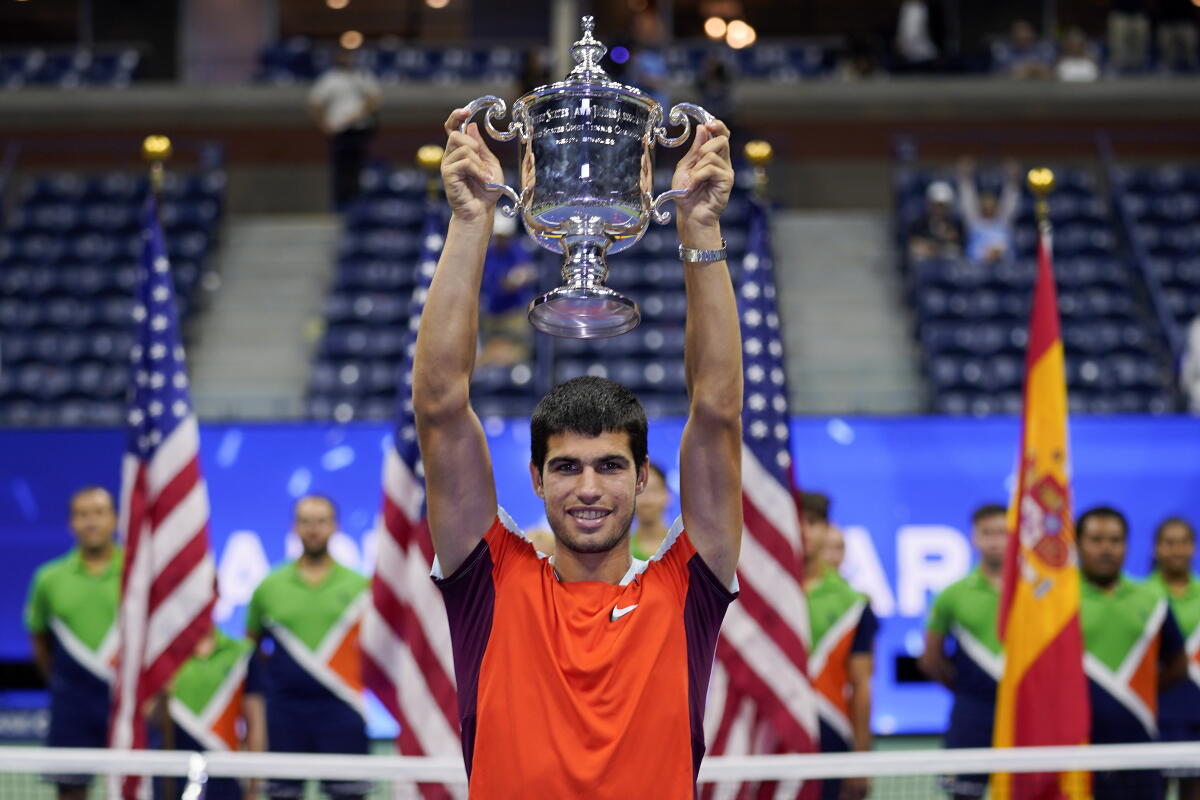
In 2022, Carlos Alcaraz secured his maiden Grand Slam title at the US Open in New York, earning a prize purse of $2.6 million. While tennis prize money structures fluctuate based on tournament revenue and inflation, the US Open has his...
In 2022, Carlos Alcaraz secured his maiden Grand Slam title at the US Open in New York, earning a prize purse of $2.6 million. While tennis prize money structures fluctuate based on tournament revenue and inflation, the US Open has historically offered one of the most lucrative winner’s purses in professional sports, reflecting the event's massive commercial scale.
Contents
The financial rewards associated with professional tennis, specifically at the Grand Slam level, are often misunderstood by casual observers. When fans ask how much Carlos Alcaraz won at the US Open, they are usually inquiring about the specific purse awarded for his 2022 victory. It is important to distinguish between gross winnings, net income after taxes, and the broader financial ecosystem that supports elite athletes.
The 2022 US Open Financial Context
When Carlos Alcaraz defeated Casper Ruud in the 2022 US Open final to claim his first major championship, the United States Tennis Association (USTA) awarded him $2,600,000. This amount represented the winner's share of the total prize pool designated for the Men’s Singles draw.
At the time, the total purse for the US Open reached record levels, reflecting a post-pandemic effort to bolster player compensation across all rounds of the tournament. The prize money is distributed based on the round reached, meaning that even players who exit in the first round receive a significant sum to cover their travel, coaching, and training expenses.
How US Open Prize Money is Structured
Understanding why Alcaraz received $2.6 million requires looking at the USTA’s compensation model. The tournament allocates a fixed amount for each level of competition. As a player progresses from the first round through to the final, the payout increases exponentially.
- First Round Qualification: Players receive base compensation for simply participating in the main draw.
- Progression Payouts: Each subsequent victory—reaching the second round, third round, round of 16, quarter-finals, semi-finals, and finally the championship—triggers a pre-determined financial reward.
- The Winner’s Share: The final amount is not a salary but a performance-based bonus provided by the tournament organizers.
It is worth noting that this $2.6 million figure is the "gross" amount. From this total, professional athletes must deduct significant expenses.
Beyond the Gross Total: Financial Realities for ATP Players
The headline number of $2.6 million rarely represents the actual take-home pay for an athlete. Professional tennis is an incredibly expensive enterprise. To maintain their ranking and performance, players like Alcaraz must fund a vast support network.
- Coaching Staff: Elite players employ head coaches, fitness trainers, physiotherapists, and mental health consultants. These individuals often receive a percentage of prize money or a high annual salary.
- Travel and Logistics: Constant international travel for the ATP tour, including flights, luxury accommodation, and logistics for team members, constitutes a substantial portion of a player's yearly expenditure.
- Taxes: Tennis players are subject to complex international tax laws. Winnings in the United States are subject to federal and state withholding taxes, which can claim a significant portion of the gross prize money depending on the player’s tax residency status.
Historical Comparison of US Open Winner Purses
The US Open has consistently increased its prize money over the last decade. To provide context, the following table illustrates the prize money growth for Men's Singles winners in recent years. This progression shows that while Alcaraz's win was highly lucrative, the amount is part of a steady upward trajectory in tennis revenue.
| Year | Winner's Prize Money (USD) |
|---|---|
| 2020 | $3,000,000 |
| 2021 | $2,500,000 |
| 2022 | $2,600,000 |
| 2023 | $3,000,000 |
| 2024 | $3,600,000 |
| 2025 | $3,600,000 |
Note: The 2020 total was higher due to a different distribution model during the pandemic era; however, the trend from 2021 onwards shows consistent growth in top-tier prize money.
The Role of Endorsements vs. Prize Money
For a player of Carlos Alcaraz’s caliber, the $2.6 million won at the 2022 US Open represents only one pillar of his total annual income. In professional tennis, top-ranked athletes typically derive the majority of their income from sponsorship deals and endorsements rather than tournament prize money.
Brands in the luxury goods, sportswear, automotive, and technology sectors compete to sign top-tier tennis players. These multi-year contracts provide a level of financial stability that tournament winnings cannot, as endorsements are not dependent on winning a specific match or staying injury-free during a specific week. Alcaraz’s marketability grew exponentially after his US Open win, leading to significant commercial partnerships that dwarf the initial tournament prize money.
Frequently Asked Questions
Does the prize money for the US Open differ between men and women? No. The US Open has been a leader in gender equality, offering equal prize money for the Men’s and Women’s Singles champions since 1973. Both winners receive identical payouts.
Are there deductions taken out of the winner's check automatically? Yes. Professional tournaments withhold taxes according to U.S. law before the player receives the final check. Players are also responsible for state-level income taxes based on where the earnings were generated.
Is the prize money the same for every Grand Slam tournament? No. Each of the four Grand Slams—the Australian Open, Roland Garros (French Open), Wimbledon, and the US Open—operates independently and sets its own prize money purse, which may vary significantly from year to year.
Do players get paid if they lose in the first round? Yes. Even those who exit in the first round receive substantial prize money. This ensures that lower-ranked players, who often face high costs to travel to the tournament, are compensated for their efforts in qualifying for the main draw.
How is prize money impacted by tournament withdrawals? If a player qualifies for the tournament but must withdraw before a match begins, they typically receive a portion of the first-round prize money, provided the withdrawal meets official tournament medical or eligibility criteria.
Next Steps for Understanding Athlete Earnings
If you are tracking the financial success of professional athletes, it is best to consult official records from the Association of Tennis Professionals (ATP) for career prize money totals. These figures are updated in real-time following each tournament. For a holistic view, remember that "winnings" as reported in headlines should always be treated as gross revenue, with significant overhead costs and tax liabilities functioning as the reality of the business.
To stay current on the latest US Open purse structures, the USTA periodically publishes official fact sheets ahead of each year's tournament. These documents offer the most accurate data regarding the distribution of funds among participants.
Image Gallery