Leonard Nimoy: The Definitive Legacy of an Actor, Director, and Cultural Icon
Leonard Nimoy was a multi-faceted American artist best known for his portrayal of Spock in the Star Trek franchise. Beyond acting, he was an accomplished director, photographer, author, and singer. His contribution to science fiction a...
Leonard Nimoy was a multi-faceted American artist best known for his portrayal of Spock in the Star Trek franchise. Beyond acting, he was an accomplished director, photographer, author, and singer. His contribution to science fiction and his humanitarian efforts solidified his status as a permanent fixture in global popular culture through 2026 and beyond.
Contents
Foundations: From Boston to the Final Frontier
Born on March 26, 1931, in Boston, Massachusetts, Leonard Simon Nimoy was the son of Jewish immigrants from Iziaslav (now Ukraine). His upbringing in a Yiddish-speaking household in the West End of Boston profoundly influenced his later artistic choices and his worldview. Nimoy began acting at the age of eight in local children’s theater, pursuing a passion that his parents—while supportive of his talents—initially viewed with the skepticism common among immigrant families seeking financial stability.
After a brief stint at Boston College, Nimoy moved to California to study at the Pasadena Playhouse. His early career in Hollywood followed the traditional path of a working actor in the 1950s: a series of small roles in "B" movies and guest appearances on television series such as Dragnet, Sea Hunt, and The Twilight Zone. One of his earliest lead roles was in the 1952 serial Zombies of the Stratosphere, a project that, while kitschy, foreshadowed his long-term association with the science fiction genre.
Throughout the 1950s and early 1960s, Nimoy supplemented his acting income by working as a delivery driver and a vending machine servicer. This period of professional struggle instilled in him a disciplined work ethic that he maintained throughout his life. By the time Gene Roddenberry began casting for a new "Wagon Train to the Stars" called Star Trek in 1964, Nimoy was a seasoned character actor ready for a breakthrough.
The Vulcan Paradigm: Defining Spock
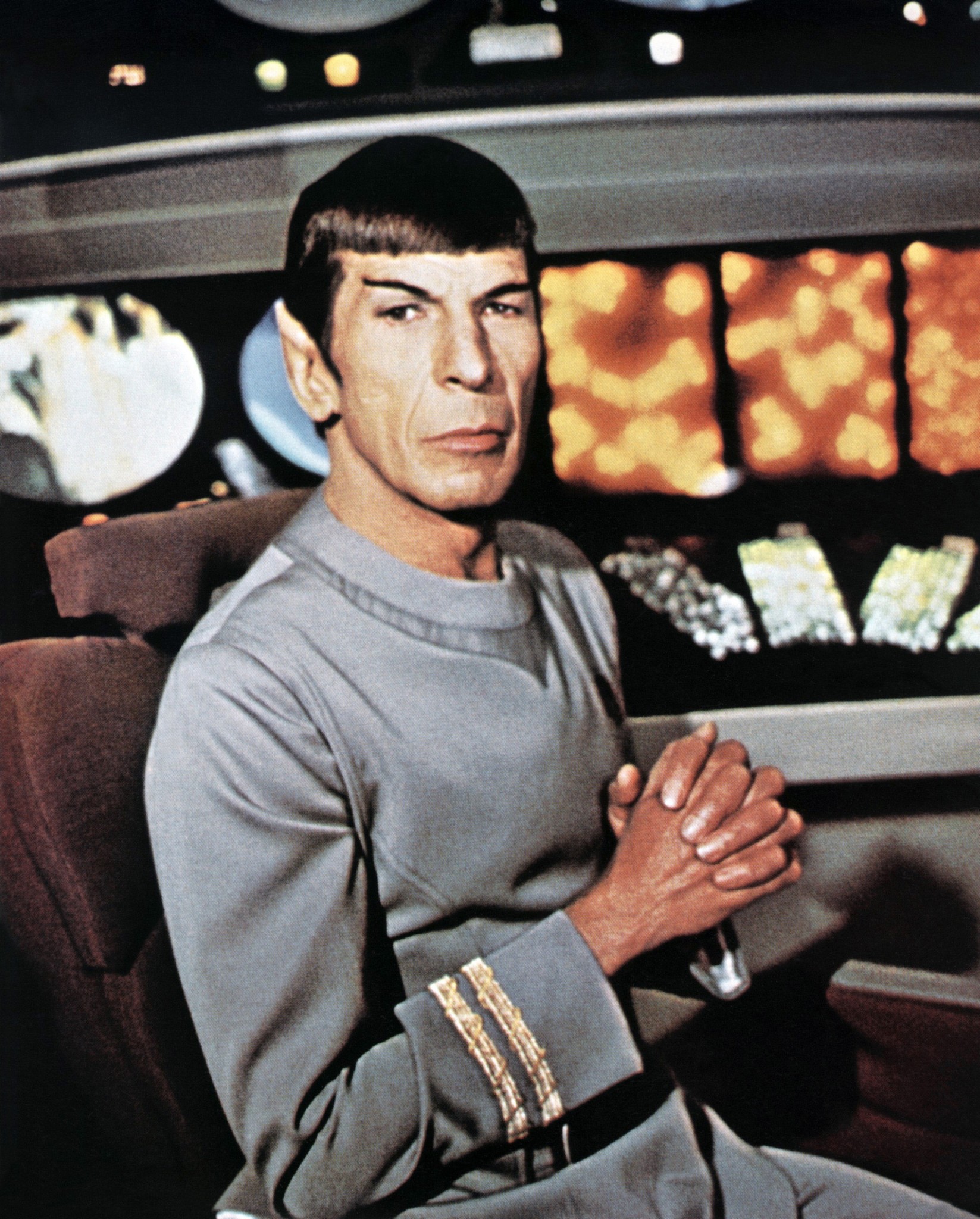
When Star Trek: The Original Series (TOS) premiered in 1966, the character of Spock—a half-human, half-Vulcan science officer—was a radical departure from contemporary television archetypes. Spock represented a "cool" intellect, a character who prioritized logic over emotion. Nimoy’s performance was nuanced; he didn't play Spock as a robot, but as a man constantly suppressing a turbulent emotional core.
The Origin of the Vulcan Salute
One of Nimoy’s most enduring contributions to the Star Trek mythos was the creation of the Vulcan salute. During the filming of the second-season premiere, "Amok Time," Nimoy suggested that Vulcans should have a unique greeting. He drew inspiration from his Jewish heritage, specifically the priestly blessing (Kohanim) he had witnessed in a synagogue as a child. This gesture, involving the separation of the fingers to form the Hebrew letter Shin, became a universal symbol of peace and "living long and prospering."
Conflict and Reconciliation with the Character
Nimoy’s relationship with his most famous role was famously complex. In 1975, he published his first autobiography, titled I Am Not Spock. The title was intended to explain the distinction between his own identity and that of his character, but many fans misinterpreted it as a rejection of the franchise. It took decades of reflection for Nimoy to fully embrace the symbiosis between himself and the Vulcan. In 1995, he published a follow-up autobiography, I Am Spock, in which he acknowledged that the character’s traits of logic and observation had become an inseparable part of his own personality.
Evolution of the Director: Behind the Lens
While many fans know Nimoy for his screen presence, his work behind the camera was equally influential. He was a pioneer among actors who transitioned into directing, proving that a deep understanding of performance could translate into successful technical leadership.
Revitalizing Star Trek on Film
After the success of Star Trek II: The Wrath of Khan (1982), Nimoy took the directorial reins for Star Trek III: The Search for Spock (1984). He faced the immense challenge of directing a film in which his own character was deceased for the majority of the runtime. His success led him to direct Star Trek IV: The Voyage Home (1986). Known as "the one with the whales," this film remains one of the most commercially successful and critically acclaimed entries in the series, largely due to Nimoy’s insistence on a lighter, more humorous tone that emphasized environmental themes over military conflict.
Commercial Success Outside the Franchise
Nimoy’s directorial prowess was not limited to science fiction. In 1987, he directed Three Men and a Baby, starring Tom Selleck, Steve Guttenberg, and Ted Danson. The film was a massive hit, becoming the highest-grossing film of 1987 in the United States. This achievement was a watershed moment, as it proved that "genre actors" could helm mainstream blockbusters that appealed to a wide demographic. He later directed films like The Good Mother (1988) and Funny About Love (1990), showcasing his versatility in handling drama and romantic comedy.
Literary and Artistic Pursuits
Nimoy’s creative output extended far beyond the screen. He was a prolific photographer whose work was exhibited in galleries and museums across the United States. His most famous and controversial collection, The Shekhina Project (2002), explored the feminine aspect of God in Judaism through black-and-white photography of semi-nude women. This project demonstrated Nimoy’s willingness to engage with complex theological and social issues, even at the risk of alienating traditionalist audiences.
As an author, Nimoy published several volumes of poetry, including You & I (1973) and A Lifetime of Love: Poems on the Passages of Life (2002). His writing often touched on themes of isolation, love, and the search for meaning—elements that mirrored the internal struggles of the Spock character but reflected Nimoy’s personal philosophical inquiries.
In the realm of music, Nimoy released five albums under Dot Records in the late 1960s. While some tracks like "The Ballad of Bilbo Baggins" became cult novelties, other songs showcased his baritone voice and his interest in folk-pop and spoken-word storytelling. Even in 2026, these recordings are frequently revisited by historians of 1960s pop culture as artifacts of a unique era in celebrity crossover media.
The Cultural Impact of "Live Long and Prosper"
Leonard Nimoy passed away on February 27, 2015, but his influence continues to resonate. In the years following his death, his legacy has been preserved through the Leonard Nimoy Memorial at the Museum of Science in Boston and through the continued expansion of the Star Trek universe.
Mentorship and the Next Generation
Nimoy was instrumental in the 2009 reboot of Star Trek, directed by J.J. Abrams. By appearing as "Spock Prime," he provided a bridge between the original series and the new timeline. More importantly, he served as a mentor to Zachary Quinto, the actor who took over the role of Spock. This passing of the torch ensured that the character’s core values—integrity, intellectual curiosity, and the bridge between two worlds—would remain intact for a new generation of viewers.
Philanthropy and Advocacy
Nimoy and his wife, Susan Bay Nimoy, were dedicated philanthropists. They supported various causes, including the arts, medical research, and Jewish organizations. The Nimoy Foundation was established to support contemporary artists and foster community engagement with the arts. Furthermore, Nimoy was a vocal advocate for environmental protection and health awareness, particularly after his diagnosis of chronic obstructive pulmonary disease (COPD), which he attributed to years of smoking before quitting in the 1980s.
Career Milestones and Contributions
The following table summarizes the key milestones in Leonard Nimoy's multifaceted career:
| Category | Significant Work/Event | Year(s) | Impact/Note |
|---|---|---|---|
| Television | Star Trek: The Original Series | 1966–1969 | Created the definitive portrayal of Spock. |
| Directing | Star Trek IV: The Voyage Home | 1986 | Highest critical acclaim for a ST film at the time. |
| Directing | Three Men and a Baby | 1987 | Top-grossing film of the year; proved mainstream appeal. |
| Literature | I Am Not Spock | 1975 | Explored the actor-character identity conflict. |
| Photography | The Shekhina Project | 2002 | Challenged religious and gender perceptions. |
| Voice Acting | Civilization IV | 2005 | Provided the iconic narration for the game. |
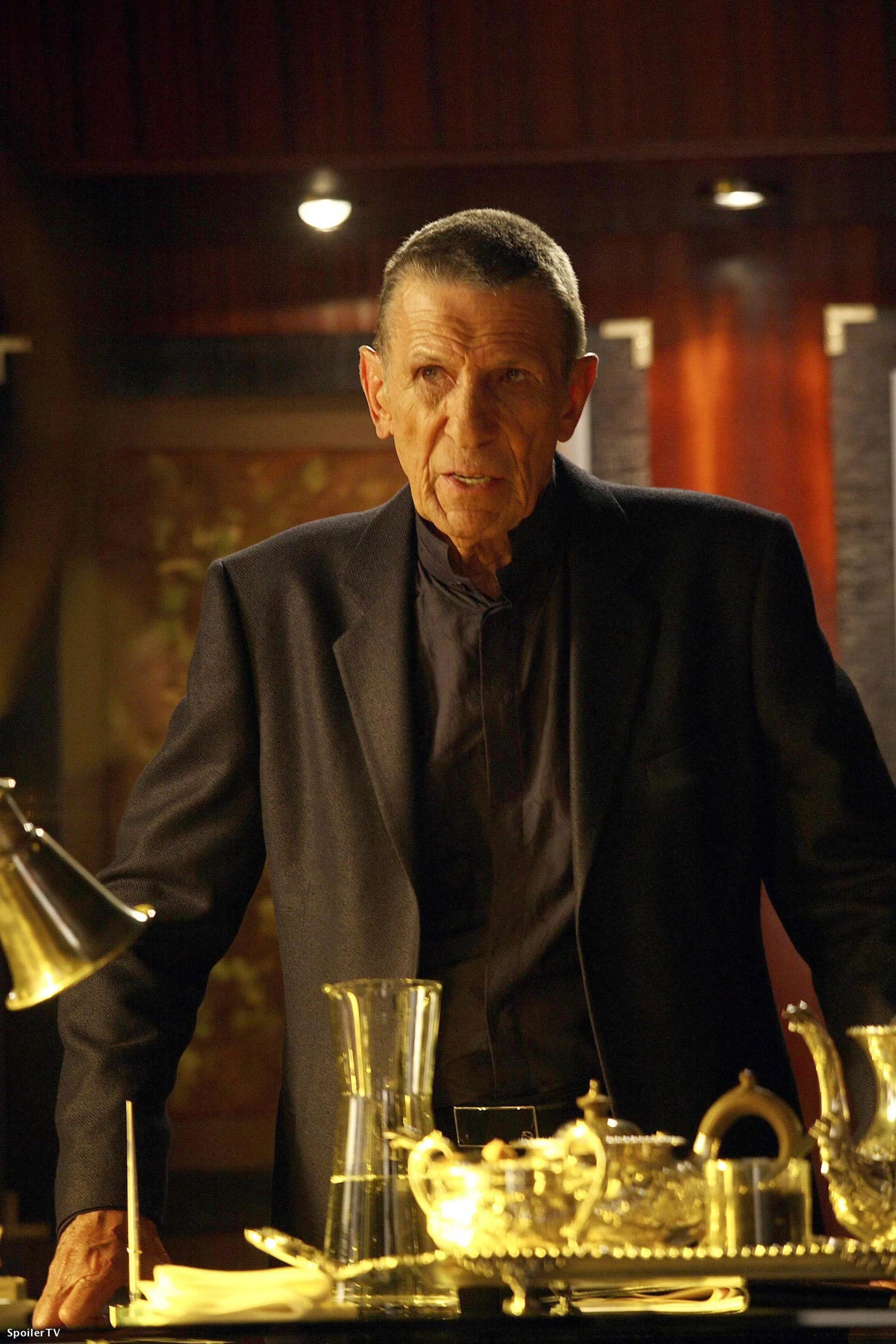
| Television | Fringe (William Bell) | 2009–2012 | Introduced Nimoy to a new generation of sci-fi fans. |
Frequently Asked Questions
What is the meaning behind the Vulcan salute?
The Vulcan salute, accompanied by the phrase "Live Long and Prosper," is a gesture of peace. Leonard Nimoy based it on a priestly blessing he saw in an Orthodox Jewish synagogue as a child. He felt that Vulcans needed a unique, non-human way to greet one another, and the gesture symbolized the separation of the divine from the mundane.
Why did Leonard Nimoy write "I Am Not Spock"?
Nimoy wrote the book to address the common misconception that he and his character were the same person. He wanted to discuss his craft as an actor and the different roles he had played. The title was unfortunately interpreted by some as a rejection of the fans, which led him to write a second autobiography, I Am Spock, twenty years later to clarify his deep affection for the role.
Did Leonard Nimoy have a career in music?
Yes, Nimoy released five albums between 1967 and 1970. His music ranged from sci-fi-themed songs to folk and pop covers. While often viewed as a period curiosity today, his music career was a significant part of his public persona during the height of Star Trek’s initial popularity.
What was Leonard Nimoy's final film role?
Nimoy’s final live-action appearance was in Star Trek Into Darkness (2013), where he reprised his role as Spock Prime. He also provided voice work for various projects until his passing in 2015. His influence is still felt in 2026 through posthumous releases of archival material and documentaries focusing on his life.
How did Leonard Nimoy contribute to the arts outside of acting?
Nimoy was a highly respected photographer whose work is held in the permanent collections of several museums. He also directed major motion pictures and was a published poet. His foundation, the Nimoy Foundation, continues to provide grants to help artists develop their work and share it with the public.
The Enduring Influence of a Polymath
Leonard Nimoy’s legacy in 2026 is not merely that of a television star, but of a creative polymath who successfully navigated multiple disciplines. He taught audiences that logic is a tool for understanding, not a replacement for empathy. His ability to balance the technical demands of directing with the emotional nuance of acting, while maintaining a prolific output in photography and literature, serves as a blueprint for the modern multi-hyphenate artist.
For those looking to explore his work today, the most effective next action is to view the documentary For the Love of Spock, directed by his son Adam Nimoy. This film provides an intimate look at Nimoy’s life, his struggles with fame, and the profound impact he had on the world of science and technology. Whether through his iconic Vulcan salute or his quiet dedication to the arts, Leonard Nimoy remains a beacon of intellectual curiosity and artistic integrity.
Image Gallery