Cloud Identity and Access Management: A Comprehensive Guide to AWS IAM and Azure Entra ID
Cloud Identity and Access Management (IAM) is the foundational security framework that ensures only authenticated and authorized entities can access specific cloud resources. By 2026, managing these identities in AWS IAM and Microsoft...
Cloud Identity and Access Management (IAM) is the foundational security framework that ensures only authenticated and authorized entities can access specific cloud resources. By 2026, managing these identities in AWS IAM and Microsoft Entra ID (formerly Azure AD) has become the primary defense mechanism against data breaches, requiring a deep understanding of policy evaluation, machine identities, and zero-trust principles.
Contents
The Evolution of Cloud IAM in 2026
The landscape of cloud computing has shifted from simple perimeter-based security to a model where identity is the new perimeter. In 2026, organizations no longer rely solely on firewalls or Virtual Private Clouds (VPCs) to protect data; instead, they focus on granular control over "who" can do "what" to "which" resource. This shift is driven by the explosion of microservices, serverless functions, and the proliferation of non-human identities, such as service principals and IAM roles for automated workloads.
Cloud IAM involves two distinct but related processes: Authentication (AuthN) and Authorization (AuthZ). Authentication verifies the identity of a user or service (e.g., via multi-factor authentication or certificates), while Authorization determines the permissions granted to that verified identity. In complex environments like Amazon Web Services (AWS) and Microsoft Azure, mastering these processes is essential for maintaining a secure and compliant infrastructure.
Understanding AWS IAM: The Resource-Centric Approach
AWS IAM is a global service, meaning your identity configurations are consistent across all AWS Regions. The architecture of AWS IAM is built around four primary components: Users, Groups, Roles, and Policies.
IAM Identities and Roles
In AWS, an IAM User represents a specific person or service that interacts with AWS. However, by 2026, the use of long-lived IAM Users with permanent access keys is widely considered a legacy practice. The industry standard has shifted toward IAM Roles. Roles are intended to be assumed by authorized entities—be they users, applications, or AWS services—for a limited time. When an entity assumes a role, it receives temporary security credentials, significantly reducing the risk of credential leakage.
Policy Evaluation Logic
The core of AWS IAM security lies in its JSON-based policies. AWS follows a strict evaluation logic:
- Explicit Deny: If any policy explicitly denies an action, the request is denied, regardless of other "Allow" statements.
- Explicit Allow: If no explicit deny exists, the engine looks for an explicit allow.
- Default Deny: If there is neither an explicit deny nor an explicit allow, the request is denied by default (Implicit Deny).
This logic applies to Identity-based policies (attached to the user/role) and Resource-based policies (attached to the resource, such as an S3 bucket). Understanding the intersection of these policies is critical for troubleshooting access issues in 2026 enterprise environments.
Deep Dive into Microsoft Entra ID (Azure IAM)
Microsoft rebranded Azure Active Directory to Microsoft Entra ID to reflect a broader vision of identity management that spans beyond just Azure resources. In 2026, Entra ID serves as the central nervous system for Microsoft 365, Azure, and thousands of third-party SaaS applications.
The Tenant Architecture
Unlike AWS IAM’s global scope, Entra ID is organized into Tenants. A tenant represents a dedicated instance of Entra ID that an organization receives when it signs up for a Microsoft cloud service. Within this tenant, identities are managed through a hierarchy of Management Groups, Subscriptions, and Resource Groups.
Conditional Access: The Brain of Azure Security
One of the most powerful features of Azure IAM is Conditional Access. In 2026, Conditional Access policies act as "if-then" statements. For example, "If a user attempts to access a high-impact database from an untrusted IP address, then they must perform phishing-resistant MFA." This allows security teams to enforce real-time, context-aware security signals such as user location, device compliance status, and application sensitivity.
Managed Identities
To solve the problem of managing secrets in code, Azure offers Managed Identities. This feature provides an identity for applications to use when connecting to resources that support Microsoft Entra authentication. Since the platform handles the identity and the rotation of credentials, developers never have to handle sensitive connection strings or API keys, effectively eliminating a common vector for lateral movement during a cyberattack.
Comparative Analysis: AWS IAM vs. Microsoft Entra ID
While both providers aim to secure resources, their implementations differ in terminology and architectural philosophy. AWS is often viewed as more resource-centric, while Azure is deeply integrated with the corporate directory and user-lifecycle management.
| Feature | AWS IAM | Microsoft Entra ID (Azure) |
|---|---|---|
| Primary Unit | IAM Role / User | User / Service Principal |
| Scope | Global (within an AWS Account) | Tenant-based (across Subscriptions) |
| Policy Language | JSON (Identity & Resource-based) | RBAC Roles & Conditional Access |
| Cross-Account Access | Role Assumption (Trust Policies) | B2B Collaboration / Lighthouse |
| Machine Identity | IAM Roles for EC2/Lambda | Managed Identities |
| SSO Integration | IAM Identity Center | Native Integration (Entra ID) |
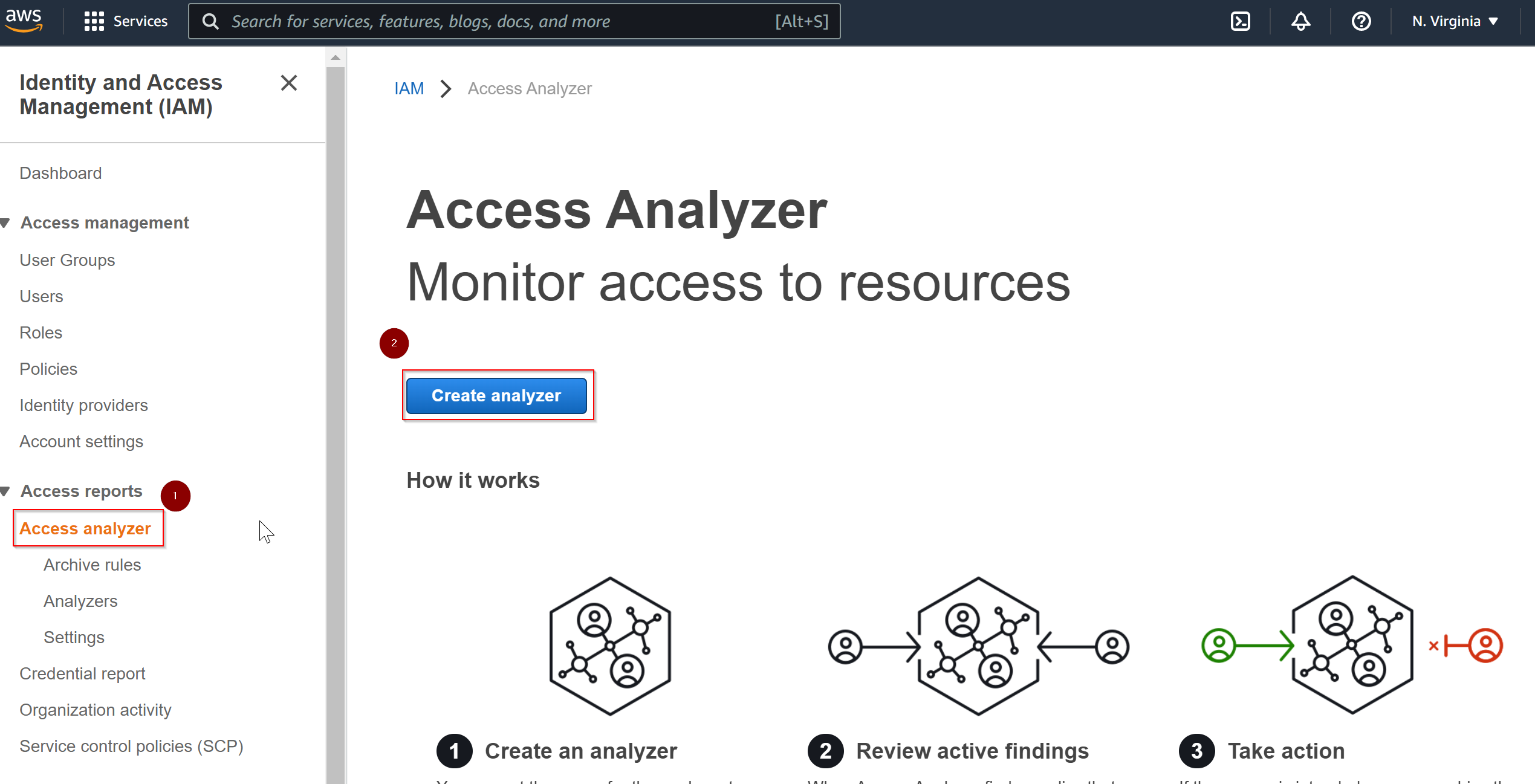
| Access Governance | IAM Access Analyzer | Entra ID Governance / PIM |
Key Technical Requirements for 2026 Compliance
Effective Cloud IAM management now requires more than just creating users and groups. To meet modern security standards, organizations must implement the following technical controls:
1. Privilege Elevation and JIT Access
Just-In-Time (JIT) access ensures that users do not have standing permissions. In Azure, this is managed through Privileged Identity Management (PIM), where users must request activation of a role for a specific duration. In AWS, similar patterns are achieved using IAM Identity Center or third-party Cloud Infrastructure Entitlement Management (CIEM) tools that dynamically update IAM policies based on session requirements.
2. Micro-Segmentation of Identities
By 2026, the "Blast Radius" of an identity is a primary concern. Technical teams should implement Permissions Boundaries in AWS to set the maximum permissions an identity can have, regardless of what its attached policies allow. In Azure, using Custom Roles instead of built-in "Contributor" or "Owner" roles ensures that users only have the exact actions required for their specific job function.
3. Identity Threat Detection and Response (ITDR)
IAM is no longer a "set and forget" configuration. It requires active monitoring. This involves:
- AWS CloudTrail: Monitoring for unauthorized
AssumeRolecalls or frequentAccessDeniederrors. - Entra ID Protection: Utilizing AI-driven risk signals to detect "impossible travel" or leaked credentials in real-time.
Common Pitfalls and Troubleshooting
Even experienced architects encounter challenges when managing multi-cloud IAM. One common mistake is the misconfiguration of Trust Relationships. In AWS, an IAM Role must have a Trust Policy that explicitly allows an entity to assume it. If this policy is too broad (e.g., allowing * in the Principal field), it creates a significant security vulnerability known as a "cross-account confused deputy" risk.
In Azure, a frequent issue is the delay in propagation. While most IAM changes are near-instant, certain Conditional Access or Group Membership changes can take several minutes to propagate across the global Entra ID infrastructure. In 2026, troubleshooting these issues requires a disciplined approach to reviewing sign-in logs and utilizing tools like the Entra ID What If tool to simulate policy outcomes before deployment.
Future-Proofing with Zero Trust
The ultimate goal of Cloud IAM in 2026 is the implementation of a Zero Trust Architecture. This model assumes that no identity is inherently trustworthy, even if it is inside the network perimeter. Every request for access must be explicitly authenticated, authorized, and validated against security policies.
For AWS, this means leveraging VPC Endpoints and Attribute-Based Access Control (ABAC), where permissions are granted based on tags (e.g., Project: Omega) rather than static names. For Azure, it involves moving away from legacy protocols and ensuring that all administrative actions are performed through secure, managed workstations using phishing-resistant security keys.
Frequently Asked Questions
What is the difference between RBAC and ABAC in Cloud IAM?
Role-Based Access Control (RBAC) defines permissions based on a user's job function (e.g., "Billing Admin"). Attribute-Based Access Control (ABAC) defines permissions based on attributes or tags (e.g., "Allow access if the user's Department tag matches the resource's Department tag"). ABAC is often more scalable in 2026 for large organizations because it reduces the total number of roles needed.
Can I use AWS IAM to manage Azure resources?
Not directly. AWS IAM and Azure Entra ID are separate identity providers. However, you can use Identity Federation. Most organizations use Entra ID as their "Source of Truth" and federate it with AWS IAM Identity Center. This allows users to log in with their corporate Azure credentials to access the AWS Management Console.
What are Managed Identities in Azure and why should I use them?
Managed Identities are a feature of Microsoft Entra ID that provides an automatically managed identity for Azure services (like Virtual Machines or App Services). You should use them because they eliminate the need for developers to manage credentials, such as passwords or API keys, within their code, which significantly increases security.
How does AWS IAM Identity Center differ from standard IAM?
Standard IAM is account-specific and managed within individual AWS accounts. IAM Identity Center (formerly AWS SSO) is a centralized service that allows you to manage access to multiple AWS accounts and third-party applications from a single place. In 2026, IAM Identity Center is the recommended way to manage human access at scale.
Is MFA mandatory for all cloud identities in 2026?
While cloud providers cannot "force" you to use Multi-Factor Authentication (MFA) on every single account, it is considered a mandatory baseline for any production environment. Both AWS and Azure have introduced "Security Defaults" that strongly encourage or enforce MFA for administrative accounts to prevent credential-stuffing attacks.
Practical Recommendation
To effectively manage Cloud IAM in 2026, start by auditing your existing environments for unused credentials and over-privileged roles. Implement IAM Identity Center for AWS and Privileged Identity Management for Azure to move toward a Just-In-Time access model. Finally, automate your identity lifecycle management using Infrastructure as Code (IaC) tools like Terraform or Pulumi to ensure that IAM policies are version-controlled, reviewed, and consistent across your entire cloud estate.
Image Gallery