Comprehensive Guide to the Junior Gold Miners Index
A junior gold miners index is a financial benchmark that tracks the performance of small-cap and mid-cap companies primarily engaged in the exploration, development, and early-stage production of gold and silver. The most prominent exa...
A junior gold miners index is a financial benchmark that tracks the performance of small-cap and mid-cap companies primarily engaged in the exploration, development, and early-stage production of gold and silver. The most prominent example is the MVIS Global Junior Gold Miners Index, which serves as the underlying benchmark for the VanEck Junior Gold Miners ETF (GDXJ).
Contents
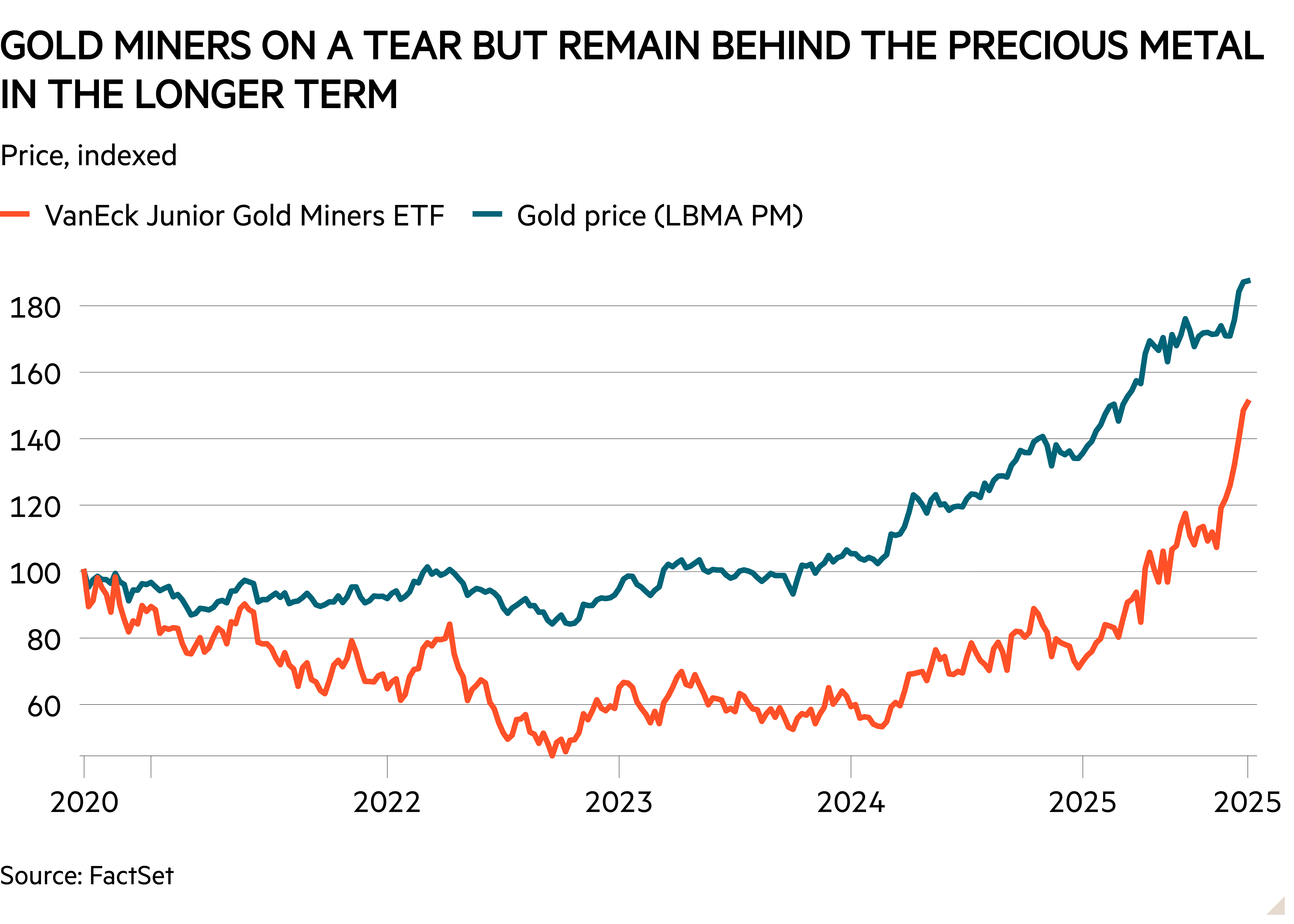
The junior gold mining sector represents the "growth" engine of the precious metals industry. Unlike major producers, which focus on maintaining massive output from established mines, junior miners are often in the process of discovering new deposits or bringing a specific project into production. This makes a junior gold miners index a high-beta play on the price of gold, offering greater potential rewards alongside significantly higher volatility.
Defining the Junior Gold Miners Index
To understand the index, one must first distinguish between "Junior" and "Senior" miners. In the mining hierarchy, Senior miners (Majors) are large-cap companies with diversified global operations and annual production typically exceeding one million ounces of gold. Junior miners, conversely, are smaller entities.
However, in the context of a modern financial index like the MVIS Global Junior Gold Miners Index (MVGDXJ), the definition of "junior" is broader than the traditional industry definition. While a pure exploration company might have a market capitalization of $50 million, an index designed for an Exchange Traded Fund (ETF) requires liquidity. Consequently, these indices often include mid-cap companies—those with market caps ranging from $200 million to over $3 billion—to ensure that investors can enter and exit positions without causing massive price swings in the underlying stocks.
The Purpose of the Index
The primary purpose of a junior gold miners index is to provide a standardized measure of the health and sentiment of the speculative side of the gold market. Investors use these indices to:
- Gain Leveraged Exposure: Junior miners often see their stock prices rise by a higher percentage than the spot price of gold during a bull market.
- Diversify Exploration Risk: Investing in a single junior miner is risky; the index spreads that risk across dozens of companies.
- Benchmark Performance: Portfolio managers use the index to compare their returns against the broader junior mining sector.
How the Index is Constructed and Maintained
The integrity of a junior gold miners index relies on strict rules regarding eligibility, weighting, and rebalancing. Most reputable indices, such as those managed by MarketVector Indexes (MVIS) or NYSE Arca, follow a transparent methodology.
Eligibility Requirements
For a company to be included in a junior gold miners index in 2026, it must generally meet several criteria:
- Revenue/Asset Source: The company must derive at least 50% of its revenue from gold or silver mining, or have at least 50% of its assets invested in gold/silver related projects.
- Market Capitalization: There is usually a minimum market cap requirement (e.g., $150 million) to ensure the company is substantial enough for institutional investment.
- Liquidity: A company must demonstrate a minimum average daily trading volume. This prevents "thinly traded" stocks from skewing the index price.
- Free Float: Only shares available to the public are considered, excluding closely held shares by insiders or governments.
Weighting and Rebalancing
Most junior indices are market-capitalization-weighted, meaning larger companies within the "junior" bracket have a greater impact on the index's value. To prevent a single company from dominating the index, "caps" are often applied (for example, no single stock can exceed 8% of the total index weight).
Rebalancing typically occurs quarterly. During this process, the index manager reviews all components. Companies that have grown too large (graduating to "Senior" status) or fallen below liquidity thresholds are removed, while new, qualifying explorers are added.
Junior vs. Senior Miners: Key Differences
Understanding the junior gold miners index requires a comparison with the senior miners index (such as the NYSE Arca Gold Miners Index, tracked by GDX). The fundamental difference lies in their operational focus and risk profile.
| Feature | Junior Gold Miners Index (e.g., GDXJ) | Senior Gold Miners Index (e.g., GDX) |
|---|---|---|
| Primary Focus | Exploration and Development | Production and Cash Flow |
| Market Cap Range | Small to Mid-Cap ($150M - $3B+) | Large-Cap ($5B - $50B+) |
| Volatility | High | Moderate |
| Gold Price Sensitivity | High Leverage (High Beta) | Moderate Leverage |
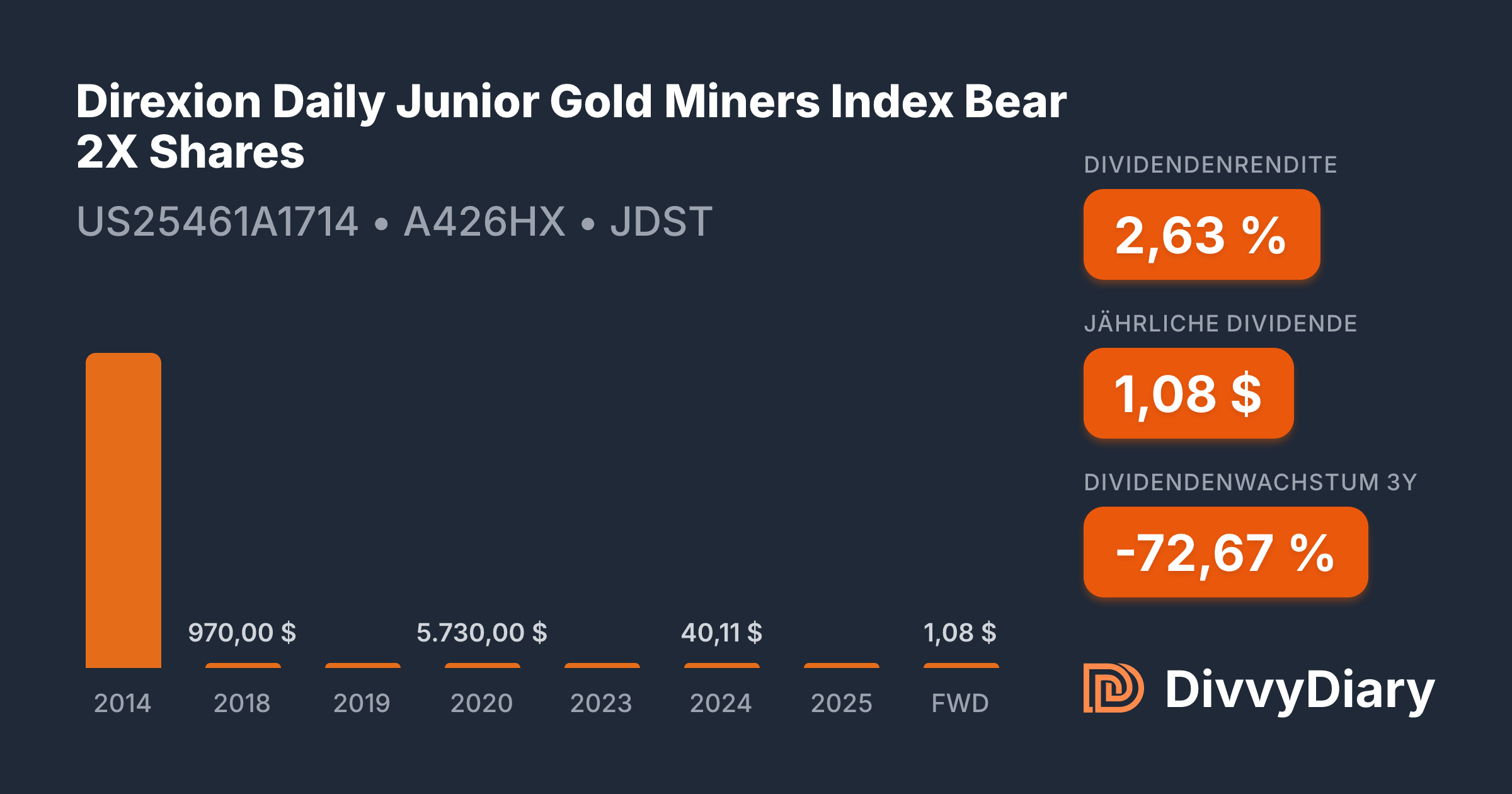
| Dividend Yield | Rare / Minimal | Common among Majors |
| Political Risk | High (often single-asset focus) | Diversified across many jurisdictions |
| Growth Driver | Discovery and M&A | Operational Efficiency and Scale |
The Mechanics of Leverage in Junior Mining
The junior gold miners index is often described as a "leveraged" bet on gold. This is not because the index uses debt or derivatives, but because of the operating leverage inherent in the mining business.
Consider a junior miner that can produce gold at an All-In Sustaining Cost (AISC) of $1,800 per ounce. If the price of gold is $2,000, the company earns a $200 profit per ounce. If the price of gold rises by 10% to $2,200, the company’s profit doubles to $400 per ounce (a 100% increase in profit for a 10% move in the underlying metal). Because junior miners often have higher costs or are closer to the "margin" than majors, their valuations react more violently to gold price fluctuations.
Furthermore, juniors carry optionality. A discovery of a new high-grade vein can increase the valuation of a junior miner by 500% in a few months, a feat nearly impossible for a multi-billion dollar major like Newmont.
Primary Investment Vehicles: GDXJ and Others
For most investors in 2026, accessing the junior gold miners index is done through Exchange Traded Funds (ETFs). These funds buy all the stocks in the index in their respective weights, allowing investors to buy or sell the entire sector with a single ticker symbol.
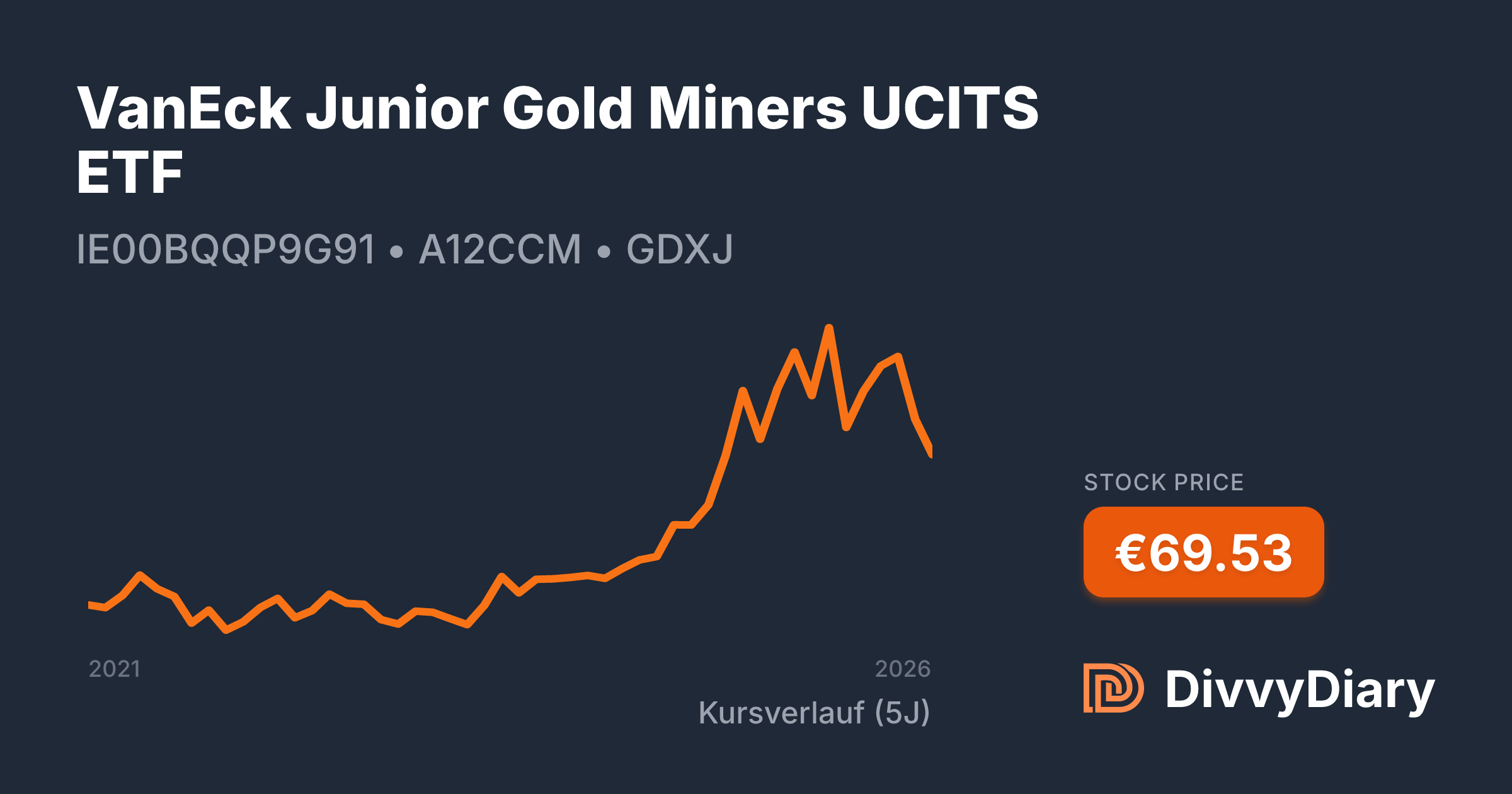
VanEck Junior Gold Miners ETF (GDXJ)
This is the most liquid and widely traded vehicle for the junior sector. It tracks the MVIS Global Junior Gold Miners Index. It is preferred by institutional traders for its high volume and deep options market.
Sprott Junior Gold Miners ETF (SGDJ)
The Sprott index focuses more on "factor-based" investing. It prioritizes companies with stronger revenue growth and higher stock price momentum. This can lead to different performance outcomes compared to the market-cap-weighted MVIS index.
Regional and Niche Indices
Some investors look at regional indices, such as those focusing specifically on Canadian juniors (listed on the TSX Venture Exchange) or Australian juniors (ASX). While these offer more granular exposure, they often lack the global diversification found in the MVIS or NYSE Arca indices.
Risks Associated with the Junior Gold Miners Index
While the potential for outsized gains is significant, the junior gold miners index is among the more volatile segments of the equities market.
1. Capital Intensity and Dilution
Mining is incredibly expensive. Junior companies that are not yet producing gold must raise capital through equity offerings. This results in shareholder dilution, where the value of existing shares is reduced as new shares are issued to fund exploration. During bear markets for gold, juniors may find it impossible to raise cash, leading to "zombie" companies that trade at fractions of a penny.
2. Jurisdictional and Political Risk
A major miner might have 20 mines across 10 countries. A junior miner often has one flagship project. If the government of that specific country changes mining laws, increases taxes, or revokes a permit, the value of the company—and its weight in the index—can vanish overnight.
3. Technical and Exploration Risk
The index is populated by companies chasing "anomalies" in the earth's crust. There is never a guarantee that a promising drill hole will turn into a feasible mine. Technical failures, such as poor metallurgy (inability to separate gold from rock efficiently), can render a project worthless despite high gold prices.
The Role of the Junior Index in a 2026 Portfolio
In the financial landscape of 2026, the junior gold miners index remains a tactical tool rather than a "buy and hold" core holding for most. Its primary role is as a diversifier and an inflation hedge.
Because the index often moves independently of the S&P 500 or the Nasdaq, it can provide balance during periods of equity market stress. However, due to its volatility, financial advisors typically recommend limiting exposure to 2% to 5% of a total investment portfolio.
Investors often use the GDX/GDXJ Ratio to determine market sentiment. When GDXJ (Juniors) is outperforming GDX (Seniors), it typically indicates a "risk-on" environment where investors are confident in the long-term upward trajectory of gold prices.
Frequently Asked Questions
What is the difference between GDX and GDXJ?
GDX tracks the NYSE Arca Gold Miners Index, which consists primarily of large, established "Senior" producers like Barrick Gold and Newmont. GDXJ tracks the MVIS Global Junior Gold Miners Index, which focuses on smaller, "Junior" exploration and development companies. GDXJ is generally more volatile and offers higher potential leverage to the price of gold.
Does a junior gold miners index pay dividends?
While some mid-cap companies within the index may pay modest dividends, the index as a whole typically has a very low dividend yield. Most junior miners reinvest every dollar of capital into exploration and mine construction rather than returning it to shareholders.
Why do junior gold miners sometimes fall when gold prices rise?
This "decoupling" usually happens due to rising input costs (labor, fuel, machinery) or broader equity market sell-offs. If a junior miner’s cost to produce gold rises faster than the price of gold itself, its profit margins shrink. Additionally, because they are stocks, they are susceptible to general market liquidity crises.
Is it better to buy the index or individual junior mining stocks?
For most investors, the index is safer because the failure rate of individual junior mining companies is exceptionally high. An index provides exposure to the "winners" that make massive discoveries while diluting the impact of the "losers" that fail to find gold.
How often are companies added or removed from the index?
Most major junior gold miner indices are rebalanced quarterly. This ensures that the index accurately reflects the current market capitalization and liquidity of the sector, removing companies that have been acquired or have shrunk below the size requirements.
Next Steps for Investors
If you are considering exposure to the junior gold miners index, the first step is to evaluate your risk tolerance. Given the sector's volatility, it is often wise to wait for periods of consolidation in the gold price rather than buying during a vertical "spike." Monitoring the All-In Sustaining Costs (AISC) of the top holdings in the index can provide valuable insight into the sector's profitability at current gold prices. For 2026, staying informed on global monetary policy and real interest rates remains essential, as these are the primary macro drivers for the gold mining industry.
Image Gallery