Understanding the FMP API for Satellite Services
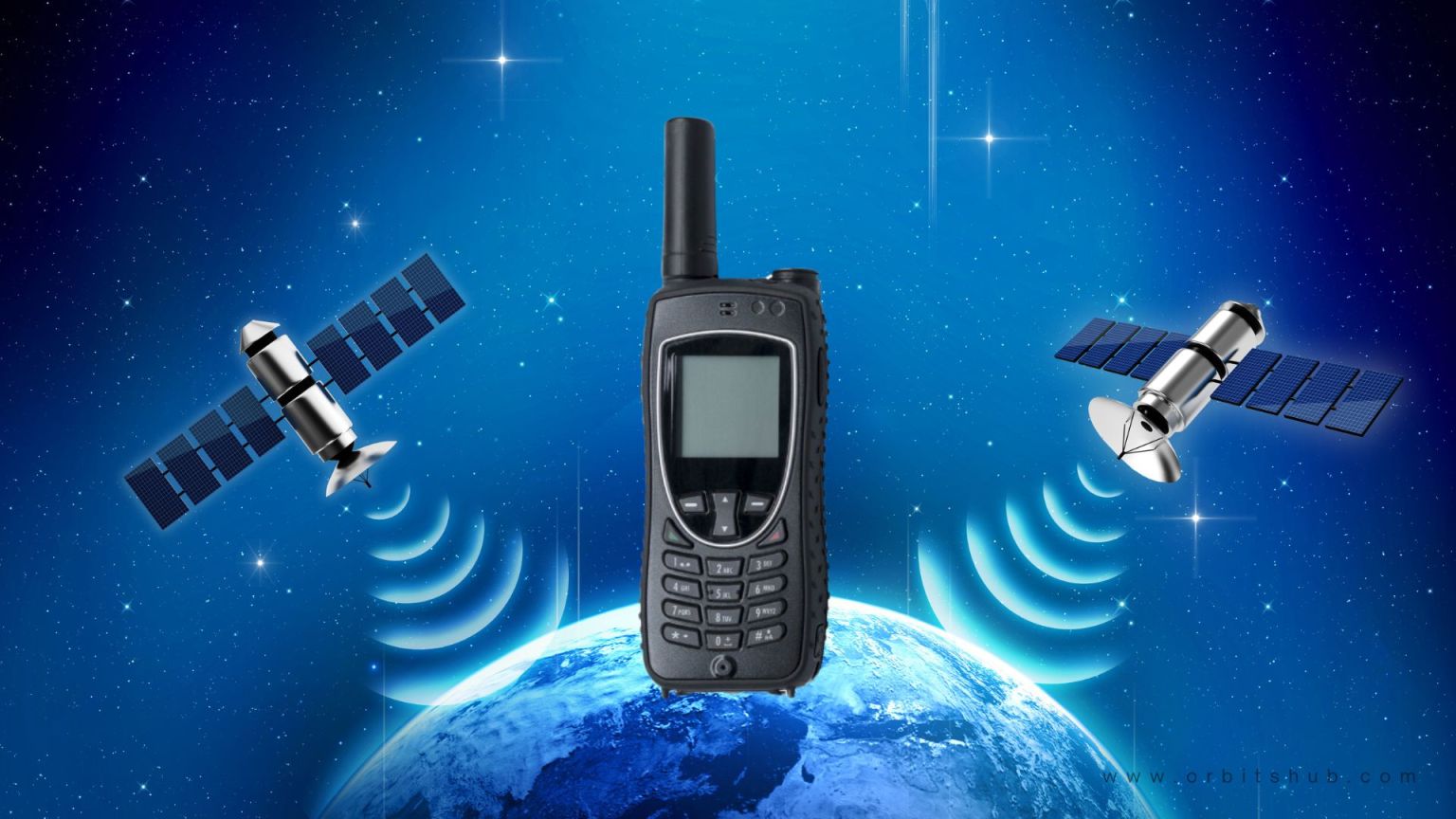
The Financial Modeling Prep (FMP) API facilitates satellite services integration by delivering structured macroeconomic, stock market, and industry-specific financial data that developers and enterprise platforms use to model the econo...
The Financial Modeling Prep (FMP) API facilitates satellite services integration by delivering structured macroeconomic, stock market, and industry-specific financial data that developers and enterprise platforms use to model the economic viability, supply chain logistics, and valuation metrics of space-based operations.
Contents
Integrating specialized datasets into aerospace and satellite operations workflows requires a robust understanding of programmatic data delivery. While orbital mechanics, telemetry data, and signal propagation are handled by dedicated ground station software and space-domain hardware, the business intelligence behind satellite services—ranging from launch cost amortizations to constellation funding and transponder leasing contracts—relies heavily on financial market information. The Financial Modeling Prep API serves as a primary endpoint for retrieving real-time and historical market data, company fundamentals, and macroeconomic indicators. By examining how this interface interacts with satellite service architectures, developers can build comprehensive applications that merge orbital tracking metrics with deep financial analytics.
Core Architecture and Data Endpoints Relevant to Aerospace
Building an application that incorporates satellite services data alongside financial telemetry requires familiarity with specific API endpoints. Financial Modeling Prep structures its database across multiple categories, giving developers access to equities, exchange-traded funds (ETFs), cryptocurrencies, forex, and vital economic indicators.
For organizations monitoring publicly traded aerospace manufacturers, satellite operators, and launch service providers, equity fundamentals provide baseline valuation metrics. Analysts track capital expenditures (CapEx), research and development (R&D) investments, and debt-to-equity ratios to understand how well-capitalized a particular satellite constellation project is.
- Client Application Layer
- (HTTP GET / REST JSON) -> Financial Modeling Prep API -> Unified Operations Dashboard (Financials + Telemetry)
- (Telemetry / SGP4) -> Satellite Ground Station Network -> Unified Operations Dashboard (Financials + Telemetry)
The table below outlines key API endpoints frequently utilized when analyzing the financial health and market positioning of companies operating within the satellite and aerospace sector.
| Endpoint Category | Specific API Route Example | Primary Data Returned | Utility in Satellite Services |
|---|---|---|---|
| Company Valuation | /api/v3/enterprise-value/{symbol} |
Market cap, total debt, cash, enterprise value | Assessing corporate leverage for large-scale constellation financing. |
| Financial Statements | /api/v3/income-statement/{symbol} |
Revenue, net income, operating expenses | Tracking R&D and manufacturing cost scalability over time. |
| Key Metrics | /api/v3/key-metrics/{symbol} |
ROIC, debt-to-equity, free cash flow per share | Evaluating operational efficiency of legacy satellite operators. |
| Economic Indicators | /api/v4/economic |
Interest rates, inflation data, GDP growth | Projecting cost-of-capital fluctuations for multi-year space programs. |
Integrating Financial Modeling Prep with Telemetry Pipelines
A common architectural pattern in modern aerospace software engineering involves combining orbital mechanics data with financial market inputs. Ground station software utilizes Two-Line Element (TLE) sets and Simplified General Perturbations (SGP4) propagation algorithms to track satellite positions. However, operational decisions—such as when to lease additional transponder bandwidth, schedule preventative maintenance, or hedge against currency fluctuations for international ground station builds—depend entirely on financial modeling.
When developing these hybrid pipelines, developers typically implement asynchronous microservices. One service fetches telemetry data from hardware APIs, while a companion service queries the FMP API on a scheduled cron job or via event-driven triggers.
Authentication and Request Handling
Accessing endpoints requires an active API key appended as a query parameter (?apikey=YOUR_API_KEY). Because satellite tracking systems often operate in environments with stringent latency requirements, request optimization is essential. Best practices include:
- Caching Responses: Storing static or slow-changing fundamental data (such as quarterly income statements or annual balance sheets) in local Redis or PostgreSQL databases to prevent redundant API calls.
- Rate Limit Management: Monitoring HTTP response headers to stay well within subscription tier limits, preventing execution blocks during critical satellite pass windows.
- Error Handling: Implementing exponential backoff strategies to gracefully manage network timeouts or upstream service degradation.
Economic Factors Impacting Satellite Deployments
Satellite services operate within a capital-intensive ecosystem. Launch vehicles, payload manufacturing, insurance underwriting, and ground infrastructure require substantial upfront capital. Consequently, macroeconomic indicators available through the FMP API play a pivotal role in predictive financial modeling.
Interest Rate Sensitivities
High interest rate environments directly increase the cost of capital required to fund multi-billion-dollar Low Earth Orbit (LEO) constellations. By pulling benchmark interest rate data and central bank yields via economic endpoints, financial planners can simulate how shifting macroeconomic conditions impact the internal rate of return (IRR) of a proposed satellite network.
Supply Chain and Commodity Costs
Aerospace manufacturing relies heavily on specialized raw materials, including carbon composites, titanium, and rare earth elements for propulsion systems. While the FMP API focuses primarily on financial markets and equities, tracking the stock performance and financial health of key defense and aerospace suppliers provides indirect visibility into supply chain stability and inflationary pressures.
Comparative Analysis: Financial Data Providers for Aerospace Analytics
When selecting a financial data provider to support aerospace and satellite operations dashboards, engineering teams evaluate several options based on data granularity, historical depth, pricing structure, and ease of integration.
| Feature / Consideration | Financial Modeling Prep (FMP) | Traditional Terminal Providers (e.g., Bloomberg) | Open-Source / Public Domain Feeds |
|---|---|---|---|
| Primary Access Method | RESTful JSON APIs | Proprietary Software / Terminal / API | Various (CSV downloads, public APIs) |
| Historical Data Depth | 30+ years of financials | Extensive multi-decade archives | Highly variable and fragmented |
| Implementation Complexity | Low (standard HTTP/JSON) | High (proprietary SDKs and authentication) | Medium to High (data cleaning required) |
| Cost Structure | Tiered developer-friendly subscriptions | Extremely high enterprise pricing | Free, but lacking maintenance guarantees |
| Suitability for Automated Dashboards | Excellent | Moderate to High (restricted by terminal seat licenses) | Low |
Common Implementation Mistakes and Troubleshooting
Developers new to integrating financial APIs into technical aerospace workflows often encounter specific hurdles. Recognizing these pitfalls helps streamline development cycles.
- Ignoring Rate Limits: Exceeding query thresholds during automated batch updates will result in HTTP 429 Too Many Requests errors. Always implement local rate-limiting queues.
- Mismatched Fiscal Calendars: Different international satellite operators utilize varying fiscal year ends. Relying on hardcoded calendar-year assumptions when parsing FMP income statement endpoints can lead to skewed comparative analyses.
- Failing to Handle Null Values: In newly public aerospace or space-tech companies, certain fundamental metrics or ratios may return
nulldue to limited historical reporting. Software must include robust fallback logic to prevent application crashes.
Frequently Asked Questions
What is the primary purpose of using the FMP API in satellite services?
The FMP API provides the financial and economic data necessary to model the business side of satellite operations, such as tracking manufacturer valuations, projecting capital expenditure requirements, and analyzing macroeconomic variables affecting launch and deployment costs.
Does the FMP API provide real-time satellite telemetry or orbital tracking data?
No. The FMP API is strictly focused on financial markets, stock fundamentals, and economic indicators. It must be paired with dedicated aerospace APIs or ground station software to handle orbital mechanics and spacecraft telemetry.
How are API keys secured in a production aerospace environment?
API keys should never be exposed in client-side code or public repositories. They must be stored securely using environment variables or dedicated secrets management services (such as AWS Secrets Manager or HashiCorp Vault) within backend server environments.
Can historical financial data be retrieved for private satellite startups?
The FMP API specializes in publicly traded equities and major economic indicators. Private startups that have not completed an Initial Public Offering (IPO) or issued public debt will generally not have comprehensive financial statements available through standard endpoints.
What data format does the FMP API use for its responses?
All responses from the Financial Modeling Prep API are delivered in standard JavaScript Object Notation (JSON), making them easily parseable across virtually all modern programming languages, including Python, JavaScript, and Go.
Next Actions for Developers
To begin incorporating financial data into your satellite services architecture, sign up for a developer account on the Financial Modeling Prep platform to generate an API key. Review the official API documentation to test basic endpoints via a REST client like Postman or cURL. Once basic connectivity is verified, construct a lightweight backend service to ingest fundamental data and merge it with your existing operational or telemetry dashboards.
Image Gallery