Understanding How Foundation Repair in Rhinelander Works
Foundation repair in Rhinelander, Wisconsin, is a specialized engineering process designed to stabilize a structure’s base against the region's unique glacial soils and harsh climate. The process typically involves a professional struc...
Foundation repair in Rhinelander, Wisconsin, is a specialized engineering process designed to stabilize a structure’s base against the region's unique glacial soils and harsh climate. The process typically involves a professional structural assessment followed by the installation of mechanical supports—such as helical piers, wall anchors, or carbon fiber reinforcements—to counteract settlement, hydrostatic pressure, and the damaging effects of the annual freeze-thaw cycle.
Contents
Maintaining a solid foundation in the "Northwoods" requires more than just filling cracks; it demands a technical understanding of how local environmental stressors interact with residential and commercial architecture. In 2026, foundation repair methodologies have become increasingly data-driven, utilizing advanced sensors and high-tensile materials to ensure long-term structural integrity.
The Geological and Climatic Context of Rhinelander
To understand how foundation repair works in Rhinelander, one must first understand the "why" behind the damage. Rhinelander is situated in a region characterized by glacial outwash and till. The soil composition often consists of a mix of sandy loam, silt, and occasional clay pockets. While sandy soils generally offer good drainage, they are also susceptible to erosion and shifting if the water table fluctuates—a common occurrence near Boom Lake and the Wisconsin River.
The primary driver of foundation failure in Oneida County is the freeze-thaw cycle. Wisconsin winters are notoriously severe. When the ground freezes, the moisture within the soil expands, creating a force known as frost heave. This upward pressure can lift shallow foundations or push against basement walls. Conversely, during the spring thaw, the soil saturated with snowmelt becomes heavy and loses its load-bearing capacity, leading to "settlement"—where the house sinks into the softened earth.
By 2026, building standards in Northern Wisconsin emphasize the "active zone"—the depth to which the ground freezes and thaws. In Rhinelander, this can extend several feet deep, meaning any permanent foundation repair must reach well below this line to find stable, non-reactive soil or bedrock.
Identifying the Need for Repair: Symptoms and Diagnosis
Foundation repair works by first identifying the specific failure mechanism. Homeowners in Rhinelander typically notice several key indicators that signify structural distress:
- Stair-Step Cracks: Found in exterior brickwork or interior concrete blocks, these suggest that one section of the foundation is settling faster than the rest.
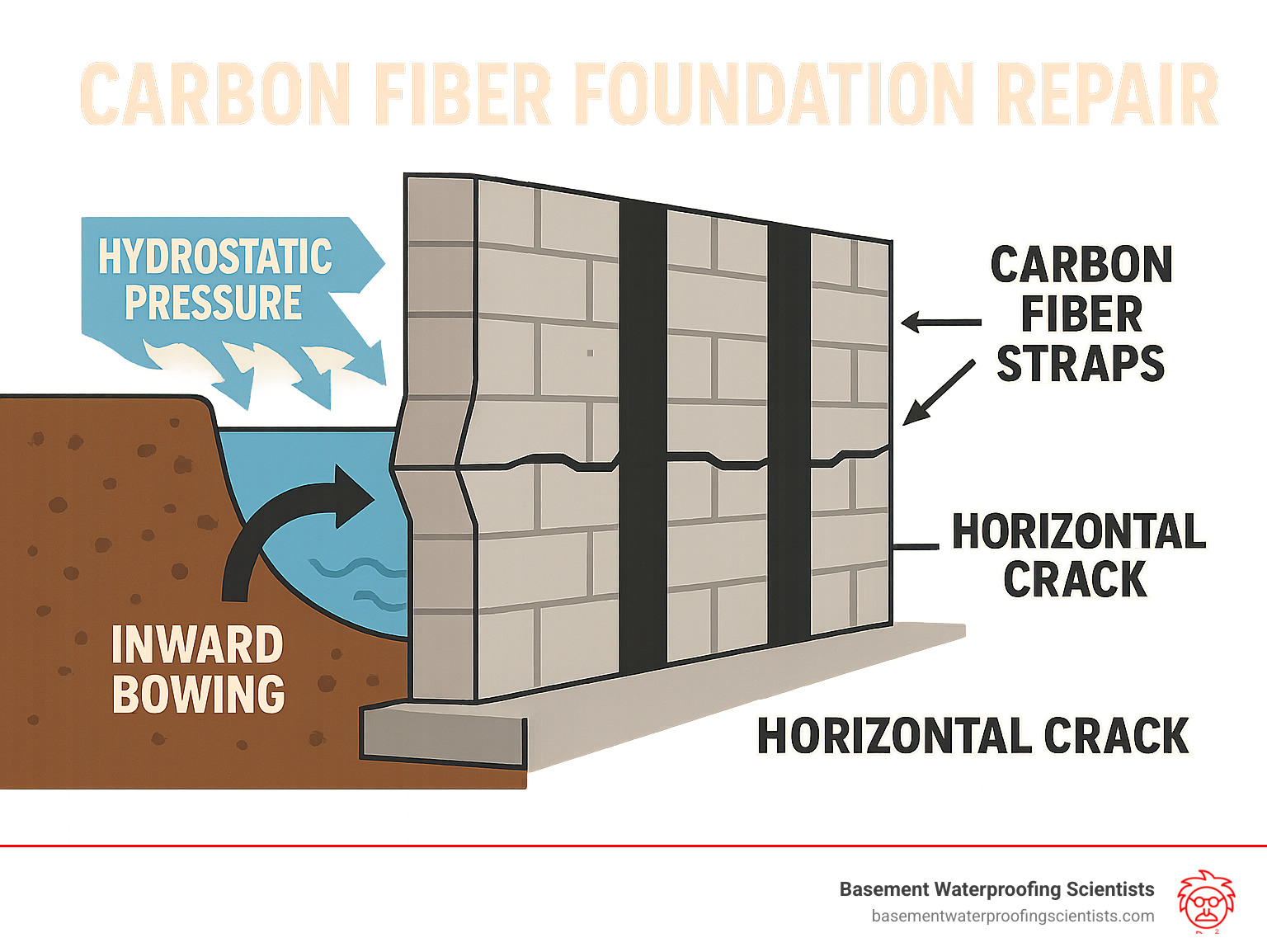
- Horizontal Wall Cracks: These are often the result of hydrostatic pressure. When the soil surrounding the basement becomes saturated, it exerts massive inward force, causing the walls to "bow" or tilt.
- Sticking Doors and Windows: When a foundation shifts, the rectangular frames of doors and windows become skewed, preventing them from opening or closing smoothly.
- Foundation Seepage: While often viewed as a plumbing or drainage issue, persistent water in a basement often indicates that structural cracks have formed, allowing the high Rhinelander water table to penetrate the envelope.
In 2026, professional diagnostic tools include digital manometers (to measure floor levels within 1/10th of an inch) and ground-penetrating radar (GPR) to locate voids beneath a concrete slab without disruptive excavation.
Technical Methods of Foundation Stabilization
Once the problem is diagnosed, contractors employ specific mechanical solutions. The "how" of the repair depends entirely on whether the goal is to stop the house from sinking (stabilization) or to fix walls that are being pushed inward.
1. Helical Piering
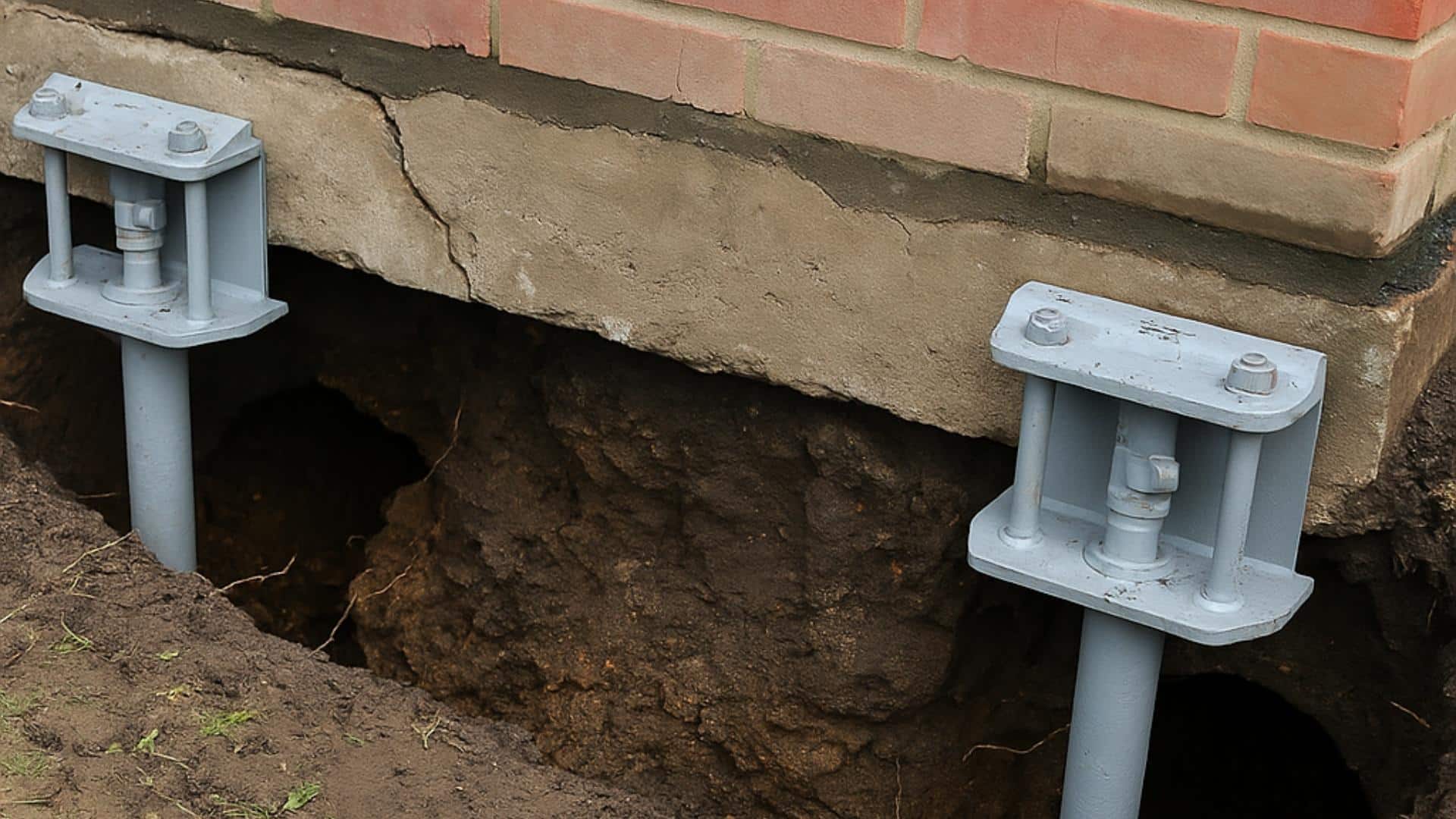
Helical piers are essentially giant steel screws. They are the preferred method for stabilizing settling foundations in Rhinelander's sandy and silty soils.
- The Process: Sections of high-strength steel shafts with helical plates (flanges) are screwed into the ground using hydraulic machinery.
- The Goal: The piers are driven deep into the earth, past the unstable "active zone" and the organic topsoil, until they reach a load-bearing stratum or achieve a specific torque rating.
- The Result: Once the piers are anchored in stable soil, heavy-duty steel brackets are attached to the foundation's footing. The weight of the house is then transferred from the failing soil onto these deep-seated steel pillars.
2. Push Piering
Similar to helical piers, push piers are used to combat settlement. However, they rely on the weight of the structure itself for installation.
- The Process: A steel bracket is attached to the foundation. Hydraulic rams then "push" galvanized steel pipe sections through the bracket and into the ground.
- The Goal: The pipe is driven down until it hits bedrock or a sufficiently dense soil layer that can support the resistance of the house's weight.
- The Result: This method is highly effective for heavy, multi-story homes or commercial buildings in Rhinelander that require a deep, end-bearing support system.
3. Wall Anchoring and Bracing
For basement walls that are bowing inward due to the pressure of wet Wisconsin soil, stabilization involves counter-acting that lateral force.
- Plate Anchors: An anchor is buried in the stable soil of the yard, several feet away from the house. A steel rod connects this anchor to a plate on the inside of the basement wall. By tightening the nut on the interior plate, the wall is pulled back toward the anchor.
- I-Beam Bracing: If the exterior of the property is inaccessible (due to decks or landscaping), steel I-beams are installed vertically against the interior basement wall. These beams are anchored to the floor joists above and the concrete floor below, physically preventing the wall from moving further inward.
4. Carbon Fiber Reinforcement
For less severe cracking or minor bowing, carbon fiber straps have become a 2026 industry standard.
- The Process: High-tensile carbon fiber straps are bonded to the foundation wall using industrial-strength epoxy.
- The Mechanics: Carbon fiber does not stretch. Once bonded, it absorbs the lateral tension that would otherwise cause the concrete to crack and bow. It is nearly invisible once painted, making it a favorite for finished basements.
The Role of Moisture Management and Waterproofing
A critical component of how foundation repair works in Rhinelander is the management of water. Even the best mechanical piering can fail if the soil continues to erode or expand due to poor drainage. Modern repair projects in 2026 almost always include:
- Exterior Grading: Ensuring the soil slopes away from the foundation at a minimum of one inch per foot for the first six feet.
- Sump Pump Systems: In Rhinelander, where snowmelt is significant, a high-capacity sump pump with a battery backup is essential to prevent hydrostatic pressure build-up.
- Interior Drainage Channels: Also known as "French drains," these are installed along the interior perimeter of the basement floor to collect water that seeps through the walls and direct it to the sump pump.
Comparison of Common Repair Methods
| Method | Primary Use Case | Durability | Relative Cost (2026) |
|---|---|---|---|
| Helical Piers | Foundation settlement in sandy/silty soil. | Lifetime (Transferable) | High |
| Push Piers | Deep settlement/heavy structures. | Lifetime | High |
| Wall Anchors | Bowing or leaning basement walls. | 25+ Years | Moderate |
| Carbon Fiber | Hairline cracks and minor bowing. | 25+ Years | Low |
| Polyjacking | Sinking concrete slabs/walkways. | 10–15 Years | Low |
Cost Factors and Considerations for 2026
The cost of foundation repair in Rhinelander varies based on the severity of the damage and the accessibility of the site. In 2026, the average cost for a single pier installation typically ranges from $1,800 to $3,200. A comprehensive project involving multiple piers and waterproofing can exceed $20,000.
Factors influencing the price include:
- Depth to Stable Soil: In some parts of Oneida County, piers may need to go 30–50 feet deep to find competent soil, increasing material costs.
- Permitting: Rhinelander municipal codes require specific structural permits and, in some cases, a sign-off from a licensed professional engineer (PE).
- Landscaping Restoration: Excavating for wall anchors or pier brackets often requires removing bushes, sidewalks, or decks, which adds to the total project budget.
Frequently Asked Questions
Does homeowner’s insurance cover foundation repair?
Generally, no. Standard homeowner’s insurance policies in Wisconsin do not cover foundation repair caused by "earth movement," "settlement," or "hydrostatic pressure." However, if the foundation damage was a direct result of a covered peril—such as a sudden pipe burst or a vehicle crashing into the home—you may be eligible for a claim. Always review your 2026 policy riders for specific exclusions.
How long does the repair process take?
For a typical Rhinelander residential home, the mechanical installation of piers or anchors usually takes between 3 to 5 business days. This timeframe does not include the initial engineering assessment or the time required for the city to issue permits. Larger commercial projects or those requiring significant excavation for exterior waterproofing may take 2 weeks or more.
Can I repair my foundation myself?
Foundation repair is not a DIY project. It involves heavy hydraulic equipment, precise engineering calculations, and specialized knowledge of soil mechanics. An incorrect repair can lead to "over-lifting," which creates massive structural cracks in the upper levels of the home, potentially making the structure uninhabitable.
Is carbon fiber better than steel beams?
It depends on the severity of the wall movement. Carbon fiber is ideal for preventing movement and reinforcing walls with cracks less than 2 inches out of plumb. If the wall has bowed significantly or is sheared at the base, steel I-beams or wall anchors are technically necessary to provide the required structural resistance.
Will foundation repair increase my property value?
In the Rhinelander real estate market, a repaired foundation with a transferable warranty is significantly more valuable than a home with visible structural issues. Most buyers in 2026 will require a foundation certification before closing. Professional repair essentially "clears the title" of structural liability, allowing for a standard mortgage and sale.
Practical Recommendation
If you suspect foundation issues in Rhinelander, the first step is to document the damage. Take photographs of cracks with a ruler for scale and monitor them over a change in seasons (specifically between the autumn freeze and spring thaw).
Avoid "quick fix" solutions like simply caulking cracks. These do nothing to address the underlying soil instability. Instead, consult with a contractor who provides a comprehensive site evaluation including soil probing and floor-level mapping. Ensure that any work performed comes with a transferable lifetime warranty, as this is a vital document for property value retention in the Wisconsin real estate market.
Image Gallery