How to Use Imperfect Tense Examples in English: A Comprehensive Guide
The imperfect tense in English is not a single verb form but a grammatical aspect expressed through the Past Continuous, "used to," and "would." It describes past actions that were ongoing, habitual, or incomplete at a specific time. B...
The imperfect tense in English is not a single verb form but a grammatical aspect expressed through the Past Continuous, "used to," and "would." It describes past actions that were ongoing, habitual, or incomplete at a specific time. By using these structures, speakers provide background context and describe recurring past behaviors.
Contents
In English linguistics, the concept of the "imperfect" refers to the imperfective aspect—a way of looking at an event that does not focus on its completion. While Romance languages like Spanish, French, or Italian have a specific, dedicated conjugation for the imperfect, English relies on a combination of auxiliary verbs and specific constructions to achieve the same meaning. As of 2026, understanding these nuances remains essential for achieving a natural, "native-like" flow in both academic writing and daily conversation.
Understanding the Concept of the Imperfect in English
To use imperfect tense examples correctly, one must first recognize that English separates "what happened" (Past Simple) from "what was happening" or "what used to happen." The former is perfective—it views the action as a completed whole. The latter is imperfective—it views the action as a process, a habit, or a background state.
In English, we primarily utilize three structures to convey the imperfect:
- The Past Continuous (Past Progressive): Used for actions that were in progress at a specific moment in the past.
- Used to + Infinitive: Used for past habits or states that are no longer true.
- Would + Infinitive: Used for repeated past actions or routines, often with a nostalgic tone.
Distinguishing between these is the key to mastering English narrative flow. While the Past Simple tells the "main events" of a story, the imperfect structures provide the "scenery" or the "atmosphere."
The Past Continuous: Capturing Ongoing Moments
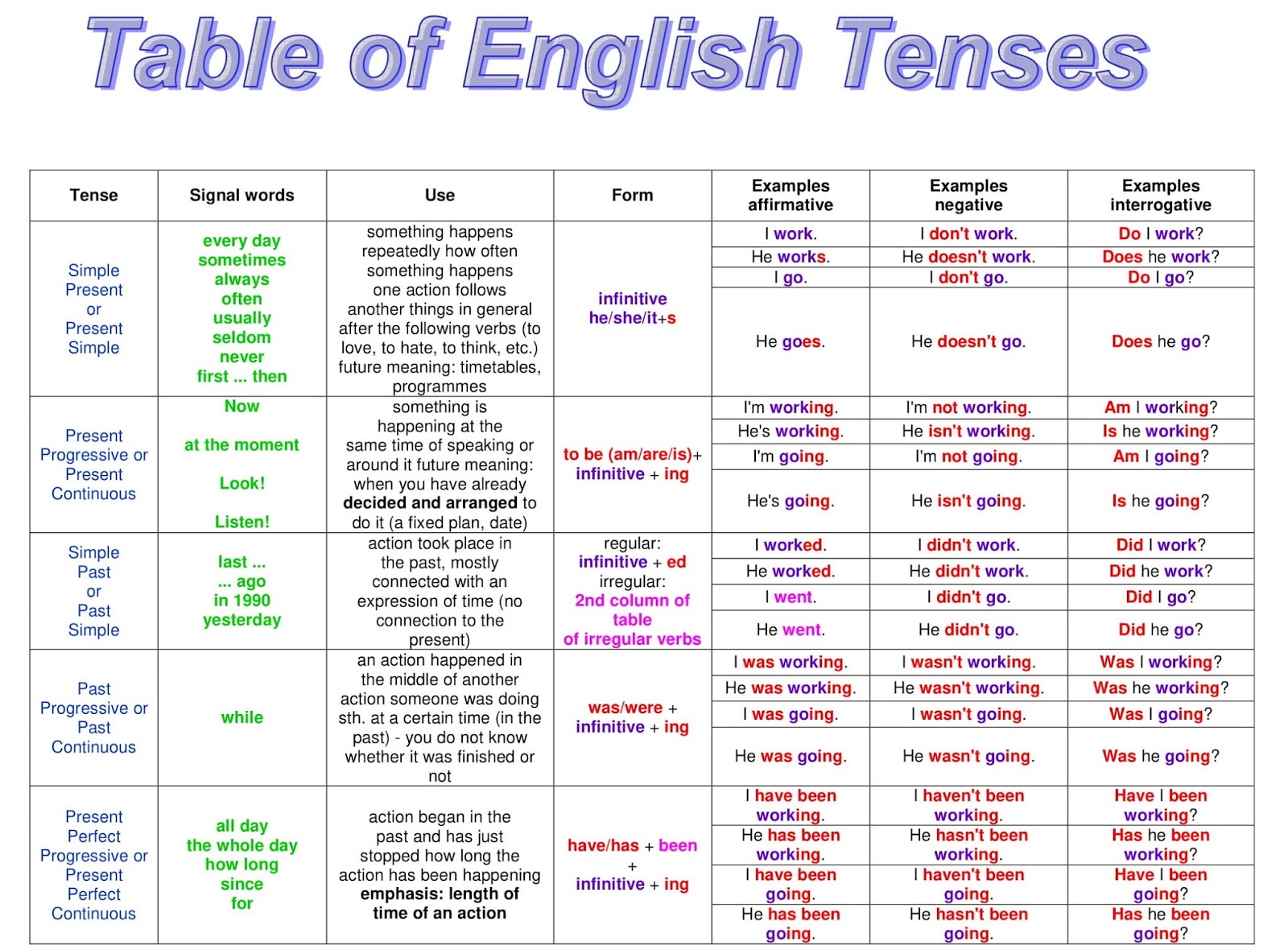
The Past Continuous is the most direct equivalent to the imperfect tense when describing a specific moment in time. It is formed using the past tense of the verb "to be" (was or were) followed by the present participle (the -ing form of the verb).
When to Use the Past Continuous
The Past Continuous is essential for setting the scene. For example, "The sun was shining, and the birds were singing" describes a continuous state that existed before the main action of a story began.
It is also frequently used to show an interrupted action. In the sentence, "I was eating dinner when the phone rang," the imperfect action (eating) was ongoing until the perfective action (the phone ringing) occurred. Without the imperfect construction, the sentence "I ate dinner when the phone rang" implies a different sequence—that you began eating only after the phone rang.
Grammatical Structure
- Affirmative: Subject + was/were + [verb]-ing (e.g., "She was writing.")
- Negative: Subject + was/were + not + [verb]-ing (e.g., "They were not listening.")
- Interrogative: Was/Were + subject + [verb]-ing? (e.g., "Were you sleeping?")
"Used to" and "Would": Expressing Past Habits
When the "imperfect" refers to a habit or a state that lasted for a long time in the past, English shifts from the Past Continuous to "used to" or "would." These are the tools for describing childhood, former lifestyles, or outdated routines.
The Versatility of "Used to"
"Used to" is the most flexible imperfect construction because it can describe both actions and states. A "state" refers to things like feelings, beliefs, or possession.
- Example (Action): "I used to run five miles every morning."
- Example (State): "I used to have a blue car." (You cannot say "I would have a blue car" in this context).
The Narrative Charm of "Would"
"Would" is used for repeated actions in the past, but it is more restricted than "used to." It cannot be used for stative verbs (verbs of being or feeling). It often carries a sense of nostalgia or describes a predictable routine.
- Example: "Every summer, we would visit my grandmother's farm."
In 2026, stylistic guides emphasize that "would" is excellent for creative writing to establish a recurring past behavior after "used to" has already set the timeframe. For instance: "We used to live in London. Every Sunday, we would walk through Hyde Park."
Key Differences: Imperfect Aspect vs. Past Simple
Understanding how to use imperfect tense examples requires a clear contrast with the Past Simple. The Past Simple is the "default" past tense, used for completed actions, while the imperfect forms provide depth and duration.
| Feature | Past Simple | Past Continuous (Imperfect) | "Used to" (Habitual Imperfect) |
|---|---|---|---|
| Primary Function | Completed action | Ongoing action in the past | Past habit or state |
| Focus | The result or the fact it happened | The duration or the process | The repetition or the change |
| Structure | Verb + -ed (or irregular) | was/were + -ing | used to + infinitive |
| Example | "I watched a movie." | "I was watching a movie." | "I used to watch movies." |
| Interruption | The action that interrupts | The action being interrupted | N/A |
Mastering Stative Verbs in the Imperfect Context
A common challenge when learning how to use the imperfect in English is the "stative verb" rule. Stative verbs describe states of being, emotions, or mental processes—words like know, love, believe, understand, be, and own.
In English, stative verbs are rarely used in the continuous (-ing) form. Even if you want to express an ongoing state in the past, you must usually use the Past Simple or used to.
- Incorrect: "I was knowing the answer."
- Correct: "I knew the answer" or "I used to know the answer."
This is a significant departure from Romance languages, where the imperfect conjugation is applied to stative verbs quite naturally. In English, the Past Simple often "absorbs" the role of the imperfect when dealing with these specific verbs.
Practical Sentence Examples and Scenarios
To internalize these rules, consider how the meaning changes based on the choice of tense.
Scenario 1: Providing Background
- "While the teacher was explaining the lesson, several students were taking notes."
- Analysis: Both actions are imperfective. They describe the environment of the classroom without focusing on when the lesson started or ended.
Scenario 2: Describing a Former Identity
- "When I was a child, I used to believe in ghosts."
- Analysis: This uses the habitual imperfect for a state. It implies that the belief was a long-standing condition that is no longer true in 2026.
Scenario 3: Creating a Narrative Sequence
- "He was driving home when he saw the accident. He immediately pulled over and called the police."
- Analysis: "Was driving" provides the imperfect background. "Saw," "pulled," and "called" are the perfective (Past Simple) events that drive the story forward.
Troubleshooting Common Mistakes
Even advanced speakers encounter hurdles when applying imperfective aspects in English. Below are the most frequent errors observed in 2026 language assessments.
- Overusing the Past Continuous: Do not use the -ing form for every past action. If the action was short or its duration is irrelevant, use the Past Simple.
- Bad: "I was opening the door and I was walking inside."
- Good: "I opened the door and walked inside."
- Using "Would" for States: Remember that "would" requires an action verb.
- Bad: "I would be a tall child."
- Good: "I used to be a tall child."
- Spelling "Used to" in Negatives: In the negative form, the "d" is dropped because of the auxiliary verb "did."
- Bad: "I didn't used to like spinach."
- Good: "I didn't use to like spinach."
Frequently Asked Questions
Can I use the Past Continuous for a habit?
Yes, but usually only if the habit was annoying or occurred with surprising frequency, often paired with the word "always." For example: "He was always losing his keys." This emphasizes the repetitive nature of the action as an ongoing nuisance in the past.
What is the difference between "used to" and the Past Simple for habits?
The Past Simple can describe a habit (e.g., "I played soccer for ten years"), but "used to" explicitly emphasizes that the habit has ceased. If you say "I used to play soccer," the listener automatically knows you no longer play.
Does English have an "Imperfect Subjunctive"?
Technically, English uses the Past Simple form in "if" clauses to express hypothetical situations (the Second Conditional), such as "If I were you." While some grammarians refer to this as an imperfect subjunctive, it is functionally distinct from the imperfect tense used for past description.
How do I translate the Spanish "era" or "estaba" into English?
"Era" (from ser) is usually translated as "was" (Past Simple) or "used to be." "Estaba" (from estar) is translated as "was" (Past Simple) or "was [verb]-ing" (Past Continuous) depending on whether you are describing a location or an ongoing action.
Is "would" more formal than "used to"?
"Would" is often perceived as more literary or nostalgic. In a formal essay about history, you might write: "Soldiers would often wait weeks for supplies." In casual speech, "used to" is more common for general descriptions of the past.
Final Recommendation for Mastery
To master the imperfect tense in English, practice "The Zoom-In Technique." Start by describing a broad past setting using the Past Continuous and "used to" (The Zoom-Out). Then, pinpoint specific, completed actions using the Past Simple (The Zoom-In).
For example: "In 2020, I was living in a small apartment and I used to work from home every day. One Tuesday, the power went out." This contrast between the continuous background and the sudden event is the essence of effective English storytelling. Consistently reading narrative long-form journalism or novels will help you see these patterns in 2026 and beyond.
Image Gallery