The Moscow Open Chess Robot Incident: Anatomy, Technical Causes, and Robotics Safety
During the Moscow Chess Open in July 2022, an automated chess-playing robotic arm grabbed and fractured the finger of a seven-year-old competitor named Christopher. The incident occurred when the child rushed his turn before the machin...
During the Moscow Chess Open in July 2022, an automated chess-playing robotic arm grabbed and fractured the finger of a seven-year-old competitor named Christopher. The incident occurred when the child rushed his turn before the machine had fully completed its movement sequence, highlighting severe vulnerabilities in deploying industrial robotics around humans without adequate safety interlocks.
Contents
Chronology of the Incident at the Moscow Open
On July 19, 2022, during the Moscow Chess Open—one of Russia’s premier annual chess tournaments—a public demonstration match pitted a multi-board robotic chess system against several young players simultaneously. Among the competitors was Christopher, a highly ranked chess player in Moscow under the age of nine.
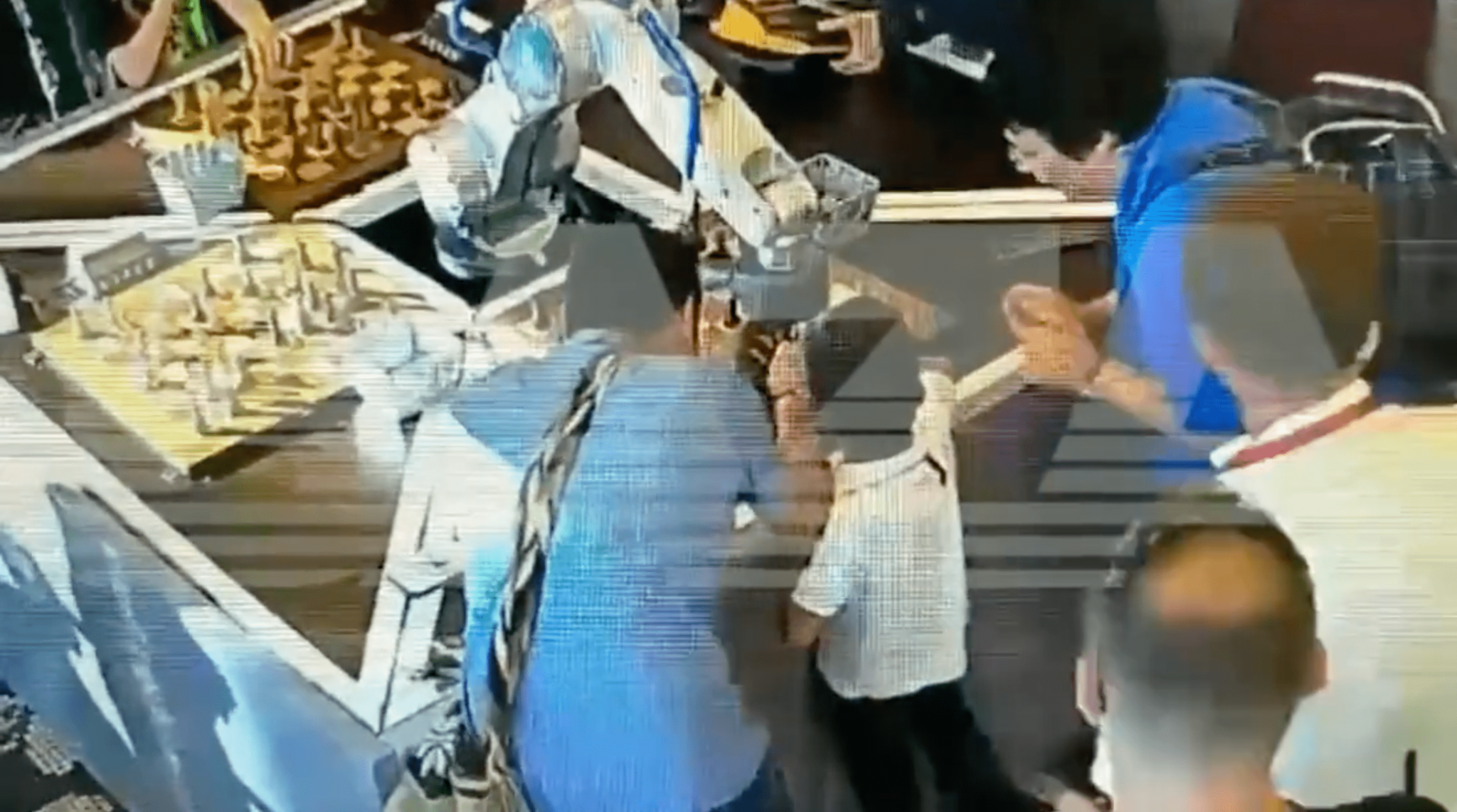
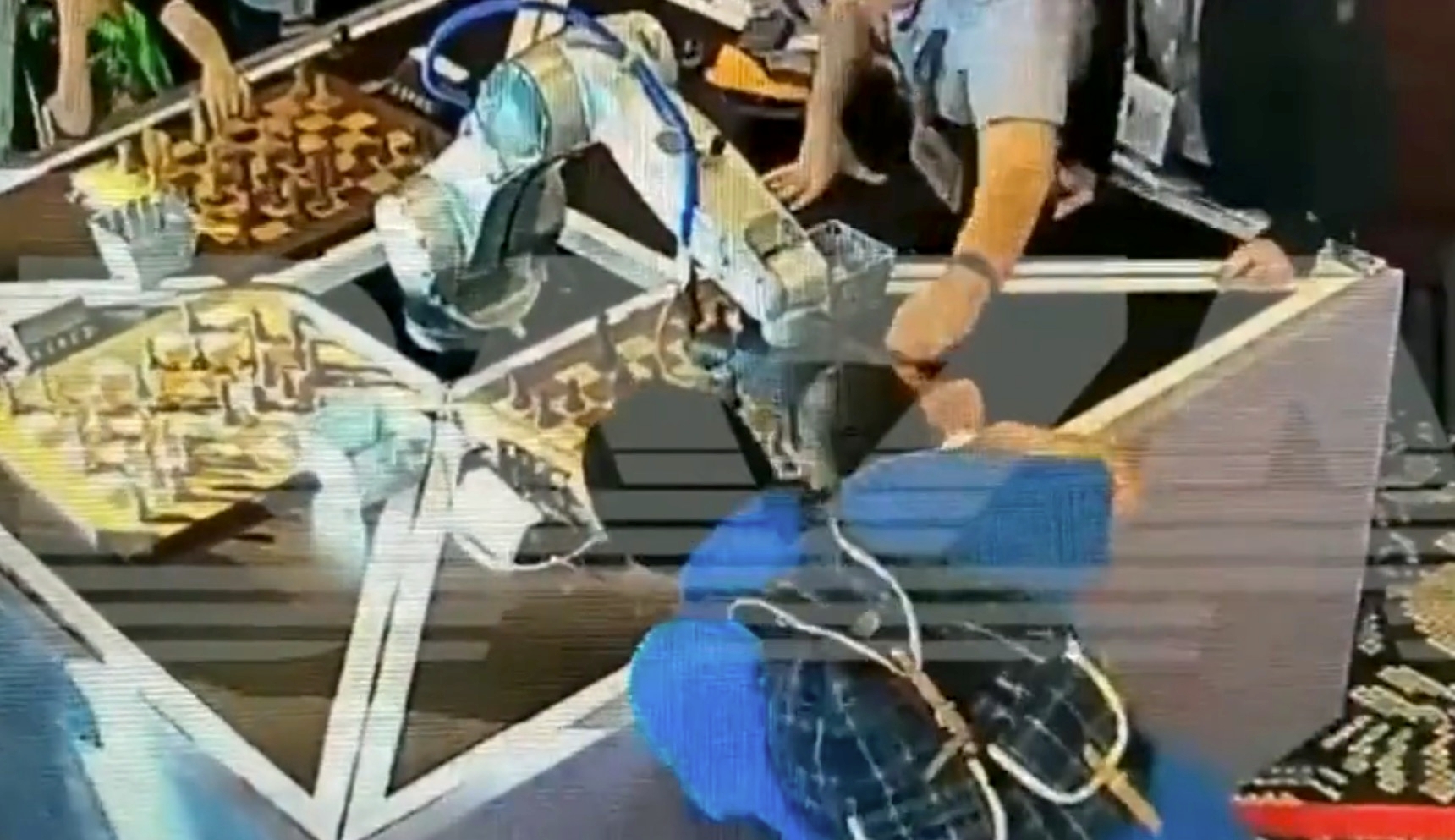
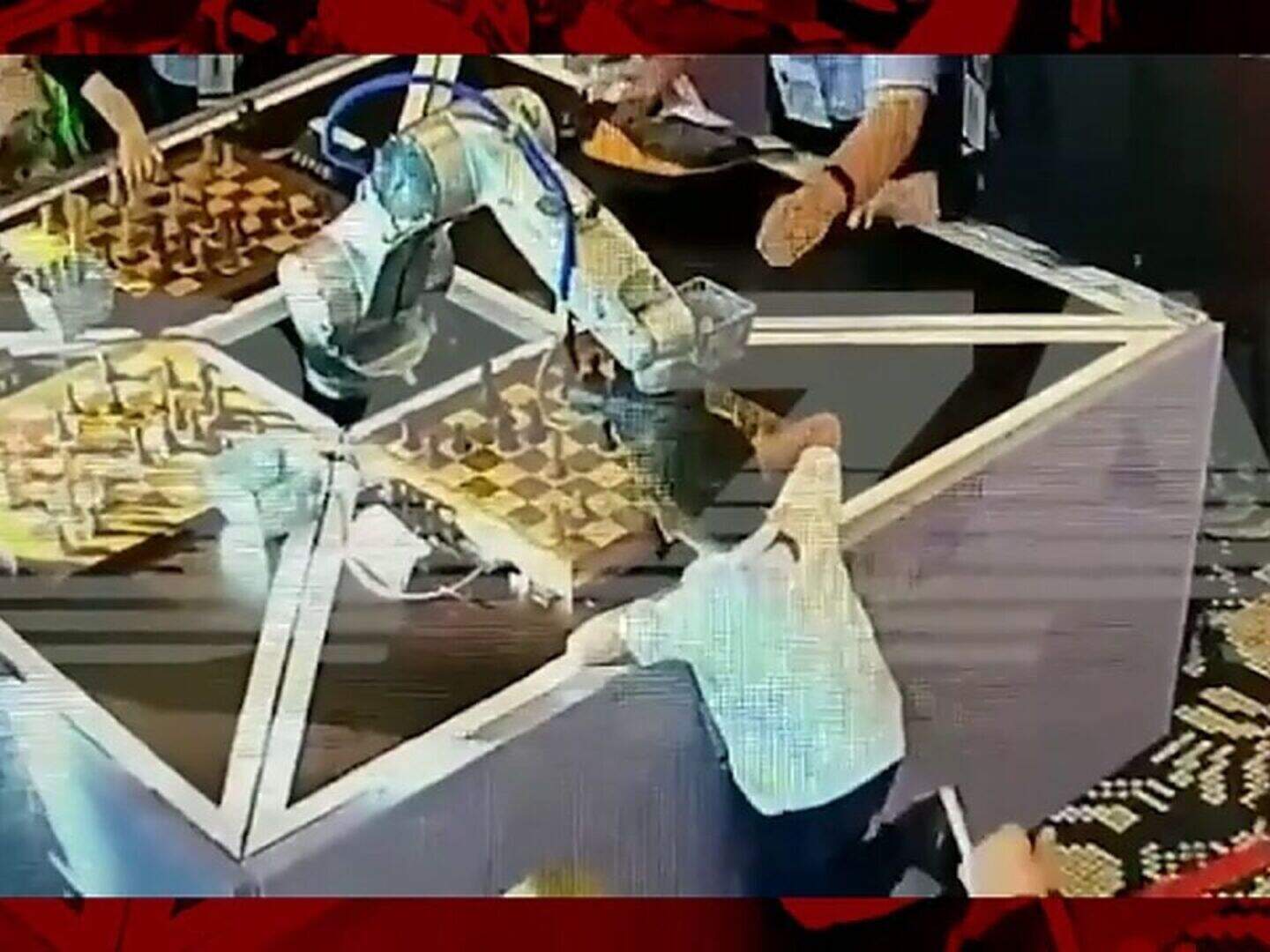
The match utilized a multi-axis robotic arm designed to pick up, move, and capture physical chess pieces across multiple boards. During a rapid sequence of play, the robot captured one of Christopher’s pieces and set it aside. Before the robotic arm had fully retracted to its home position or signaled the completion of its turn, Christopher reached into the board's active workspace to make his counter-move.
The robot’s end-effector (gripper) closed down on the boy’s finger instead of the intended square or piece. Lacking collision-detection sensors or emergency torque limits, the arm maintained its mechanical force, trapping the child's hand. Nearby adults—including tournament stewards and spectators—rushed to the table, pried open the robotic gripper, and freed the child.
Christopher suffered a bone fracture in his finger. Although medical personnel quickly applied a cast, allowing him to return and finish the tournament the following day with assistance in making moves, the event raised immediate international concern regarding public human-robot interaction (HRI).
Technical Anatomy: Why the Robot Grabbed the Player
To understand how an automated system could clamp onto a human hand, it is necessary to examine the architecture of industrial robotic arms compared to modern collaborative robotics.
- Vision/Chess Engine System (Calculates piece coordinates)
- Open-Loop Controller (Generates trajectory path)
- Rigid Industrial Servo Motor Drives (No Torque/Force Feedback Loop)
- End-Effector Clamps Target Zone (Traps obstruction if present)
1. Vision System vs. Spatial Awareness
The chess robot operated using an overhead vision processing system paired with a standard chess engine. The system's camera scanned the board state, identified piece positions, calculated the optimal move, and sent target Cartesian coordinates to the robot controller.
However, the vision system was configured primarily for board state tracking rather than continuous dynamic space monitoring. It assumed an static operational environment during the robot’s active execution cycle. Once the motion path was calculated and initiated, the controller executed the trajectory in an "open-loop" manner regarding obstacles, assuming no human limb would enter the defined work envelope until the arm completed its return phase.
2. Lack of Force-Torque Sensing and Limiting
Standard industrial robotic arms are engineered for repeatability and heavy payload handling rather than physical safety around non-isolated humans. Their drive trains utilize high-ratio gearboxes driven by high-torque servo motors.
- Absence of Joint Torque Sensors: Unlike purpose-built collaborative robots (cobots), traditional industrial arms lack internal strain gauges or torque sensors at each joint to detect unexpected physical resistance.
- Rigid Position Control: When the end-effector encountered the boy’s finger, the motor drives did not detect an abnormal current spike or mechanical obstruction in time to halt. The controller attempted to complete its programmed joint trajectories, exerting mechanical force sufficient to fracture human bone.
3. Missing Human-in-the-Loop Interlocks
Safe public-facing automation requires redundant safety interlocks. In standard industrial cells, physical fencing, light curtains, or area-scanning lidars immediately cut power (Category 0 or 1 safety stop under ISO 13849-1) if a human breaks the safety perimeter. At the Moscow Open, the robot operated openly on a standard table without physical barriers, proximity sensors, or optical safety zones monitoring the user's hands.
Regulatory Frameworks and Hardware Safety Standards
The Moscow Open incident highlights what occurs when machinery built for controlled industrial environments is deployed in public spaces without adhering to international robotics safety standards.
- ISO 10218-1 / ISO 10218-2 Industrial Robot Safety Norms
- Traditional Industrial Arm
- High speed & rigid actuator
- Requires perimeter fencing
- Lacks dynamic torque monitoring
- Collaborative Robot (Cobot)
- ISO/TS 15066 Compliance
- Power & Force Limiting (PFL)
- Speed & Separation Monitoring
- Traditional Industrial Arm
ISO 10218 and ISO/TS 15066 Standard Compliance
Industrial robotics safety is governed internationally by ISO 10218-1 and ISO 10218-2 (Safety requirements for industrial robots), complemented by ISO/TS 15066 (Technical specification for collaborative robots). ISO/TS 15066 defines four distinct collaborative operational modes:
- Safety-Rated Monitored Stop: The robot halts motion whenever a human enters the collaborative workspace.
- Hand Guiding: The operator manually controls motion via a direct interface with safety-rated feedback.
- Speed and Separation Monitoring: The system continuously measures distance to the operator using sensors (e.g., 3D safety cameras or lidar), reducing speed as the human approaches and stopping completely before impact can occur.
- Power and Force Limiting (PFL): Physical forces exerted by the robot are mechanically and electronically capped below biomechanical pain and injury thresholds.
The machine used in the Moscow demonstration fulfilled none of these four criteria. It was an industrial payload actuator repurposed for public display without the integration of PFL actuators, dynamic distance tracking, or light-curtain boundaries.
Comparing Industrial Robot Arms vs. Collaborative Robots (Cobots)
To prevent physical injuries during human-robot interactions, engineering teams must evaluate hardware architecture against international safety definitions.
| Safety Parameter | Standard Industrial Arm | Purpose-Built Collaborative Robot (Cobot) | Moscow Open Robot Deployment |
|---|---|---|---|
| Primary Safety Mechanism | Physical perimeter fencing, light curtains, interlocking doors | Internal torque sensors, force feedback, rounded edges | None (Open table access) |
| Response to Obstruction | Maintains trajectory using full motor torque until fault trip | Immediate safety stop (<10ms) upon low force detection | Continued movement, trapping the obstruction |
| Biomechanical Force Limits | Exceeds human injury thresholds (often >500 N) | Strictly limited per ISO/TS 15066 (e.g., <140 N on limbs) | Unregulated high torque |
| Workspace Monitoring | Static perimeter safety relays | Dynamic optical lidars, speed/separation sensors | Single vision camera targeted solely at board state |
| Child Safety Suitability | Strictly prohibited in shared space | Requires specialized low-threshold parameter sets | Deployed directly against children without modifications |
Official Responses and Legal Liability
Following the event, representatives from the Moscow Chess Federation and regional authorities issued statements regarding operational protocols and liability.
Federation Statements and Operator Claims
Sergey Lazarev, President of the Moscow Chess Federation, confirmed the fracture to the press, noting that the robotic unit had been rented for multiple public exhibitions over several years without prior physical incidents. Lazarev asserted that the child breached safety protocols by moving out of turn before the robot finished its cycle:
"The robot broke the child's finger... the robot was rented by us, it has been displayed in many places for a long time with specialists. The child made a move, and after that it was necessary to give time for the robot to answer, but the boy rushed, the robot grabbed him."
Sergey Smagin, Vice-President of the Moscow Chess Federation, characterized the event as an unprecedented occurrence, attributing it to an unfortunate timing coincidence where the child reached into the machine's operating envelope during an active down-stroke.
Legal Action and Institutional Responsibility
The boy's parents subsequently contacted the prosecutor's office, raising questions regarding public safety compliance, negligence in event management, and vendor liability.
From a safety engineering and legal standpoint, attributing system failure to user error—particularly when the user is a young child—violates fundamental principles of human factors design. Standard risk assessment guidelines under ISO 12100 (Safety of machinery — General principles for design — Risk assessment and risk reduction) mandate that equipment designers must account for reasonably foreseeable misuse or predictable human failure, especially in public environments.
Key Takeaways for Safe Robotics Deployments in Public Spaces
The 2026 consensus among robotics engineers, safety auditors, and event organizers emphasizes strict technical guardrails when exposing the general public—and minors in particular—to automated physical hardware.
- Event Planning Phase
- Perform ISO 12100 Risk Audit
- Choose Cobot Hardware (Power & Force Limited)
- Install Physical Barriers (Separation from Public Zone)
- Implement Hardwired E-Stop (Dedicated steward stationed at controller)
1. Mandate Power and Force Limiting (PFL) Hardware
Never deploy raw industrial articulated arms in unrestricted proximity to the public. Any machine operating within reach of non-technical users must be certified under ISO/TS 15066 standards, incorporating joint-level torque feedback that caps contact force below human injury levels.
2. Implement Hardware-Level Safety Interlocks
Software-level routines running inside an application loop (like a chess engine) are not safety-rated. Safety stops must be managed by independent, safety-certified hardware controllers (Category 3 or 4 under ISO 13849-1) wired directly to physical emergency stops, pressure mats, or light curtains.
3. Fail-Safe Workspace Isolation
If an industrial-grade robot arm must be demonstrated publicly, it should be isolated behind transparent polycarbonate physical barriers. The interaction must take place digitally—for example, via an electronic chessboard or touch screen that transmits move data to the isolated robot cell.
4. Station Dedicated Operators with Hardware E-Stops
Public demonstrations require a designated operator holding a physical emergency stop ("dead-man switch") who maintains an unobstructed line of sight. This operator's sole task is to monitor human movement into the work zone and halt system power before contact occurs.
Frequently Asked Questions
What caused the chess robot to grab the child's finger during the Moscow Open?
The robot lacked real-time collision detection and proximity sensing within its physical workspace. When the seven-year-old player reached across the board out of turn, the system's controller executed its pre-programmed move path without detecting the boy's hand, clamping its end-effector onto his finger.
Was the chess robot a collaborative robot (cobot)?
No. The machine was an industrial robotic arm modified with software to play chess. Unlike certified collaborative robots, it did not possess internal joint-torque sensors or soft force limits designed to automatically halt movement upon striking an unexpected object.
Did the child return to play in the tournament after the incident?
Yes. After receiving immediate medical treatment and having a cast applied to his fractured finger, Christopher returned to the Moscow Open the next day to complete his remaining matches, with adults assisting him in placing the chess pieces on the board.
What international standards govern safety in human-robot interactions?
Physical human-robot interactions are primarily governed by ISO 10218-1 and ISO 10218-2 (industrial safety requirements) along with ISO/TS 15066 (specifications for collaborative operations). General machinery risk management is outlined in ISO 12100.
Who was held accountable for the injury?
The boy's parents filed reports with public prosecutor services to investigate safety violations. The incident led to widespread criticism of the event organizers and equipment providers for failing to implement physical safety barriers or collaborative control systems during a public event featuring child participants.
Actionable Recommendations for System Integrators
Organizations planning public installations involving robotic hardware should adhere to a strict compliance checklist before allowing human interaction:
- Conduct a Formal Risk Assessment: Complete a documented hazard analysis under ISO 12100 prior to equipment transport.
- Select Certified Cobots: Use only cobot platforms certified under ISO/TS 15066 for direct public-facing interaction.
- Establish Redundant E-Stops: Ensure at least two independent, safety-rated hardware emergency stops are within immediate reach of trained supervisors.
- Isolate High-Torque Systems: Enclose non-collaborative machinery behind physical barriers, utilizing digital inputs for public participation.
Image Gallery