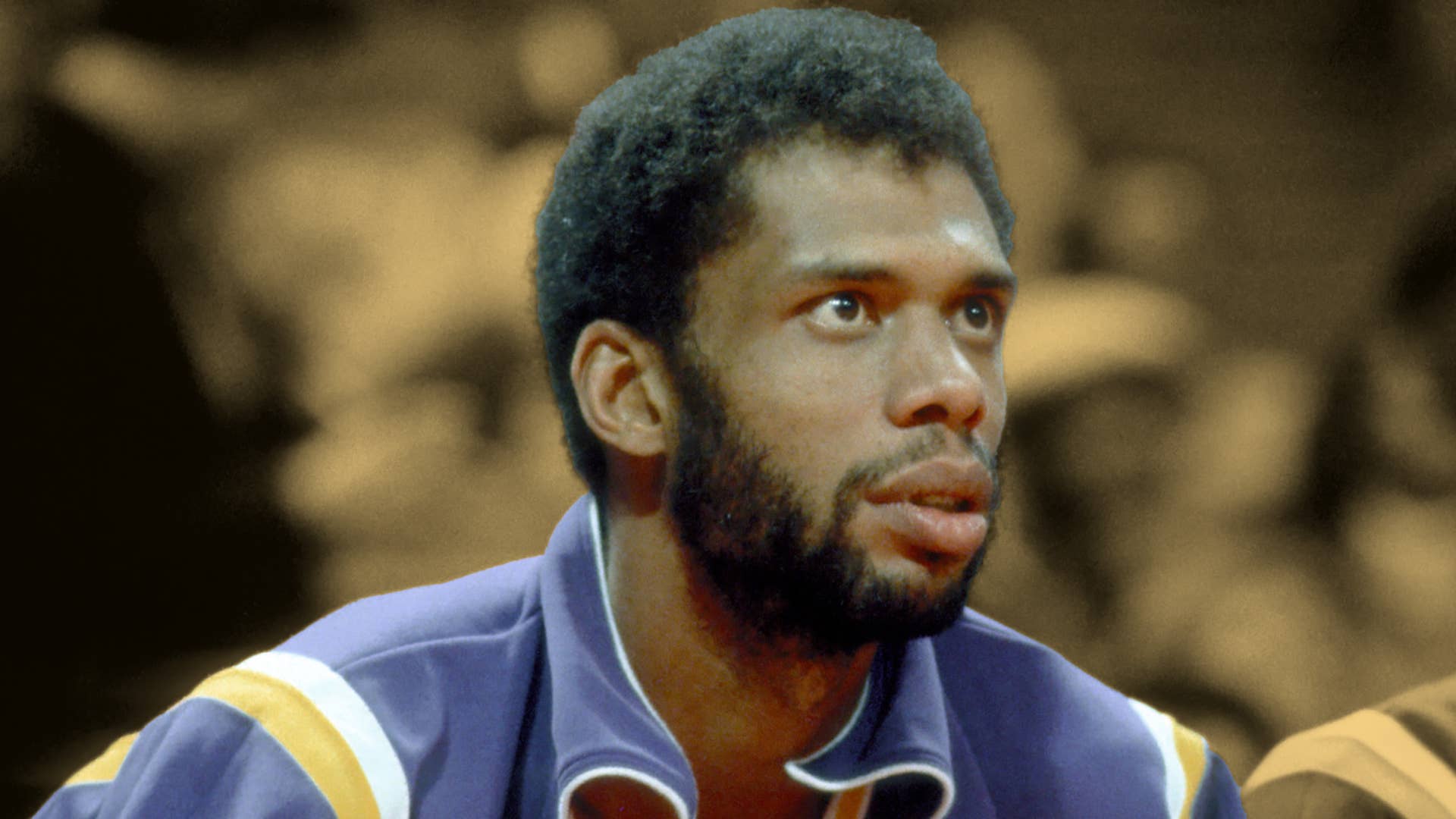
The Formative Years of Lew Alcindor: Kareem Abdul-Jabbar in His Childhood
Kareem Abdul-Jabbar was born Ferdinand Lewis Alcindor Jr. on April 16, 1947, in Harlem, New York City. His childhood was defined by a rapid physical growth that saw him reach 5'8" by age nine, a strict Catholic upbringing, and the disc...
Kareem Abdul-Jabbar was born Ferdinand Lewis Alcindor Jr. on April 16, 1947, in Harlem, New York City. His childhood was defined by a rapid physical growth that saw him reach 5'8" by age nine, a strict Catholic upbringing, and the disciplined influence of his father, a transit police officer and jazz musician. These early years in the Inwood neighborhood laid the foundation for his legendary basketball career and lifelong social activism.
Contents
The Cultural and Familial Roots of Lew Alcindor
To understand the man who would become Kareem Abdul-Jabbar, one must first understand the environment of post-World War II New York City. Born to Cora Lillian and Ferdinand Lewis Alcindor Sr., young "Lew" was an only child, a status that often led to a more solitary and observant temperament. His father was a man of significant presence and talent; a Juilliard-trained trombone player and a transit police officer, Ferdinand Sr. embodied a blend of artistic sensitivity and rigid discipline.
Growing up in the Dyckman Street projects in the Inwood neighborhood of Upper Manhattan, Lew was immersed in a household where excellence was expected but quietness was the norm. His father’s career as a police officer meant that authority and rules were central to the household, while his musical background introduced Lew to the world of jazz—a genre that would influence his rhythm on the court and his philosophical outlook on life. His mother, Cora, provided a protective and nurturing counterpoint, though the towering height Lew inherited from his father's side soon made him stand out in any crowd.
The Challenge of Early Physical Prominence
By the time Lew Alcindor was in the fourth grade, he already stood well over five feet tall. By the age of 12 or 13, he had surpassed the height of most grown men, reaching 6'8" before he even entered high school. While this physical gift eventually became his greatest professional asset, in his childhood, it was often a source of social alienation and unwanted attention.
Living as a "giant" child in Harlem and Inwood meant that Lew could never be anonymous. He often spoke in later years about the feeling of being a "freak" or an outsider. This sense of "otherness" was compounded by the racial dynamics of the 1950s. Being a tall, Black youth in a predominantly white Catholic school system created a unique set of pressures. He was often expected to be more mature than his peers simply because of his size, a common burden placed on children who physically outpace their chronological age.
Educational Foundations: St. Jude’s and the Catholic Influence
Lew’s early education took place at St. Jude’s Parish Elementary School. The Catholic school environment of the 1950s was known for its strict adherence to rules, uniforms, and traditional academic rigor. For Alcindor, this environment reinforced the discipline he learned at home. However, it was also here that he first encountered the complexities of racial integration and prejudice.
During his time at St. Jude’s, Lew was often the only Black student in his class. This isolation forced him to develop a strong internal life. He became a voracious reader, finding solace in books and history—subjects that would later inform his career as an author and cultural critic. It was during these elementary school years that he first began to pick up a basketball, though his initial experiences were not those of a natural prodigy. He was clumsy at first, struggling to coordinate his rapidly lengthening limbs, but his height made him an inevitable candidate for the school team.
The Transformation at Power Memorial Academy
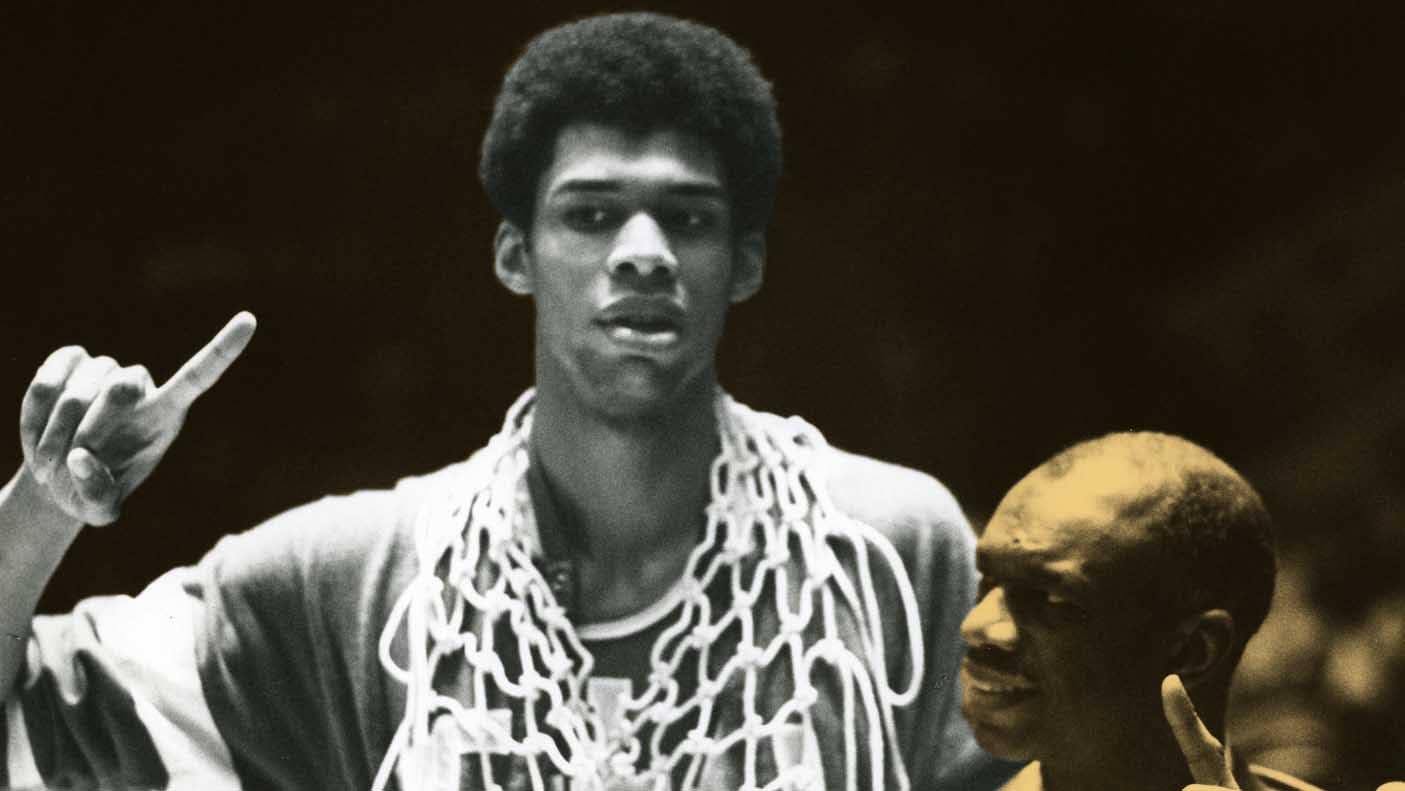
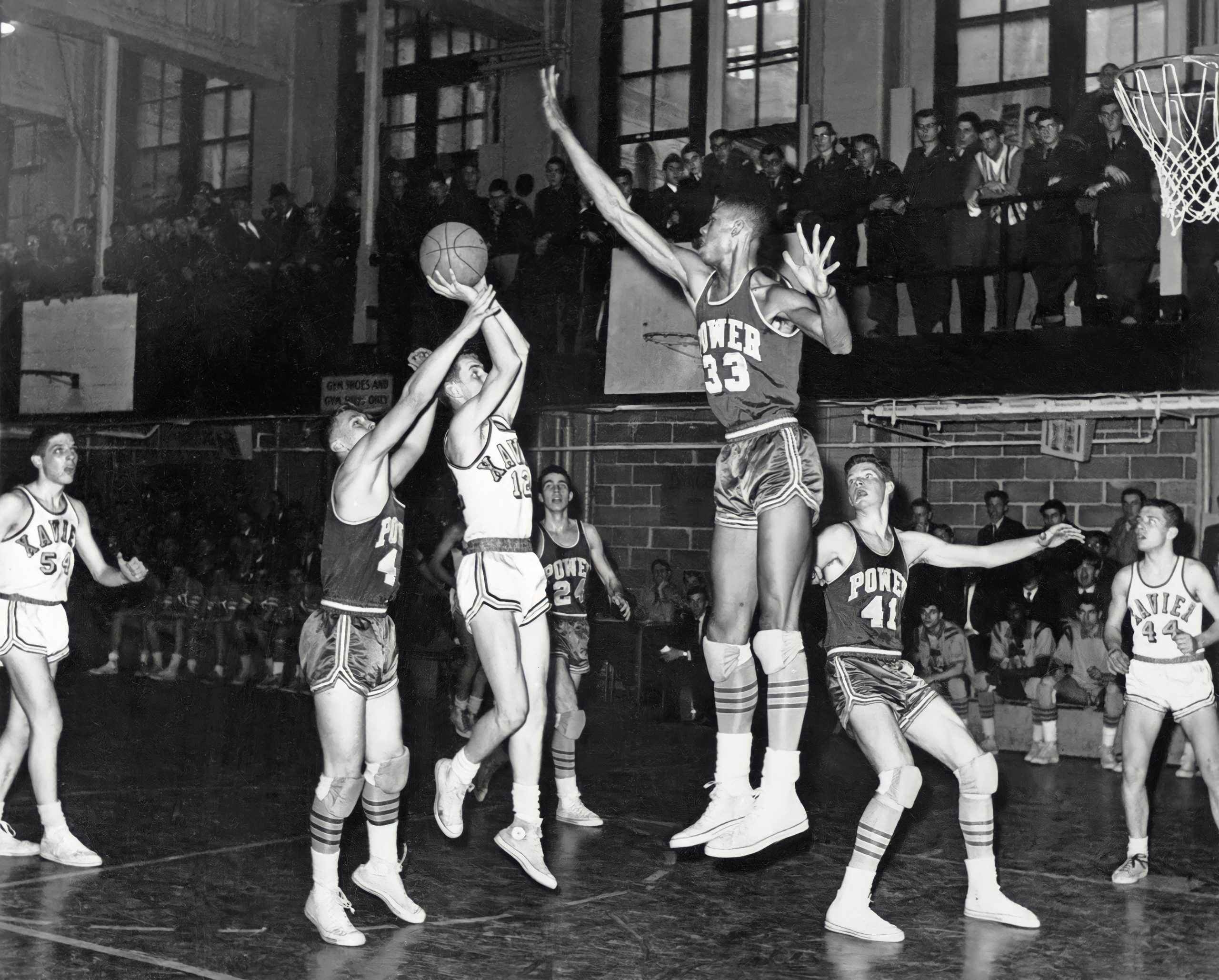
The trajectory of Lew Alcindor’s life changed permanently when he enrolled at Power Memorial Academy, a Catholic high school in Manhattan. Under the tutelage of coach Jack Donohue, the raw potential of the "Tower from Power" began to crystallize into dominant athletic skill.
Donohue’s coaching was rigorous and focused on fundamentals. He recognized that Lew’s height was only an advantage if paired with footwork and stamina. During these years, Lew’s childhood officially transitioned into a high-profile adolescence. His high school career is still regarded as one of the greatest in American history. He led the Power Memorial "Irish" to three straight New York City Catholic championships.
The 71-Game Winning Streak
The most famous hallmark of his high school years was the staggering 71-game winning streak. From 1962 to 1964, Power Memorial was virtually unbeatable. This period was not just about basketball; it was Lew’s introduction to the national spotlight. Reporters from across the country began to descend on the tiny gym in Manhattan to see the teenager who was already being touted as the future of the NBA.
| Aspect of High School Career | Details and Statistics |
|---|---|
| High School | Power Memorial Academy (Manhattan, NYC) |
| Coach | Jack Donohue |
| Winning Streak | 71 Consecutive Games |
| Career Points | 2,067 Points (High School Record at the time) |
| Championships | 3 New York City Catholic Championships |
| Final Record | 79 Wins - 2 Losses |
| Accolades | Three-time First Team All-City; National High School Player of the Year |
The Awakening of Social Consciousness
While his physical growth was the most visible change during his childhood and early teens, his intellectual and social growth was equally significant. The late 1950s and early 1960s were a period of intense social upheaval in the United States. Living in New York City, Lew was witness to the burgeoning Civil Rights Movement.
The 1964 Harlem riot occurred during his high school years, an event that deeply affected his worldview. He began to see the disparities between the disciplined, safe world of his Catholic school and the systemic struggles faced by his community. It was during his late childhood that he began to question the "Lew Alcindor" persona. He started exploring African American history and African heritage, seeds that would eventually lead to his conversion to Islam and his name change to Kareem Abdul-Jabbar in 1971.
His father’s influence played a role here as well. Ferdinand Sr. was a man of deep dignity who refused to bow to the racial slights of the era. Watching his father navigate the world as a Black man in a position of authority (as a police officer) while still facing the realities of segregation gave Lew a complex understanding of power and justice.
Developing the "Skyhook" and Technical Prowess
Even as a child, Lew was being coached to utilize his height in ways that were revolutionary. While the "Skyhook" became his signature move in the NBA, the mechanics of the shot began in the gyms of New York City. Because he was so much taller than his opponents, he was often double- or triple-teamed. To counter this, he needed a shot that was unblockable regardless of how many defenders surrounded him.
His early training focused on the "Mikan Drill" and other rhythmic post moves. His background in music—specifically the jazz he heard at home—is often cited by sports historians as a reason for his exceptional timing. Unlike many tall players who were stationary, Lew was fluid and mobile, a result of the rigorous physical education he received during his formative years at Power Memorial.
The Move to UCLA: The End of an Era
By 1965, Lew Alcindor’s childhood in New York had reached its conclusion. He was the most recruited high school basketball player in history. His decision to leave the East Coast for UCLA (University of California, Los Angeles) was a pivotal moment. It represented a break from the strictures of his New York upbringing and an entry into the West Coast’s more experimental and socially active environment.
When he left for college, he was no longer just a tall kid from Harlem; he was a national phenomenon. However, the traits he developed in those first 18 years—the discipline of a cop’s son, the rhythm of a jazz enthusiast, the intellectual curiosity of a lonely student, and the resilience of a Black youth in a changing America—remained the core of his identity.
Frequently Asked Questions
What was Kareem Abdul-Jabbar's name when he was a child?
During his childhood and high school years, he was known as Ferdinand Lewis "Lew" Alcindor Jr. He did not adopt the name Kareem Abdul-Jabbar until 1971, several years into his professional basketball career, following his conversion to Islam.
How tall was Kareem Abdul-Jabbar as a child?
Lew Alcindor was exceptionally tall from a very young age. He was 5'8" by age nine. By the time he entered the eighth grade, he was 6'6", and he reached 6'8" by his freshman year at Power Memorial Academy. He eventually grew to his full height of 7'2".
Where did Kareem Abdul-Jabbar grow up?
He grew up primarily in the Inwood neighborhood of Upper Manhattan, specifically in the Dyckman Street projects. While often associated with Harlem because of his birth and cultural roots, his daily childhood life was centered in the northernmost part of Manhattan.
What kind of student was he in his youth?
He was an excellent student, known for being studious and quiet. His Catholic school upbringing at St. Jude's and Power Memorial emphasized academic discipline. He was a frequent reader and had a particular interest in history and social justice from a young age.
Did Kareem Abdul-Jabbar play any other sports as a child?
While basketball was his primary focus due to his height, Lew Alcindor also participated in baseball and track in his early youth. However, his rapid growth made basketball the most natural fit for his physical stature, and he began focusing on it almost exclusively by middle school.
Practical Recommendation for Researchers and Fans
For those looking to understand the childhood of Kareem Abdul-Jabbar more deeply, the most authoritative source is his own autobiography, Becoming Kareem: Growing Up On and Off the Court. Published in 2017, this memoir specifically targets the formative years of his life, providing a firsthand account of his struggle with identity, his relationship with his parents, and the racial climate of 1950s New York. Additionally, the documentary Kareem: Minority of One offers archival footage of his high school years at Power Memorial that illustrates his early dominance better than statistics alone.
Image Gallery