How RFID in Libraries Improves Service: A Comprehensive Guide to Modern Automation
Radio Frequency Identification (RFID) improves library service by accelerating circulation, enhancing inventory accuracy, and enabling staff to shift from repetitive manual tasks to high-value patron support. By automating check-outs a...
Radio Frequency Identification (RFID) improves library service by accelerating circulation, enhancing inventory accuracy, and enabling staff to shift from repetitive manual tasks to high-value patron support. By automating check-outs and returns through non-line-of-sight data transmission, RFID reduces wait times and provides real-time visibility into a library’s physical collection.
Contents
The Evolution of Library Service Through RFID Technology
As we navigate 2026, the role of the library has shifted from a mere repository of books to a dynamic community hub for digital literacy, research, and collaborative learning. Central to this transformation is the integration of Radio Frequency Identification (RFID). Unlike traditional barcode systems that require a direct line of sight and manual scanning of every individual item, RFID uses electromagnetic fields to identify and track tags attached to books, media, and equipment.
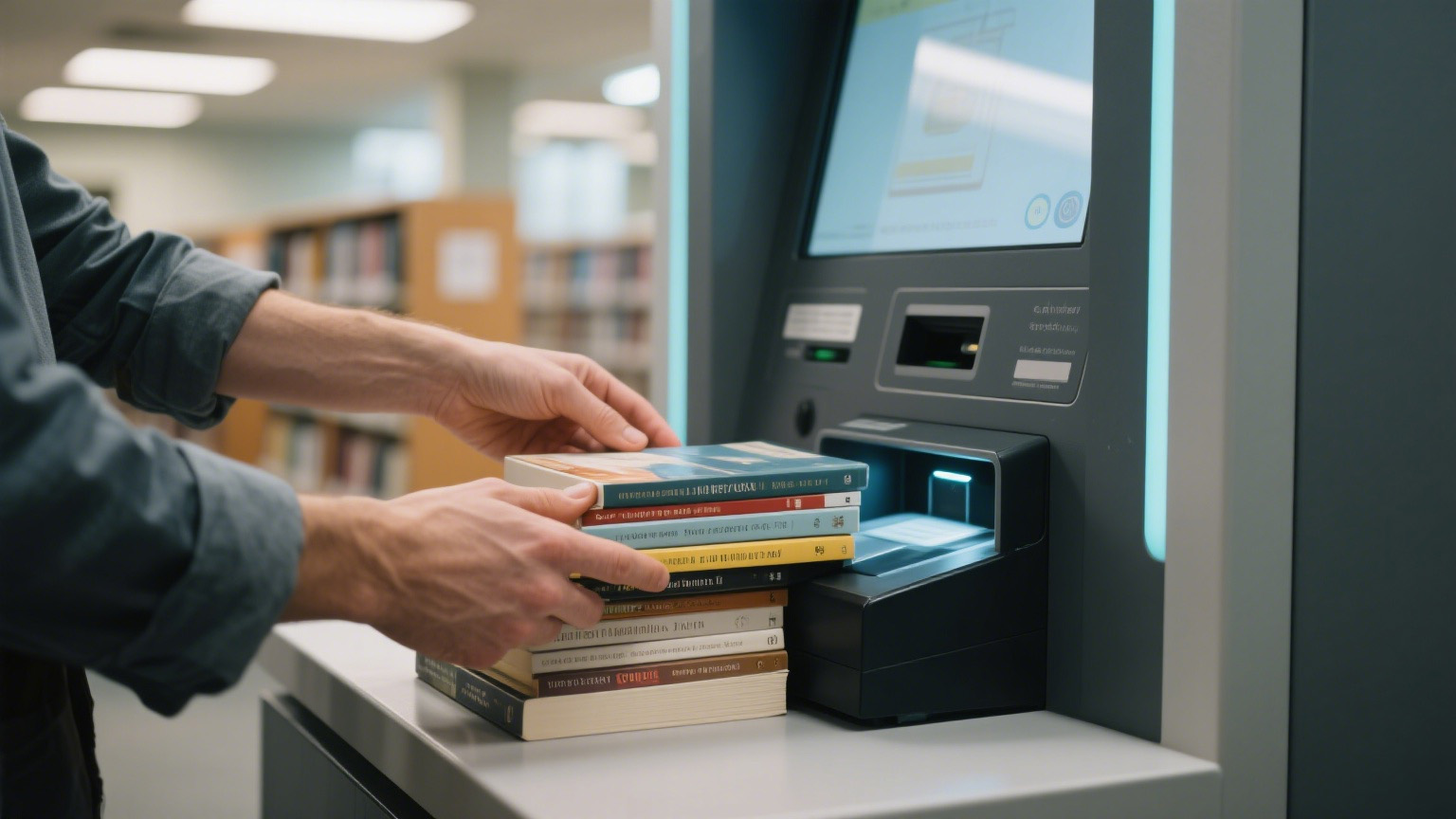
The fundamental shift in service occurs because RFID allows for the simultaneous processing of multiple items. This "bulk scanning" capability is the cornerstone of modern library efficiency. When a patron places a stack of five books on an RFID reader, the system identifies all five instantly. This eliminates the bottleneck at the circulation desk, a chronic pain point in high-traffic urban and academic libraries. Furthermore, the technology has matured significantly; by 2026, the interoperability between different RFID vendors and Integrated Library Systems (ILS) has reached a level of seamlessness that was difficult to achieve a decade ago.
Enhancing the Patron Experience: Speed, Privacy, and Autonomy
The primary beneficiary of RFID implementation is the library patron. The service improvements are most visible in the self-service sector, which has become the standard expectation for modern users.
Frictionless Self-Checkout
In a traditional barcode-based environment, self-checkout kiosks often suffer from "user error" when patrons fail to align the barcode correctly under the laser. RFID removes this friction. Patrons can simply place their bag or stack of items on the kiosk platform. The RFID reader captures the unique identifiers from the chips, communicates with the library’s database via the SIP2 or NCIP protocols, and updates the patron's account in seconds. This autonomy is particularly valued by younger demographics and busy professionals who prioritize speed.
Increased Privacy
Service quality is also defined by the level of privacy a library can afford its users. RFID-enabled self-service allows patrons to borrow sensitive materials—such as books on health, finance, or personal lifestyle—without the need for a face-to-face interaction with staff. By 2026, privacy-enhancing features in RFID tags, such as "untreaceable" modes or temporary ID masking, have addressed earlier concerns regarding patron tracking outside the library building, further solidifying trust in the institution.
24/7 Returns and Automated Materials Handling (AMH)
RFID enables the use of intelligent return book drops. When an item is dropped into an Automated Materials Handling (AMH) system, the RFID tag is read instantly, the item is checked in, and the patron's record is cleared before they even leave the building. Advanced AMH systems then use conveyor belts and sorters to categorize items by genre or shelf location. This ensures that popular titles return to the "available" status on the online catalog almost immediately, rather than sitting in a back-room bin for 24 to 48 hours.
Empowering Library Staff for High-Value Roles
A common misconception is that RFID is a tool for staff reduction. In practice, the technology serves as a tool for staff reallocation. By automating the mundane, repetitive tasks of scanning barcodes and physical sorting, library professionals can focus on specialized services that a machine cannot perform.
From Clerks to Information Consultants
When staff are no longer tethered to the circulation desk, they become mobile. Equipped with tablets or handheld RFID readers, librarians can move through the stacks, assisting patrons with complex research queries or digital navigation. This transition from "clerical" to "consultative" work significantly raises the perceived value of library service.
Reducing Physical Strain and Ergonomic Risk
The manual handling of thousands of books daily presents a high risk of repetitive strain injuries (RSI) for library workers. Barcode scanning requires specific wrist orientations and repetitive lifting. RFID allows for "touchless" scanning, where items can stay in crates or be moved in bulk. Reducing the physical toll on staff leads to higher morale and lower turnover, which indirectly improves service continuity and institutional knowledge.
Revolutionizing Inventory Management and Collection Accuracy
A library’s service is only as good as its catalog accuracy. If a patron sees an item listed as "Available" online but cannot find it on the shelf, the service has failed. RFID provides the most robust solution to this perennial problem.
Rapid Shelf Reading and Searching
Using a handheld RFID scanner, a staff member can "read" an entire shelf of books simply by waving the device along the spines. The scanner compares the tags it finds against the library’s database in real-time. If a book is shelved in the wrong section, the handheld device emits an audible alert or highlights the error on a screen. Tasks that previously took days—such as a full inventory of a 50,000-volume collection—can now be completed in a few hours.
Identifying "Missing" but Present Items
Often, books are not stolen; they are simply misplaced. An RFID-enabled inventory allows staff to find items that have been tucked behind other books or placed on the wrong floor. By keeping the physical collection in sync with the digital catalog, libraries ensure that patrons find what they are looking for, reducing frustration and increasing circulation rates.
Technical Standards and Security Protocols
To ensure that RFID improves service rather than complicating it, libraries must adhere to international technical standards. By 2026, most libraries have standardized on ISO 15693 and ISO 18000-3 for High Frequency (HF) tags, which operate at 13.56 MHz. These standards ensure that tags from one manufacturer can be read by equipment from another, preventing "vendor lock-in" and ensuring long-term sustainability.
| Feature | Barcode System (Traditional) | RFID System (Modern) | Service Impact |
|---|---|---|---|
| Scanning Method | Line-of-sight, one item at a time. | Near-field/Long-range, bulk scanning. | Massive reduction in checkout queues. |
| Durability | Visible; prone to scratching/fading. | Hidden inside cover; protected. | Fewer "unreadable" items at checkout. |
| Inventory Speed | Manual scan of every spine (Very slow). | Wave-based scanning (Very fast). | Higher catalog accuracy; fewer lost items. |
| Security | Requires separate EM/RF security strips. | Integrated ID and security bit. | Streamlined processing; fewer false alarms. |
| Patron Autonomy | Limited; high error rate in self-scan. | High; intuitive and fast. | Empowers patrons; improves privacy. |
Addressing the Challenges of RFID Implementation
While the benefits are extensive, improving service through RFID requires careful planning to avoid operational hiccups.
The Conversion Process
The initial "tagging" of a legacy collection is a monumental task. For a library with 200,000 items, this involves physical handling and tag application for every single piece of media. Most successful libraries in 2026 use a phased approach, tagging new acquisitions first and using "tagging stations" to convert the remaining collection during low-traffic periods.
Cost Considerations
The capital investment for RFID includes tags, kiosks, AMH sorters, and staff workstations. However, the Return on Investment (ROI) is measured in increased circulation and decreased "lost book" costs. By 2026, the price of passive RFID tags has dropped significantly, making them viable even for smaller community libraries or rural branches.
Interference and Materials
Metal and liquids can interfere with RFID signals. Books with foil covers or DVDs with metallic layers require specialized "shielded" tags or specific placement strategies to ensure they are read correctly. Libraries must train staff to recognize these materials to maintain a 99% or higher read rate, ensuring the service remains reliable.
Frequently Asked Questions
Does RFID pose a risk to patron privacy?
In a modern library setting, RFID tags typically store only a unique identification number (barcode equivalent) and a security bit. They do not store personal patron information or titles of the books in plain text. By 2026, advanced encryption and "kill" features at the exit gate further protect user data, ensuring that the technology is safer than traditional systems.
Can RFID tags be used for theft prevention?
Yes. RFID tags include an "AFI" (Application Family Identifier) or a "DSFID" (Data Storage Format Identifier) byte that acts as a security gate. When an item is checked out correctly, this bit is flipped. If a patron attempts to exit with an item that has not been checked out, the security gates will trigger an alarm. This integrated approach is more efficient than the old method of using separate magnetic strips.
How long do RFID tags last?
Passive RFID tags, which do not have a battery, are designed to last the lifetime of the book. Most manufacturers guarantee the tags for at least 10 to 20 years, or approximately 100,000 "reads." This durability ensures that the service improvements provided by RFID are a long-term investment for the library.
Is RFID compatible with existing library software?
Yes, modern RFID systems are designed to be "vendor-agnostic." They communicate with the Integrated Library System (ILS) using the Standard Interchange Protocol (SIP2) or the newer NISO Circulation Interchange Protocol (NCIP). This means a library can upgrade its hardware without necessarily needing to replace its entire database software.
Will RFID make library jobs obsolete?
History has shown the opposite. While RFID automates the manual labor of circulation, it allows libraries to expand their programming. Libraries that implement RFID often see an increase in community workshops, literacy programs, and specialized research assistance, requiring a highly skilled and engaged workforce.
Practical Recommendations for Implementation
For libraries looking to improve service through RFID in 2026, the following steps are recommended:
- Conduct a Workflow Audit: Identify the specific bottlenecks in your current circulation process. Is the delay at the return desk or the checkout kiosk? Tailor your RFID hardware to solve these specific pain points.
- Prioritize Tag Quality: Invest in ISO-compliant, high-quality tags with strong adhesive. Cheap tags that peel off or fail after two years will negate the efficiency gains of the system.
- Staff Training is Crucial: Ensure that all staff members understand how to use handheld readers and how to troubleshoot kiosk errors. Service improvement is only possible when the staff is confident in the technology.
- Patron Education: Launch a "Self-Service Success" campaign to show patrons how easy the new system is. Provide clear signage and perhaps a "roving assistant" during the first month of implementation to guide users through the new process.
By focusing on these areas, libraries can ensure that their transition to RFID results in a measurably better experience for everyone who walks through their doors.
Image Gallery