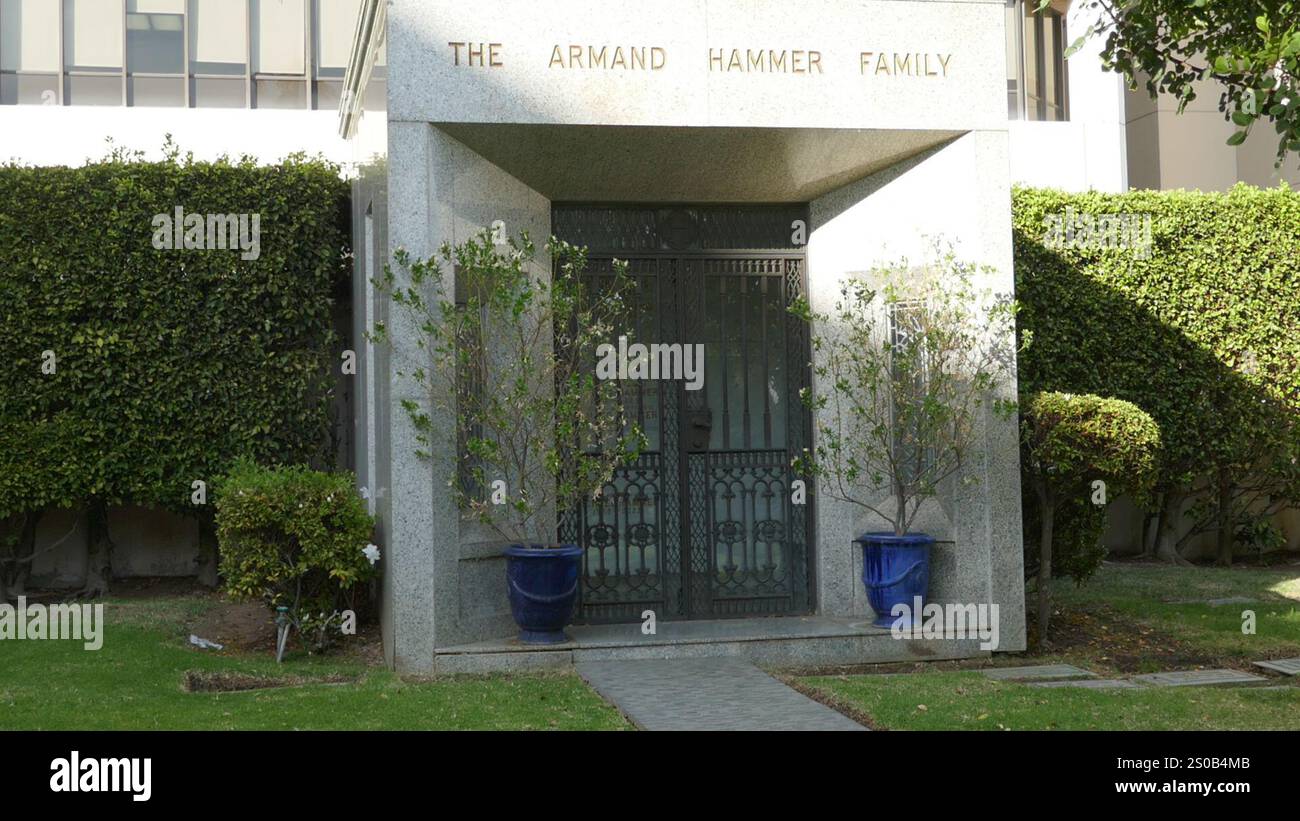
Julian Armand Hammer and the Hammer Family Legacy: Wealth, Power, and Controversy
Julian Armand Hammer (1924–1996) served as the primary link between the legendary industrialist Armand Hammer and the subsequent generations of the Hammer dynasty. While often overshadowed by his father's immense public profile, Julian...
Julian Armand Hammer (1924–1996) served as the primary link between the legendary industrialist Armand Hammer and the subsequent generations of the Hammer dynasty. While often overshadowed by his father's immense public profile, Julian’s life was defined by the dual pressures of managing a massive inheritance and navigating significant personal and legal challenges that shaped the family's lasting reputation.
Contents
The Hammer family legacy is one of the most complex narratives in American business history, blending high-stakes international diplomacy, the global oil trade, and a series of public scandals that have fascinated biographers for decades. To understand the legacy of Julian Armand Hammer, one must look past the surface of the "Hammer" name and examine the specific intersections of corporate power, personal tragedy, and the weight of an extraordinary patriarchal shadow.
The Architect of the Dynasty: The Shadow of Armand Hammer
To understand Julian Armand Hammer, one must first understand the man who loomed over his entire existence: his father, Armand Hammer. Armand was a physician by training but a capitalist by instinct. He became world-renowned as the chairman of Occidental Petroleum, a company he transformed from a small, struggling outfit into a global energy giant.
Armand's influence was not limited to oil. He was a master of "shuttle diplomacy," maintaining close ties with Soviet leaders from Vladimir Lenin to Mikhail Gorbachev. This unique position allowed the Hammer family to amass not just wealth, but a level of political capital that few private citizens ever achieve. Julian grew up in an environment where the family home was a crossroads for international power brokers, art dealers, and industrial titans.
However, this environment came with a cost. Armand Hammer was known for his demanding nature and a relentless drive for success that often sidelined his personal relationships. Julian, as the only son from Armand's first marriage to Baroness Olga von Root, was the natural heir to this empire, yet he often found himself struggling to find a distinct identity within the rigid structure of his father’s expectations.
The Life and Career of Julian Armand Hammer
Julian was born in 1924, a time when his father was already deeply involved in business dealings in the Soviet Union. His early life was characterized by luxury but also by the instability of a father who was frequently traveling or embroiled in complex legal and financial schemes.
Julian served in the United States Army during World War II, an experience that provided a brief respite from the family business. Upon his return, he was integrated into the Hammer corporate machine. While he held various positions within Occidental Petroleum and associated family ventures, his role was often interpreted by historians as secondary. He did not possess his father’s aggressive business temperament, leading to a dynamic where he was seen more as a custodian of the family name than a visionary leader in his own right.
Despite his more reserved professional profile, Julian remained a key fixture in the Hammer social circle. He was involved in the management of the family’s extensive art collections and philanthropic efforts, which were centered around the Armand Hammer Foundation. As of 2026, many of the assets Julian once oversaw remain central to the ongoing legal and historical discussions regarding the Hammer estate.
The 1955 Incident and Legal Turmoil
Perhaps the most significant and controversial chapter in Julian Armand Hammer’s life occurred on his 26th birthday in 1955. This event would leave a permanent mark on the family legacy and has been a focal point for documentaries and investigative reports exploring the "darker" side of the Hammer dynasty.
On June 27, 1955, Julian shot and killed an associate named Bruce Winton at his home in Los Angeles. The circumstances surrounding the shooting were fraught with tension; Julian claimed that Winton had become aggressive and was threatening his family, specifically making unwanted advances toward Julian's wife.
The legal proceedings that followed were a testament to the family's influence. Despite the gravity of the incident, the charges against Julian were eventually dismissed. Public and historical scrutiny of the case has often suggested that Armand Hammer used his significant wealth and political connections to ensure a favorable outcome for his son. This event established a recurring theme in the Hammer family legacy: the ability of immense wealth to provide a shield against legal consequences, a theme that has resurfaced in contemporary discussions regarding later generations.
The Business Interests: Occidental Petroleum and Beyond
While Julian may not have been the face of Occidental Petroleum, his life was inextricably tied to the company’s fortunes. Under Armand’s leadership, Occidental became a major player in the Libyan oil fields and expanded into chemicals and agriculture.
Julian’s involvement in the company was largely administrative and symbolic. He served on the board of directors and was a significant shareholder. However, his tenure was marked by the internal politics of a family-run corporation. Armand Hammer was notoriously reluctant to cede control, even as he aged. This created a bottleneck at the top of the organization, where Julian and other executives were often kept in a state of professional stasis.
| Generation | Representative | Primary Role | Key Contribution/Legacy |
|---|---|---|---|
| First Generation | Armand Hammer | CEO, Occidental Petroleum | Built the global oil empire and Soviet ties. |
| Second Generation | Julian Armand Hammer | Executive/Board Member | Managed the transition of wealth; 1955 legal case. |
| Third Generation | Michael Armand Hammer | Philanthropist/Business Man | Led the Hammer Foundation; expanded art holdings. |
| Fourth Generation | Armie Hammer | Actor | Brought the family name into modern pop culture. |
Passing the Torch: Michael Armand Hammer and the Third Generation
The transition of the family legacy from Julian to his son, Michael Armand Hammer, marked another shift in the family’s public standing. Michael was born in 1955, the same year as the shooting incident involving his father. He was raised with a clear understanding of the family’s status and was groomed to take over the philanthropic and business interests that Julian had maintained.
Michael Hammer was far more active in the public eye than Julian. He took the reins of the Hammer Foundation and was heavily involved in the Knoedler Gallery scandal, which involved the sale of forged artworks—a controversy that rocked the art world in the early 21st century. Michael's leadership style was often described as more flamboyant than his father’s, yet he shared Julian’s experience of living in the long shadow of the original patriarch, Armand.
Michael’s death in late 2022 signaled the end of a specific era of Hammer leadership. By 2026, the focus of the family legacy has moved away from oil and industrial power toward the cultural and psychological impact of being raised in such a dynasty.
The Modern Perception of the Hammer Legacy
In recent years, the Hammer family legacy has undergone a massive re-evaluation. The 2022 documentary series House of Hammer brought the stories of Armand, Julian, and Michael back into the mainstream, framing the family’s history through a lens of inherited trauma and systemic abuse.
Julian Armand Hammer is often portrayed in these modern narratives as a tragic figure—a man caught between a domineering father and a son who would go on to face his own set of public trials. The "legacy" is no longer just about the billions of dollars or the millions of barrels of oil; it is about the "Hammer curse," a term used by some family members and critics to describe the recurring patterns of violence, legal battles, and moral compromises that have followed the family for over a century.
As of 2026, the Hammer name is most frequently associated with:
- Philanthropy: The continued work of the Armand Hammer Foundation.
- Art History: The massive collections housed in institutions like the Hammer Museum in Los Angeles.
- True Crime/Biography: The ongoing fascination with the 1955 shooting and the inner workings of Occidental Petroleum.
Comparison of Generational Wealth and Influence
The Hammer family provides a textbook example of how wealth evolves across generations. In the first generation, the wealth was "active"—it was being built and used as a tool for geopolitical influence. By Julian’s generation, the wealth became "passive" or "custodial." Julian’s job was to exist within the framework his father built. By the time the legacy reached the fourth generation, the wealth had largely been liquidated or tied up in foundations, leaving the descendants to trade on the cultural capital of the name itself.
This shift highlights a common trajectory in American dynasties. The transition from industrial power to cultural notoriety is often fraught with difficulty, as the skills required to build an empire (ruthlessness, vision, risk-taking) often translate poorly to the domestic and social spheres of subsequent generations.
FAQs
Who was Julian Armand Hammer's father?
Julian's father was Armand Hammer, the billionaire industrialist and longtime CEO of Occidental Petroleum. Armand was one of the most influential businessmen of the 20th century, known for his ability to bridge the gap between Western capitalism and Soviet communism.
What happened during the 1955 shooting incident involving Julian Hammer?
On his 26th birthday in 1955, Julian Hammer shot and killed Bruce Winton at his home. Julian claimed the shooting was in self-defense, alleging that Winton was threatening his family. The charges were eventually dismissed, though the incident remains a point of significant historical controversy.
Did Julian Armand Hammer run Occidental Petroleum?
No, Julian never served as the CEO of Occidental Petroleum. While he held executive positions and served on the board, his father, Armand Hammer, remained in control of the company until his death in 1990 at the age of 92.
How is Julian Armand Hammer related to the actor Armie Hammer?
Julian Armand Hammer was the grandfather of actor Armie Hammer. Julian’s son, Michael Armand Hammer, was Armie’s father. This makes Julian the direct link between the industrial empire of the mid-20th century and the Hollywood presence of the family in the 21st century.
What is the Armand Hammer Foundation?
The Armand Hammer Foundation is a philanthropic organization established by the family to manage their extensive art collections and charitable giving. Over the decades, it has been at the center of various legal disputes regarding the distribution of the family’s assets and the management of their legacy.
Practical Considerations for Researchers
For those looking to explore the Hammer family legacy further, the following avenues are recommended:
- Archives of Occidental Petroleum: While now a public company with a different leadership structure, historical records of the Hammer era provide insight into the business side of the legacy.
- The Hammer Museum (UCLA): Located in Los Angeles, this institution holds a significant portion of the art collected by Armand Hammer and provides context for the family’s cultural contributions.
- Legal Archives of Los Angeles County: For those interested in the 1955 shooting, public records regarding the case of People v. Hammer offer the most objective view of the legal proceedings.
- Biographies: Books such as Dossier: The Secret History of Armand Hammer by Edward Jay Epstein provide a deeply researched look into the family’s ties and Julian’s role within them.
The legacy of Julian Armand Hammer is not a simple story of success or failure. It is a narrative of a man navigating the impossible expectations of a world-famous father while dealing with the consequences of his own actions. In 2026, his life remains a critical piece of the puzzle for anyone trying to understand the intersection of American industry and the private lives of the ultra-wealthy.
Image Gallery