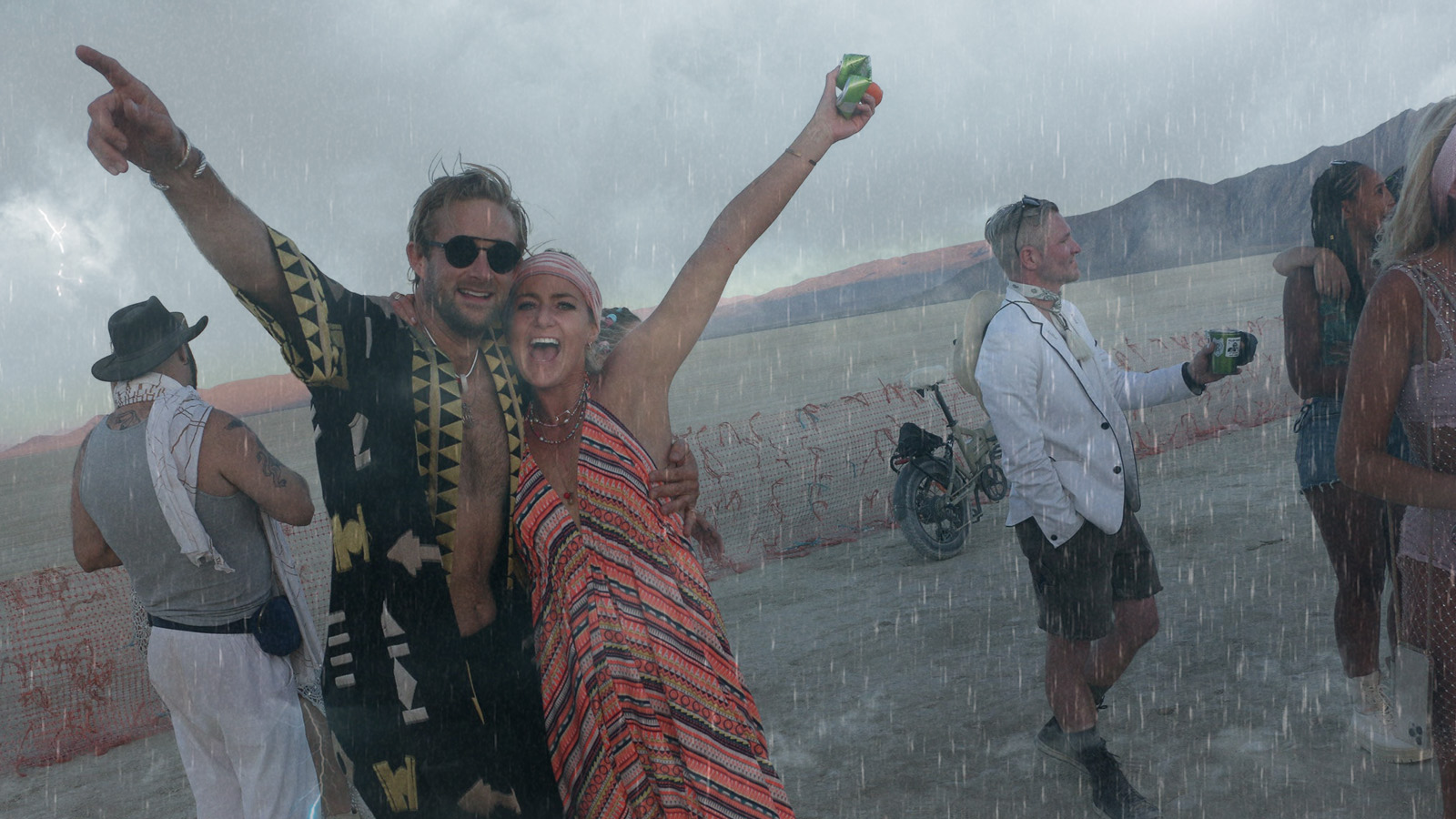
What the Burning Man Flood Revealed: Infrastructure, Logistics, and Resilience in Extreme Environments
The 2023 Burning Man flood revealed critical vulnerabilities in temporary city infrastructure, highlighting the challenges of managing large-scale events on dry lakebeds during extreme weather. It demonstrated that even highly prepared...
The 2023 Burning Man flood revealed critical vulnerabilities in temporary city infrastructure, highlighting the challenges of managing large-scale events on dry lakebeds during extreme weather. It demonstrated that even highly prepared, self-reliant communities face significant operational risks when unpredictable meteorological events transform arid alkaline playa into impassable, adhesive mud, effectively severing external support lines.
Contents
The Environmental Context: Why the Black Rock Desert Flooded
The Black Rock Desert in Nevada is a prehistoric lakebed known as a playa. During the late summer, the surface is typically a hard-packed, cracked crust of alkaline clay. However, this surface is chemically and physically unique; when it absorbs significant rainfall, the clay turns into a substance often described as "playa mud" or "gumbo." This material is notorious for its ability to stick to footwear, tires, and equipment, creating a viscous, slippery barrier that prevents the use of standard vehicles and hampers pedestrian movement.
In early September 2023, the region experienced an unseasonable, intense storm system that deposited several months’ worth of rain in less than 24 hours. The primary revelation here was not merely that the desert could flood, but that the specific geological composition of the Black Rock City (BRC) site renders it uniquely susceptible to "lockdown" scenarios. Unlike traditional soil, which might drain or compact, saturated playa clay loses its load-bearing capacity while simultaneously becoming an adhesive hazard.
Infrastructure and Self-Reliance Testing
Burning Man operates on the principle of Radical Self-Reliance. The flood forced this principle from a philosophical guideline into a survival requirement. The infrastructure of Black Rock City—designed to house over 70,000 people—was tested against a total shutdown of the "Exodus" period.
The flood revealed that:
- Logistical Fragility: While participants are required to bring their own food, water, and shelter for the duration of the event, the cessation of incoming and outgoing traffic exposed gaps in supply chain management for secondary services, such as portable toilet servicing and emergency medical evacuations.
- Waste Management Limits: The inability of service vehicles to traverse the mud meant that essential infrastructure, such as sanitary facilities, reached capacity faster than anticipated. This underscored the necessity for redundant, non-vehicular service protocols.
- Communication Gaps: The event relied on a mix of local radio, digital newsletters, and word-of-mouth. The flood highlighted that when centralized digital communication portals face intermittent power or connectivity issues, physical signage and community-led information distribution remain the most reliable methods for maintaining order.
The Dynamics of "Shelter in Place"
The Bureau of Land Management (BLM) and event organizers issued a "shelter in place" order to prevent vehicles from getting stuck on the access roads, which would have permanently blocked egress for emergency services. This decision revealed the importance of behavioral compliance within large, decentralized crowds.
The successful management of this period relied on the existing cultural norms of the community. Because participants were already accustomed to managing their own resources, there was no mass panic. Instead, the community pivoted toward micro-communities. Neighbors shared resources, food, and heat, turning the event into a study of decentralized resource management. However, the revelation remains that professional event planning must account for a "total standstill" scenario where authorities cannot deploy heavy equipment for extraction or support.
Comparative Operational Challenges
Managing an event in a remote desert environment requires a different set of safety considerations compared to traditional urban or fairground-based events. The following table highlights the operational differences revealed by the event’s response to the 2023 flooding.
| Feature | Standard Event Planning | Playa-Specific Planning | Impact of 2023 Flood |
|---|---|---|---|
| Ground Stability | Permanent pavement/grass | Seasonal alkaline clay | Total loss of surface traction |
| Egress Protocol | Multiple paved exits | Single road access | Immediate "Shelter in Place" |
| Resupply | Daily or on-demand | Pre-arrival only | Service vehicle suspension |
| Medical Access | Near urban hospitals | Air-evacuation reliance | Air travel limitations due to mud |
Technical Lessons for Extreme Weather Planning
The 2023 event provided data that is currently influencing modern remote-site event engineering. Experts in venue management have pointed to three specific areas where technical standards for "extreme weather in arid climates" are shifting:
- Vehicle Dynamics: The realization that 4x4 vehicles are effectively immobilized by thick, wet clay has led to a re-evaluation of emergency response vehicle selection. Future protocols emphasize the use of high-flotation or tracked vehicles for essential staff movement.
- Sanitation Resilience: Portable sanitation units must be positioned at lower densities or equipped with enhanced containment strategies that do not rely on frequent servicing cycles by heavy trucks.
- Meteorological Integration: The integration of site-specific weather modeling—rather than regional forecasting—is now a priority. The 2023 flood demonstrated that regional forecasts often fail to capture the localized, high-intensity precipitation patterns common in the Great Basin.
Navigating Legal and Regulatory Implications
The Burning Man Project operates under a special recreation permit issued by the BLM. The flooding event raised questions regarding the legal responsibilities of event organizers versus the autonomy of participants. The primary legal takeaway involves the "Duty of Care." The organizers were tasked with providing clear, timely, and enforceable directives (such as the mandatory stop to vehicle movement). The success of this directive proved that legal compliance in a remote, ungoverned space is best achieved through clear, preemptive communication rather than reactive enforcement.
Disclaimer: This information is for educational purposes regarding large-scale event logistics and does not constitute legal, emergency management, or professional safety advice. Always consult local authorities and official event guidelines for current safety requirements.
Frequently Asked Questions
1. Was the 2023 Burning Man flood a historical anomaly? While significant rain in the Black Rock Desert is uncommon, it is a known geological risk. Meteorologists and local historians note that precipitation events in the area are often unpredictable and can be intense due to the basin's geography.
2. Why could participants not simply walk out? The mud at the site is not just wet soil; it is highly adhesive and can weigh several pounds per boot, making hiking extremely physically taxing. Furthermore, the distance from the center of the playa to the nearest paved road is several miles, presenting a significant risk of hypothermia and exhaustion for thousands of people unprepared for an emergency trek.
3. Did the event organizers provide refunds after the flood? Policies regarding event cancellations or restricted access are governed by the ticket terms and conditions agreed to at purchase. Generally, major event organizers specify that tickets are non-refundable, as funds are allocated to infrastructure and permits long before the event begins.
4. How does the playa surface affect medical emergencies? During the flood, the primary concern for emergency services was the inability of ambulances to traverse the site. The event relies on specific air-medical support, but weather conditions often ground aircraft, meaning medical care must be managed on-site until conditions improve.
5. What is the current standard for "Radical Self-Reliance"? This remains the core tenet of the event. It means participants are expected to be fully responsible for their own survival, including having enough food, water, and shelter to endure the entire duration of their stay, plus an extra 48 to 72 hours of supplies in case of an extended delay.
Next Steps for Future Preparedness
For organizers and participants alike, the lesson of the 2023 event is the transition from "hope for good weather" to "active climate adaptation." Organizers should continue to enhance site drainage mapping and update mandatory supply lists for participants to ensure they account for extended, multi-day delays. Participants should view their gear lists not as a camping checklist, but as a survival kit capable of sustaining them in an environment where no external assistance is guaranteed. Whether you are an event coordinator or an attendee, planning for the worst-case scenario—total isolation—is now the standard requirement for participation in any remote-location event.
Image Gallery