The Real Cost of Mold Remediation in Victorville
In Victorville, California, professional mold remediation typically costs between $1,500 and $4,500 for average residential projects. Minor, localized surface treatments can cost as little as $500 to $1,200, while major structural reme...
In Victorville, California, professional mold remediation typically costs between $1,500 and $4,500 for average residential projects. Minor, localized surface treatments can cost as little as $500 to $1,200, while major structural remediation—such as whole-attic contamination, widespread slab leak damage, or HVAC duct cleanouts—can range from $5,000 to more than $10,000.
Contents
Understanding the true price of mold removal in the Victor Valley region requires looking beyond initial estimates. Remediation involves diagnostic testing, containment protocols, hazardous material disposal, and post-remediation rebuilds. Factors specific to the High Desert, such as evaporative cooler moisture and concrete slab foundation leaks, also play a significant role in total project costs.
Average Mold Remediation Costs in Victorville by Project Scope
The ultimate price of mold remediation depends heavily on the square footage affected and the structural accessibility of the contamination. The Institute of Inspection, Cleaning and Restoration Certification (IICRC) outlines standard protocols for handling fungal growth based on contaminated area size and material porosity.
| Project Scope | Cost Summary |
|---|---|
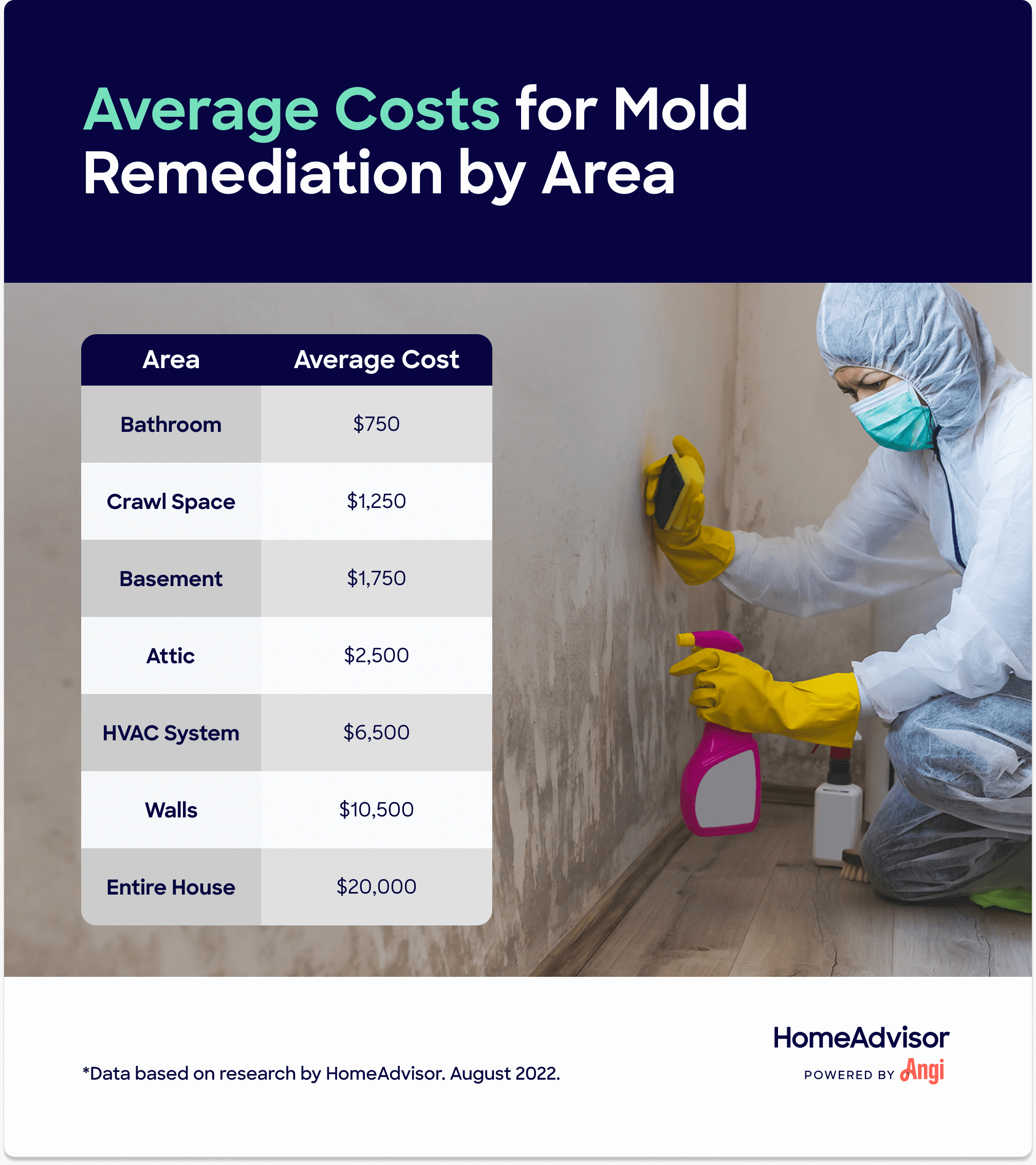
| Minor / Localized (<10 sq. ft.) | $500 – $1,500 |
| Moderate / Room-Scale (10-100 sq.ft) | $1,500 – $4,000 |
| Extensive / Structural (>100 sq.ft) | $4,000 – $10,000+ |
| Whole-Home / HVAC Contamination | $8,000 – $15,000+ |
Minor Localized Remediation ($500 – $1,500)
Minor remediation applies to contained areas measuring less than 10 square feet. Common examples in Victorville homes include isolated growth under a kitchen sink, behind a toilet, or around a window frame subject to condensation.
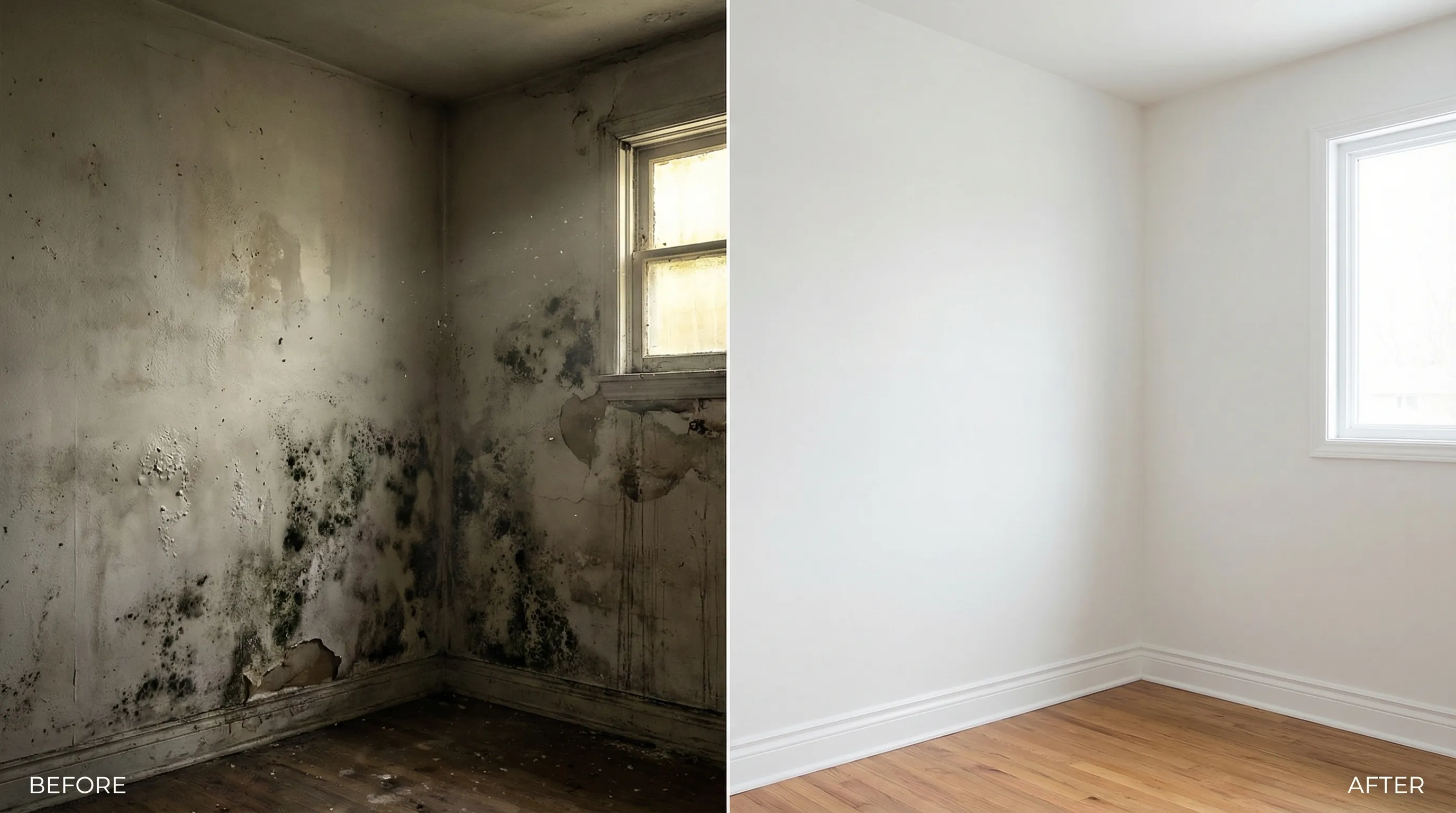
At this scale, technicians set up basic localized isolation, remove compromised drywall or cabinetry backings, apply EPA-registered antimicrobial agents, and dry the structure. Rebuild costs for minor projects are usually minimal, often requiring simple drywall patching and repainting.
Moderate Room-Scale Remediation ($1,500 – $4,000)
Moderate remediation involves affected areas spanning between 10 and 100 square feet. This frequently occurs when an undetected plumbing leak inside a wall cavity feeds mold growth across an entire bathroom wall, laundry room, or closet.
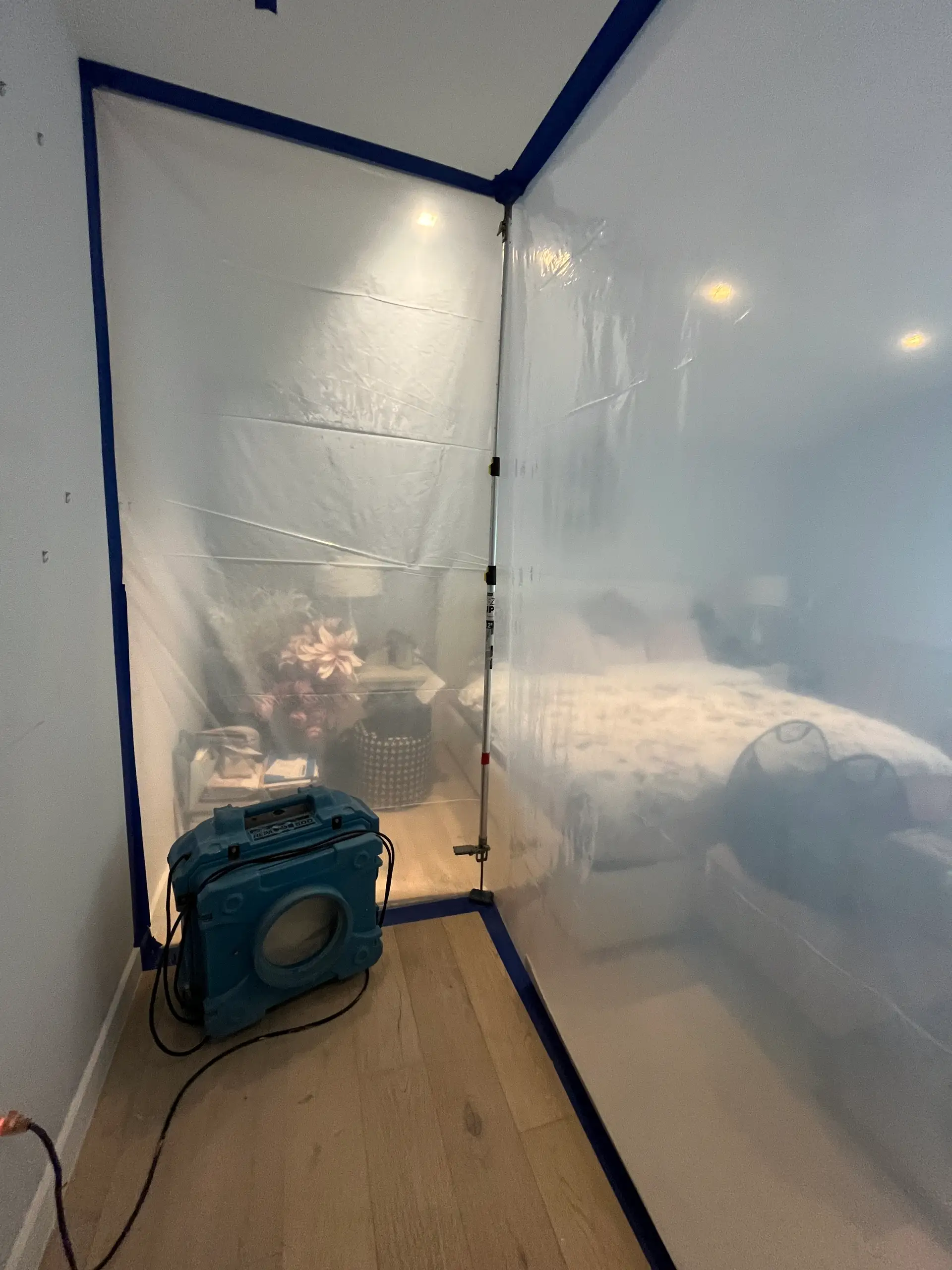
This process requires establishing formal plastic containment zones under negative air pressure using High-Efficiency Particulate Air (HEPA) air scrubbers. Technicians must remove affected drywall, insulation, and subflooring before treating structural wood framing.
Severe Structural and Crawl Space Remediation ($4,000 – $10,000+)
When mold penetrates structural elements, crawl spaces, attics, or spans multiple rooms, costs increase significantly. In Victorville, heavy desert rainstorms or neglected roof leaks can introduce moisture into unconditioned attic spaces, leading to widespread fungal growth on rafters and roof sheathing.
Remediation at this level requires extensive containment, physical abrasion (such as media blasting or soda blasting to clean wood framing), specialized HEPA vacuuming, and extensive moisture-control installations. Rebuilding costs for major structural jobs can easily match or exceed the cost of the remediation itself.
Line-Item Breakdown of Mold Removal Expense Components
A professional mold remediation quote in San Bernardino County is broken into several specialized procedures. Understanding these components helps property owners evaluate line items on contractor proposals.
| Remediation Phase | Typical Cost Range | Core Deliverables |
|---|---|---|
| 1. Inspection & Air Testing | $300 – $700 | Moisture mapping, lab spore-trap samples |
| 2. Containment & Air Scrubbing | $500 – $1,800 | Critical barriers, HEPA negative air pressure |
| 3. Demolition & Decontamination | $1,000 – $5,000 | Controlled tear-out, HEPA vac, antimicrobial |
| 4. Clearance Verification (PRV) | $300 – $500 | Independent 3rd party pass/fail lab testing |
| 5. Reconstruction / Build-Back | $1,500 – $8,000+ | Drywall, flooring, trim, and paint work |
Initial Inspection and Environmental Testing ($300 – $700)
Before any work begins, an assessment establishes the scope of contamination. An environmental inspector uses thermal imaging cameras, pinless moisture meters, and air-sampling cassettes to identify non-visible moisture and quantify airborne spore counts.
To maintain objectivity, industry guidelines dictate that initial mold inspections and post-remediation testing should be performed by an independent environmental consultant rather than the remediation contractor doing the physical work.
Containment Setup and Negative Air Pressure ($500 – $1,800)
To prevent mold spores from spreading into unaffected areas of the home, technicians build containment zones using 6-mil flame-retardant poly sheeting and heavy-duty zipper doors.
Negative air pressure is established using HEPA-filtered air scrubbers vented to the outdoors. This step ensures that any air disturbed during demolition passes through filters capable of capturing particles as small as 0.3 microns with 99.97% efficiency.
Demolition, Remediation, and Antimicrobial Treatment ($1,000 – $5,000)
Porous materials that cannot be restored—such as drywall, carpet padding, acoustic ceiling tiles, and fiberglass insulation—are wet-misted, cut out, bagged in sealed poly bags, and removed.
Non-porous and semi-porous structural elements (like Douglas fir wall studs) are wire-brushed, HEPA-vacuumed, and treated with EPA-registered fungicides or antimicrobial sealants.
Post-Remediation Verification Testing ($300 – $500)
Once cleaning is complete but before containment barriers are removed, an independent inspector conducts Post-Remediation Verification (PRV). This involves physical surface sampling and indoor air quality tests.
If indoor spore counts inside containment match or fall below outdoor baseline levels, the space receives a clearance certificate, confirming it is safe for reconstruction.
Reconstruction and Drywall Repair ("Build-Back") ($1,500 – $8,000+)
Remediation companies specialize in demolition, cleaning, and sanitization; they do not always handle rebuilds. Replacing removed drywall, texture, trim, flooring, and paint requires trade restoration work.
A standard 12x12 foot room requiring full drywall replacement, baseboards, and painting typically adds $2,000 to $4,500 to the total project out-of-pocket expenses.
High Desert Environmental Factors Affecting Remediation in Victorville
Although Victorville features a dry, High Desert climate, specific localized environmental conditions create unique mold risks that impact total remediation expenses.
Evaporative (Swamp) Cooler Systems
Evaporative cooling remains popular throughout the Victor Valley due to its lower electrical draw compared to traditional central air conditioning. However, poorly maintained swamp coolers are a primary source of indoor moisture and mold in local homes.
| Cooling System Type | Primary Remediation & Cost Risks |
|---|---|
| Evaporative (Swamp) Coolers | High roof leak risk; duct rust/condensation; seasonal water saturation in ductwork. |
| Central AC Units | Clogged condensate drain lines; frozen coils overflowing into plenum or ceiling joists. |
When roof-mounted units leak, water travels down the supply ductwork, soaking ceiling drywall, attic insulation, and internal framing. Cleaning mold out of uninsulated duct lines or replacing rust-damaged sheet metal ducting often adds $1,200 to $3,000 to standard remediation estimates.
Post-Tension Slab Leaks
Many single-family homes in Victorville built since the 1980s utilize slab-on-grade concrete foundations. Plumbing lines buried beneath concrete slabs can develop pinhole leaks due to soil shifting or water pressure fluctuations.
Water from a slab leak wicks up into carpet pads, luxury vinyl plank (LVP) underlayment, and the lower edge of perimeter drywall. Because the leak occurs beneath the floor, growth often spreads several feet in all directions before surface staining becomes visible. Remediation requires stripping flooring down to bare concrete and using specialized industrial dehumidification equipment to draw moisture out of the foundation.
High Thermal Spikes and Rapid Spore Proliferation
During summer monsoons, Victorville experiences sudden spikes in outdoor relative humidity alongside extreme heat. When high heat combines with trapped interior water from a broken supply line or appliance leak, mold spores can germinate and colonize wet drywall within 24 to 48 hours. Rapid germination often increases the size of the required containment zone, escalating costs.
California Insurance Guidelines for Mold Damage Coverage
Navigating insurance coverage for mold remediation in California requires understanding policy limitations, exclusions, and documentation protocols under the California Department of Insurance.
Covered Perils vs. Excluded Maintenance Issues
Standard California homeowners insurance policies (HO-3 forms) generally cover mold remediation only if the mold directly results from a covered, sudden, and accidental water discharge.
- Covered Scenarios: A supply line breaks under a sink, a water heater tank ruptures, or a washing machine hose bursts unexpectedly.
- Excluded Scenarios: Mold resulting from long-term, slow plumbing leaks, deferred maintenance, poor window sealing, continuous roof leaks, or surface water flooding.
| Water / Mold Source Event | Typical Policy Status (HO-3) |
|---|---|
| Burst Plumbing Supply Line | Covered (Subject to policy sub-limits) |
| Sudden Water Heater Failure | Covered (Subject to policy sub-limits) |
| Neglected Swamp Cooler Leak | Denied (Categorized as improper maintenance) |
| Gradual Slab Leak (Months long) | Denied or Heavily Restricted |
| Regional Overland Flooding | Denied (Requires separate NFIP Flood Policy) |
Policy Sub-Limits and Mold Caps
Even when a claim is accepted under a covered water loss, many California home insurance policies enforce a specific mold sub-limit cap—frequently capped at $5,000 or $10,000 per policy year. This cap applies strictly to the remediation, testing, and decontamination phases.
The physical repair of the plumbing pipe and structural drying (water damage mitigation) fall under standard structural limits, but the specialized fungal removal is restricted by the sub-limit unless the homeowner previously purchased a mold endorsement rider.
How to Avoid Overpaying: Hiring Qualified Local Specialists
Because California does not currently require a dedicated state-level mold remediation license, property owners must carefully evaluate contractor qualifications to ensure work meets recognized safety and performance standards.
| Qualification Benchmark | Required Standard / Verification |
|---|---|
| IICRC Certification | S520 Standard for Professional Mold Remediation (WRT / AMRT credentials) |
| California Contractor License | C-61 / D-64 (Non-Structural) or Class B General Building Contractor (CSLB verified) |
| Insurance Coverage | $1M+ General Liability + Pollution Liability (Standard liability excludes mold claims) |
| Testing Separation | Remediation firm must NOT perform their own clearance testing (conflict of interest) |
Key Hiring Verification Steps
- Demand Independent Clearance Testing: Never hire a firm that conducts its own final clearance testing. An independent environmental testing company must perform the initial diagnostic air samples and final Post-Remediation Verification (PRV) to eliminate conflict of interest.
- Verify CSLB Licensing: Check contractor license status on the California Contractors State License Board (CSLB) portal. Remediation companies executing structural repairs or projects over $500 must hold appropriate licensing (e.g., Class B General Building Contractor or specialized classifications).
- Confirm Pollution Liability Insurance: Standard commercial general liability policies typically exclude mold claims. Ensure the contractor carries specific Contractors Pollution Liability (CPL) insurance to cover potential spore cross-contamination during work.
- Reject Chemical-Only Solutions: Beware of contractors offering low-cost "fogging-only" or spray-based mold elimination without containment setup or physical material removal. Guidelines established under IICRC S520 state that dead mold spores remain allergenic and toxic; physical removal of contaminated porous materials is mandatory.
Frequently Asked Questions
How long does the mold remediation process take in a home?
A standard residential mold remediation project in Victorville takes 3 to 5 days to complete. Day 1 involves establishing containment, setting up negative pressure, and initial tear-out. Days 2 and 3 focus on HEPA vacuuming, cleaning, scrubbing wood framing, and running air scrubbers. Day 4 or 5 is reserved for drying time and independent clearance testing.
Can I clean small mold infestations myself to save money?
According to the United States Environmental Protection Agency (EPA), property owners can generally clean surface mold areas smaller than 10 square feet (roughly 3 feet by 3 feet) themselves using proper safety gear. Use N95 respirators, nitrile gloves, and eye protection, scrubbing non-porous surfaces with soapy water or approved antimicrobials. Never attempt DIY remediation on porous materials like drywall or in areas larger than 10 square feet.
Why is professional mold remediation so expensive?
The cost reflects the specialized equipment, strict containment measures, hazardous waste handling, and specialized labor required. Contractors must use commercial HEPA air scrubbers, negative air machines, protective gear (PPE), and follow strict safety procedures to prevent dangerous cross-contamination into living areas.
Does Victorville’s dry desert air naturally eliminate mold?
While dry air lowers humidity levels and stops surface mold from active growth, low ambient humidity does not kill existing mold spores or structural root systems (hyphae). Mold spores enter a dormant state during dry conditions and reactivate as soon as moisture is reintroduced by household activities, plumbing leaks, or winter condensation.
How do I verify that mold remediation was successful?
Success is verified through an independent Post-Remediation Verification (PRV) assessment. An environmental inspector conducts a visual check for dust and debris inside containment, verifies that structural materials have reached normal moisture levels (typically below 12% to 15% wood moisture equivalent), and collects air samples. Spore concentrations inside the containment must mirror baseline outdoor counts before containment walls are removed.
Recommended Action Plan for Victorville Homeowners
If you suspect active mold growth inside your property, take these immediate steps to control total repair expenses and protect health:
- Stop the Moisture Source: Shut off water lines to leaking fixtures, repair failing swamp cooler pump lines, or address plumbing leaks immediately. Mold cannot grow without moisture.
- Isolate the Contaminated Area: Turn off central HVAC systems or evaporative coolers if growth is detected near air intakes or supply vents. Close interior doors leading to affected rooms to prevent airborne spore travel.
- Schedule an Independent Inspection: Hire an independent indoor air quality consultant to conduct baseline air sampling and produce a formal scope of work before calling remediation contractors.
- Review Insurance Coverage: Contact your home insurance carrier to confirm whether your water leak qualifies under covered sudden-and-accidental provisions, and confirm your specific mold sub-limit policy cap.
- Obtain Multiple Scope-Matched Estimates: Present the independent environmental scope of work to at least two IICRC-certified contractors to ensure accurate, line-item cost comparisons.
Disclaimer: This article is for informational purposes only and does not constitute legal, financial, environmental health, or professional contracting advice. Specific mold coverage limits depend on individual insurance policies and independent property assessments conducted by licensed experts.
Image Gallery