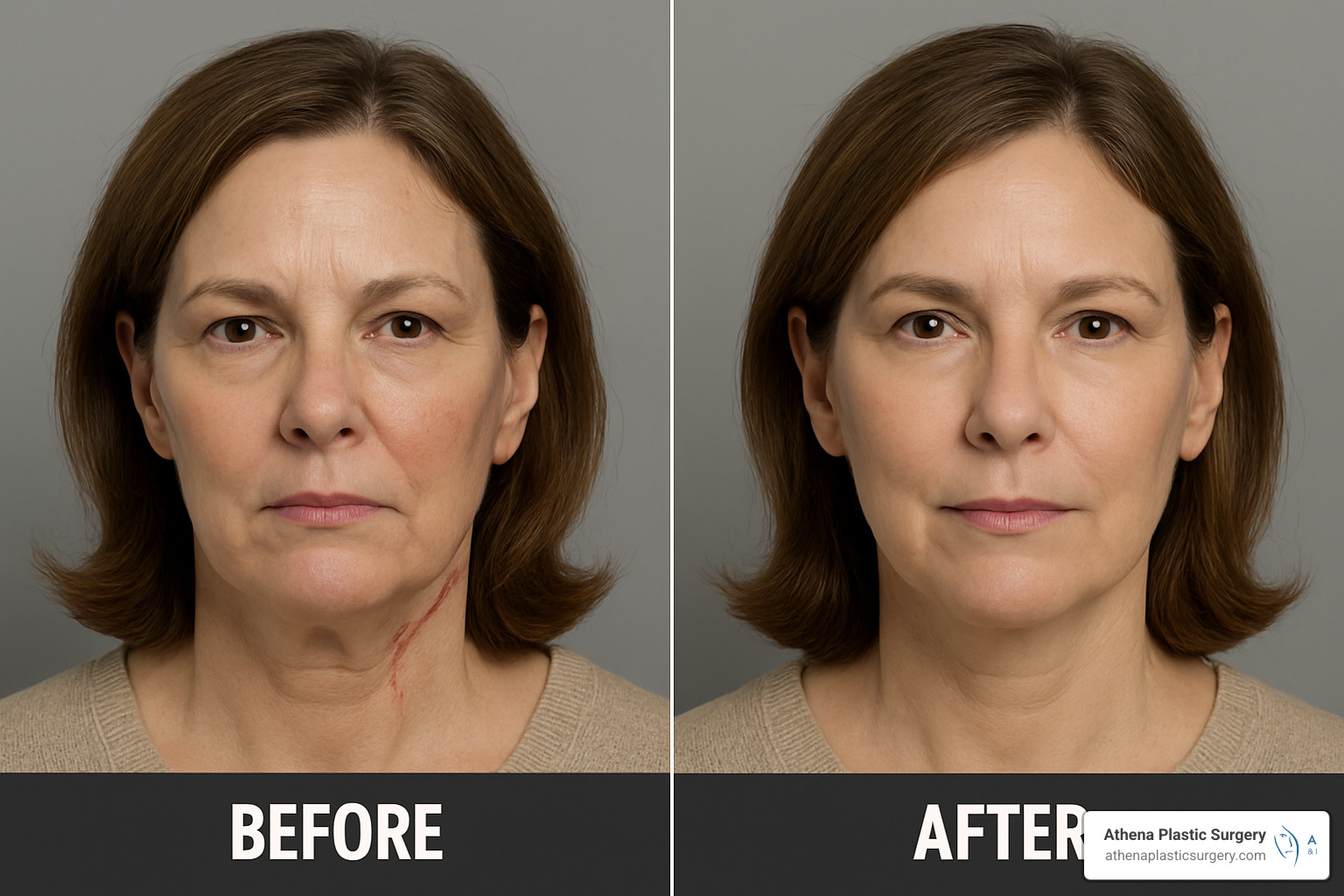
Why Bad Facelifts Happen to Celebrities: The Anatomy of Unnatural Cosmetic Results
When public figures appear on red carpets or television screens with starkly altered features—tightened wind-tunnel skin, startled expressions, or distorted hairlines—public fascination immediately follows. The phenomenon of bad celebr...
When public figures appear on red carpets or television screens with starkly altered features—tightened wind-tunnel skin, startled expressions, or distorted hairlines—public fascination immediately follows. The phenomenon of bad celebrity facelifts offers a visible lesson in the complex intersection of advanced cosmetic surgery, high-definition media scrutiny, and the relentless pressure of public aging. Far from simple vanity, these outcomes typically stem from a combination of outdated surgical techniques, aggressive tissue tension, and unrealistic expectations amplified by modern camera technology.
Contents
Understanding why these procedures yield unnatural outcomes requires looking past the tabloid headlines and examining the actual anatomical and surgical principles involved in facial rejuvenation.
The Anatomy of a Modern Facelift vs. Outdated Techniques
To understand why a facelift looks unnatural, one must first understand what the procedure is designed to achieve. A traditional facelift (rhytidectomy) is a surgical intervention intended to reposition sagging facial tissues, eliminate jowls, and restore a more youthful contour to the lower face and neck.
Decades ago, surgical philosophy focused primarily on skin tightening. Surgeons would make incisions around the ears, pull the facial skin tight like a bedsheet, and trim away the excess. This superficial approach—often referred to as a skin-only facelift—is a primary historical culprit behind the windswept look. Skin has limited elasticity; when placed under extreme tension without underlying structural support, it stretches back out, pulls at the earlobes (producing the telltale "pixie ear" deformity), and creates an unnaturally glossy, tight surface texture.
The SMAS Layer and Modern Structural Support
Modern facial plastic surgery focuses on the Superficial Musculoaponeurotic System (SMAS), a layer of fibrous tissue and muscle that encases the deeper structures of the face.
- SMAS Plication or Plication: Folding and suturing the SMAS layer to lift sagging deeper tissues without tension on the skin.
- SMASectomy: Removing a strip of the SMAS layer and stitching the remaining edges together for vector lifting.
- Deep Plane Facelift: Releasing the retaining ligaments beneath the SMAS layer, allowing the entire facial muscle and fat complex to be repositioned as a single unit.
When celebrities exhibit distortion, it often indicates that a provider either used an outdated tension-heavy technique or over-corrected the deeper layers, anchoring tissues in unnatural upward vectors rather than following the natural diagonal and vertical vectors of facial aging.
| Facelift Technique | Primary Mechanism | Risk of Unnatural Appearance | Common Recovery Profile |
|---|---|---|---|
| Skin-Only (Outdated) | Pulls and trims surface skin | High (Windswept look, pixie ears) | Moderate |
| SMAS Plication | Folds and tightens the muscle layer | Low-Moderate | Moderate-High |
| Deep Plane | Releases ligaments and lifts composite units | Low (When performed by an expert) | Extended |
The Pressures of Fame: Time Constraints and Media Scrutiny
The high-profile nature of celebrity status introduces unique variables that complicate surgical decision-making and recovery timelines. Public figures operate under intense media scrutiny, where every physical change is documented, analyzed, and critiqued across digital platforms.
The Recovery Timeline vs. Industry Demands
A comprehensive deep plane facelift or revision procedure requires a substantial healing window. Swelling, bruising, and nerve stunning are normal physiological responses that can take anywhere from six weeks to several months to fully resolve.
- Early Phase (Weeks 1–3): Acute inflammation, visible suture lines, and localized numbness.
- Intermediate Phase (Weeks 4–8): Subsided swelling, return to light public appearances with strategic camouflage.
- Late Phase (Months 3–12): Maturation of scars, softening of tissues, and settling into the final aesthetic result.
Celebrities frequently face pressure to return to filming, press tours, or public appearances before tissue healing is complete. Premature exposure to high-definition cameras, stage lighting, and professional makeup can accentuate lingering swelling and scar maturation, making a normal post-operative phase look distorted to the untrained observer.
Over-Correction and the "More is Better" Fallacy
In an industry that rewards youthful appearance, patients and practitioners alike can fall victim to over-correction. If a minor surgical adjustment leaves minor laxity, the temptation is to pull tighter, fill more, or combine multiple aggressive procedures simultaneously.
Combining a deep facelift with aggressive volumetric fat grafting, chemical peels, and eyelid surgery (blepharoplasty) can disrupt the natural fat pads of the face. Over-grafting—injecting too much fat into the cheeks or temples—creates a pillowy, rounded facial structure that defies natural aging anatomy, leading to what is colloquially known as a "pillow face" appearance.
Technical Errors and Anatomical Missteps
When a facelift produces a permanently startled, windblown, or expressionless face, specific technical or anatomical miscalculations have occurred during the surgical intervention.
Vector Mismatch and Incision Placement
The human face ages in multiple vectors. Gravity pulls soft tissue downward and forward, leading to the formation of jowls and nasolabial folds. Surgeons must lift tissues along the exact vector from which they fell—typically a vertical or slightly oblique trajectory toward the temple or ear.
- Incorrect Vectors: Pulling the skin too far backward toward the ears creates a lateral vector stretch. This stretches the corners of the mouth unnaturally wide, flattens the cheeks, and distorts the natural curves of the face.
- Scar Management and Hairline Distortion: Poor incision planning can shift sideburns backward, elevate the hairline, or destroy the natural contours around the tragus (the small projection of cartilage in front of the ear canal), resulting in visible, distorted scars.
Facial Nerve Vulnerability
The facial nerve (cranial nerve VII) and its branches run deep beneath the SMAS layer, controlling all expressions from blinking to smiling. A surgeon operating without meticulous anatomical knowledge risks damaging these nerves.
Even temporary stretching or bruising of the frontal branch of the facial nerve can cause temporary paralysis of the forehead, leading to an inability to raise the eyebrows and an unnaturally frozen, startled expression. In severe cases, permanent nerve damage can result in asymmetrical facial movements or chronic loss of muscle control.
The Cumulative Effect of Multi-Modal Alterations
A bad celebrity outcome is rarely the result of a single surgical procedure. Over decades, public figures may undergo a succession of minor and major cosmetic interventions:
- Non-surgical neurotoxins (Botox, Dysport) and dermal fillers.
- Thread lifts and energy-based skin tightening devices.
- Primary surgical facelifts, brow lifts, and neck lifts.
- Subsequent revision surgeries to correct previous deficiencies.
As scar tissue accumulates beneath the skin with each successive operation, the tissue loses its natural pliability. Subsequent surgeries become progressively more difficult, as the blood supply is compromised and tissue planes are obscured by fibrosis. This cumulative scarring frequently leads to tethering—where the skin is pulled tight against underlying bone in isolated spots—creating a rigid, mask-like facial appearance during movement.
Frequently Asked Questions
Why do some celebrity facelifts make them look completely unrecognizable?
Unrecognizable transformations usually result from a combination of over-tightening skin, excessive volume replacement via fat grafting or fillers, and alterations to the underlying muscle vectors. When the natural contours of the cheekbones, jawline, and eyes are distorted, the face loses its unique identity markers.
Can a botched or unnatural facelift be corrected with revision surgery?
Yes, revision facelifts are performed to release tight scar tissue, reposition displaced structural layers (SMAS), and restore a more natural facial contour. However, revision surgery is technically demanding due to existing scar tissue and altered anatomy, requiring a specialist with extensive experience in facial reconstruction.
How long does it take for a facelift to look completely natural?
While most patients return to social activities within four to six weeks, internal tissue healing, scar softening, and nerve recovery continue for up to a full year. Final results are rarely assessable before the six-month mark.
Why do some celebrities look fine after surgery while others look unnatural?
Outcomes depend heavily on the surgeon's anatomical expertise, adherence to conservative modern techniques (such as deep plane preservation), the patient's natural skin elasticity, and whether the individual resists the pressure to over-correct or undergo premature secondary procedures.
Next Actions and Expert Guidance
For individuals considering facial rejuvenation—whether public figures or private citizens—mitigating the risk of an unnatural outcome requires thorough due diligence.
- Verify that the operating surgeon is board-certified in plastic surgery or otolaryngology (facial plastic surgery) with specific fellowship training in advanced facial rejuvenation techniques.
- Request to view a comprehensive portfolio of unretouched before-and-after photographs, specifically looking at patients in the same age demographic.
- Prioritize consultations that emphasize functional preservation, natural vector movement, and realistic recovery timelines over quick fixes or extreme transformations.
Image Gallery