Why Auto Insurers Report Accidents to the DMV: Legal and Procedural Requirements in 2026
Auto insurers report accidents to the Department of Motor Vehicles (DMV) primarily to satisfy state-mandated financial responsibility laws and to maintain the integrity of public driving records. This data exchange ensures that all inv...
Auto insurers report accidents to the Department of Motor Vehicles (DMV) primarily to satisfy state-mandated financial responsibility laws and to maintain the integrity of public driving records. This data exchange ensures that all involved parties were properly insured at the time of the incident, allows the state to monitor high-risk drivers, and facilitates the accurate assessment of driving privileges.
Contents
The relationship between private insurance carriers and state regulatory bodies like the DMV (or BMV, DOT, or SOS, depending on the jurisdiction) is built on a foundation of legal compliance and public safety. While many drivers assume their insurance claim is a private matter between them and their carrier, the reality is that the state has a vested interest in knowing when a significant collision occurs. As of 2026, the integration between insurance databases and state motor vehicle departments has become almost entirely automated, making the reporting process faster and more comprehensive than ever before.
The Legal Foundation of Mandatory Reporting
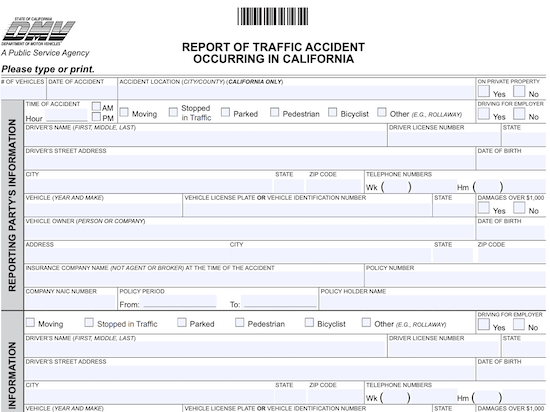
In nearly every jurisdiction, the law requires that the state be notified of any motor vehicle accident that results in injury, death, or property damage exceeding a specific monetary threshold. While the legal burden to file an accident report often falls on the driver (via forms like California’s SR-1 or New York’s MV-104), insurance companies have separate, parallel obligations.
Financial Responsibility Laws
The core reason for insurer-to-DMV reporting is the enforcement of Financial Responsibility Laws. These statutes dictate that every driver must have the financial means—usually through an insurance policy—to pay for damages they cause. When an accident is reported, the DMV must verify that the vehicles involved were covered by a valid policy at the exact moment of impact.
If an insurer receives a claim for an accident, they are often required by state regulation to notify the DMV if the policy was inactive or if there is a discrepancy in coverage. This prevents uninsured motorists from continuing to drive without penalty after an incident.
Threshold Requirements
Most states do not require reporting for "fender benders" where damage is negligible. However, the definition of "negligible" has shifted. In 2026, many states have set their reporting thresholds between $1,000 and $2,500. If an insurer processes a claim that exceeds this amount, the event triggers an automatic data transmission to the state’s motor vehicle registry. This threshold applies to the total damage to any one person's property, not just the policyholder’s vehicle.
The Role of the Motor Vehicle Report (MVR)
A driver's Motor Vehicle Report (MVR) is the official government record of their driving history. It includes convictions, license status, and accident history. Insurers report accidents to the DMV to ensure this record is accurate and up-to-date.
Risk Assessment and Public Safety
The DMV uses accident data to identify "problem drivers." If a driver is involved in multiple accidents within a short timeframe, the DMV may take administrative action, such as requiring a defensive driving course, placing the driver on probation, or suspending their license. By reporting accidents, insurers provide the data necessary for the state to perform this public safety function.
Standardizing Driver Data
Without insurer reporting, the state would rely solely on police reports and self-reporting by drivers. Self-reporting is notoriously unreliable, as drivers may attempt to hide accidents to avoid points or license suspension. Police reports are only generated when an officer is called to the scene. Insurers, however, see nearly every significant accident because they are the ones paying for the repairs. This makes them a vital source of truth for the state’s records.
How the Reporting Process Works in 2026
The transition to fully digital government services has streamlined how insurers and the DMV communicate. In 2026, this is no longer a manual process involving paper forms and mail.
Electronic Data Interchange (EDI)
Most major insurance carriers use Electronic Data Interchange (EDI) systems to communicate with state databases. When a claim is opened and identified as a "reportable event," the insurer's software automatically pings the state’s system. This transmission typically includes:
- The Policy Number and carrier code.
- The Vehicle Identification Number (VIN).
- The date, time, and location of the accident.
- The names and driver’s license numbers of the parties involved.
- An indicator of whether there were injuries or fatalities.
The Role of the National Insurance Crime Bureau (NICB)
In addition to direct DMV reporting, insurers often report to centralized databases like the Comprehensive Loss Underwriting Exchange (CLUE) and the National Insurance Crime Bureau (NICB). While these are private entities, state DMVs often have data-sharing agreements with them to cross-reference accident reports and combat insurance fraud.
State-Specific Reporting Thresholds and Timelines
Reporting requirements are not uniform across the United States. Each state set its own rules regarding when an insurer must involve the DMV and how quickly that notification must occur.
| State | Damage Threshold (Property) | Reporting Deadline (Typical) | Key Form/System |
|---|---|---|---|
| California | Over $1,000 | 10 Days | SR-1 / e-Reporting |
| New York | Over $1,000 | 10 Days | MV-104 / IIES |
| Texas | Over $1,000 | 10 Days | CRB-3 (Driver) / Carrier EDI |
| Florida | Any injury/death or tow-away | Immediate (via Police/Insurer) | Driver History Record |
| Illinois | Over $1,500 ($500 if uninsured) | 10 Days | SR-22 (for high-risk) |
Note: Thresholds and requirements are subject to local legislative updates and should be verified with the specific state's Department of Insurance or DMV.
Verification of Mandatory Coverages (SR-22 and FR-44)
For certain drivers, the reporting relationship between the insurer and the DMV is even more stringent. If a driver has been convicted of a DUI, driving without insurance, or causing a serious accident, the state may require an SR-22 or FR-44 certificate.
In these cases, the insurer is legally mandated to report to the DMV not just the accident, but the status of the policy itself. If the policyholder misses a payment or cancels the policy, the insurer must notify the DMV immediately (often within 24 hours). This "active monitoring" is a specialized form of reporting that ensures high-risk drivers remain compliant with heightened insurance requirements.
Impact on the Policyholder
When an insurer reports an accident to the DMV, it sets off a chain of events that affects the policyholder’s legal and financial standing.
- MVR Update: The accident appears on the driver’s MVR. This record is accessible to future employers (for commercial driving roles) and other insurance companies.
- Surcharge Application: While the report to the DMV is for record-keeping, the underlying accident often leads to a premium increase. Other insurers will see the DMV report when the driver tries to switch carriers, preventing the driver from "hiding" their accident history.
- Administrative Review: If the accident involved a violation of traffic law, the DMV may use the insurer’s report to cross-reference with police records to determine if a license suspension is warranted.
Common Misconceptions About DMV Reporting
"If the police didn't come, the DMV won't know." This is a common error. Even if law enforcement was not present to file a crash report, your insurance company's report—and your own legal requirement to report—will ensure the DMV is notified of any accident exceeding the damage threshold.
"The insurer reports who was at fault." Generally, the insurer reports the occurrence of the accident and the coverage details. While some states include a "fault" field in their electronic records, the primary purpose is to log the event. The determination of legal liability is often a separate civil or claims-based matter, though a "points" system may be applied if a citation was issued.
"Private property accidents aren't reported." In many states, if the damage exceeds the threshold, it must be reported regardless of whether it happened on a public highway or a private parking lot. Insurers do not typically distinguish between the two when fulfilling their regulatory reporting duties.
Protecting Your Record
Because insurer reporting to the DMV is largely automated and legally required, drivers have little control over whether an accident is reported. However, you can manage the impact:
- Verify Accuracy: Periodically request a copy of your MVR from the DMV to ensure that reported accidents are listed correctly. Inaccuracies (such as an accident being listed twice) can unfairly drive up insurance costs.
- Comply with Deadlines: Do not rely solely on your insurer. If your state requires a driver-filed report (like the SR-1), file it promptly to avoid license suspension for non-compliance.
- Understand Your Policy: Know your reporting requirements. Some "accident forgiveness" programs may prevent your rates from rising, but they do not stop the insurer from fulfilling their legal duty to report the accident to the state.
Frequently Asked Questions
Does every insurance claim get reported to the DMV?
No. Minor claims that fall below the state's property damage threshold and do not involve injuries are generally not reported to the DMV. For example, a glass repair claim or a small scratch that costs $400 to fix in a state with a $1,000 threshold usually remains a private matter between the insurer and the policyholder.
How long does an accident stay on my DMV record after it's reported?
In most states, an accident remains on your MVR for three to five years. For more serious incidents, such as those involving alcohol or felony charges, the record may persist for ten years or longer. It is important to note that while it may fall off your DMV record, it may stay in private insurance databases like CLUE for a different duration.
Can I stop my insurer from reporting an accident?
Legally, no. If the accident meets the criteria for mandatory reporting under state law, the insurer is obligated to notify the DMV. Attempting to prevent this reporting could be considered a violation of your policy terms and may lead to legal complications with state regulators.
What happens if the insurer reports the accident but I don't?
Many states require both the driver and the insurer (or police) to file reports for significant accidents. If the DMV receives a report from an insurance company but nothing from the driver, they may send a notice of intent to suspend your license until the proper paperwork is filed.
Will an out-of-state accident be reported to my home DMV?
Yes. Through the Driver License Compact (DLC) and modern electronic data sharing, accidents and traffic violations that occur in other states are routinely reported back to your home state’s DMV and added to your MVR.
Recommendation for Drivers
If you are involved in an accident, the most prudent course of action is to assume it will be reported to the DMV. Verify your state's specific reporting threshold and ensure you file any required personal accident reports within the legal timeframe (usually 10 days). Always keep a record of your insurance claim number and any communication with your adjuster, as this documentation will be vital if there is ever a dispute regarding the accuracy of your DMV record.
Image Gallery