Understanding the Johnnie Walker Label Levels: A Complete Guide for 2026
The Johnnie Walker portfolio is organized into a color-coded hierarchy that signifies age, rarity, and flavor profile. From the accessible Red Label designed for mixing to the prestigious Blue Label crafted from rare casks, understandi...
The Johnnie Walker portfolio is organized into a color-coded hierarchy that signifies age, rarity, and flavor profile. From the accessible Red Label designed for mixing to the prestigious Blue Label crafted from rare casks, understanding these levels helps consumers navigate price points and select the right Scotch for specific occasions or palates.
Contents
Johnnie Walker is the most widely distributed brand of blended Scotch whisky in the world. Owned by Diageo, the brand traces its roots back to 1820 in Kilmarnock, Scotland. Unlike single malts, which come from a single distillery, Johnnie Walker expressions are "blends." These are masterfully constructed by combining various single malts (for flavor and character) and grain whiskies (for smoothness and structure).
In 2026, the core lineup remains the benchmark for the industry. Each "color" in the lineup serves a distinct purpose, moving from vibrant, younger spirits to deeply complex, aged liquids. To appreciate the levels, one must look beyond the price tag and understand the blending philosophy behind each bottle.
The Foundation: Johnnie Walker Red Label
Johnnie Walker Red Label is the entry point of the brand’s hierarchy. It is a "No Age Statement" (NAS) whisky, meaning the producer does not disclose the age of the youngest spirit in the blend, though it must be at least three years old by Scotch whisky law.
Purpose and Flavor Profile
Red Label was specifically created for the global market to be a versatile mixer. In the early 20th century, as the "Highball" (whisky and soda) became popular, the brand needed a bold spirit that wouldn't lose its character when diluted. It is composed of up to 35 different grain and malt whiskies.
The flavor profile is characterized by high notes of citrus, cinnamon, and a distinct, peppery spice. It lacks the deep smoke of the higher labels, focusing instead on a "zesty" finish. While some enthusiasts drink it neat, its primary design is to be paired with ginger ale, soda water, or used in cocktails.
Value Proposition
In 2026, Red Label remains the high-volume leader. It offers an affordable introduction to the "house style" of Johnnie Walker. Its reliability and consistency across global markets make it the standard for bars and casual home gatherings where complexity is less important than a refreshing, recognizable taste.
The Global Benchmark: Johnnie Walker Black Label
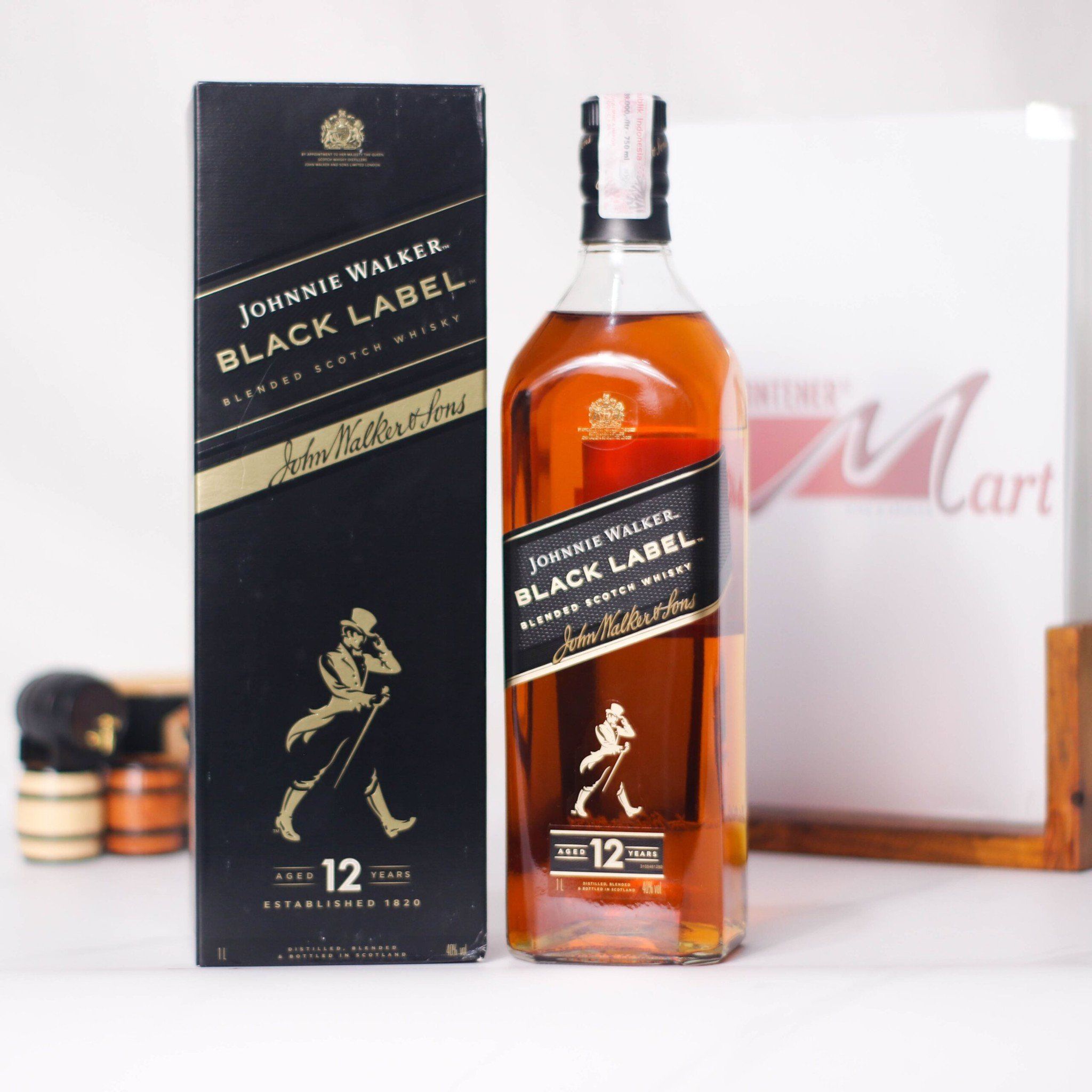
Black Label is arguably the most famous expression in the portfolio. Unlike Red Label, Black Label carries a 12-year age statement. This means every single drop of whisky in the bottle has been aged in oak casks for at least 12 years.
The Art of the 12-Year Blend
Black Label is often referred to as the "Everest of deluxe whiskies" by industry experts. It utilizes approximately 40 whiskies from all four corners of Scotland. Key components typically include malts from Cardhu for sweetness, Caol Ila for maritime smoke, and Glendullan for fruitiness.
The result is a sophisticated balance of dark fruit, creamy vanilla, and a signature dry smokiness. It provides a much smoother experience than the Red Label, making it the first level in the hierarchy that is widely enjoyed neat or on the rocks.
Why It Matters
For many Scotch drinkers, Black Label is the "baseline" of quality. It represents the point where a blend transitions from a basic spirit to a complex, sipping whisky. In the 2026 market, it continues to offer one of the best price-to-quality ratios in the world of spirits, serving as a reliable gift and a staple for a well-stocked home bar.
The Smoke Specialist: Johnnie Walker Double Black
Introduced as a permanent addition to the lineup after successful travel-retail trials, Double Black is an NAS expression that takes the blueprint of the Black Label and intensifies it.
Charred Casks and Peated Malts
Double Black is not necessarily "older" or "better" than Black Label; it is simply "different." The master blender achieves this profile by using a higher proportion of whiskies from the West Coast and Islands of Scotland (which are naturally smokier) and aging the blend in "deeply charred" oak casks.
On the palate, Double Black delivers a more visceral experience. The smoke is heavier, reminiscent of a campfire, and is accompanied by notes of dried fruits and creamy apple. It was designed for consumers who enjoy the "Islay" style of Scotch—known for peat and medicinal notes—but still want the balance of a blend.
The Unique Outlier: Johnnie Walker Green Label
Green Label occupies a unique space in the hierarchy because it is a Blended Malt, not a Blended Scotch. This is a critical technical distinction. While other Johnnie Walker labels contain grain whisky (made from corn or wheat), Green Label is made only from single malts.
The 15-Year Maturity
Green Label carries a 15-year age statement. It focuses on four key signature malts:
- Talisker: For power and sea-salt spice.
- Linkwood: For floral and garden fruit notes.
- Cragganmore: For exceptional malty heart and cedarwood.
- Caol Ila: For big, peaty smoke.
Because it lacks grain whisky, Green Label has a "thicker" mouthfeel and a more intense flavor concentration than Black Label. It offers earthiness, cut grass, and deep wood notes. It is often cited by connoisseurs as the "hidden gem" of the Johnnie Walker range because it provides the complexity of a single malt with the balance of a master blend.
The Celebration Blend: Johnnie Walker Gold Label Reserve
Gold Label Reserve is an NAS blend that focuses on luxury and "creaminess." It was historically associated with the Clynelish distillery, whose water flows over veins of gold in the Kildonan Hills—hence the name.
Texture and Serving Temperature
Gold Label Reserve is designed for "celebration." It is significantly less smoky than Black or Green Label, leaning instead into honeyed sweetness, tropical fruit (pineapple and mango), and a velvet-like texture.
One unique aspect of Gold Label Reserve is its versatility in serving. While most Scotch is served at room temperature, Gold Label was famously marketed to be served from the freezer. In 2026, it remains a favorite for "champagne-style" occasions where a lighter, more indulgent whisky is preferred.
The Sophisticated Choice: Johnnie Walker 18 Year Old
Formerly known as the "Platinum Label," this expression was rebranded to Johnnie Walker 18 Year Old to emphasize its significant age statement. It is a classic, private-blend style of whisky, inspired by the tradition of Johnnie Walker directors creating special blends for private gatherings.
Elegance and Age
The 18-year-old maturation ensures that the grain and malt whiskies have fully integrated. The flavor profile moves away from the aggressive smoke of the Double Black and toward a refined elegance. Expect notes of marzipan, creamy vanilla, and a hint of charred orange peel.
This label is positioned for those who want a premium, aged Scotch that is more accessible and "modern" than the Blue Label. It is remarkably smooth and is best enjoyed neat in a tulip-shaped Glencairn glass to concentrate the delicate aromas.
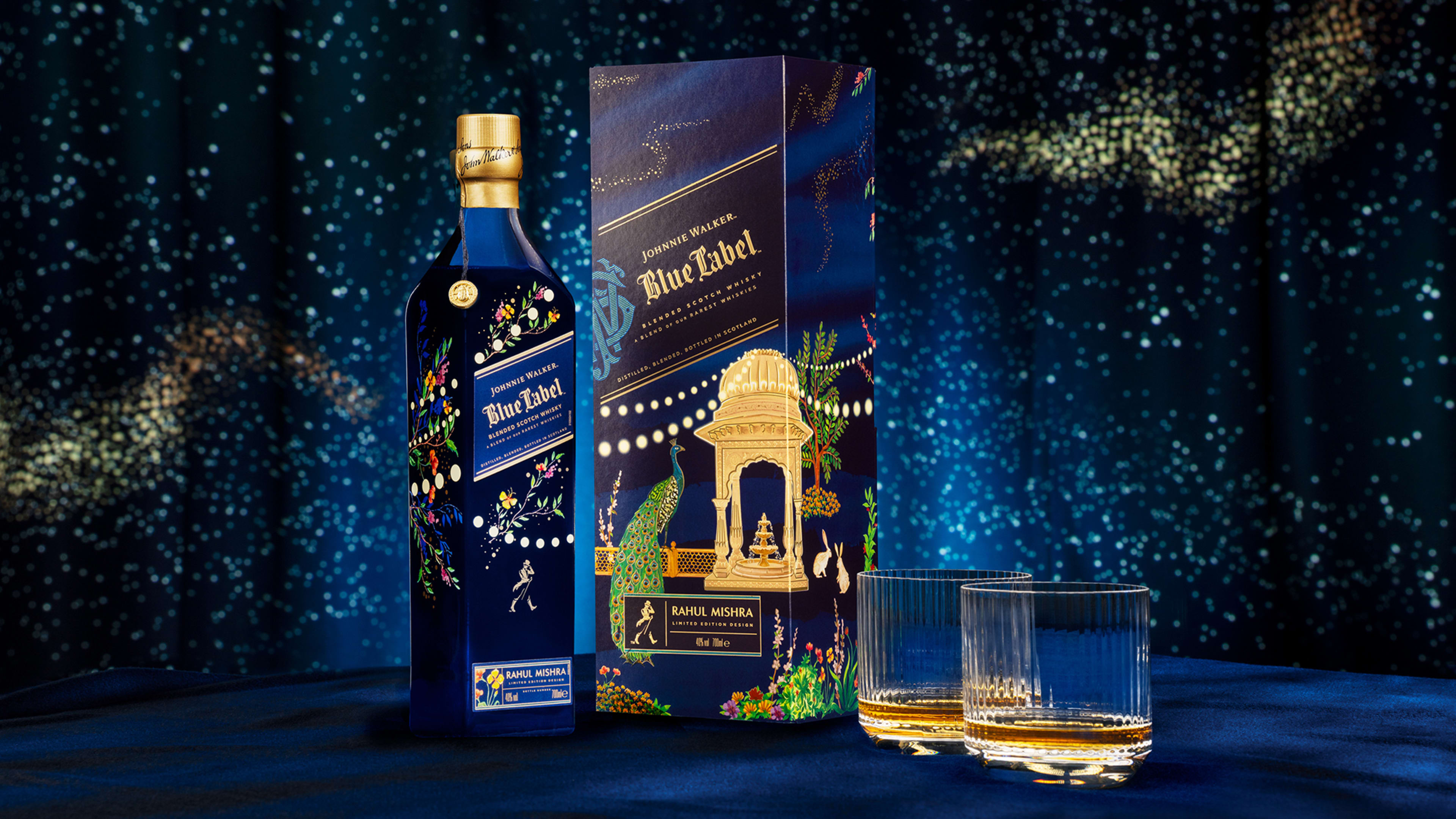
The Icon: Johnnie Walker Blue Label
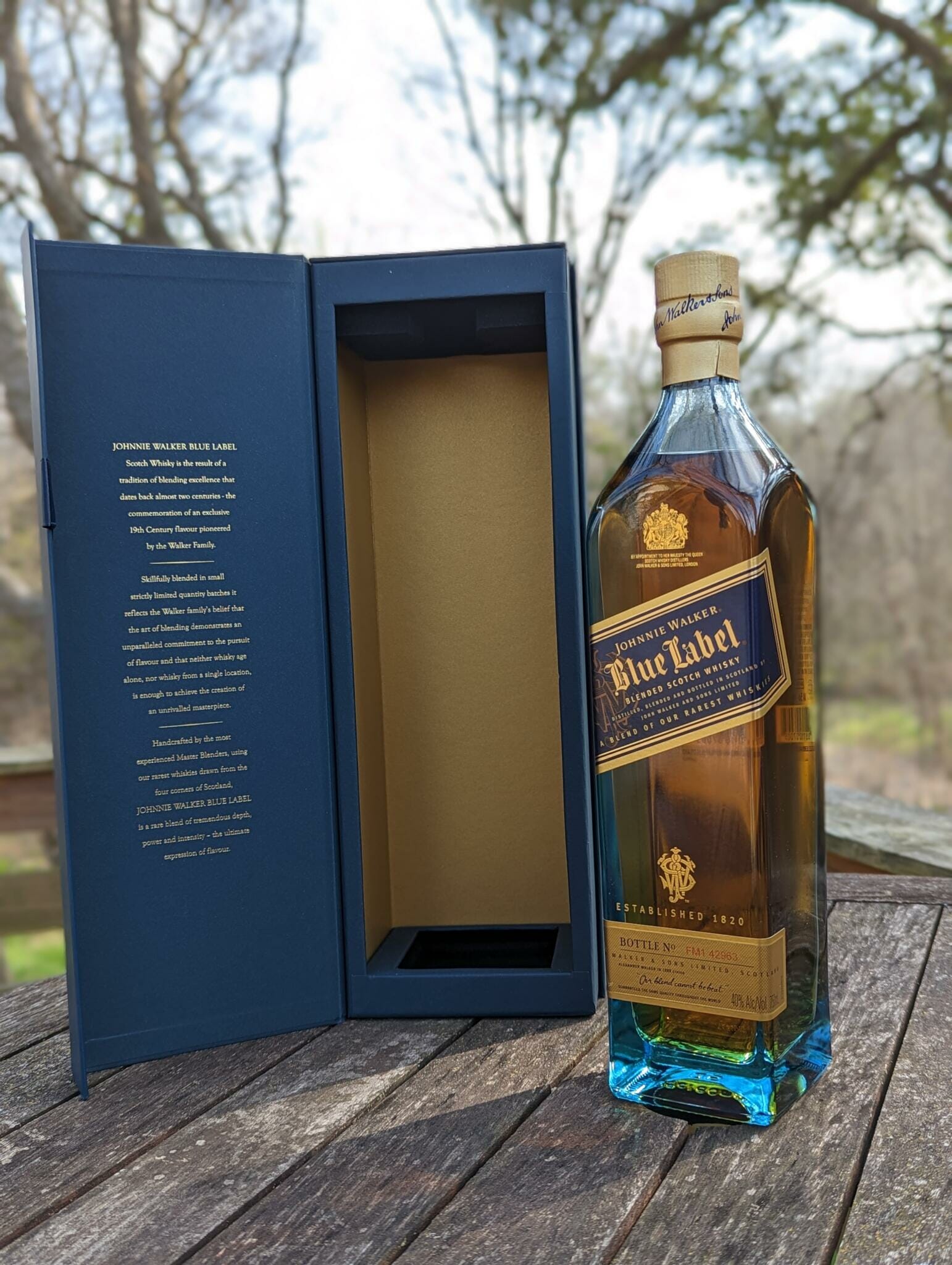
Blue Label is the pinnacle of the core Johnnie Walker hierarchy. It is an NAS blend, but its lack of an age statement is a deliberate choice. The blend is designed to recreate the character of 19th-century whiskies, using some of the rarest casks in the Diageo inventory.
The "1 in 10,000" Rarity
The brand claims that only one in every 10,000 casks is of sufficient quality to be used in the Blue Label blend. This includes "ghost whiskies" from silent distilleries (those that have long since closed) such as Port Ellen or Brora.
Blue Label is characterized by its extraordinary smoothness. The flavor journey is multi-layered: it starts with hazelnuts and honey, moves into oranges and aromatic oils, and finishes with a soft, wispy smoke that lingers for minutes. In 2026, it remains the ultimate "status" gift in the world of Scotch, often packaged in silk-lined boxes with heavy, flint-glass bottles.
Comparison Table of Johnnie Walker Labels (2026 Data)
| Label Level | Age Statement | Type | Primary Flavor Profile | Ideal Use Case |
|---|---|---|---|---|
| Red Label | NAS | Blended Scotch | Spicy, Pepper, Zesty | Cocktails & Mixers |
| Black Label | 12 Years | Blended Scotch | Smooth, Smoke, Vanilla | Everyday Sipping |
| Double Black | NAS | Blended Scotch | Heavy Smoke, Charred Oak | Peat Lovers |
| Green Label | 15 Years | Blended Malt | Forest, Earthy, Floral | Malt Enthusiasts |
| Gold Label | NAS | Blended Scotch | Honey, Cream, Tropical | Celebrations/Chilled |
| 18 Year Old | 18 Years | Blended Scotch | Sweet, Elegant, Fruit | Special Occasions |
| Blue Label | NAS | Blended Scotch | Rare, Velvet, Complex | Luxury Gifting |
Frequently Asked Questions
Why does Blue Label not have an age statement if it is the most expensive?
In the world of Scotch, age is an indicator of maturity, but not necessarily a guarantee of superior flavor. Blue Label focuses on "rarity" and "character." By not having an age statement, the master blender can include very old whiskies (30-50 years) alongside slightly younger whiskies that provide "vibrancy" and "lift." If it were labeled as a 30-year-old, every single drop would have to be 30, which might make the blend taste overly "woody" or flat.
Which Johnnie Walker label is the smoothest?
Blue Label is universally regarded as the smoothest due to the inclusion of very old grain whiskies and rare malts that have lost their youthful "bite" over decades of maturation. For those on a mid-range budget, Gold Label Reserve and the 18 Year Old also offer high levels of smoothness with minimal smoke interference.
Is Johnnie Walker Green Label being discontinued?
As of 2026, Green Label remains a core part of the global lineup. It was briefly "retired" in many markets around 2012 (except for Taiwan), but due to immense consumer demand, it was brought back globally in 2016. It remains highly popular because it is the only "Blended Malt" in the range, offering a specific profile that grain-inclusive blends cannot replicate.
What is the difference between Black Label and Double Black?
While they share a similar name, the difference lies in intensity. Black Label is a 12-year-old balanced blend with moderate smoke. Double Black has no age statement and uses "heavily charred" casks and more peated whiskies to create a much more intense, smoky, and "darker" flavor profile. Think of Black Label as a balanced meal and Double Black as the same meal with double the spices.
How should I drink Johnnie Walker Blue Label?
To appreciate the complexity of Blue Label, it is traditionally served neat with a glass of ice water on the side. You take a sip of the ice water first to cleanse and chill your palate, then take a small sip of the Blue Label. The contrast in temperature and the purity of the water help the intricate layers of the whisky "unfold" on the tongue.
Final Recommendation for Selection
Choosing a Johnnie Walker label depends entirely on your intent. If you are looking for a versatile mixer for highballs, Red Label is the logical choice. For those seeking a daily sipper that defines the Scotch category, Black Label is the gold standard.
If you prefer the intensity of smoke without the high price of Islay single malts, Double Black is your best bet. Green Label is the choice for the discerning enthusiast who appreciates the purity of malt whisky. For luxury gifting or a "bucket list" experience, Blue Label remains the undisputed king of the portfolio. In 2026, regardless of the level you choose, the brand’s commitment to "Keep Walking" ensures a consistent experience that has defined the blending industry for over two centuries.
Image Gallery