Understanding the Magistrate Judge Definition and Judicial Role in 2026
Navigating the federal court system requires a firm grasp of the distinct judicial officers who preside over civil and criminal proceedings. The magistrate judge definition centers on a judicial officer appointed by U.S. district court...
Navigating the federal court system requires a firm grasp of the distinct judicial officers who preside over civil and criminal proceedings. The magistrate judge definition centers on a judicial officer appointed by U.S. district court judges to assist in handling the heavy caseload of federal district courts. Established formally under the Federal Magistrates Act of 1968 and continually modernized through subsequent legislative amendments into 2026, these judicial officers play a critical role in managing pretrial matters, conducting misdemeanor trials, and streamlining federal litigation. Understanding their authority, appointment process, and jurisdiction is essential for legal professionals, litigants, and researchers examining modern federal jurisprudence.
Contents
Historical Evolution and the Legal Authority of Magistrate Judges
The magistrate judge position evolved from the historical United States commissioner system, which was often criticized for its fee-based structure and lack of standardized legal training. Congress enacted the Federal Magistrates Act to professionalize the office, transforming commissioners into salaried judicial officers with clearly defined statutory duties. Over the decades, Congress expanded their authority to promote judicial economy within U.S. district courts.
By 2026, federal magistrate judges derive their authority directly from Title 28 of the United States Code, Section 636. Their powers span a wide continuum, ranging from preliminary criminal proceedings—such as initial appearances, arraignments, and detention hearings—to comprehensive supervision of complex civil discovery disputes. Unlike Article III judges, who enjoy lifetime tenure and presidential appointment confirmed by the Senate, magistrate judges are appointed through a rigorous merit selection process handled directly by the district judges of a specific judicial district for renewable eight-year terms.
Core Responsibilities in Criminal and Civil Proceedings
Federal magistrate judges manage a diverse docket that directly supports Article III district judges. Their operational scope differs significantly between criminal and civil matters, requiring a balance of statutory compliance, judicial discretion, and case management efficiency.
Criminal Docket Management
- Initial Appearances and Arraignments: Informing defendants of their constitutional rights, reviewing charges, and appointing federal public defenders when necessary.
- Detention and Bail Hearings: Evaluating risk of flight and danger to the community under the Bail Reform Act to determine pretrial release conditions.
- Search and Arrest Warrants: Reviewing law enforcement applications, affidavits, and probable cause statements to authorize warrants.
- Misdemeanor Trials: Presiding over petty offense and misdemeanor trials when defendants consent to magistrate jurisdiction, including sentencing.
- Preliminary Proceedings in Felonies: Conducting preliminary hearings, handling extradition matters, and issuing Reports and Recommendations (R&Rs) on felony suppression motions.
Civil Docket Management
- Pretrial Scheduling and Discovery: Issuing scheduling orders under Rule 16 and adjudicating discovery disputes, motions to compel, and protective orders.
- Settlement Conferences: Acting as neutral mediators to facilitate early case resolution and settlement negotiations.
- Consent Jurisdiction: Presiding over full civil trials, from jury selection through final judgment, when all participating parties consent in writing under 28 U.S.C. 636(c).
- Dispositive Motion Review: Reviewing dispositive motions (such as motions to dismiss or for summary judgment) and issuing comprehensive Reports and Recommendations for final adoption by an Article III judge.
Magistrate Judges vs. Article III District Judges
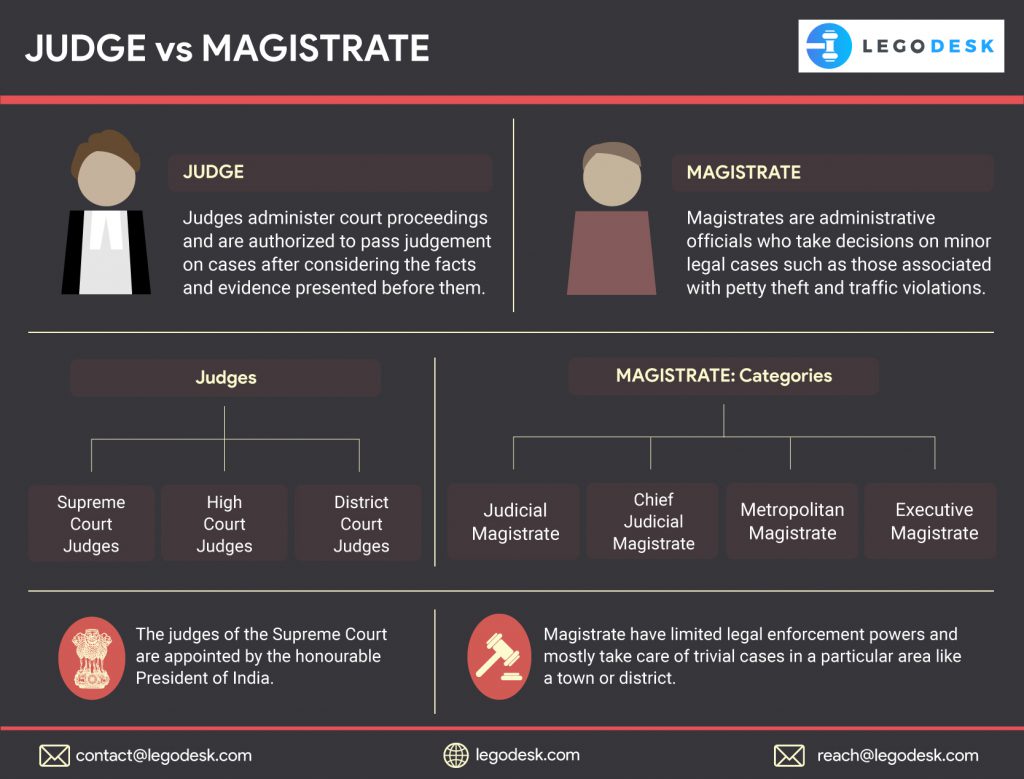
To fully understand the magistrate judge definition, one must contrast their appointment, tenure, and jurisdictional limits with those of Article III district judges. While both sit in the United States District Courts and wear judicial robes, their constitutional foundations and powers are distinct.
| Feature / Parameter | Article III District Judge | United States Magistrate Judge |
|---|---|---|
| Constitutional Basis | Article III of the U.S. Constitution | Article I (Statutory under 28 U.S.C. § 636) |
| Appointment Method | Appointed by the President; Confirmed by the Senate | Appointed by majority vote of U.S. District Judges in the district |
| Term of Office | Life tenure (during good behavior) | Renewable 8-year terms (Part-time positions serve 4-year terms) |
| Salary Protection | Protected by the U.S. Constitution (cannot be reduced) | Subject to statutory congressional adjustments |
| Felony Trial Authority | Full constitutional authority to conduct felony trials and sentencing | Limited authority; requires explicit written party consent for civil trials or misdemeanor trials |
| Primary Function | Final adjudication of all federal civil and criminal trials | Pretrial management, consent trials, preliminary criminal matters, and R&Rs |
Operational Distinction Notice Understanding Judicial Authority: While magistrate judges handle the vast majority of pretrial mechanics and preliminary criminal phases, final judgments in felony cases and non-consent civil matters remain exclusively within the constitutional purview of Article III district judges. Litigants must carefully review local court rules when consenting to magistrate jurisdiction in civil lawsuits.
The Merit Selection and Appointment Process
The selection of a United States magistrate judge is governed by strict statutory guidelines and Judicial Conference regulations designed to ensure high professional competence, integrity, and diversity.
- Public Notice and Recruitment: When an 8-year term expires or a new position is authorized, the district court issues a public announcement seeking qualified applicants.
- Merit Selection Panel: The district court appoints a diverse panel of lawyers and community members to review applications, conduct background checks, and interview candidates.
- Candidate Nomination: The panel submits a confidential list of the top five candidates to the district judges.
- District Court Appointment: The Article III judges of the district vote to select and appoint the final candidate.
- Background Investigations: The selected candidate undergoes a rigorous FBI background check and tax compliance verification before taking the oath of office.
Pros and Cons of Utilizing Magistrate Judges in Civil Litigation
Choosing whether to consent to a magistrate judge for all civil proceedings involves strategic legal considerations. Attorneys and corporate counsel evaluate several practical advantages and potential limitations.
Advantages
- Docket Efficiency: Magistrate judges generally manage smaller individual dockets than Article III judges, often resulting in quicker rulings on motions and accelerated trial dates.
- Specialized Attention: Their focus on case management and settlement facilitation makes them exceptionally skilled at resolving complex discovery disputes.
- Flexibility: Scheduling trials and hearings is frequently more manageable due to greater availability on the magistrate's calendar.
Disadvantages
- Perceived Authority: Some litigants prefer the lifetime tenure and perceived prestige of an Article III judge for high-stakes commercial litigation.
- Appellate Review Path: Appeals from a consensual magistrate judge trial go directly to the U.S. Court of Appeals, mirroring Article III trials, but non-consensual R&Rs require intermediate review by a district judge, adding a procedural layer.
- Consent Requirement: Because civil consent requires unanimous agreement from all opposing parties, obtaining cooperative alignment can sometimes be logistically challenging.
Frequently Asked Questions
What is the primary definition of a United States magistrate judge?
A United States magistrate judge is a judicial officer appointed by federal district judges to assist with the judicial workload, handling preliminary criminal proceedings, civil pretrial matters, and full trials upon party consent. They operate under statutory authority rather than Article III constitutional appointment.
Can a magistrate judge preside over a felony criminal trial?
No, magistrate judges do not have the constitutional authority to preside over felony criminal trials or sentence defendants convicted of felonies. Felony trials and sentencing must be conducted by an Article III district judge.
How long is a magistrate judge's term of office?
Federal magistrate judges serve renewable terms of eight years for full-time positions and four years for part-time positions. This differs from Article III judges, who hold lifetime appointments.
What happens if parties do not consent to a magistrate judge in a civil case?
If one or more parties withhold consent to have a magistrate judge conduct all proceedings, the case remains assigned to an Article III district judge for trial. However, the magistrate judge may still handle pretrial discovery and issue recommendations on dispositive motions.
How are magistrate judges compensated?
Magistrate judges receive a federal salary set by Congress upon the recommendation of the Judicial Conference of the United States. Their compensation is tied to federal judicial pay scales but is not constitutionally insulated from reduction in the same manner as Article III judicial salaries.
Conclusion and Strategic Next Steps
Comprehending the magistrate judge definition is vital for anyone navigating the nuances of the federal court system. These judicial officers serve as foundational pillars of federal judicial efficiency, ensuring that dockets move smoothly from initial criminal appearance through complex civil discovery. Whether you are evaluating consent jurisdiction in a civil lawsuit or tracking preliminary criminal proceedings, recognizing the jurisdictional boundaries and procedural advantages of magistrate judges empowers informed legal strategy. To explore specific district rules, local appointment panels, or active magistrate calendars, consult the official website of your regional United States District Court or review the administrative guidelines provided by the Administrative Office of the U.S. Courts.
Image Gallery