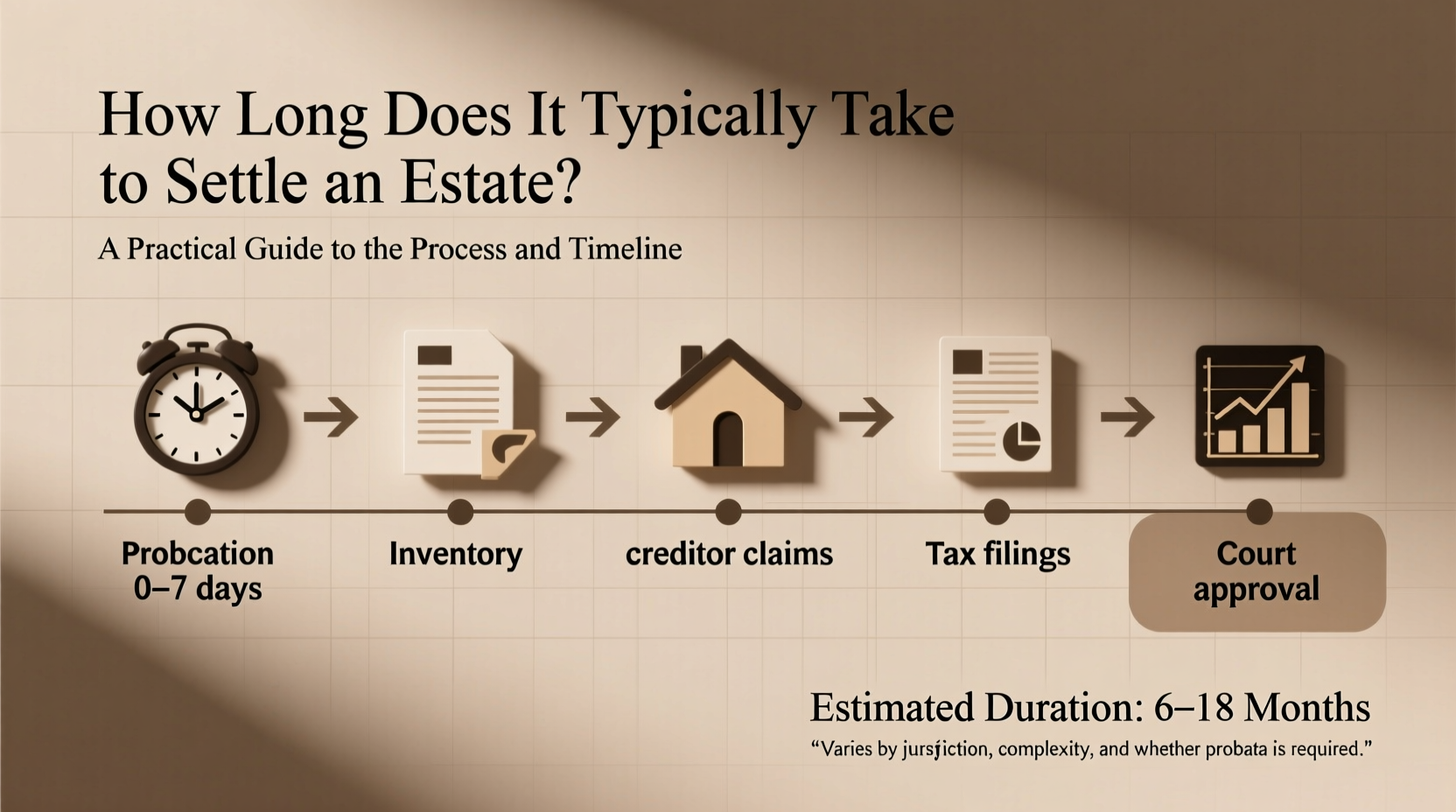
How Long Does It Take to Get a Workers' Compensation Settlement? A Practical Timeline
A workers' compensation settlement typically takes between 6 and 18 months from the initial date of injury to final payout. Straightforward claims with undisputed liability and minor injuries can resolve in 3 to 6 months, while complex...
A workers' compensation settlement typically takes between 6 and 18 months from the initial date of injury to final payout. Straightforward claims with undisputed liability and minor injuries can resolve in 3 to 6 months, while complex cases involving contested claims, surgery, or permanent disability evaluations often require 12 to 24 months.
Contents
Key Takeaways
- Maximum Medical Improvement (MMI) is the single most critical milestone; formal settlement negotiations should rarely begin until your doctor confirms your condition has stabilized.
- Disputed liability or denied claims significantly lengthen the timeline, pushing resolution out by 6 to 12 additional months due to administrative hearings and appeals.
- State Workers' Compensation Board approval is required by law in most jurisdictions, adding 2 to 8 weeks after an agreement is signed before funds are distributed.
- Settling too early can result in forfeiting rights to future medical coverage for unexpected complications.
Core Factors That Dictate Your Settlement Timeline
The duration of a workers' compensation claim varies widely based on legal, medical, and procedural requirements. While every case presents unique circumstances, four primary factors dictate how quickly a settlement moves from initial filing to final payment.
1. Medical Stabilization (Maximum Medical Improvement)
An injured worker reaches Maximum Medical Improvement (MMI) when their medical condition has stabilized and no further functional recovery is expected, even with continued treatment. Settling a claim before reaching MMI is a major financial risk because the full extent of permanent disability, future medical costs, and loss of earning capacity cannot be accurately evaluated. For minor soft-tissue injuries, MMI might be reached in 8 to 12 weeks; for complex spinal surgeries or severe traumatic injuries, MMI may take 12 to 18 months.
2. Claim Status: Accepted vs. Contested
When an employer's insurance carrier accepts a claim without dispute, treatment and temporary disability payments proceed smoothly, paving the way for straightforward negotiations once treatment concludes. Conversely, if the insurer denies the claim, disputes that the injury occurred during the scope of employment, or challenges the necessity of recommended medical procedures, the timeline slows considerably. Resolving these disputes requires formal administrative hearings, depositions, and independent medical reviews.
3. Medical Evaluation and Permanent Disability Ratings
Once MMI is reached, the primary treating physician—and often an insurer-appointed doctor during an Independent Medical Examination (IME)—must issue a formal rating report detailing any permanent impairment. Disagreements between treating physicians and IME doctors are common. Resolving conflicting disability ratings through supplemental reports, cross-examinations, or panel evaluations adds weeks or months to the settlement phase.
4. Jurisdiction and Administrative Agency Workloads
Workers' compensation is governed at the state level in the United States, meaning procedural rules, mandatory waiting periods, and agency approval times vary across jurisdictions. State boards and commission dockets can experience backlogs, directly affecting how quickly settlement agreements are reviewed, scheduled for judicial approval, or set for dispute hearings.
Step-by-Step Breakdown of the Settlement Timeline
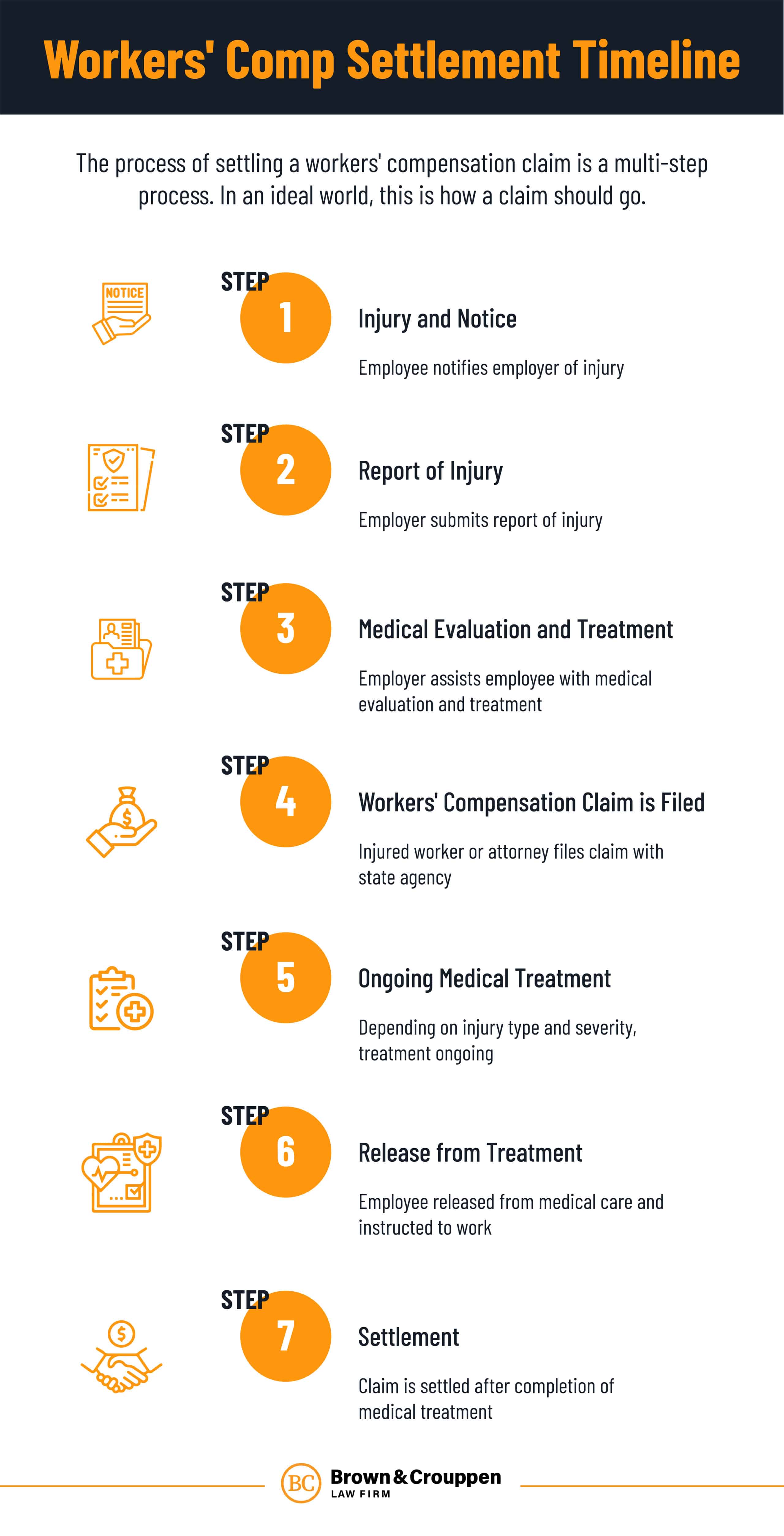
Navigating a workers' compensation claim involves distinct sequential phases. Understanding what occurs during each phase helps set realistic expectations for your overall timeline.
- Injury Occurs & Reported
- Medical Treatment & Recovery
- Reach MMI
- Negotiations
- State Board Approval
- Payment Disbursed
Phase 1: Injury Reporting and Initial Claim Filing (Weeks 1–4)
The statutory clock begins the moment an injury occurs or an occupational illness is diagnosed. State laws require employees to report injuries to their employer within specific deadlines, often ranging from 4 to 30 days.
- Reporting the Injury: Written notice must be submitted to the employer detailing the incident, date, time, and nature of the injury.
- Claim Form Submission: The employer provides the official state workers' compensation claim form, which is submitted to the insurer and the state oversight board.
- Initial Investigation: The insurance carrier opens an investigation and has a statutory period (typically 14 to 90 days, depending on the state) to accept or contest the claim.
Phase 2: Medical Treatment and Reaching MMI (Months 2–12+)
During this phase, the primary focus is medical recovery. The employer's insurer pays for authorized medical expenses and temporary total disability (TTD) benefits to replace lost wages while you are unable to work.
- Ongoing Care: Physical therapy, prescriptions, specialist visits, diagnostic imaging, and surgical procedures occur during this period.
- Progress Evaluations: Treating physicians provide periodic status updates detailing work restrictions and medical progress.
- MMI Determination: Once recovery plateaus, the treating physician issues a formal statement that the patient has reached MMI and prepares a final assessment.
Phase 3: Impairment Rating and Case Valuation (Weeks 4–8 Post-MMI)
After MMI is declared, the focus shifts from medical recovery to financial evaluation.
- Impairment Rating: The physician assigns a permanent partial disability (PPD) rating using established guidelines, such as the AMA Guides to the Evaluation of Permanent Impairment.
- Defense IME (If Requested): Insurance companies frequently request an Independent Medical Examination by an insurance-retained doctor to evaluate the impairment rating or dispute the need for future medical care.
- Comprehensive Valuation: Your legal representative or representative counselor calculates total damages, including unpaid medical bills, future expected care, functional impairment, and future wage loss.
Phase 4: Settlement Demand, Negotiations, and Mediation (Months 1–3 Post-Evaluation)
With the valuation established, formal settlement discussions begin between the parties.
- Demand Package: A formal demand letter outlining medical evidence, disability ratings, and requested financial compensation is sent to the insurance carrier.
- Offers and Counteroffers: The insurance adjuster reviews the demand and responds with an initial offer. Multiple rounds of offers and counteroffers follow.
- Mediation/Pre-Hearing Conferences: If the parties reach an impasse, they may attend voluntary or mandatory state mediation sessions to negotiate a compromise with the assistance of a neutral mediator or administrative judge.
Phase 5: Legal Execution, Board Approval, and Disbursement (Weeks 2–8 Post-Agreement)
Once an agreement is reached, formal paperwork must be completed and approved by state authorities.
- Drafting the Settlement Documents: Attorneys prepare the formal compromise and release agreement or stipulated award agreement detailing all payment terms and medical waivers.
- State Agency Review: The agreement is submitted to the state Workers' Compensation Board or Commission. An Administrative Law Judge (ALJ) reviews the documents to ensure the agreement is fair and legally compliant. In some states, a brief approval hearing is required.
- Payment Issuance: Statutory rules govern how quickly insurers must issue payment after judge approval, typically within 14 to 30 calendar days. Late payments may trigger statutory penalties against the insurer.
Realistic Timelines Across Settlement Stages
The following table provides estimated durations for each stage of a typical workers' compensation settlement process under standard administrative procedures.
| Settlement Stage | Undisputed / Minor Claim Timeline | Contested / Complex Claim Timeline | Key Milestone / Objective |
|---|---|---|---|
| Initial Filing & Notice | 1 to 2 weeks | 2 to 4 weeks | Timely reporting and initial medical assessment |
| Treatment & MMI Reach | 2 to 6 months | 6 to 18+ months | Achieving stable medical status and clear prognosis |
| Impairment Rating & Evaluation | 2 to 4 weeks | 2 to 4 months | Obtaining doctor's final disability rating and IME reports |
| Settlement Negotiations | 2 to 6 weeks | 2 to 5 months | Reaching mutual financial terms or mediating disputes |
| Board Review & Judicial Approval | 1 to 3 weeks | 3 to 8 weeks | Securing formal approval from the state Workers' Comp Board |
| Final Funds Distribution | 1 to 3 weeks | 2 to 4 weeks | Insurer issuing funds after final order entry |
| Total Estimated Timeframe | 3 to 8 months | 12 to 24+ months | Complete resolution from injury date to payout |
Common Causes of Settlement Delays and How to Avoid Them
Unnecessary delays can cause significant financial strain for injured workers awaiting compensation. Identifying friction points early helps keep the process moving efficiently.
- Common Delay Drivers:
- Premature Settlement Attempts (Before MMI)
- Utilization Review & Treatment Authorizations
- Disputed Independent Medical Examinations (IMEs)
- Administrative Backlogs at State Hearing Boards
Premature Settlement Pressures
Insurance adjusters sometimes offer early settlement packages shortly after an injury occurs. While accepting an early payout might seem attractive, doing so before reaching MMI often leaves workers uncompensated for future surgeries, therapies, or permanent work limitations. Waiting until medical stability is established ensures an accurate valuation.
Utilization Review and Authorization Bottlenecks
Insurers frequently use Utilization Review (UR) programs to evaluate whether requested medical procedures are necessary under clinical guidelines. Delays in approving MRIs, surgeries, or physical therapy prolong treatment timelines, which directly delays reaching MMI. Ensuring medical providers submit complete documentation and appealing improper treatment denials promptly helps prevent UR gridlock.
Impairment Rating Disputes and Multiple IMEs
When an insurance adjuster disagrees with your treating doctor's disability rating, they usually request a defense IME. Obtaining an appointment with an IME doctor, waiting for the formal report, and resolving conflicting ratings through supplemental evaluations can delay negotiations by two to four months.
Administrative Board Backlogs
In populous jurisdictions, state workers' compensation courts handle high case volumes. If your claim requires a formal evidentiary hearing to resolve liability or entitlement disputes, waiting for an open hearing date on an administrative law judge's calendar can add 3 to 9 months to your timeline.
Types of Settlements: Lump Sum vs. Structured Payments
The structure of your settlement agreement affects both how long negotiations take and how money is disbursed over time.
Compromise and Release (Lump Sum)
A Compromise and Release agreement resolves the entire claim in exchange for a single, one-time cash payment.
- How It Works: In exchange for the lump sum, the injured worker releases the employer and insurer from all future financial liability, including future medical treatment expenses.
- Timeline Impact: Negotiations can take longer because both sides must accurately project and agree upon the value of all future medical care and loss of earnings over the worker's remaining life expectancy.
- Payout Schedule: Once approved by a judge, the entire settlement amount is disbursed within the state-mandated window (usually 14 to 30 days).
Stipulated Findings and Award (Structured or Ongoing)
A Stipulated Award establishes an agreement on the worker's degree of permanent disability while keeping certain benefits open.
- How It Works: The insurer agrees to pay a specific weekly or monthly permanent disability benefit for a designated period, while continuing to pay for ongoing authorized medical treatment related to the workplace injury.
- Timeline Impact: Negotiations can move more quickly because future medical costs do not need to be estimated or bought out in advance.
- Payout Schedule: Payments are distributed over time on a regular, bi-weekly or monthly schedule based on state benefit charts.
Practical Steps to Keep Your Settlement Moving Forward
While medical healing cannot be rushed, taking proactive administrative steps helps eliminate avoidable delays during your claim.
- Maintain Complete Medical Records: Request copies of clinical notes, test results, and operational reports immediately after appointments so your legal team has an up-to-date file ready for valuation.
- Attend Every Scheduled Appointment: Missing medical appointments or failing to follow treatment plans gives insurance companies grounds to argue that your condition has improved or that you are non-compliant, stalling your case.
- Report All Symptoms and Functional Limitations: Ensure your treating physician documents every physical limitation, pain level, and daily task restriction in their official records during each visit.
- Respond Promptly to Document Requests: Return signed medical releases, questionnaire forms, and financial records to your attorney or claim representative right away.
- Monitor State-Specific Statutory Deadlines: Keep track of your state's statute of limitations for filing formal claims and requesting board hearings so rights are not unintentionally waived.
- Consult a Qualified Workers' Compensation Attorney: Navigating insurance tactics, dispute resolutions, and judicial approvals requires technical legal knowledge. An experienced lawyer ensures claims are accurately valued and administrative steps are completed without error.
Legal and Regional Advice Limitation
Workers' compensation laws, procedures, hearing schedules, and statutory settlement requirements vary significantly by state jurisdiction. This practical timeline guide provides general administrative estimates and educational context for standard procedures across the United States. It does not constitute formal legal or financial advice. Injured workers should consult a licensed workers' compensation attorney in their specific state to review individual case specifics, statutory deadlines, and local administrative practices.
Frequently Asked Questions
Why is Maximum Medical Improvement (MMI) so important before settling?
Reaching MMI is essential because it marks the point where your medical condition has stabilized, allowing doctors to determine the full extent of any permanent functional impairment. If you settle before reaching MMI, you risk underestimating your long-term medical needs and financial loss, and you forfeit the right to demand additional compensation if your condition later worsens.
How long does it take to get a check after a settlement is signed?
After signing a settlement agreement, payment typically arrives within 2 to 8 weeks. The agreement must first be submitted to the state Workers' Compensation Board or an Administrative Law Judge for legal review and approval. Once the judge issues an official approval order, state law usually requires the insurance company to disburse funds within 14 to 30 calendar days.
Can an insurance company delay a workers' comp settlement on purpose?
While insurance companies must operate under duty of good faith guidelines, they often utilize procedural tools—such as requesting Independent Medical Examinations, requiring Utilization Reviews, or conducting detailed audits of medical bills—that naturally extend timelines. Working with an attorney and staying diligent with documentation prevents unnecessary administrative delays.
What happens if the insurance company denies my workers' comp claim?
If your claim is denied, the timeline for obtaining a settlement lengthens substantially. You or your attorney must file a formal application for adjudication or appeal with the state Workers' Compensation Board. Resolving a denied claim requires collecting evidence, taking depositions, attending pre-trial hearings, and potentially proceeding to a formal trial before an administrative judge, extending the overall timeline to 12 to 24 months.
Does getting an attorney make a workers' comp settlement take longer?
Hiring an attorney can sometimes add a short amount of time to early negotiations because a lawyer will thoroughly review medical records, hire independent medical experts if needed, and push back against low initial offers. However, legal representation often prevents costly mistakes, ensures accurate claim valuation, speeds up formal board proceedings, and yields higher net settlements.
Next Steps for Injured Workers
If you are navigating an active workers' compensation claim, focus first on completing your prescribed medical care and reaching MMI. Gather all relevant medical records, benefit statements, and work status notes into an organized file. If your claim is denied, if an insurer insists on an early settlement before your medical condition is stable, or if negotiations stall, consult a licensed workers' compensation lawyer in your state to protect your rights and keep your claim moving toward resolution.
Image Gallery