Navigating Pennsylvania and Minnesota Court Systems: A 2026 Legal Resource Guide
Disambiguation Note: This article covers the judicial infrastructures of two distinct states: the Commonwealth of Pennsylvania (PA) and the State of Minnesota (MN). Please ensure you are referencing the specific state jurisdiction rele...
Disambiguation Note: This article covers the judicial infrastructures of two distinct states: the Commonwealth of Pennsylvania (PA) and the State of Minnesota (MN). Please ensure you are referencing the specific state jurisdiction relevant to your legal matter, as court procedures and administrative requirements differ significantly between these two regions.
Contents
The legal landscapes in Pennsylvania and Minnesota operate under robust, distinct frameworks designed to manage civil, criminal, and appellate matters. Understanding how these systems function in 2026 is critical for litigants, legal practitioners, and researchers navigating state-level judiciary portals. While both states utilize sophisticated digital filing systems, the administrative pathways, court tiers, and public access protocols remain geographically and statutorily siloed.
The Pennsylvania Unified Judicial System: Operational Overview
Pennsylvania maintains a Unified Judicial System (UJS) that centralizes administrative oversight. The UJS ensures that all courts, from the minor judiciary (Magisterial District Courts) to the appellate levels, adhere to consistent procedural rules.
Core Tiers of the Pennsylvania Judiciary
The structure of the Pennsylvania court system is hierarchical, designed to provide multiple layers of adjudication:
- Magisterial District Courts: The front line of the judiciary, handling summary offenses, traffic violations, and minor civil disputes where the amount in controversy is below 12,000 USD.
- Courts of Common Pleas: The trial courts of general jurisdiction, divided into 60 judicial districts across 67 counties. These courts handle felony criminal cases, major civil litigation, and family law matters.
- Intermediate Appellate Courts: The Superior Court, which handles most appeals from the Courts of Common Pleas, and the Commonwealth Court, which focuses on cases involving state and local government agencies.
- Supreme Court of Pennsylvania: The highest court in the Commonwealth, serving as the final arbiter of state law and responsible for the administrative governance of the entire judicial system.
The Minnesota Judicial Branch: Structural Framework
Minnesota’s court system is structured to provide efficient access to justice through a streamlined, three-tier hierarchy. As of 2026, the Minnesota Judicial Branch emphasizes digital transparency and self-help accessibility for non-represented litigants.
Key Components of Minnesota Courts
- District Courts: Minnesota is divided into 10 judicial districts. Each district court holds original jurisdiction over virtually all civil and criminal cases, including juvenile, probate, and family law matters.
- Court of Appeals: This court reviews decisions from trial courts and state agencies, ensuring that procedural standards were upheld during the initial trial phase.
- Supreme Court of Minnesota: Exercises discretionary review over cases from the Court of Appeals and handles direct appeals in specific scenarios, such as first-degree murder convictions and tax court rulings.
Technical Requirements for Digital Filing and Access
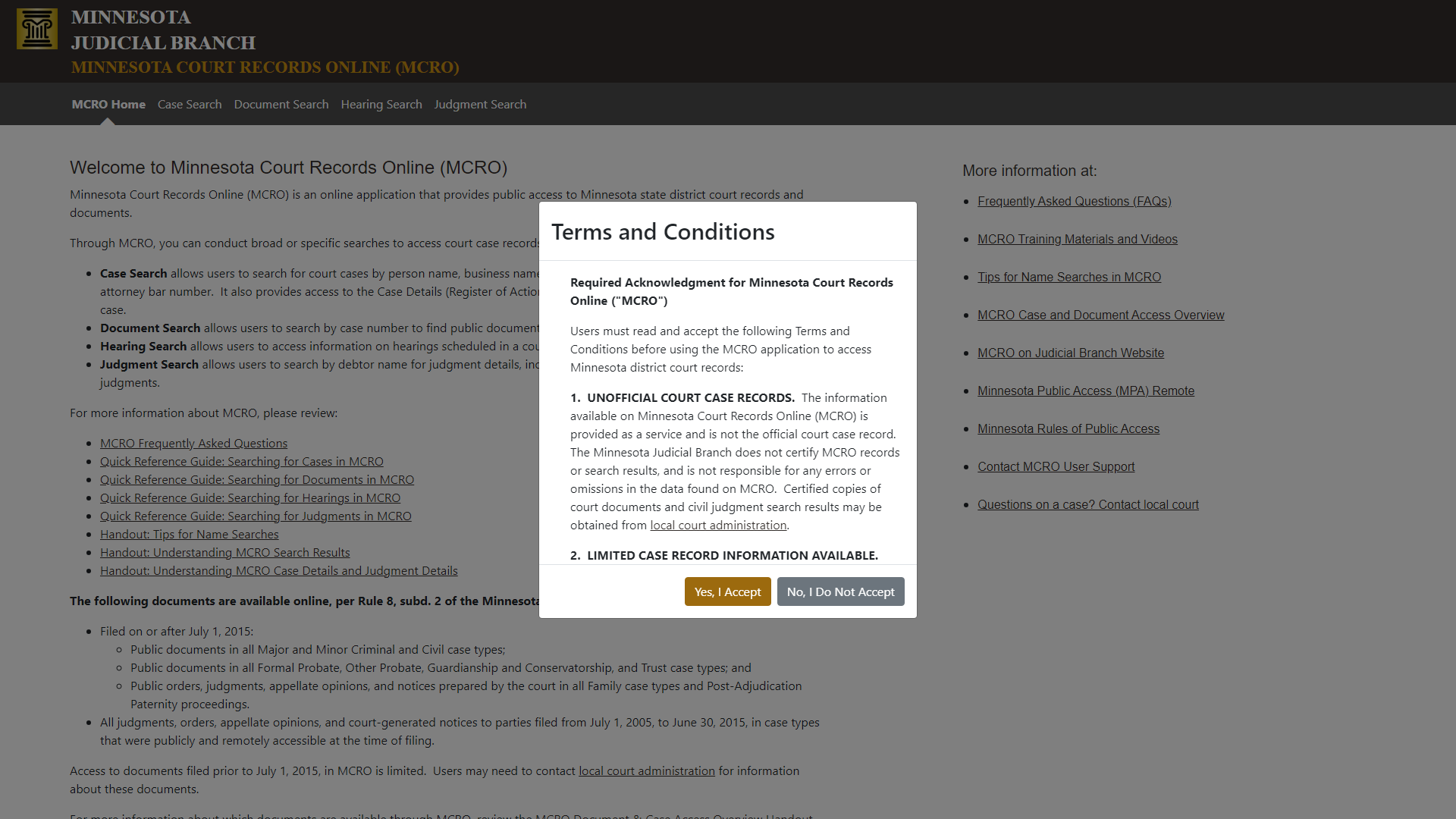
In 2026, both states have transitioned to high-availability digital platforms for document submission and case management. Accessing these records requires an understanding of the specific portals managed by the Administrative Office of Pennsylvania Courts (AOPC) and the Minnesota Judicial Branch (MCRO).
Comparative Analysis of Judicial Administrative Systems
| Feature | Pennsylvania (UJS) | Minnesota (MN Courts) |
|---|---|---|
| Primary Case Search Portal | UJS Portal (Public Web Docket) | Minnesota Court Records Online (MCRO) |
| Filing System | PACFile (E-filing) | E-Filing System (EFS) |
| Jurisdiction Authority | Administrative Office of PA Courts | State Court Administrator |
| Access Restriction Levels | Public, Confidential, and Sealed | Public, Confidential, and Restricted |
Guidelines for Electronic Access Credential Requirements Professional users and attorneys in both jurisdictions are required to maintain verified digital identities to utilize full filing privileges. Public users generally have read-only access to non-confidential dockets, though registration is often required to view specific document images or to receive automated case status notifications.
Navigating Procedures for Pro Se Litigants
Representing oneself in court requires strict adherence to procedural rules, which are enforced with equal rigor for self-represented individuals as they are for attorneys.
Recommended Steps for Pro Se Engagement
- Identify the Correct Venue: Determine if your case belongs in a Magisterial District Court (PA) or a specific County District Court (MN) based on the location of the incident or the residency of the parties.
- Review Local Rules: Each county may have supplementary local rules that modify general state procedures. Always check the specific county website for 2026 Standing Orders.
- Prepare Documentation: Utilize the standardized forms provided on the official court websites. Altering these forms can lead to rejection by the clerk of courts.
- Electronic Service: Familiarize yourself with the e-service protocols to ensure the opposing party receives timely notice of filings, as mandated by the 2026 Rules of Civil Procedure in both states.
Challenges and Remedies in Modern Litigation
Litigants often face delays due to improper filing or failure to comply with jurisdictional mandates. Common obstacles in 2026 include technical failures during e-filing or the misclassification of documents as public versus confidential.
- Filing Rejection: Usually caused by missing signatures or incorrect filing fees. Ensure your payment method is accepted by the local Clerk of Courts before initiating the filing process.
- Document Redaction: In both PA and MN, the filer is responsible for redacting sensitive information such as Social Security numbers or financial account details. Failure to redact can result in severe sanctions.
- Service of Process: Even with digital filing, original service often requires physical delivery or strict adherence to electronic service rules. Verify the requirements for your specific case type.
Frequently Asked Questions
How can I search for a criminal case in Pennsylvania? You may use the UJS Portal’s Public Web Docket Sheets. By entering the defendant’s name or the specific docket number, you can view the status of active and closed cases across the Commonwealth.
Does Minnesota offer online access to family court records? Most family court case information is available through the Minnesota Court Records Online (MCRO) portal, though specific documents involving sensitive private data may be restricted to the parties involved or their legal counsel.
Can I file my court documents entirely online in 2026? Yes, both Pennsylvania and Minnesota have mandated e-filing for most civil matters. However, certain filings, such as those requiring original signatures or sensitive attachments, may still require physical submission to the Clerk of Courts.
What is the difference between a Superior Court and a Commonwealth Court in PA? The Superior Court primarily handles criminal and private civil appeals, while the Commonwealth Court handles cases involving state agencies, zoning, and government regulations.
How do I pay court fees electronically? Both state systems integrate payment portals into their e-filing interfaces. You can typically use major credit cards or ACH transfers to satisfy filing fees and court-ordered costs.
Conclusion
Successfully navigating the court systems of Pennsylvania or Minnesota in 2026 requires a proactive approach to understanding jurisdictional boundaries and digital filing mandates. Whether you are an attorney or a self-represented litigant, utilizing the official state judicial portals is the most reliable way to ensure procedural compliance. Always consult with a qualified legal professional for advice regarding your specific case, as court rules are subject to legislative changes and evolving judicial administrative policies. If you are currently involved in a matter, verify your case status through the official UJS or MCRO portals to ensure you have the most current information.
Image Gallery