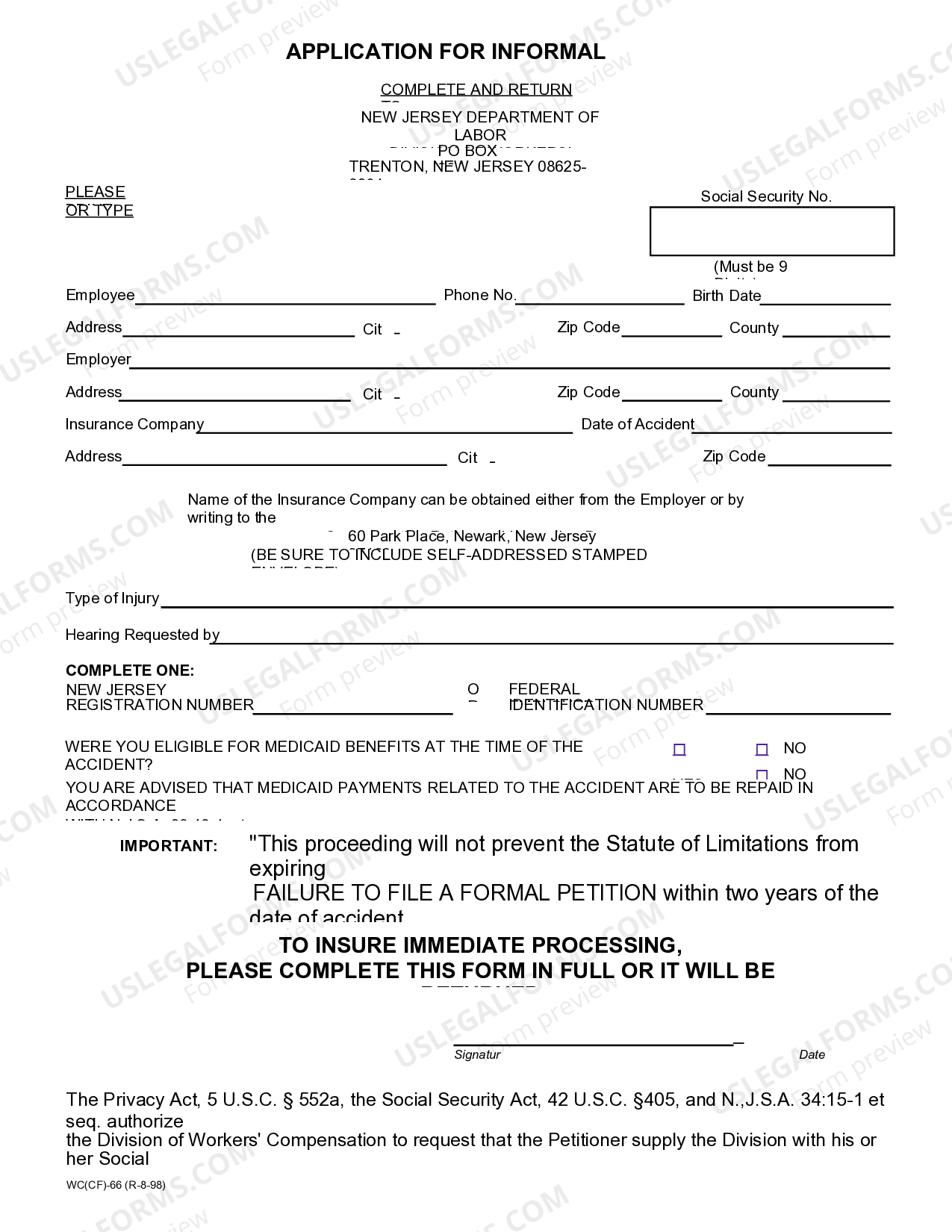
How to Apply for Workers' Compensation for Hearing Loss from a Past Job
To file a workers' compensation claim for hearing loss from a past job, you must obtain a formal diagnostic audiogram connecting your hearing impairment to past workplace noise, establish your claim within your state's "discovery rule"...
To file a workers' compensation claim for hearing loss from a past job, you must obtain a formal diagnostic audiogram connecting your hearing impairment to past workplace noise, establish your claim within your state's "discovery rule" statute of limitations, identify the correct insurance carrier from your past employment, and file formal claim notices with your state workers' compensation board.
Contents
Disclaimer: Workers' compensation regulations, statutes of limitations, and procedural rules vary significantly across state jurisdictions. The following guide provides objective informational analysis and does not constitute formal legal or medical advice. Individuals seeking to file a claim should consult a licensed workers' compensation attorney or a certified audiologist in their state.
Understanding Occupational Hearing Loss Claims for Former Employers
Occupational hearing loss—specifically noise-induced hearing loss (NIHL)—is one of the most common occupational diseases recognized by workers' compensation systems. Unlike acute traumatic injuries (such as an explosion or sudden blast), occupational hearing loss typically develops gradually over years of continuous exposure to high-level noise. Because sensorineural damage builds slowly over decades, many workers only notice significant impairment long after leaving the employment setting where the acoustic exposure occurred.
Applying for workers' compensation for hearing loss attributed to a previous employer presents distinct legal and medical hurdles compared to filing against a current employer. Key issues include:
- Proving Medical Causation: Distinguishing occupational noise damage from natural age-related hearing loss (presbycusis) or recreational noise exposure.
- Navigating Statutes of Limitations: Identifying when the legal "clock" starts ticking for latent or cumulative conditions.
- Locating Historical Coverage: Identifying the workers' compensation insurance policy in effect during your prior tenure, particularly if the company has changed names, merged, or ceased operations.
Core Legal Principles: The Discovery Rule and Last Exposure Rule
To successfully pursue a claim against a past employer, you must understand two foundational legal concepts that govern occupational disease claims in most jurisdictions:
1. The Discovery Rule (Statute of Limitations)
In standard personal injury or workers' compensation claims, the statute of limitations begins on the exact date of the accident. However, for cumulative acoustic trauma and occupational diseases, courts apply the Discovery Rule.
Under the discovery rule, the statutory window for filing a claim does not start on your last day of work. Instead, it begins on the date you discovered—or reasonably should have discovered—that your hearing loss is medically related to your past employment exposure.
Depending on state law, once a medical professional informs you in writing that your sensorineural hearing loss was caused or aggravated by workplace noise at a former job, you typically have between 30 days and three years to notify your past employer and file a formal application with the state board.
2. The Last Injurious Exposure Rule
If you worked in multiple noisy environments across your career, determining which employer is financially responsible can be complex. Most state workers' compensation systems utilize the Last Injurious Exposure Rule.
This doctrine assigns full liability for an occupational disease to the insurance carrier covering the employer where you were last exposed to noise levels capable of causing or worsening the injury. Under standards established by the Occupational Safety and Health Administration (OSHA), an environment with noise exposure at or above an 8-hour time-weighted average (TWA) of 85 decibels (dBA) is considered hazardous and capable of contributing to acoustic trauma.
Step-by-Step Application Process for Past Job Hearing Loss Claims
Pursuing compensation for cumulative hearing damage requires a structured, evidence-heavy approach. Follow these steps to navigate the process:
- Step 1: Diagnostic Audiological Evaluation
- Consult Board-Certified Audiologist / Otolaryngologist
- Conduct Pure-Tone Air/Bone Conduction & Speech Discrimination Tests
- Step 2: Reconstruct Employment & Noise History
- Compile Job Titles, Machinery Used, & Exposure Hours
- Retrieve Baseline & Exit Audiograms (if available)
- Step 3: Identify Former Employer Insurance Coverage
- Search State Workers' Comp Coverage Databases
- Determine Insurer Active During Exposure Period
- Step 4: Formal Written Notification & Filing
- Submit Written Notice to Former Employer (per state deadlines)
- File Application for Adjudication with State Board
- Step 5: Defense Review & IME Examination
- Respond to Defense Audiograms & Insurer Audits
- Participate in Independent Medical Examination (IME)
Step 1: Obtain a Comprehensive Diagnostic Evaluation
Before taking any legal action, schedule an examination with an otolaryngologist (ear, nose, and throat doctor) or a licensed audiologist. A routine screening is insufficient for a legal claim; you require a formal pure-tone air and bone conduction audiogram and speech discrimination test.
Ensure the medical professional provides a written medical report addressing:
- The exact degree of binaural (both ears) or monaural (one ear) hearing impairment.
- Whether the audiogram displays a characteristic "notch" at high frequencies (typically 3,000 Hz, 4,000 Hz, or 6,000 Hz), which indicates sensorineural noise-induced loss rather than conductive loss.
- A formal medical opinion stating that workplace noise exposure at your prior job was a substantial contributing factor to the impairment.
Step 2: Reconstruct Your Noise Exposure and Employment History
Because the exposure occurred in the past, you must build a comprehensive factual record detailing your working conditions. Document:
- Specific dates of employment, job titles, and physical locations.
- Types of heavy machinery, tools, vehicles, or industrial processes you operated or worked near (e.g., stamping presses, jet engines, turbines, pneumatic drills).
- Estimated daily duration of noise exposure and whether personal protective equipment (PPE), such as earplugs or earmuffs, was provided or enforced.
- Witness statements or testimony from former co-workers who can corroborate the noise levels.
If possible, request your personnel file and medical records from the former employer. Employers subject to OSHA noise standards are legally required to maintain employee audiometric test records for the duration of employment plus 30 years under 29 CFR 1910.1020.
Step 3: Identify the Former Employer's Insurance Carrier
To file a claim, you must target the correct insurance company that held the policy during your period of employment. If your former employer is still in business, contact their human resources or risk management department.
If the employer is out of business, merged, or non-responsive, use your state’s workers' compensation board database search tool or contact the state insurance commissioner. Most state boards maintain public registries linking historical business entities to their corresponding insurance carriers.
Step 4: Submit Written Notice and File the Formal Claim
Workers' compensation requires two separate actions:
- Notice to Employer: Send a written notification detailing your diagnosis and its connection to your past employment to the former employer (or their designated claims administrator).
- Formal Claim Filing: Submit the official state claim form (e.g., Form C-3 in New York, Form DWC-1 in California, or your state's equivalent) to the state workers' compensation agency.
Clearly specify the Date of Injury as the date a medical doctor first diagnosed you with work-related hearing loss and informed you of the causal connection.
Step 5: Prepare for Insurer Disputes and Independent Medical Exams
Insurance carriers frequently contest past-employer hearing loss claims due to latency. Expect the insurer to request an Independent Medical Examination (IME) performed by a physician of their choosing.
The defense doctor will often attempt to attribute your hearing loss to:
- Natural aging (presbycusis).
- Non-occupational activities (such as military service, hunting, concerts, or power tool use at home).
- Pre-existing conditions or medical history (such as childhood ear infections or cardiovascular conditions).
To counter these arguments, your medical expert must apply established medical formulas—such as the American Medical Association (AMA Guides to the Evaluation of Permanent Impairment) or the American Academy of Otolaryngology-Head and Neck Surgery (AAO-HNS) guidelines—to mathematically isolate age-related loss from occupational noise loss.
Key Evidence Requirements for Hearing Loss Claims
The success of a past-job hearing loss claim hinges on the quality and timeline of your supporting evidence. The following table outlines the essential documentation required by state adjudication boards:
| Evidence Type | Primary Source / Provider | Strategic Legal Function | Critical Acceptability Criteria |
|---|---|---|---|
| Diagnostic Audiogram | Board-Certified Audiologist / Otolaryngologist | Establishes current hearing threshold levels across frequencies (500–6,000 Hz). | Must include pure-tone air/bone testing conducted in a sound-treated booth adhering to ANSI standards. |
| Causation Letter | Treating ENT Physician | Serves as the primary medical evidence linking noise exposure to current hearing loss. | Must state within a reasonable degree of medical certainty that past work noise was a major factor. |
| Baseline & Exit Audiograms | Former Employer / Occupational Health Record | Demonstrates hearing drop specifically during the timeframe of employment. | Must conform to OSHA standard threshold shift (STS) monitoring records where applicable. |
| Noise Level Data / Dosimetry | Employer Safety Logs, OSHA Inspection Reports, NIOSH Studies | Proves physical existence of hazardous noise levels exceeding 85 dBA TWA. | Industrial hygiene surveys or official federal NIOSH Health Hazard Evaluations carry strong evidentiary weight. |
| Employment History & Statements | Claimant, Former Co-workers, Union Records | Establishes length of exposure, daily duration, and lack of adequate hearing protection. | Written affidavits detailing machine types, distance from noise sources, and shift lengths. |
Overcoming Common Defense Tactics
Insurers fighting latency-based claims against past employers rely on several standard legal and technical defenses. Understanding these strategies allows you to prepare counter-evidence effectively.
- Presbycusis Defense
- Effective Claimant Counter-Strategy: Apply AMA/AAO-HNS Age-Correction Formulas to Isolate NIHL Notch
- Expired Statute
- Effective Claimant Counter-Strategy: Prove "Discovery Date" (Doctor Consultation) as True Claim Clock
- Alternate Exposure
- Effective Claimant Counter-Strategy: Provide Military Records, Hobbies Logs, & Co-worker Affidavits
- Ceased Operations
- Effective Claimant Counter-Strategy: File Claim Against Historical Carrier or State Uninsured Fund
The Presbycusis (Age-Related) Defense
Because hearing loss often manifests in older age, defense attorneys regularly claim the condition is purely biological. To defeat this argument, your audiologist will analyze the audiogram's configuration. Noise-induced hearing loss creates a sharp drop (notch) specifically at 4,000 Hz before slightly recovering at 8,000 Hz. In contrast, presbycusis presents as a smooth, downward-sloping curve across all high frequencies. Medical experts use standard age-correction tables to isolate and deduct normal age-related loss, leaving the compensable noise-induced portion intact.
The Untimely Filing Defense
If the insurer argues that you failed to file within the statutory period after leaving the company, your legal team must demonstrate that you were not aware of the causal link between your current impairment and your past work until your recent diagnostic evaluation. Retain copies of all initial consultation records, intake questionnaires, and letters from your doctor that explicitly note the date you were first advised of the link.
Alternate Noise Source Exposure
Insurers will investigate your personal life for non-work noise sources. Be prepared to provide clear, honest details regarding:
- Military service records (including DD-214 forms showing sound protection or non-combat assignments).
- Recreational history (such as wearing electronic hearing protection during shooting sports).
- Prior and subsequent jobs (showing that subsequent employers had quiet work environments under 85 dBA).
State-Specific Nuances and Benefit Structures
Compensation for occupational hearing loss is primarily monetary and medical. Benefit structures generally fall into two categories:
- Medical Benefits: Full coverage for diagnostic testing, otolaryngologist consultations, initial hearing aid fittings, replacement devices, batteries, and ongoing repairs for life.
- Permanent Partial Disability (PPD) / Scheduled Loss of Use (SLU): Most states categorize hearing loss as a "scheduled injury." State law assigns a maximum number of weeks of wage benefits based on the percentage of binaural hearing impairment calculated via state-mandated formulas.
For detailed information on federal occupational disease frameworks and safety limits, consult the U.S. Department of Labor Office of Workers' Compensation Programs (OWCP).
Frequently Asked Questions
Can I file a claim if my former employer has gone out of business?
Yes. Workers' compensation coverage is tied to the insurance company that wrote the policy at the time your exposure occurred, not the current operational status of the employer. If the employer went bankrupt or dissolved without insurance, most states maintain a dedicated Uninsured Employers Fund or guarantee association to pay valid claims.
How long after leaving a past job can I apply for hearing loss compensation?
There is generally no absolute cutoff date based solely on your departure date, provided you comply with your state's discovery rule. The critical deadline is triggered when a qualified medical doctor officially diagnoses your hearing loss as work-related and informs you of this finding.
How is the monetary value of a hearing loss claim calculated?
Monetary awards are based on your calculated percentage of binaural hearing impairment under statutory formulas (such as the AMA Guides), multiplied by your historical Average Weekly Wage (AWW) at the time of employment, subject to state caps. Medical benefits (hearing aids and care) are paid separately and are typically not capped.
What if I wore hearing protection while working at my past job?
Wearing personal protective equipment (PPE) like earplugs does not automatically disqualify your claim. PPE can fail, be incorrectly fitted, or be insufficient to reduce ambient sound levels below safe thresholds (85 dBA TWA) in high-noise industrial environments.
Do I need a lawyer to file a hearing loss claim against a past employer?
While not legally required, hiring a workers' compensation attorney is strongly advised for past-employer claims. Defense insurance carriers almost routinely deny latency claims based on causation or statute-of-limitations arguments, requiring formal legal depositions, cross-examination of medical experts, and complex record searches.
Recommended Next Actions
If you suspect your hearing loss was caused by noise exposure at a former employer, take these immediate actions:
- Schedule an Audiological Exam: Book a comprehensive test with an audiologist or otolaryngologist and request an explicit opinion on whether your high-frequency loss is consistent with past occupational noise exposure.
- Gather Work History Documents: Collect pay stubs, W-2s, job descriptions, employee handbooks, or union records that prove your employment dates and job duties at the noisy workplace.
- Check State Deadlines: Contact your state’s Workers' Compensation Board or a licensed local attorney to clarify your jurisdiction's specific notice windows (often 30 to 90 days from diagnosis) and formal claim filing deadlines.
Image Gallery