How to Watch in Present Tense: Complete Conjugation and Usage Guide
To use the verb watch in the present tense, select the correct form based on the aspect of the action. Use watch or watches for simple present routines, am/is/are watching for active events happening right now, have/has watched for pas...
To use the verb watch in the present tense, select the correct form based on the aspect of the action. Use watch or watches for simple present routines, am/is/are watching for active events happening right now, have/has watched for past experiences with present relevance, and have/has been watching for ongoing actions that began previously.
Contents
Understanding the Base Verb "Watch" and Present Tense Aspects
In English grammar, the verb watch is a regular action verb defined by paying active, sustained visual attention to a moving target, event, or ongoing situation. Unlike passive sensory verbs such as see, watch denotes intentional observation over time.
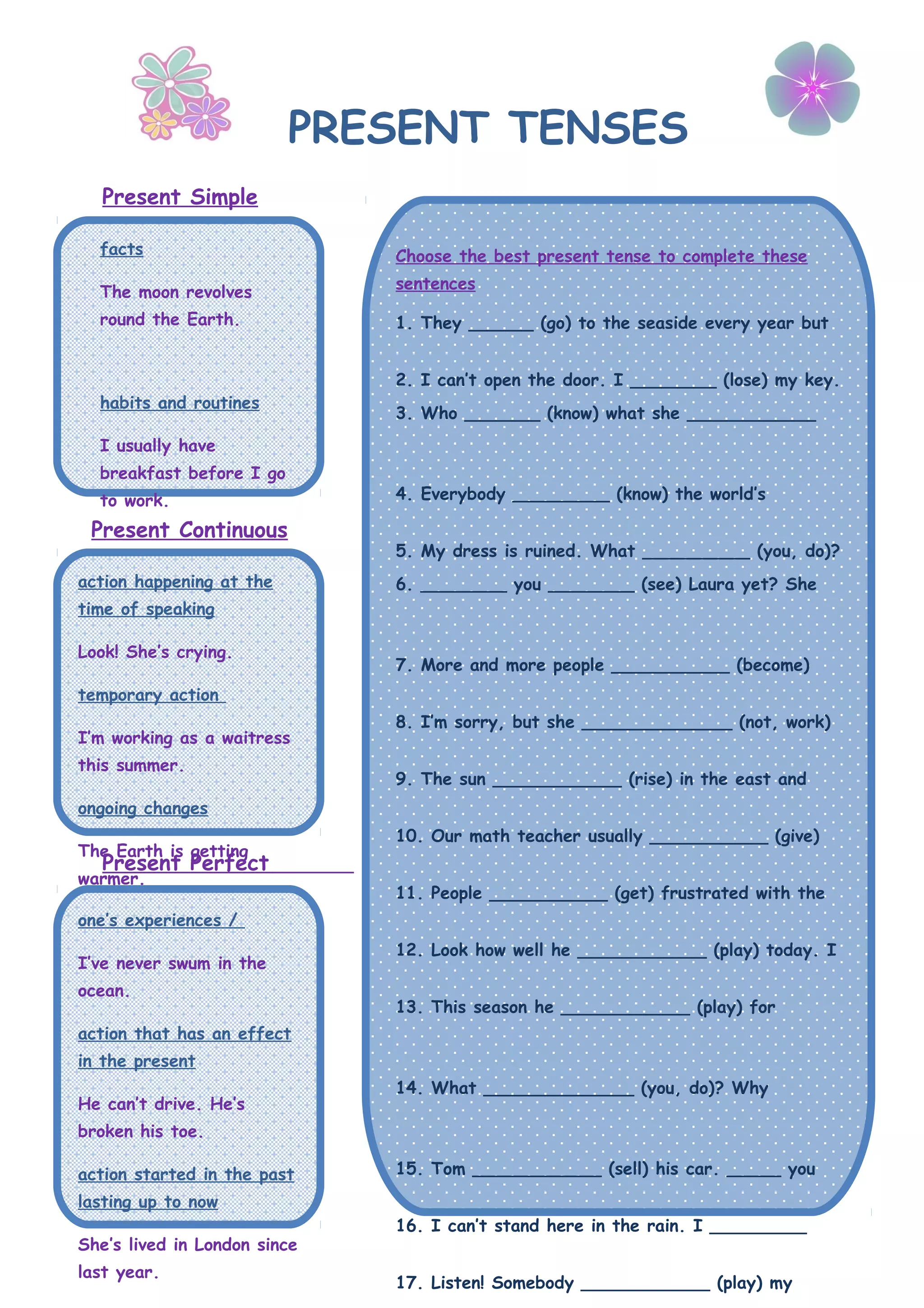
Mastering how to express watch in the present tense requires understanding English aspect variations. In standard English, the present tense is divided into four distinct forms, each conveying specific temporal nuances:
- Simple Present Tense: Used for habits, routines, general truths, and scheduled facts.
- Present Continuous (Progressive) Tense: Used for actions occurring precisely at the moment of speech or temporary ongoing situations.
- Present Perfect Tense: Used for completed actions that possess immediate relevance to the present moment or unspecific past experiences.
- Present Perfect Continuous Tense: Used for actions that started in the past and continue uninterrupted into the present moment.
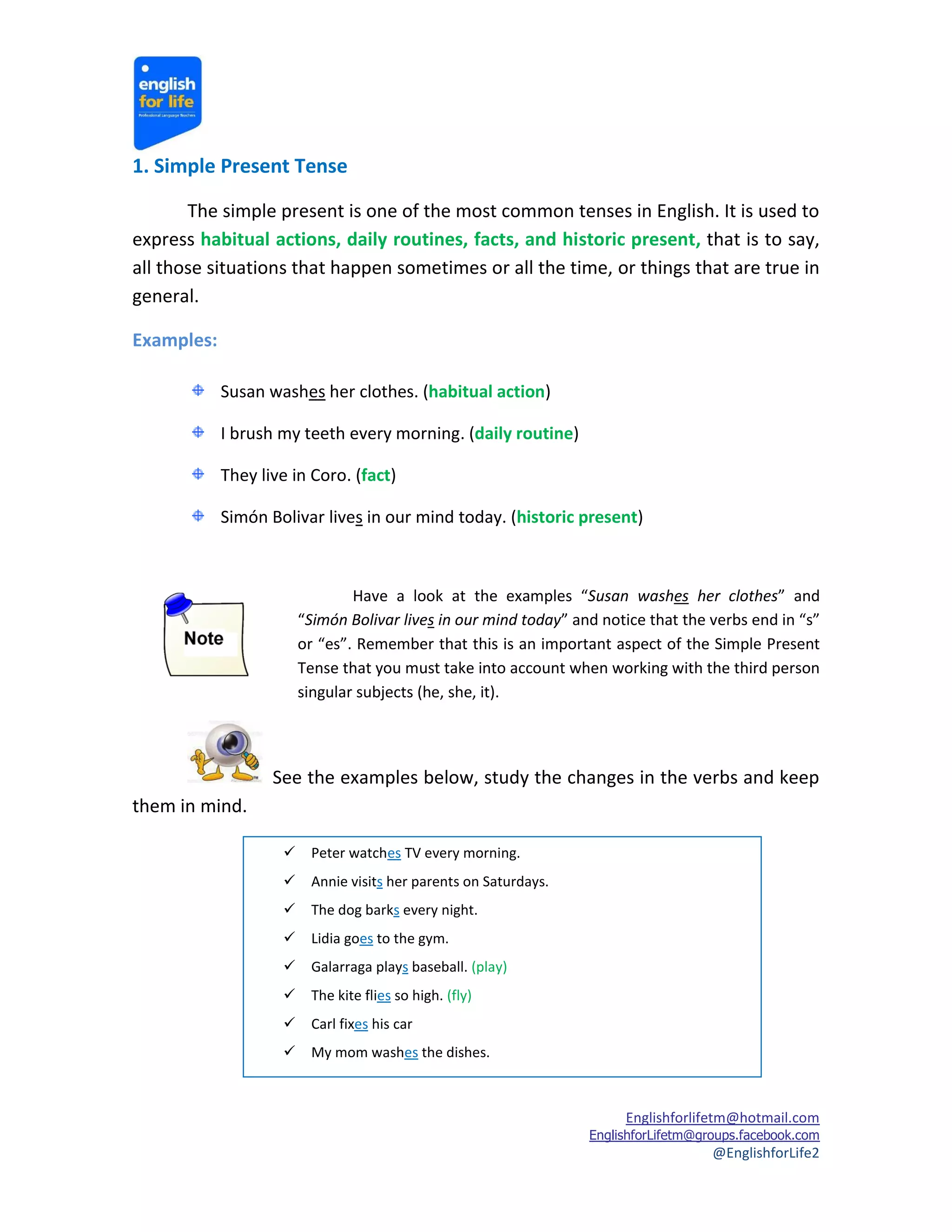
Because watch ends in the sibilant consonant blend -ch, its morphological spelling alters slightly depending on the grammatical person, specifically requiring the addition of -es rather than a simple -s in the third-person singular.
The Four Present Tense Aspects of "Watch"
1. Simple Present Tense (Watch / Watches)
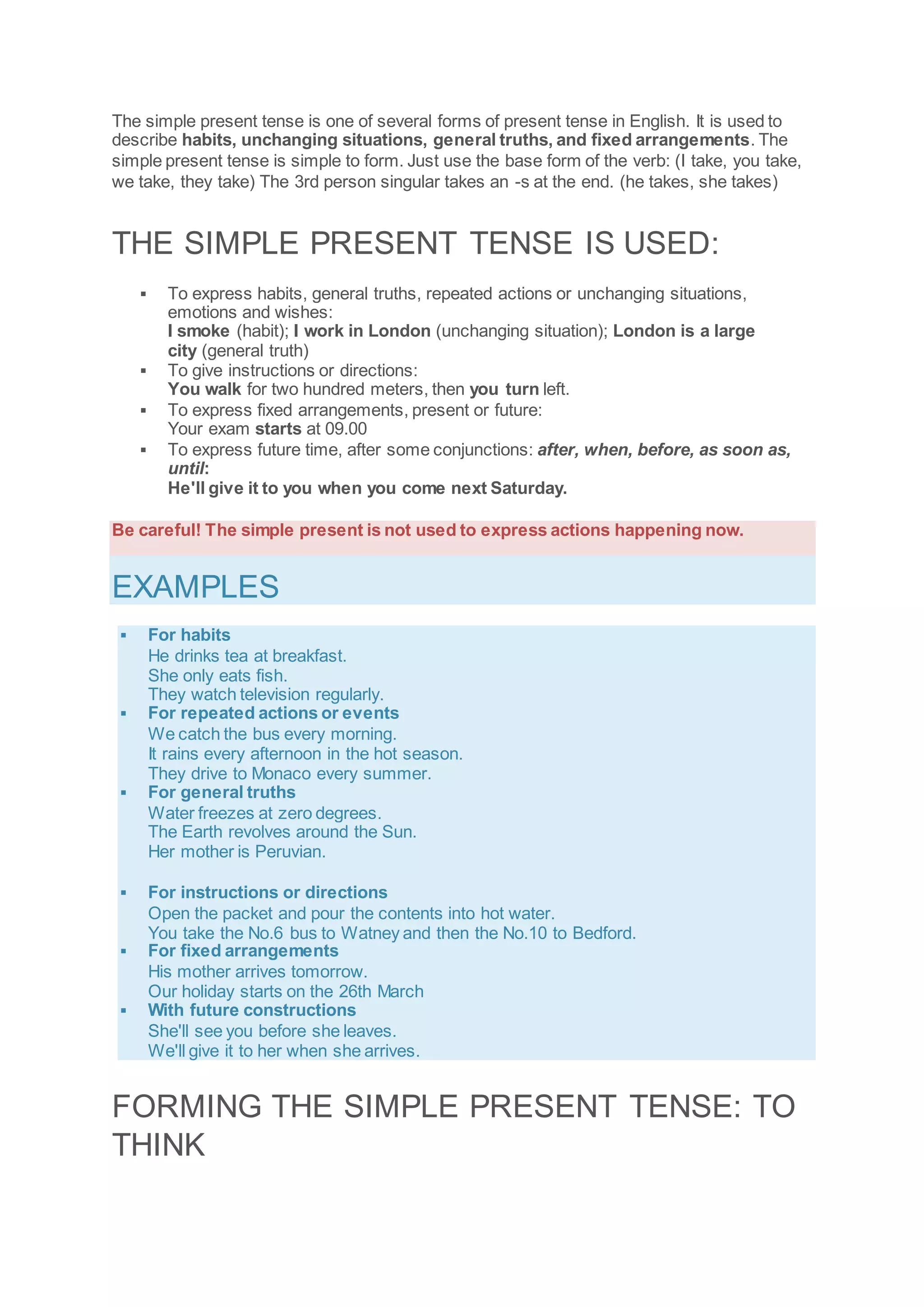
The simple present tense expresses habitual actions, repeated behaviors, scientific facts, or permanent arrangements.
Verb Structure
- I / You / We / They: Subject + base verb (watch)
- He / She / It / Singular Noun: Subject + base verb + -es (watches)
Because watch ends in -ch, English orthography mandates adding -es to construct the third-person singular form. Phonetically, this adds an extra syllable pronounced as /wɒtʃɪz/ or /wɑːtʃɪz/.
Common Signal Words
- Always, usually, often, sometimes, rarely, never, every day, on weekends, routinely.
Sentence Examples
- Affirmative: She watches documentary films every Sunday evening.
- Negative: They do not watch television during family dinners.
- Interrogative: Do you watch live sports streaming channels regularly?
2. Present Continuous Tense (Am / Is / Are Watching)
The present continuous tense describes an action occurring at the exact moment of speaking, or a temporary trend happening around the present time.
Verb Structure
- I: I + am + present participle (watching)
- He / She / It: Subject + is + present participle (watching)
- You / We / They: Subject + are + present participle (watching)
Forming the present participle requires adding the suffix -ing directly to the base verb watch, producing watching. Because watch ends in two consonants (t-c-h), no consonant doubling occurs.
Common Signal Words
- Now, right now, at the moment, currently, presently, today.
Sentence Examples
- Affirmative: I am watching an instructional syntax webinar right now.
- Negative: He is not watching the news broadcast at this time.
- Interrogative: Are we watching the correct stream for the live announcement?
3. Present Perfect Tense (Have / Has Watched)
The present perfect tense connects past events to the present moment. It indicates that an action occurred at an unspecified time prior to now, or that a past action has direct consequences on current conditions.
Verb Structure
- I / You / We / They: Subject + have + past participle (watched)
- He / She / It: Subject + has + past participle (watched)
As a regular verb, watch forms its past participle by adding -ed to the stem, resulting in watched (pronounced with a terminal /t/ sound: /wɒtʃt/).
Common Signal Words
- Already, yet, just, ever, never, so far, up to now, recently.
Sentence Examples
- Affirmative: We have watched every episode of this tutorial series.
- Negative: She has not watched the newly released updates yet.
- Interrogative: Have you ever watched a meteor shower in person?
4. Present Perfect Continuous Tense (Have / Has Been Watching)
The present perfect continuous tense emphasizes the duration of an uninterrupted activity that began in the past and remains active in the present.
Verb Structure
- I / You / We / They: Subject + have been + present participle (watching)
- He / She / It: Subject + has been + present participle (watching)
This tense combines the auxiliary verb have/has, the past participle been, and the active participle watching.
Common Signal Words
- For (duration), since (starting point), all day, how long.
Sentence Examples
- Affirmative: They have been watching market trends for three hours.
- Negative: He has not been watching his dietary intake lately.
- Interrogative: How long have you been watching this video presentation?
Complete Conjugation Matrix for "Watch" in Present Tense Forms
The following table provides a reference for conjugating the verb watch across all grammatical persons and present tense aspects.
| Subject Pronoun | Simple Present | Present Continuous | Present Perfect | Present Perfect Continuous |
|---|---|---|---|---|
| First Person Singular (I) | I watch | I am watching | I have watched | I have been watching |
| Second Person Singular/Plural (You) | You watch | You are watching | You have watched | You have been watching |
| Third Person Singular (He / She / It) | He/She/It watches | He/She/It is watching | He/She/It has watched | He/She/It has been watching |
| First Person Plural (We) | We watch | We are watching | We have watched | We have been watching |
| Third Person Plural (They) | They watch | They are watching | They have watched | They have been watching |
Key Distinctions: "Watch" vs. "See" vs. "Look" in Present Tense
Learners frequently confuse watch, see, and look when constructing present-tense sentences. Understanding the semantic differences prevents common errors:
| WATCH (Dynamic) | LOOK (Directional) | SEE (Passive) |
|---|---|---|
| Active observation of movement over time. | Directing vision toward a static object or point (uses "at"). | Automatic sensory reception without exertion. |
- Watch (Dynamic Attention): Requires monitoring active movement or progression.
- Correct: "I am watching the football game."
- Look (Directional Focus): Requires turning eyes toward a target, often static, usually followed by the preposition at.
- Correct: "She is looking at the photograph."
- See (Passive Perception): Describes the natural physical capability of visual reception without deliberate focus. See is primarily a stative verb and is rarely used in progressive forms for visual sight.
- Correct: "I see a bird on the fence." (Not: "I am seeing a bird.")
Common Mistakes When Using "Watch" in Present Tense
1. Dropping the "-es" in Third-Person Singular
- Incorrect: He watch television every evening.
- Correct: He watches television every evening.
- Explanation: Standard English requires the -es inflection on third-person singular subjects (he, she, it, singular nouns) in the simple present tense.
2. Confusing Simple Present with Present Continuous
- Incorrect: Look! The dog watches the passing cars right now.
- Correct: Look! The dog is watching the passing cars right now.
- Explanation: Actions taking place at the exact moment of speech demand the present continuous form (is watching), not the simple present (watches).
3. Subject-Auxiliary Disagreement in Perfect Tenses
- Incorrect: She have watched that movie twice.
- Correct: She has watched that movie twice.
- Explanation: Third-person singular subjects take the auxiliary verb has, while plural subjects and first/second-person singular take have.
4. Incorrect Negative Auxiliary Placement
- Incorrect: He not watches the news.
- Correct: He does not watch the news. (or He doesn't watch...)
- Explanation: In the simple present tense, negative statements require the auxiliary verb do/does combined with not and the uninflected base verb watch.
Frequently Asked Questions
What is the third-person singular form of "watch" in the present tense?
The third-person singular form of watch in the simple present tense is watches. Because the verb ends with the soft consonant sound -ch, English orthographic rules require adding -es rather than just -s. It is used with subjects such as he, she, it, or singular noun phrases (for example, "She watches the monitor").
Is "watch" a regular or irregular verb in English?
Watch is a regular verb. It follows standard English morphological rules for verb inflections, forming its past tense and past participle by adding -ed (watched), and its present participle by adding -ing (watching).
What is the functional difference between "I watch" and "I am watching"?
"I watch" uses the simple present tense to describe a routine, habit, or general truth (for example, "I watch news broadcasts every morning"). "I am watching" uses the present continuous tense to indicate an ongoing action taking place right now at the time of utterance (for example, "I am watching a video right now").
Can "watch" be used in the passive voice in present tense?
Yes, watch can be constructed in the present passive voice using the formula am/is/are + being + watched for continuous passive actions, or am/is/are + watched for simple present passive states. For example: "The building is being watched by security personnel" or "The nest is watched daily by ornithologists."
How do you negate "watch" in the simple present tense?
To form a negative simple present sentence with watch, place do not (or don't) before the base verb for I, you, we, and they, or does not (or doesn't) before the base verb for he, she, and it. For example: "I do not watch horror films" and "He does not watch sports."
Recommended Next Steps for Language Mastery
To reinforce your understanding of using watch in present tense structures, apply these practical steps:
- Practice Sentence Transformation: Take base sentences containing watch and systematically convert them through all four present tense aspects (Simple, Continuous, Perfect, and Perfect Continuous).
- Monitor Subject Agreement: Pay attention to third-person singular subjects to ensure you add -es in the simple present (watches) and use has in perfect forms (has watched).
- Distinguish Intentional Visual Verbs: Substitute watch, look at, and see in daily writing exercises to build fluency with intent-based action verbs.
EDITORIAL CATEGORY METADATA:
Image Gallery