Is Flexible Premium Variable Life Insurance Taxed Differently?
Flexible premium variable life insurance is not taxed under a different set of tax laws than other permanent life insurance policies; it follows the standard tax rules under Internal Revenue Code (IRC) Section 7702. However, its variab...
Flexible premium variable life insurance is not taxed under a different set of tax laws than other permanent life insurance policies; it follows the standard tax rules under Internal Revenue Code (IRC) Section 7702. However, its variable investment subaccounts and flexible premium structure introduce unique operational tax risks—such as accidental conversion into a Modified Endowment Contract (MEC) or taxable policy lapses driven by market volatility.
Contents
Understanding the Tax Framework for Flexible Premium Variable Life Insurance
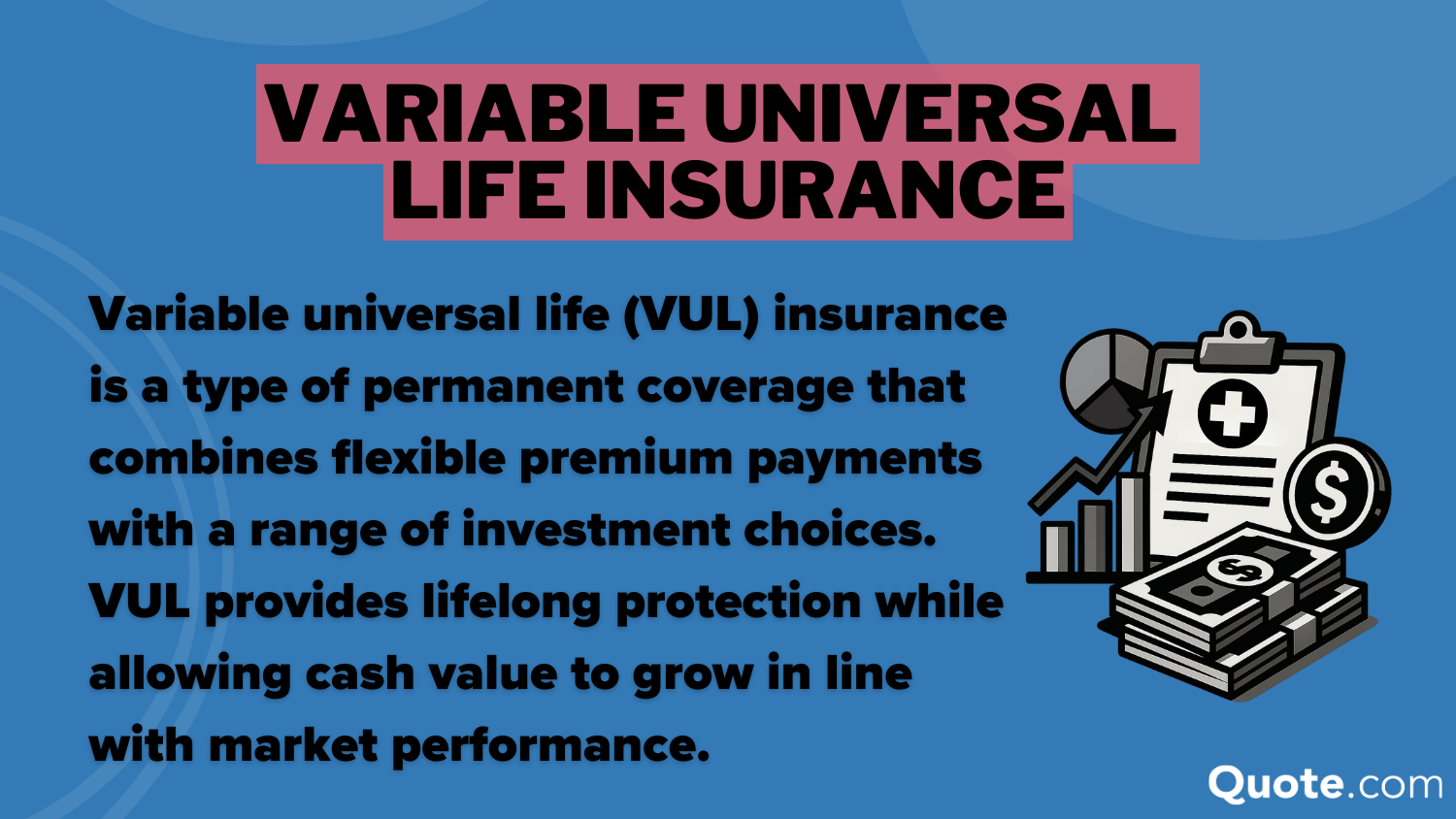
Flexible premium variable life insurance—commonly referred to in the financial services industry as Variable Universal Life (VUL)—combines two distinct operational mechanics: a flexible premium payment schedule and variable investment subaccounts tied to stock, bond, or money market indices.
From an official regulatory standpoint, the U.S. Internal Revenue Service (IRS) treats flexible premium variable life insurance under the same foundational tax statutes governing all cash-value life insurance policies, primarily IRC Section 7702. Under this section, as long as a contract satisfies statutory definitions of life insurance, the cash value accumulation within the policy receives tax-deferred treatment.
However, how those tax rules play out in practical management is where variable universal life differs significantly from traditional whole life or fixed universal life contracts:
- Variable Investment Subaccounts: Unlike fixed contracts that yield a declared interest rate backed by the insurer's general account, variable policies pass underlying investment risk directly to the policyholder. Capital gains, interest, and dividends realized inside the subaccounts incur no annual income tax reporting.
- Subaccount Reallocation: Policyholders can switch cash allocations between different investment options (e.g., rebalancing from an equity subaccount to a fixed income subaccount) without triggering capital gains taxes or taxable events.
- Flexible Premiums: Because policyholders can adjust the timing and amount of their premium payments, they face a higher risk of accidentally violating IRS funding thresholds. Exceeding statutory contribution limits can strip the policy of its favorable tax status.
Disclaimer: Tax laws, including Internal Revenue Code rules, are subject to change and varied interpretation by federal and state tax authorities. This article is for informational purposes only and does not constitute formal legal, financial, or tax advice. Consult a qualified Certified Public Accountant (CPA) or estate planning attorney for individual tax guidance.
Core Tax Advantages Shared with Permanent Life Insurance
When structured and maintained correctly within statutory guidelines, a flexible premium variable life insurance policy shares the baseline tax advantages of traditional permanent life insurance.
Tax-Deferred Cash Value Growth
Under IRC Section 72(e), earnings on the cash value inside a life insurance contract are not subject to federal or state income taxes while they remain within the policy. Because variable life insurance allows policyholders to allocate cash to equity-based subaccounts, this tax deferral can significantly accelerate compound growth compared to a taxable brokerage account, where annual dividend distributions and realized capital gains incur current income tax liabilities.
Tax-Free Death Benefit Distributions
Pursuant to IRC Section 101(a), proceeds paid to named beneficiaries upon the death of the insured are generally excluded from gross income. Beneficiaries do not owe federal income tax on the lump-sum death benefit, regardless of how much the policy grew through variable subaccount performance over its lifetime.
First-In, First-Out (FIFO) Withdrawal Accounting
For non-MEC policies, withdrawals of cash value are taxed on a First-In, First-Out (FIFO) basis. This means policyholders can withdraw money up to their total cost basis—the cumulative sum of premiums paid minus any prior tax-free distributions—completely tax-free. Only withdrawals that exceed the policy's cost basis are treated as taxable ordinary income.
Tax-Free Policy Loans
Policyholders can access cash value by taking out policy loans secured by the contract. Under standard tax rules, policy loans are not classified as taxable distributions, even if the loan amount exceeds the policy’s cost basis, provided the policy remains active and in good standing until the insured's death.
Key Operational Differences and Tax Risks of Variable Universal Life
While the underlying tax code is identical for all permanent life policies, the practical application of tax law for flexible premium variable life insurance creates distinct risks that policyholders do not typically face with traditional fixed policies.
Tax Structure Comparison: Standard VUL vs. MEC VUL
- Standard Non-MEC Policy
- Tax-Deferred Growth
- FIFO Withdrawals
- Tax-Free Policy Loans
- Tax-Free Death Benefit
- Modified Endowment Contract (MEC)
- Tax-Deferred Growth
- LIFO Withdrawals (Taxed First)
- Taxable Policy Loans
- Tax-Free Death Benefit
- 10% Penalty if Under Age 59½
1. Market Volatility and Unintended Policy Lapses
The primary practical tax risk of variable universal life insurance involves policy lapse while loans are outstanding. In fixed universal life or whole life insurance, cash value growth is relatively predictable. In a variable policy, subaccounts fluctuate directly with market index performance.
If equity markets decline sharply, the policy's cash value can fall precipitously. If the remaining cash value is insufficient to cover the policy’s internal monthly cost of insurance and administrative charges, the policy risks lapsing. If a policy lapses or is surrendered while an outstanding policy loan exists, the IRS treats the forgiven loan balance as a taxable distribution. To the extent the loan balance exceeds the policy's cumulative premium basis, that excess is taxed immediately as ordinary income, which can trigger a massive tax bill without generating cash proceeds to pay it.
2. High Premium Flexibility and the 7-Pay Test
Flexible premiums allow owners to vary payments or skip contributions when cash flow is tight. However, paying large, irregular premiums—especially during early policy years or after a period of minimal contributions—can cause the contract to fail the 7-pay test established under IRC Section 7702A.
When a policy fails the 7-pay test, the IRS permanently reclassifies it as a Modified Endowment Contract (MEC).
Modified Endowment Contract (MEC) Rules Explained
The 7-pay test measures the cumulative premiums paid into a policy during its first seven years (or following a material change to the contract) against the cumulative premiums that would be required to pay off the policy in seven equal annual payments. If total contributions at any point exceed the 7-pay limit, the policy becomes a MEC.
Tax Consequences of MEC Classification
Converting a flexible premium variable life policy into a MEC does not alter the tax-free status of the death benefit, nor does it eliminate tax-deferred growth within subaccounts. However, it drastically changes how living benefits are taxed:
- Last-In, First-Out (LIFO) Accounting: All distributions, including partial withdrawals and surrenders, are taxed on a LIFO basis. Earnings are deemed to come out first and are taxed as ordinary income before any tax-free basis can be recovered.
- Taxable Policy Loans: Unlike standard life insurance loans, loans taken from a MEC are treated as taxable distributions to the extent of gain in the contract.
- 10% Early Withdrawal Penalty: If the policyholder receives a distribution or takes a loan from a MEC before reaching age 59½, the taxable portion is subject to a 10% federal penalty tax, similar to early withdrawals from an IRA or 401(k), unless specific statutory exceptions apply.
Comparing Tax Features Across Financial Vehicles
To illustrate how flexible premium variable life insurance compares from a tax perspective against other permanent life policies and traditional investment vehicles, consider the following structural overview:
| Feature / Tax Characteristic | Flexible Premium Variable Life (VUL) | Traditional Whole Life | Fixed Universal Life | Taxable Brokerage Account |
|---|---|---|---|---|
| Growth Taxation | Tax-deferred (subaccounts) | Tax-deferred (guaranteed rate/dividends) | Tax-deferred (fixed interest rate) | Taxed annually (dividends, realized capital gains) |
| Subaccount Rebalancing Tax | Tax-free | N/A (Insurer managed) | N/A (Insurer managed) | Capital gains tax owed on sales |
| Withdrawal Accounting | FIFO (if Non-MEC) | FIFO (if Non-MEC) | FIFO (if Non-MEC) | Specific ID / FIFO / LIFO (Capital Gains) |
| Policy Loan Taxation | Tax-free (if Non-MEC) | Tax-free (if Non-MEC) | Tax-free (if Non-MEC) | N/A (Margin loans non-taxable, interest paid) |
| Death Benefit | Income tax-free | Income tax-free | Income tax-free | Subject to step-up in basis at death |
| MEC Risk Exposure | High (due to flexible premiums) | Low (fixed structured premiums) | Moderate (due to flexible premiums) | None (Tax law does not apply) |
| Lapse Tax Risk from Market Drops | High | Extremely Low | Low | None |
Estate Tax and Transfer Considerations
Beyond ordinary federal income taxation, flexible premium variable life insurance contracts are subject to federal and state estate tax rules under IRC Section 2042.
Incidents of Ownership
If the insured holds any "incidents of ownership" in the policy at the time of death—such as the right to change beneficiaries, borrow against the cash value, modify subaccount allocations, or adjust premium payment structures—the entire death benefit proceeds are included in the insured’s gross estate for federal estate tax calculation purposes.
Irrevocable Life Insurance Trusts (ILITs)
For high-net-worth individuals facing potential federal or state estate taxes, policies are frequently owned by an Irrevocable Life Insurance Trust (ILIT). When an ILIT is properly established as the applicant, owner, and beneficiary of a flexible premium variable life insurance policy:
- Death benefit proceeds are kept outside the insured's gross estate.
- The trustee maintains the authority to reallocate variable investment subaccounts without triggering estate tax inclusion.
- Annual premium payments made into the trust can utilize the annual gift tax exclusion (using Crummey withdrawal powers for trust beneficiaries).
Practical Strategies to Preserve Tax Advantages
Because the flexible nature of VUL policies creates potential tax pitfalls, policyholders should implement ongoing oversight strategies.
Monitor 7-Pay Limits Consistently
Before making extra or irregular premium payments to capitalize on variable subaccount investment opportunities, request an updated 7-pay test calculation from the insurance carrier. Insurers provide policy illustrations showing maximum allowable contributions for the current policy year to prevent unintended conversion to a MEC.
Use No-Lapse Guarantees and Secondary Guarantees
To mitigate the risk of market downturns eroding cash value and triggering a taxable lapse on outstanding loans, review whether the policy includes a No-Lapse Guarantee Rider. This guarantees coverage remains in force even if variable subaccount values fall, provided minimum premium conditions are met.
Manage Loan-to-Value (LTV) Ratios
Maintain conservative borrowing thresholds. If taking policy loans against variable cash values, keep outstanding debt well below total contributions. If subaccounts drop sharply during a market contraction, repay a portion of the loan principal promptly to reduce the risk of policy surrender and subsequent taxation of forgiven loan amounts.
Frequently Asked Questions
Is investment income within variable life subaccounts reported on Form 1099-DIV?
No. Growth, dividends, and capital gains realized inside variable life insurance subaccounts are tax-deferred under IRC Section 72. Life insurance carriers do not issue a Form 1099-DIV for internal subaccount activity. You will only receive a Form 1099-R if a taxable distribution, policy surrender, or taxable loan event occurs.
Can I transfer funds between subaccounts without paying capital gains tax?
Yes. Transfers between underlying investment subaccounts within a variable life contract are non-taxable events. Unlike executing trades in a standard investment brokerage account, switching allocations among equity, fixed income, or index subaccounts does not trigger capital gains taxes.
What happens to taxes if I surrender my flexible premium variable life policy?
If you surrender your policy, the insurance company pays out the net cash surrender value. Tax is owed on any amount received that exceeds your cost basis (total premiums paid minus previous non-taxable distributions). That taxable gain is taxed as ordinary income, not at preferred long-term capital gains tax rates.
How does changing the death benefit option affect the policy's tax status?
Flexible premium variable life policies generally offer Option A (level death benefit) and Option B (increasing death benefit equal to face amount plus cash value). Switching between death benefit options or reducing the policy face amount can trigger a material change under IRC Section 7702A, resetting the 7-pay test and potentially causing the policy to become a Modified Endowment Contract if cash value levels are too high relative to the reduced death benefit.
Are premiums paid for variable universal life insurance tax-deductible?
No. Federal tax law strictly prohibits individual taxpayers and most businesses from deducting life insurance premiums paid for personal or corporate protection under IRC Section 264, as the policyholder retains cash value rights and death benefit protection.
Next Steps and Action Plan
To ensure your flexible premium variable life insurance policy maintains its tax-advantaged status while achieving your financial objectives, consider taking the following steps:
- Request an Annual Policy Inforce Illustration: Ask your insurance company or financial advisor for an updated inforce illustration showing current subaccount performance, cash value projections, and 7-pay test margins.
- Review MEC Status with Your Insurer: Confirm whether your contract is currently classified as a non-MEC or a MEC before scheduling any additional premium payments or taking policy withdrawals.
- Evaluate Loan Balances Relative to Subaccount Exposure: If you have active policy loans, evaluate your subaccount allocation strategy to ensure market downturns will not push your policy into lapse territory.
- Consult a Tax Professional: Work with a Certified Public Accountant or fee-only financial planner to integrate your policy's cash value access strategy into your broader tax-efficient retirement income plan.
Image Gallery