How to Sell Tee Shirts Online with No Inventory: A Practical Guide
Selling tee shirts online without holding physical inventory is achieved through a business model known as print-on-demand (POD). By partnering with a third-party supplier, you can list custom-designed apparel on your website or a mark...
Selling tee shirts online without holding physical inventory is achieved through a business model known as print-on-demand (POD). By partnering with a third-party supplier, you can list custom-designed apparel on your website or a marketplace; when a customer places an order, the supplier prints your design on a blank shirt and ships it directly to the customer, handling all manufacturing and fulfillment logistics.
Contents
Understanding the Print-on-Demand (POD) Business Model
The print-on-demand model has revolutionized the barrier to entry for apparel entrepreneurs. Traditionally, starting a clothing brand required purchasing bulk inventory, renting warehouse space, and managing complex shipping logistics. With POD, you move the production point to the moment of sale.
In this model, your primary investment is time—specifically in design, marketing, and brand building. Because you do not purchase inventory upfront, you avoid the most significant risk associated with traditional retail: dead stock. If a specific design does not sell, you have incurred no financial loss beyond the time spent creating the digital artwork. However, this convenience comes with lower profit margins per unit compared to bulk printing, as the supplier charges a premium for the service of on-demand fulfillment.
Choosing Your Sales Channel: Marketplaces vs. Custom Stores
Deciding where to list your shirts is the most critical strategic decision you will make. Your choice determines your control over the brand, your access to organic traffic, and your ongoing costs.
Dedicated E-commerce Stores
Building your own store using platforms like Shopify, WooCommerce, or BigCommerce gives you full control over the customer journey. You own the customer data, can implement advanced email marketing, and dictate the brand aesthetic. However, you are entirely responsible for driving traffic to your site through paid ads or SEO.
Online Marketplaces
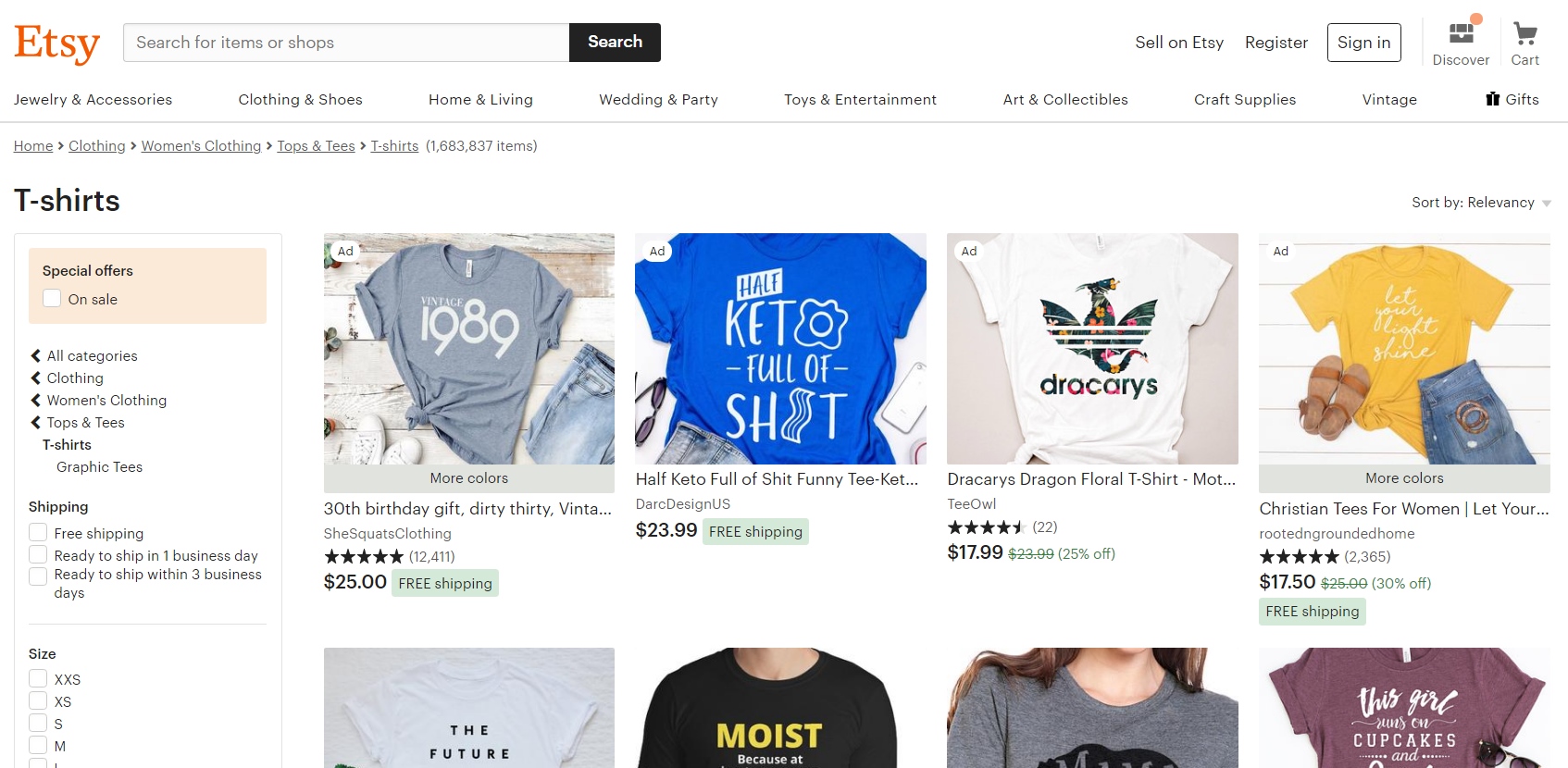
Marketplaces such as Etsy, Redbubble, or Amazon Merch (by Amazon) have built-in audiences. These platforms handle much of the visibility, making them excellent for testing designs. The drawback is high competition and limited branding capabilities. You are often restricted in how you can customize your storefront, and you may face platform fees that affect your bottom line.
Core Prerequisites for Success
Before launching, you must ensure your business foundation is technically and legally sound. Even when operating with no physical inventory, you are running a retail enterprise.
- Niche Selection: Avoid the "general apparel" trap. Success in POD often comes from targeting hyper-specific communities (e.g., hobbyist groups, local cultural themes, or specific professional identities).
- Design Assets: You need high-resolution, transparent PNG files (typically 300 DPI) for printing. If you are not a designer, utilize platforms like Canva or commission professional work from freelance designers to ensure quality.
- Legal Compliance: Register your business entity according to your local jurisdiction. Even if you are a sole proprietor, you may need a sales tax permit or a business license to operate legally and collect taxes on retail sales.
- Sample Ordering: Never skip this step. Order a sample of your own design to verify the print quality, the fabric feel of the shirt, and the efficiency of the supplier’s shipping.
Evaluating Print-on-Demand Partners
Your supplier is the invisible backbone of your business. If they fail to deliver, your reputation suffers. Consider the following criteria when vetting potential partners:
| Feature | Importance | What to Look For |
|---|---|---|
| Print Quality | High | DTG (Direct-to-Garment) capability for complex colors. |
| Integrations | Medium | Native apps for your chosen platform (e.g., Shopify). |
| Product Range | Low/Med | Variety of blanks (brands, fabric weights). |
| Geography | High | Locations near your target customers for faster shipping. |
| Branding | Medium | Ability to add custom labels or packing slips. |
Operational Workflow: From Upload to Delivery
The operational flow for a print-on-demand shirt store is largely automated once configured.
- Design Creation: Create your design and upload it to your supplier’s portal.
- Product Syncing: Map your design to specific shirt brands and sizes within your store.
- Customer Purchase: A customer visits your site, selects a size/color, and pays the retail price.
- Automatic Routing: Your store platform automatically forwards the order details (item, size, customer address) to the supplier.
- Fulfillment: The supplier picks a blank shirt, prints your design, packs it, and ships it with your branding (if supported).
- Notification: The tracking information is synced back to your store, and the customer is notified.
Common Mistakes to Avoid
The simplicity of the POD model leads many to make avoidable errors that hinder scalability.
- Neglecting Mockups: High-quality imagery is your only proxy for the physical product. Do not use generic, low-effort mockups. Use lifestyle photography or high-fidelity digital renders to show how the shirt looks when worn.
- Ignoring Shipping Times: Be transparent about lead times. Because shirts are printed upon order, they take longer to reach the customer than mass-produced items. Failing to communicate this leads to high refund rates and poor reviews.
- Over-reliance on One Platform: If your business is entirely dependent on an algorithm like Etsy’s search, a single policy change can destroy your revenue. Diversify your traffic sources, such as building an email list or a social media presence.
Frequently Asked Questions
Do I need a business license to sell POD shirts? Most jurisdictions require a business license or a sales tax registration to conduct retail sales, even online. Check with your local government's department of revenue to confirm the specific requirements for your area.
How do I handle returns in a print-on-demand model? Most POD suppliers only offer returns for manufacturing defects or shipping errors. You must establish a clear return policy on your website that distinguishes between "change of mind" returns (which you may have to absorb) and defective product returns (which the supplier usually covers).
Can I make a full-time income with no inventory? Yes, but it requires significant volume or a high-margin brand. Since the base cost of a POD shirt is higher than bulk-ordered screen printing, you must focus on building a strong brand identity that justifies higher retail pricing.
What is the most important technical specification for my designs? Always provide files in PNG format with transparent backgrounds at 300 DPI (dots per inch). This ensures the printer has enough data to produce a crisp, high-quality image without pixelation.
How do I handle customer service if I don't see the shirts? You act as the interface between the customer and the supplier. You will need to monitor tracking numbers and maintain open lines of communication with your supplier's support team to resolve shipment delays or quality disputes quickly.
Next Steps for Launching
To begin, finalize your niche and create your first three core designs. Select a sales platform and a compatible print-on-demand supplier. Once integrated, order samples to verify quality. After verification, focus entirely on marketing your store through social media, content creation, or targeted advertising. Success in this model is rarely about the volume of shirts you stock, but rather the effectiveness of your brand in reaching its intended audience.
Image Gallery