Typical Beneficiary for Life Insurance Explained: Choosing the Right Designees in 2026
A typical beneficiary for life insurance is the person, entity, or institution designated by a policyholder to receive the death benefit upon the insured’s passing. While spouses and children are the most common choices, beneficiaries...
A typical beneficiary for life insurance is the person, entity, or institution designated by a policyholder to receive the death benefit upon the insured’s passing. While spouses and children are the most common choices, beneficiaries can also include trusts, charities, or legal estates, provided the designation follows state-specific insurance laws and contractual requirements.
Contents
When purchasing a life insurance policy, the choice of a beneficiary is arguably the most critical decision after determining the coverage amount. As of 2026, the process for naming and updating these designees has become increasingly streamlined through digital portals, but the underlying legal and financial implications remain complex. Selecting the right beneficiary ensures that the financial safety net you have built reaches the intended hands without unnecessary legal interference or tax complications.
Understanding the Hierarchy: Primary vs. Contingent Beneficiaries
Life insurance policies typically allow for multiple layers of beneficiaries. This hierarchy is designed to ensure the death benefit is paid out even if your first choice is unable to receive it.
Primary Beneficiaries
The primary beneficiary is the first person or entity in line to receive the policy proceeds. You can name a single primary beneficiary or multiple individuals. If you name multiple people, you must specify the percentage of the benefit each should receive (e.g., 50% to a spouse and 25% to each of two children). If a primary beneficiary survives the insured, they receive the payout, and any contingent beneficiaries receive nothing.
Contingent (Secondary) Beneficiaries
A contingent beneficiary serves as a "backup." They only receive the death benefit if all primary beneficiaries have predeceased the insured or are legally unable to accept the funds. For example, if a husband names his wife as the primary and his adult son as the contingent, the son only receives the money if the wife is no longer living at the time of the husband's death. In 2026, estate planners strongly recommend naming at least one contingent beneficiary to avoid the death benefit defaulting to the "estate," which triggers the probate process.
Tertiary Beneficiaries
While less common, some complex estate plans include tertiary beneficiaries. These individuals or organizations are third in line, receiving the benefit only if both the primary and contingent beneficiaries are deceased or ineligible.
Common Types of Beneficiaries and Their Implications
Choosing who receives your life insurance proceeds depends on your financial goals, family structure, and the age of your dependents. Each category of beneficiary comes with specific legal considerations.
Spouses and Life Partners
In the United States, the most frequent beneficiary designation is a spouse. This is often a straightforward process, but residents of community property states—including Arizona, California, Idaho, Louisiana, Nevada, New Mexico, Texas, Washington, and Wisconsin—must be aware of specific rules. In these states, a spouse may be legally entitled to a portion of the life insurance payout if the premiums were paid with community income, even if the policyholder named someone else as the beneficiary.
Minor Children
Naming minor children directly as beneficiaries is a common mistake. Most insurance companies cannot legally pay a large sum of money directly to a minor. Instead, the court will appoint a guardian to manage the funds until the child reaches the age of majority (usually 18 or 21, depending on the state). This court process can be expensive and time-consuming. To avoid this, policyholders often use the Uniform Transfers to Minors Act (UTMA) to name a custodian or establish a trust to hold the funds for the child’s benefit.
Trusts
Designating a trust as a beneficiary offers the highest level of control over how the money is spent. An inter vivos trust (living trust) or a testamentary trust (created by a will) can specify that the death benefit be paid out in installments, used only for education, or distributed when a beneficiary reaches a certain age. This is particularly useful for protecting heirs who may not be financially responsible or for managing the care of a special-needs dependent.
Charities and Non-Profit Organizations
Life insurance is a powerful tool for philanthropy. By naming a 501(c)(3) organization as the beneficiary, the death benefit can provide a significant legacy gift. In 2026, many policyholders choose this route for "legacy planning," as it may also offer certain estate tax advantages for high-net-worth individuals.
Legal Structures: Revocable vs. Irrevocable Designations
The flexibility of your policy depends heavily on whether you choose a revocable or irrevocable beneficiary.
- Revocable Beneficiary: This is the standard choice. The policy owner retains the right to change the beneficiary at any time without the beneficiary’s consent or knowledge. This allows for adjustments after life events such as marriage, divorce, or the birth of a child.
- Irrevocable Beneficiary: Once named, an irrevocable beneficiary has a vested interest in the policy. The policy owner cannot change the beneficiary, cancel the policy, or borrow against the cash value without the written consent of the irrevocable beneficiary. This structure is often used in divorce settlements to ensure child support or alimony obligations are met.
Distribution Methods: Per Stirpes vs. Per Capita
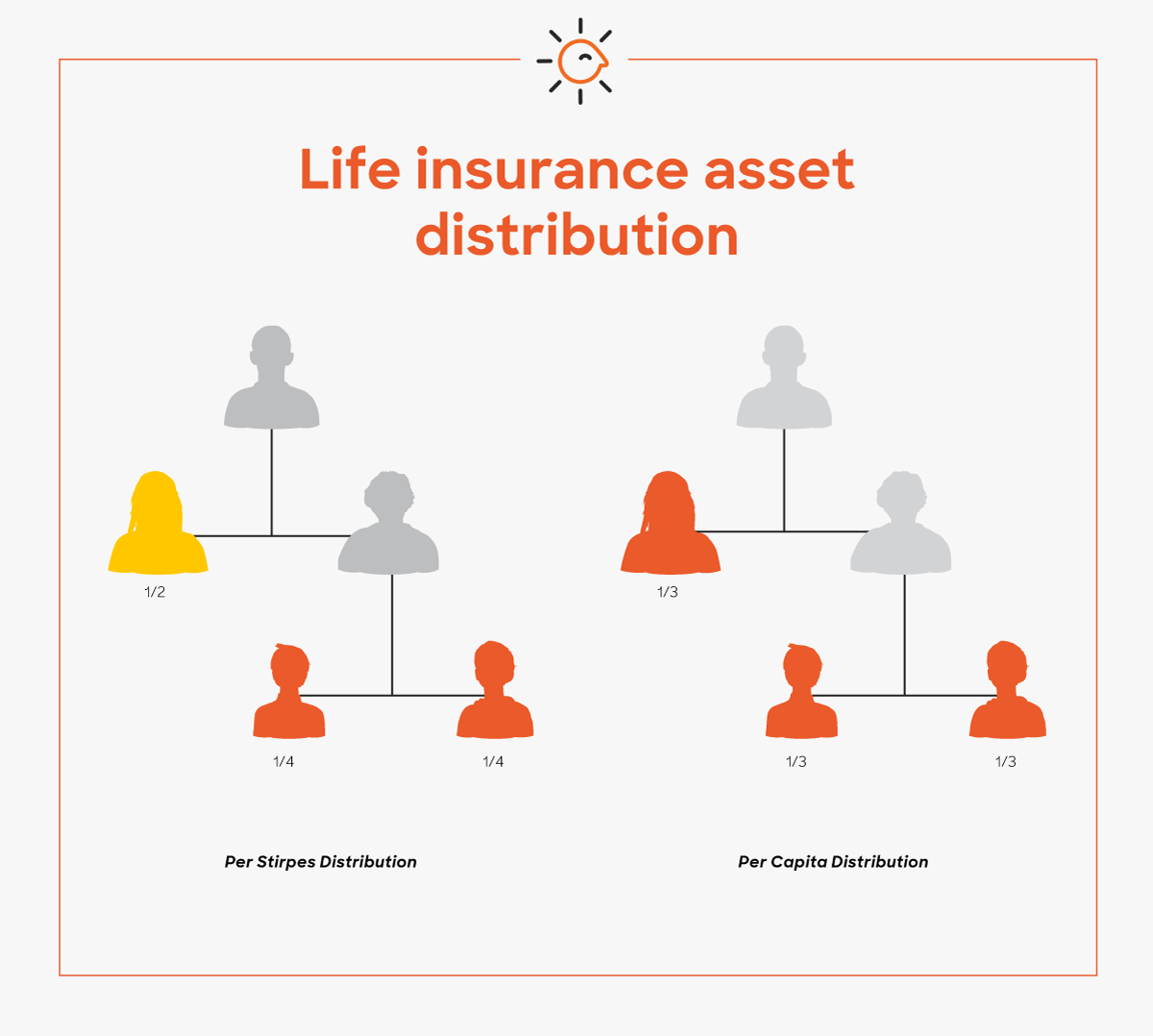
When naming multiple beneficiaries, such as children or grandchildren, you must decide how the funds will be distributed if one of those beneficiaries dies before you.
| Distribution Type | Definition | Result if a Beneficiary Predeceases the Insured |
|---|---|---|
| Per Capita | "By the head." The benefit is divided equally among the living named beneficiaries. | If you name three children and one dies, the two surviving children split the entire benefit. The deceased child's heirs receive nothing. |
| Per Stirpes | "By the branch." The benefit follows the lineage of the named beneficiary. | If you name three children and one dies, the deceased child’s share passes to their own children (your grandchildren). |
Choosing between these two methods is essential for multi-generational financial planning. Most standard life insurance forms default to per capita unless "per stirpes" is specifically requested and documented.
Common Pitfalls and How to Avoid Them
Even with the best intentions, errors in beneficiary designation can lead to the death benefit being tied up in court or taxed unnecessarily.
Naming "The Estate" as Beneficiary
Many people name their estate as the beneficiary, thinking it simplifies their will. In reality, this is often the least efficient choice. When a death benefit goes to an estate, it must pass through probate, a public and potentially lengthy legal process. This subjects the money to claims from creditors and delays the payout to your loved ones. Direct beneficiary designations typically bypass probate entirely.
Failing to Update After Divorce
In many jurisdictions, a divorce does not automatically revoke a beneficiary designation. If you named an ex-spouse as the primary beneficiary ten years ago and never updated the paperwork, they may still legally be entitled to the payout, regardless of your current relationship or will. It is vital to review designations after any major life change.
Incomplete or Vague Information
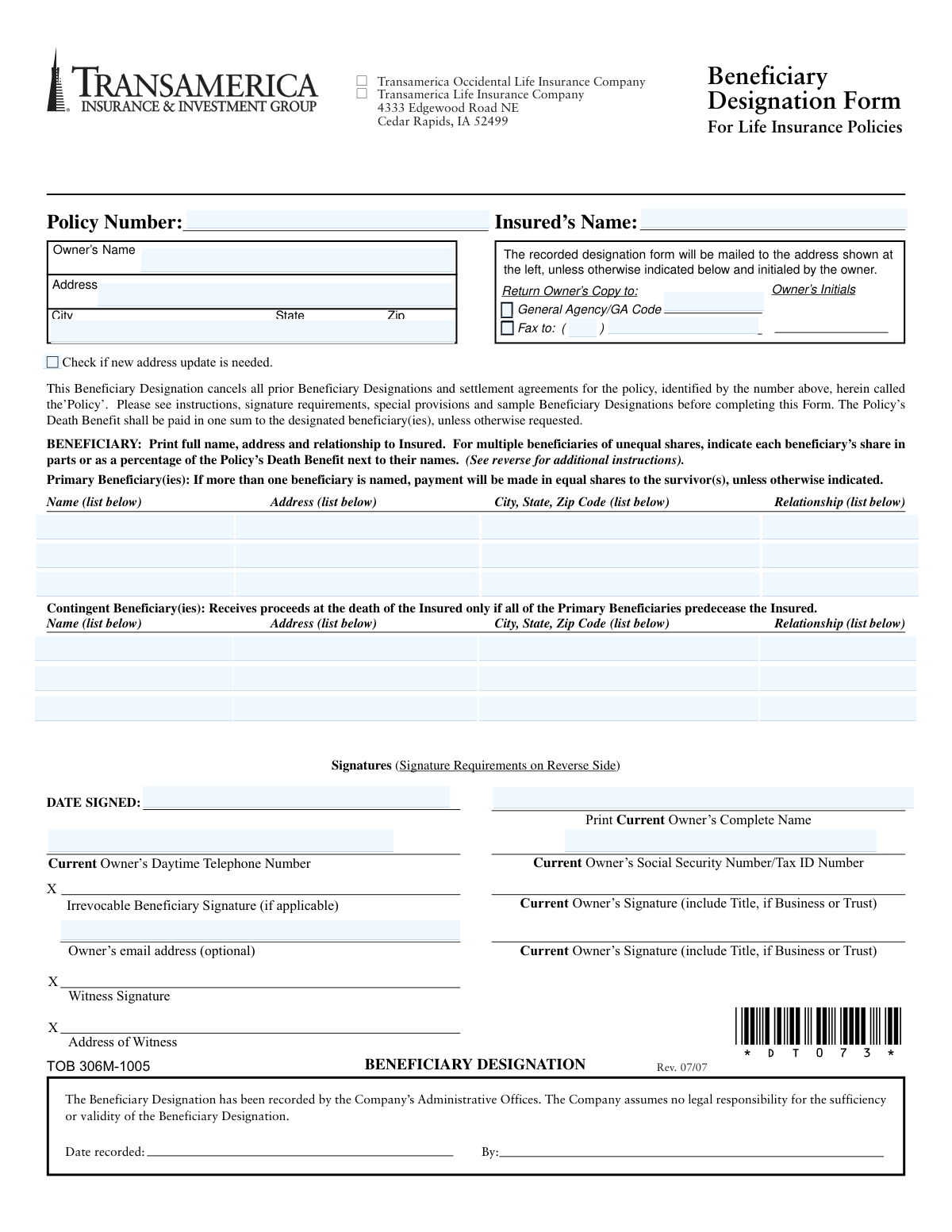
Using vague terms like "my children" or "my wife" instead of legal names can cause delays. To ensure a smooth payout, always provide the beneficiary's full legal name, Social Security number, date of birth, and current address. In 2026, insurance carriers use these details to cross-reference the Social Security Administration’s Death Master File to initiate claims more quickly.
Technical Requirements and Documentation
To finalize a beneficiary designation, insurance companies require specific documentation. As of 2026, most carriers utilize secure digital signatures (such as DocuSign or internal proprietary portals) to authenticate these changes.
- Full Legal Name: Must match the beneficiary's government-issued identification.
- Taxpayer Identification Number: Usually a Social Security Number (SSN) or Employer Identification Number (EIN) for trusts/charities.
- Relationship to the Insured: Required to establish "insurable interest" in some jurisdictions, though usually broadly defined for beneficiaries.
- Percentage Allocation: Must total exactly 100% for the primary tier and 100% for the contingent tier.
Frequently Asked Questions
Can I name my pet as a life insurance beneficiary?
Legally, you cannot name an animal as a beneficiary because pets are considered property and cannot own assets. However, you can set up a Pet Trust and name the trustee of that trust as the beneficiary. The funds would then be used specifically for the care and maintenance of the animal as outlined in the trust documents.
What happens if I don't name a beneficiary?
If no beneficiary is named, or if all named beneficiaries have passed away, the policy proceeds usually default to the policyholder's estate. As noted earlier, this subjects the funds to probate, creditors, and potential delays. Some older policies may have a "standard order of precedence" clause (e.g., spouse, then children, then parents), but you should never rely on this.
Is the death benefit taxable to the beneficiary?
Generally, life insurance death benefits are not subject to federal income tax. However, if the benefit is paid out in installments and earns interest, the interest portion of the payment is taxable. Additionally, if the total value of the estate (including the life insurance) exceeds federal or state estate tax thresholds, the benefit may be subject to estate taxes.
Can a creditor seize my life insurance payout?
In most states, the death benefit is protected from the creditors of the insured person. However, once the money is in the hands of the beneficiary, it may be subject to the beneficiary’s creditors unless the funds are held in a specific type of protective trust, such as a spendthrift trust.
Can I change my beneficiary without telling them?
If the beneficiary is revocable, you have no legal obligation to notify them of the change. If the beneficiary is irrevocable, you cannot change the designation without their express written consent.
Recommendation for Policyholders
The most effective way to manage your life insurance is to treat it as a living document. You should review your beneficiary designations at least once a year or immediately following any major life event, such as a birth, death, marriage, divorce, or significant change in financial status. Using digital tools provided by your insurer in 2026 makes these updates fast, but ensure you also keep a physical or encrypted digital record of your designations for your executors. If your family situation is complex, consulting with an estate attorney or a certified financial planner is recommended to ensure your designations align with your overall legacy goals.
Image Gallery